Mao Yu, Zuo Youmei, Mei Bin, Chen Lijian, Liu Xuesheng, Zhang Zhi, Gu Erwei
Key Laboratory of Brain Function and Disease of Chinese Academy of Science, Department of Biophysics and Neurobiology, University of Science and Technology of China, Hefei City, Anhui 230027, People's Republic of China.
Department of Anaesthesiology, First Affiliated Hospital of Anhui Medical University, Hefei City, Anhui 230031, People's Republic of China,
J Pain Res. 2018 Sep 11;11:1811-1819. doi: 10.2147/JPR.S164225. eCollection 2018.
The purpose of this study was to assess the efficacy of perineural dexamethasone with ropivacaine in multimodal analgesia for thoracic paravertebral block (TPVB) in patients undergoing elective thoracotomy.
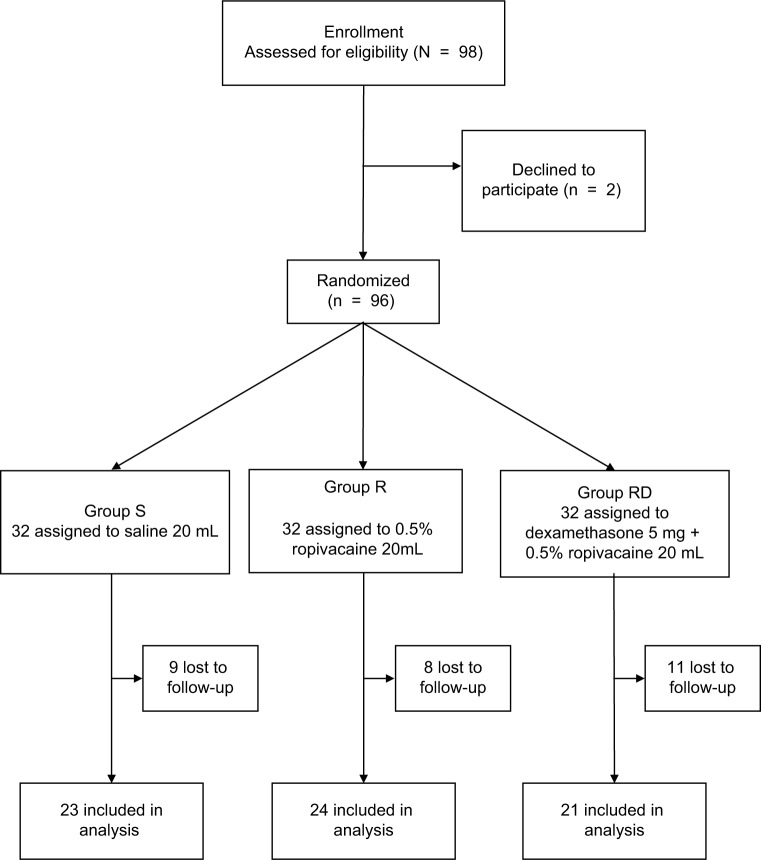
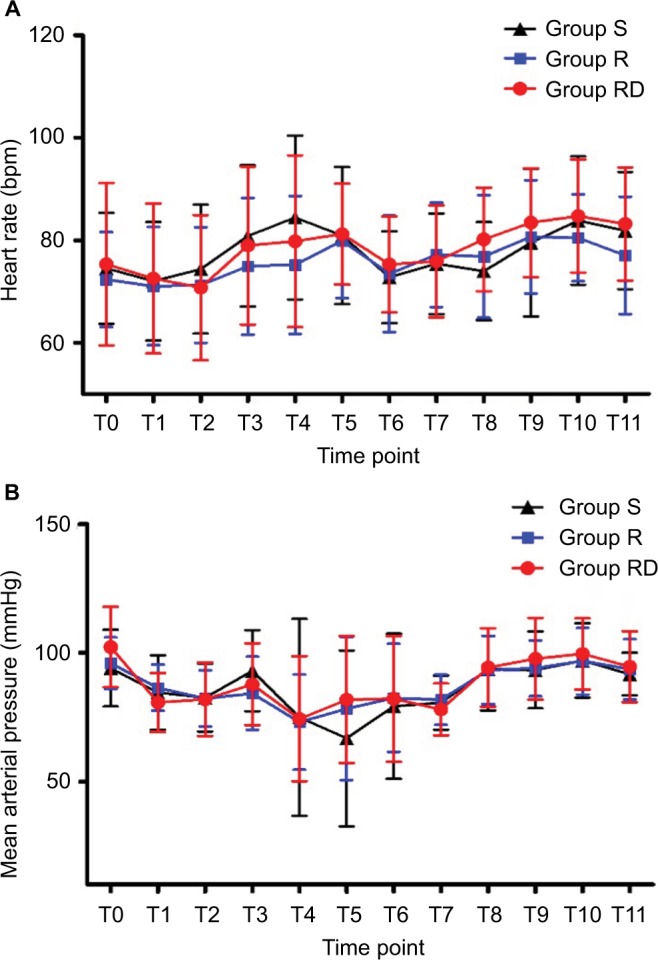
Ninety-six patients undergoing thoracotomy were enrolled in this trial and randomized to adjuvant therapy for TPVB: group S (saline), group R (0.5% ropivacaine), or group RD (5 mg dexamethasone and 0.5% ropivacaine). Postoperative analgesia, recovery duration, and chronic pain were recorded.
Groups R and RD spent less time in the postanaesthesia care unit, had earlier out-of-bed activity, and had shorter postoperative hospital stays compared with group S. The RD group regained consciousness faster and had lower acute pain scores and used less patient-controlled analgesia during the first 72 h after surgery compared with group S. Postthoracotomy pain was decreased in group RD (19.0%) compared with group S (47.6%) 3 months postoperatively, = 0.050.
Perineural dexamethasone with ropivacaine for TPVB improves postoperative analgesia quality, reduces recovery time, and may decrease the incidence of chronic pain after thoracotomy with an opioid-based anesthetic regimen.
本研究旨在评估在接受择期开胸手术的患者中,神经周围注射地塞米松联合罗哌卡因用于胸椎旁神经阻滞(TPVB)多模式镇痛的疗效。
96例接受开胸手术的患者纳入本试验,并随机分为TPVB辅助治疗组:S组(生理盐水)、R组(0.5%罗哌卡因)或RD组(5毫克地塞米松+0.5%罗哌卡因)。记录术后镇痛、恢复时间和慢性疼痛情况。
与S组相比,R组和RD组在麻醉后护理单元的停留时间更短,下床活动更早,术后住院时间更短。与S组相比,RD组术后意识恢复更快,急性疼痛评分更低,术后72小时内使用的患者自控镇痛更少。术后3个月,RD组开胸术后疼痛较S组有所减轻(19.0%对比47.6%),P = 0.050。
在基于阿片类药物的麻醉方案下,神经周围注射地塞米松联合罗哌卡因用于TPVB可提高术后镇痛质量,缩短恢复时间,并可能降低开胸术后慢性疼痛的发生率。