Laboratory of Molecular Medicine, Boston Children's Hospital, Harvard Medical School, Boston, Massachusetts, USA.
Department of Chemistry, University of Chicago, Chicago, Illinois, USA.
J Virol. 2018 Nov 27;92(24). doi: 10.1128/JVI.01327-18. Print 2018 Dec 15.
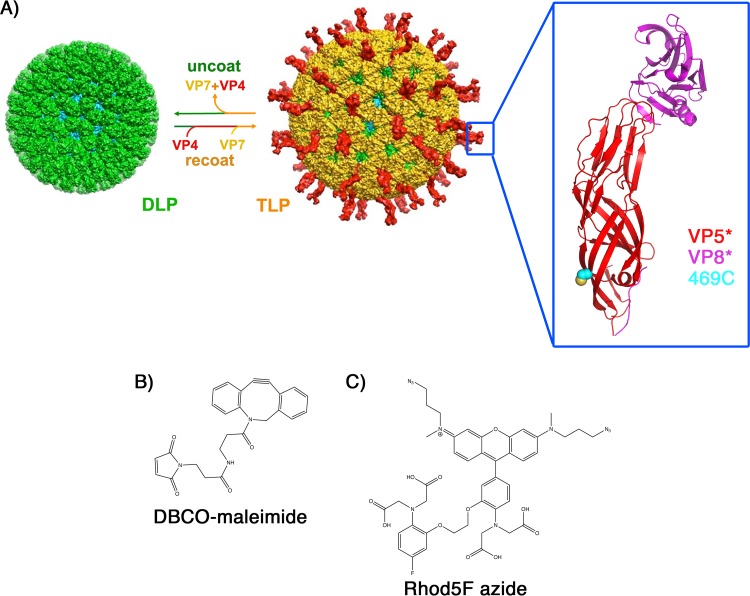
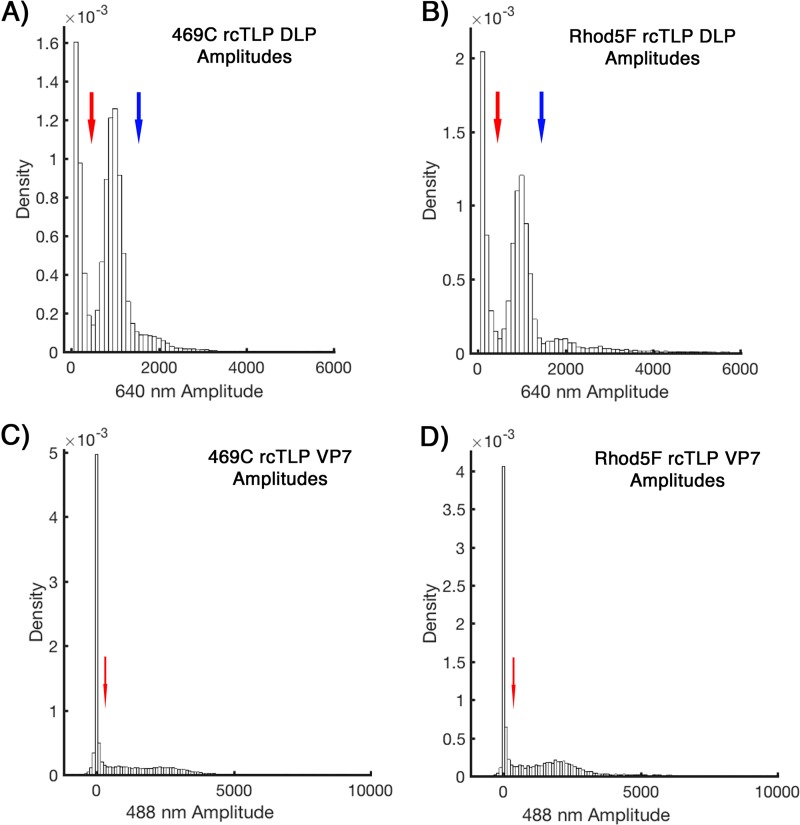
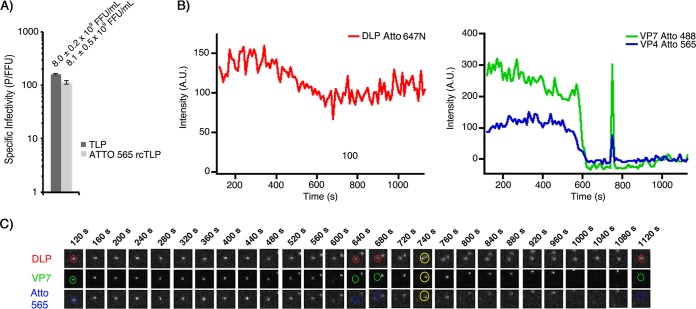
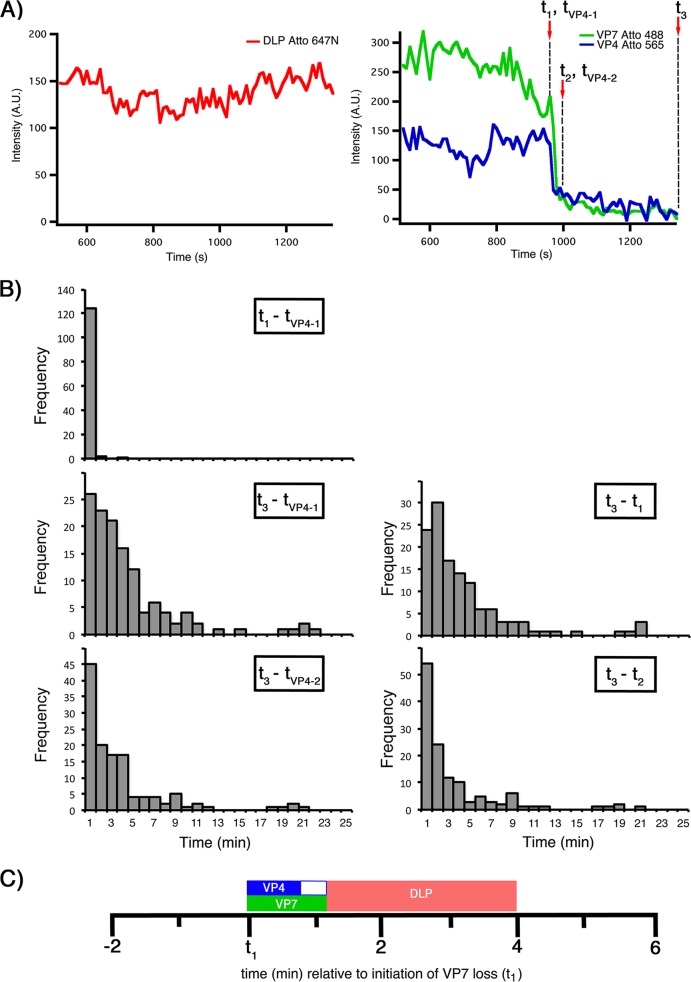
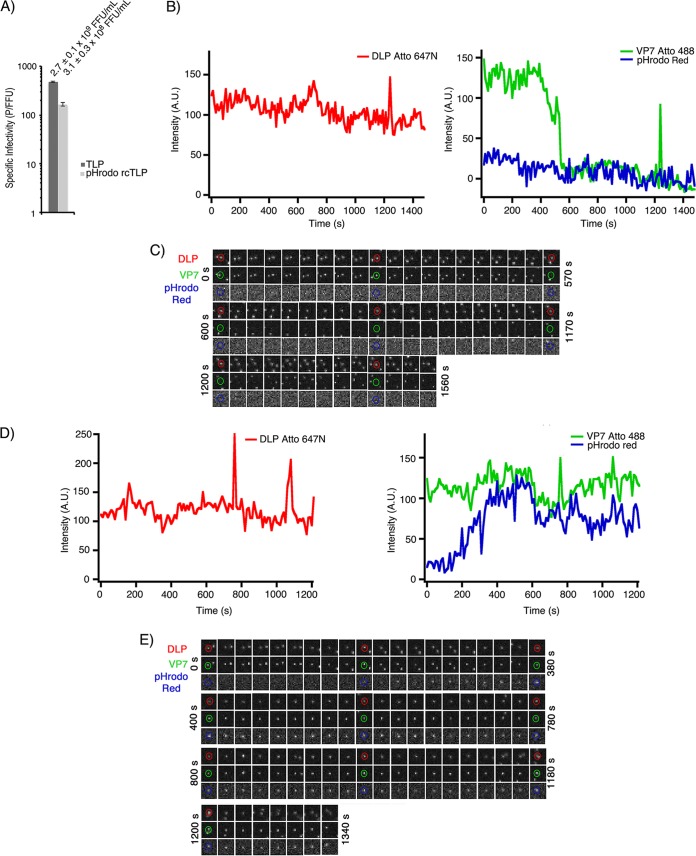
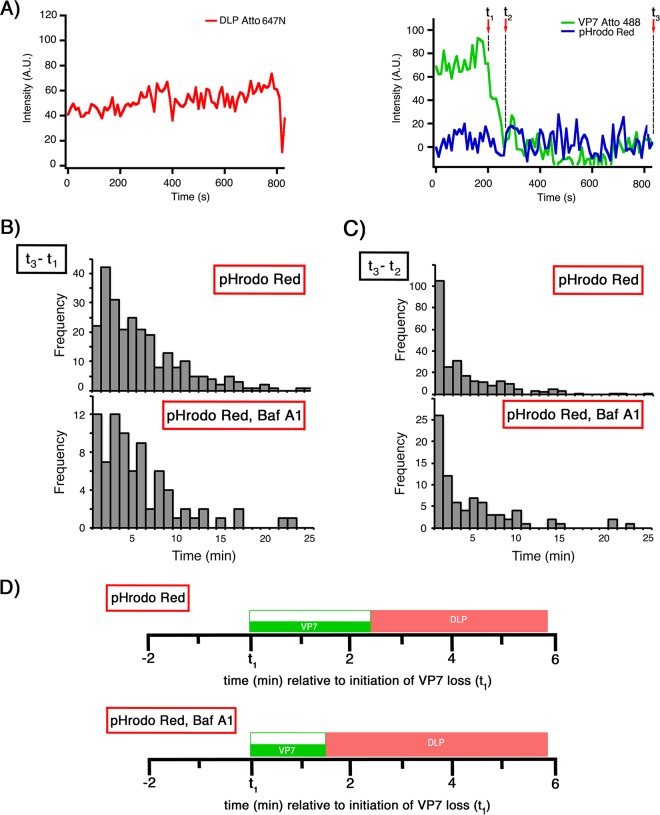
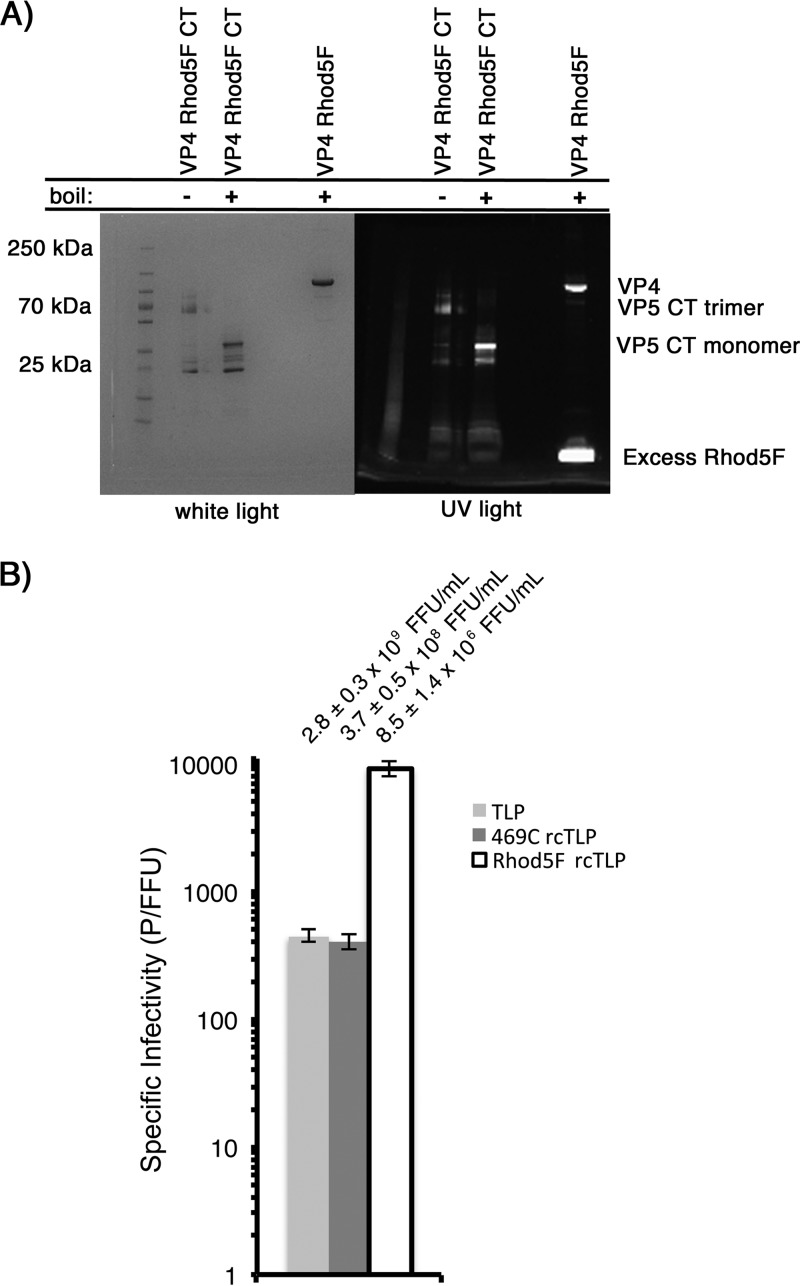
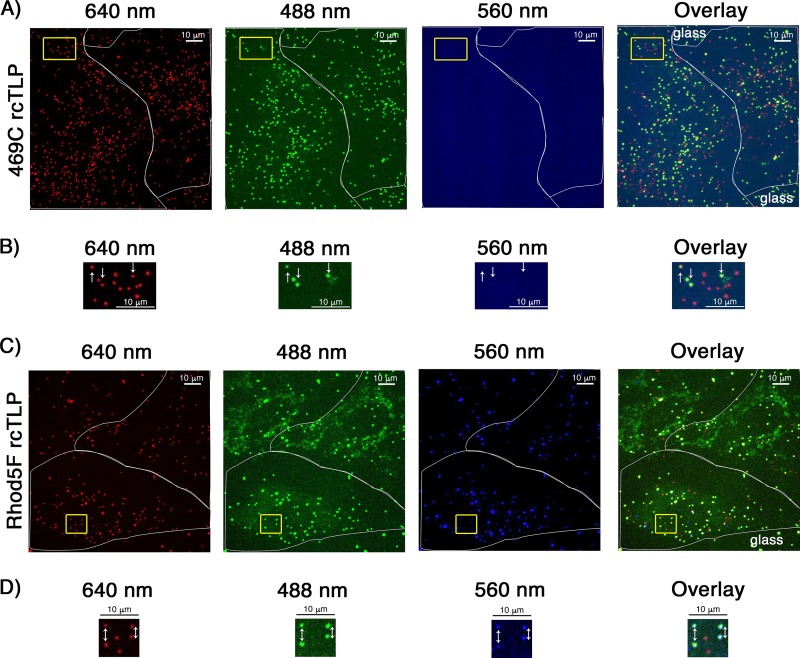
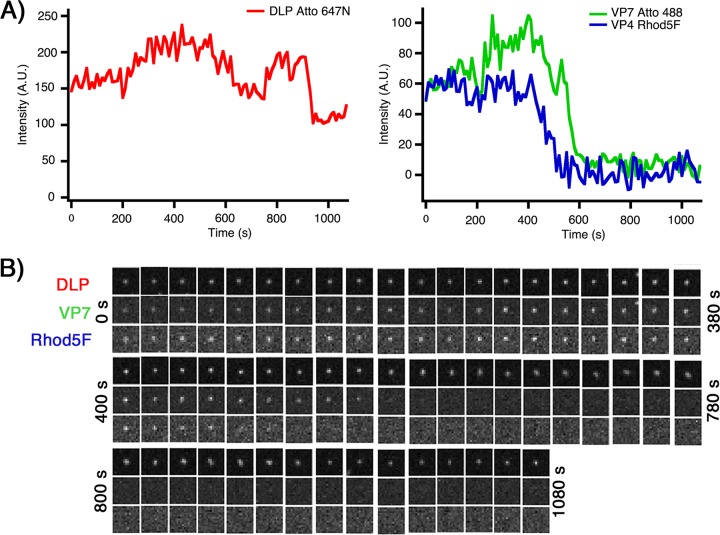
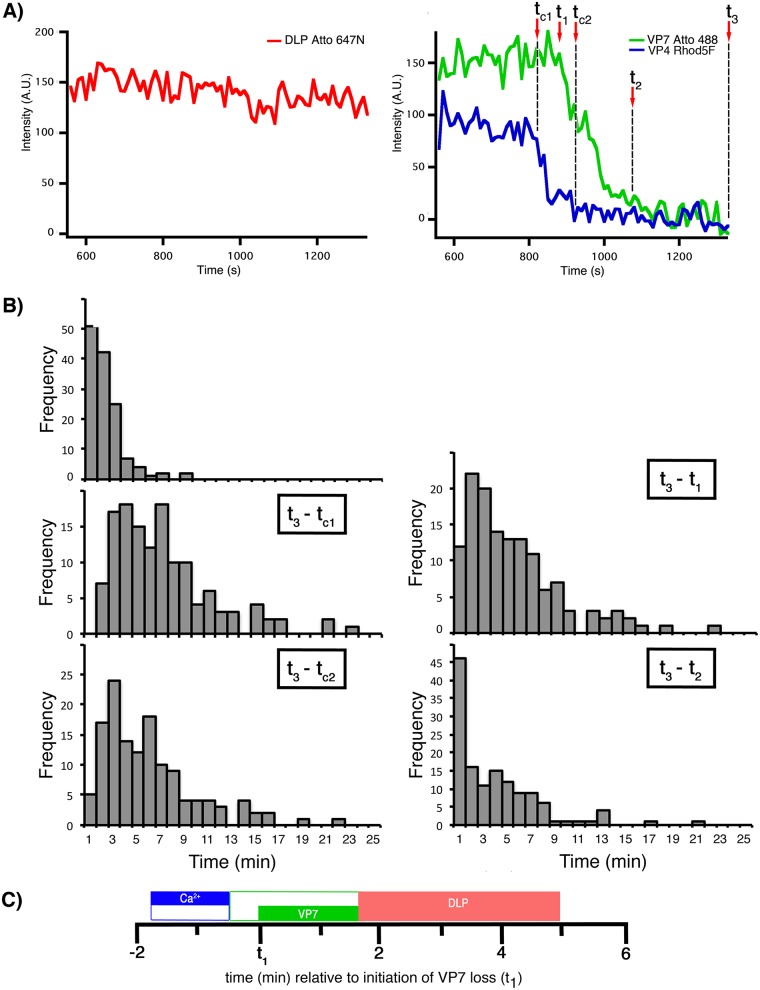
Bound calcium ions stabilize many nonenveloped virions. Loss of Ca from these particles appears to be a regulated part of entry or uncoating. The outer layer of an infectious rotavirus triple-layered particle (TLP) comprises a membrane-interacting protein (VP4) anchored by a Ca-stabilized protein (VP7). Membrane-coupled conformational changes in VP4 (cleaved to VP8* and VP5*) and dissociation of VP4 and VP7 accompany penetration of the double-layered inner capsid particle (DLP) into the cytosol. Removal of Ca strips away both outer layer proteins; we and others have postulated that the loss of Ca triggers molecular events in viral penetration. We have now investigated, with the aid of a fluorescent Ca sensor, the timing of Ca loss from entering virions with respect to the dissociation of VP4 and VP7. In live-cell imaging experiments, distinct fluorescent markers on the DLP and on VP7 report on outer layer dissociation and DLP release. The Ca sensor, placed on VP5*, monitors the Ca concentration within the membrane-bound vesicle enclosing the entering particle. Slow (1-min duration) loss of Ca precedes the onset of VP7 dissociation by about 2 min and DLP release by about 7 min. Coupled with our previous results showing that VP7 loss follows tight binding to the cell surface by about 5 min, these data indicate that Ca loss begins as soon as the particle has become fully engulfed within the uptake vesicle. We discuss the implications of these findings for the molecular mechanism of membrane disruption during viral entry. Nonenveloped viruses penetrate into the cytosol of the cells that they infect by disrupting the membrane of an intracellular compartment. The molecular mechanisms of membrane disruption remain largely undefined. Functional reconstitution of infectious rotavirus particles (TLPs) from RNA-containing core particles (DLPs) and the outer layer proteins that deliver them into a cell makes these important pediatric pathogens particularly good models for studying nonenveloped virus entry. We report here how the use of a fluorescent Ca sensor, covalently linked to one of the viral proteins, allows us to establish, using live-cell imaging, the timing of Ca loss from an entering particle and other molecular events in the entry pathway. Specific Ca binding stabilizes many other viruses of eukaryotes, and Ca loss appears to be a trigger for steps in penetration or uncoating. The experimental design that we describe may be useful for studying entry of other viral pathogens.
结合的钙离子稳定许多无包膜病毒。这些粒子中钙的流失似乎是进入或脱壳的一个调节部分。传染性轮状病毒三层颗粒 (TLP) 的外层由一种通过钙稳定的蛋白 (VP7) 锚定的膜相互作用蛋白 (VP4) 组成。VP4 的膜偶联构象变化 (切割为 VP8和 VP5) 和 VP4 和 VP7 的解离伴随着双层内层衣壳颗粒 (DLP) 穿透细胞质。钙的去除带走了两种外层蛋白;我们和其他人推测,钙的流失引发了病毒穿透的分子事件。我们现在已经借助荧光钙传感器,研究了进入病毒颗粒中钙的流失与 VP4 和 VP7 解离的时间关系。在活细胞成像实验中,DLP 和 VP7 上的不同荧光标记物报告了外层的解离和 DLP 的释放。位于 VP5*上的钙传感器监测包埋进入颗粒的膜结合囊泡内的钙浓度。钙的缓慢(持续 1 分钟)流失先于 VP7 解离约 2 分钟,DLP 释放约 7 分钟。结合我们之前的结果,即 VP7 的丢失紧随病毒颗粒与细胞表面的紧密结合约 5 分钟后发生,这些数据表明,一旦颗粒完全被摄入囊泡吞噬,钙的流失就开始了。我们讨论了这些发现对病毒进入过程中膜破坏的分子机制的影响。无包膜病毒通过破坏细胞内隔室的膜进入它们感染的细胞的细胞质。膜破坏的分子机制在很大程度上仍未确定。含有 RNA 的核心颗粒 (DLP) 和将其递送到细胞中的外层蛋白的功能重建使这些重要的儿科病原体成为研究无包膜病毒进入的特别好的模型。我们在这里报告了如何使用与病毒蛋白之一共价连接的荧光钙传感器,使用活细胞成像,从进入颗粒中建立钙流失的时间和进入途径中的其他分子事件。特定的钙结合稳定了许多真核生物的其他病毒,钙的流失似乎是穿透或脱壳步骤的触发因素。我们描述的实验设计可能对研究其他病毒病原体的进入有用。