Department of Molecular Medicine, Peter Gilgan Centre for Research and Learning, The Hospital for Sick Children, 686 Bay Street, Toronto, ON M5G0A4, Canada.
Department of Structure of Macromolecules, Centro Nacional de Biotecnología/CSIC, Cantoblanco, 28049 Madrid, Spain.
Viruses. 2023 Aug 16;15(8):1750. doi: 10.3390/v15081750.
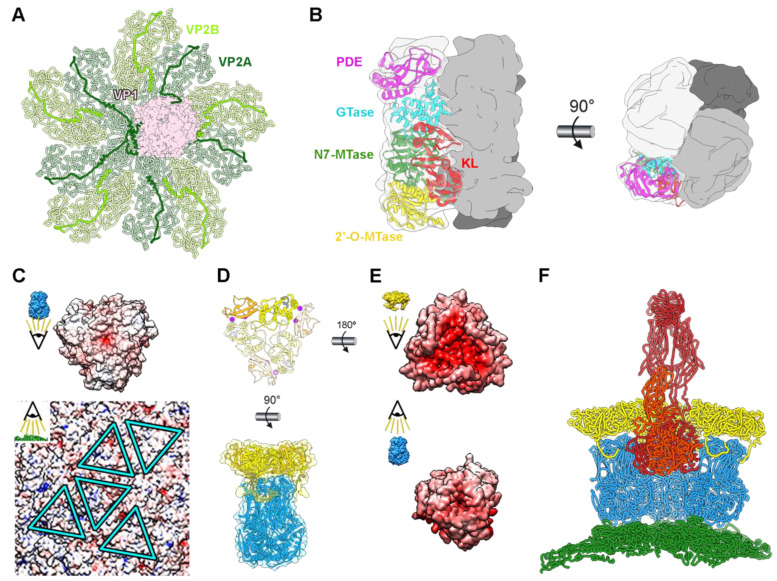
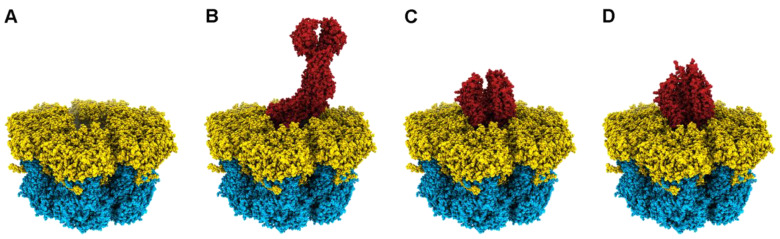
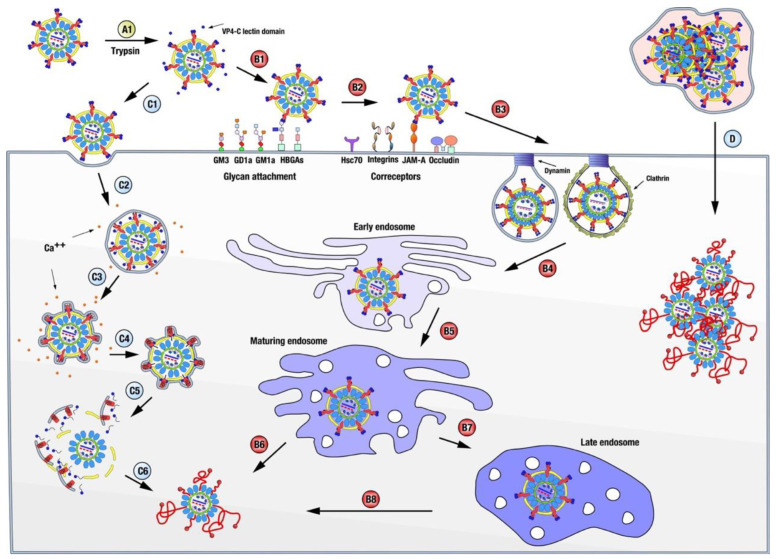
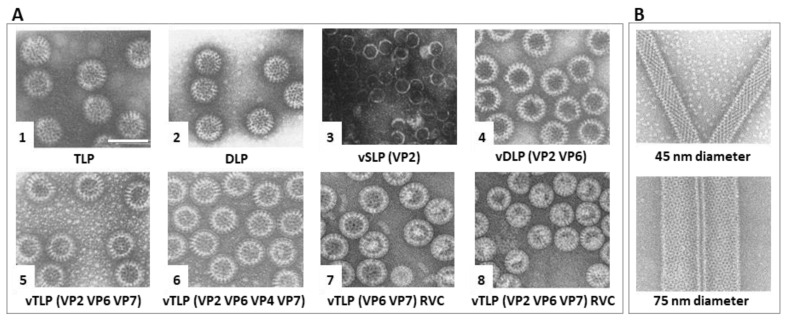
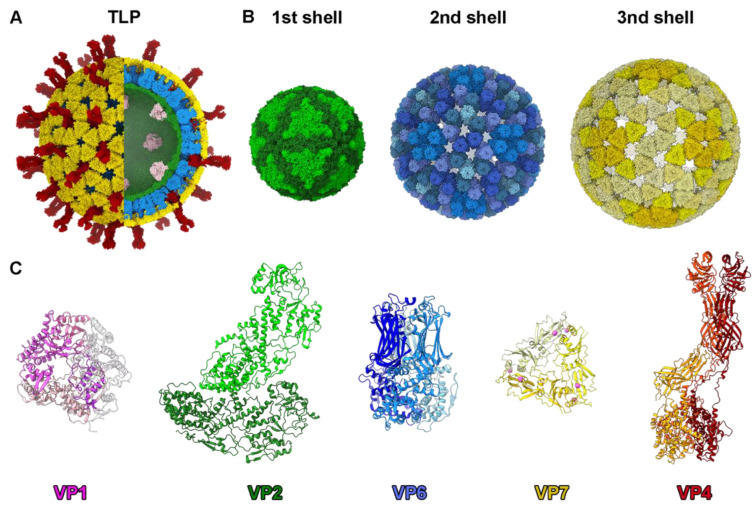
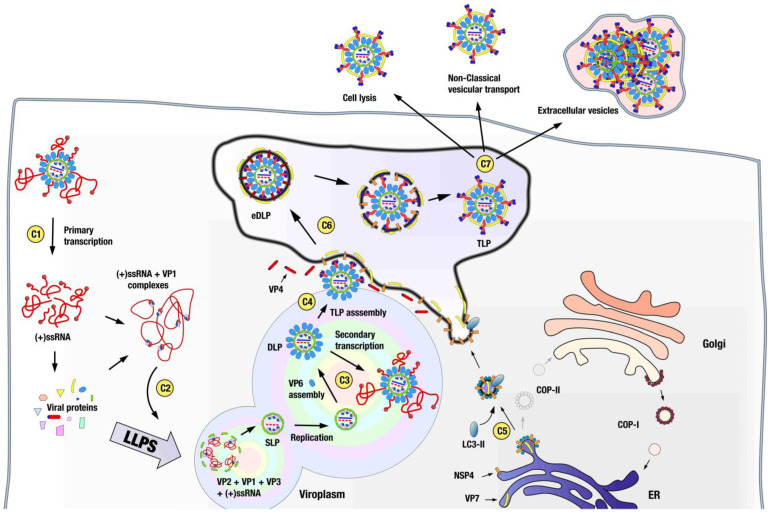
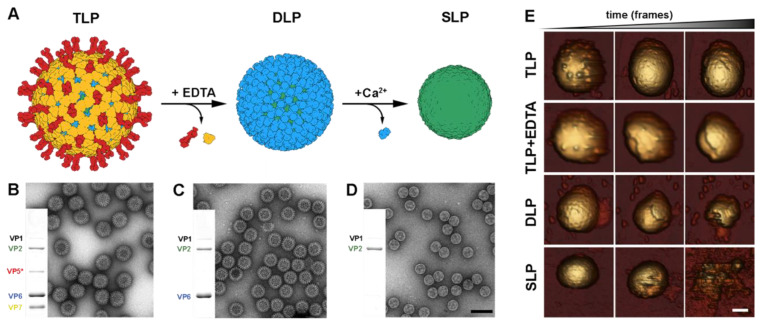
Rotaviruses (RVs) are non-enveloped multilayered dsRNA viruses that are major etiologic agents of diarrheal disease in humans and in the young in a large number of animal species. The viral particle is composed of three different protein layers that enclose the segmented dsRNA genome and the transcriptional complexes. Each layer defines a unique subparticle that is associated with a different phase of the replication cycle. Thus, while single- and double-layered particles are associated with the intracellular processes of selective packaging, genome replication, and transcription, the viral machinery necessary for entry is located in the third layer. This modular nature of its particle allows rotaviruses to control its replication cycle by the disassembly and assembly of its structural proteins. In this review, we examine the significant advances in structural, molecular, and cellular RV biology that have contributed during the last few years to illuminating the intricate details of the RV particle disassembly and assembly processes.
轮状病毒(RV)是非包膜的多层双链 RNA 病毒,是人类和许多动物幼仔腹泻疾病的主要病原体。病毒粒子由三个不同的蛋白层组成,这些蛋白层包裹着分段的 dsRNA 基因组和转录复合物。每个层定义了一个独特的亚颗粒,与复制周期的不同阶段相关联。因此,虽然单层和双层颗粒与选择性包装、基因组复制和转录的细胞内过程相关联,但进入所需的病毒机制位于第三层。这种颗粒的模块化特性使得轮状病毒能够通过其结构蛋白的拆卸和组装来控制其复制周期。在这篇综述中,我们考察了在结构、分子和细胞 RV 生物学方面的重大进展,这些进展在过去几年中有助于阐明 RV 粒子拆卸和组装过程的复杂细节。