Boston University, Boston, MA, 02215, USA.
University of Utah, Salt Lake City, Utah, USA.
Sci Rep. 2018 Sep 26;8(1):14415. doi: 10.1038/s41598-018-32686-7.
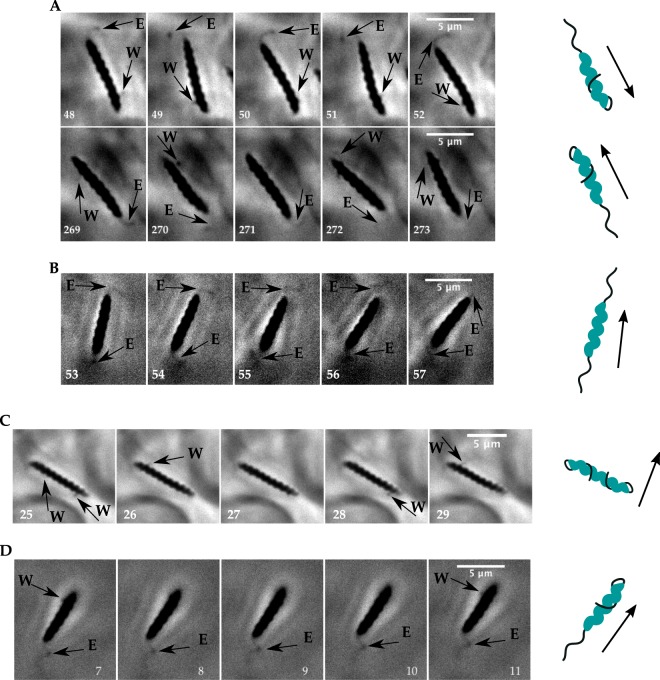
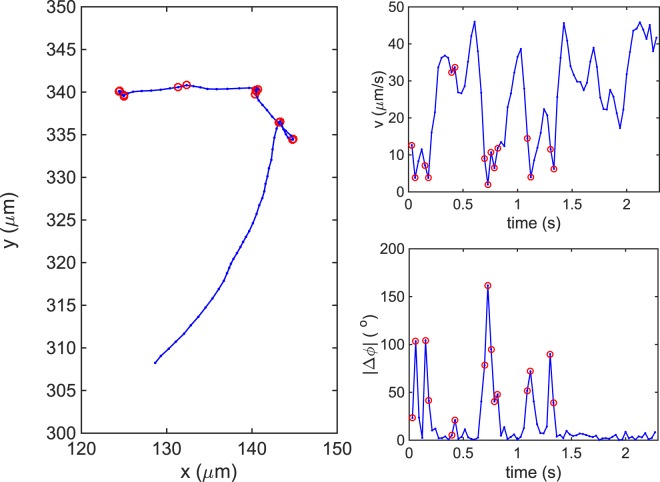
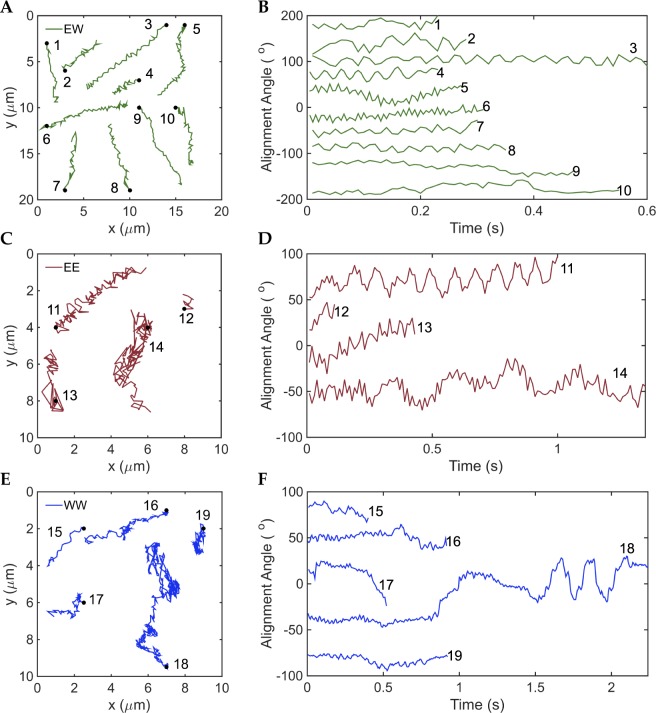
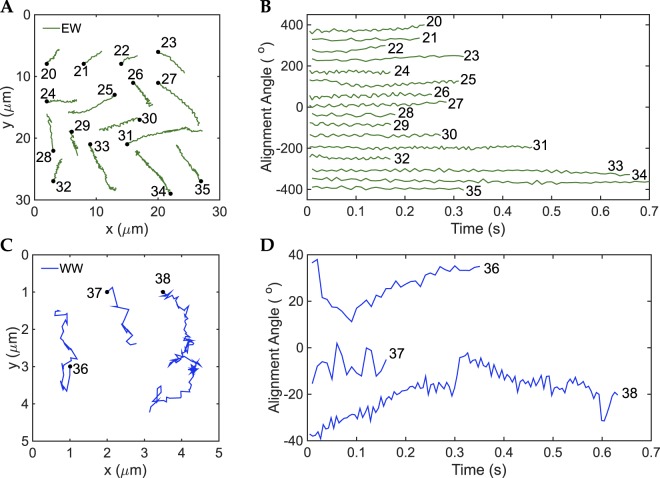
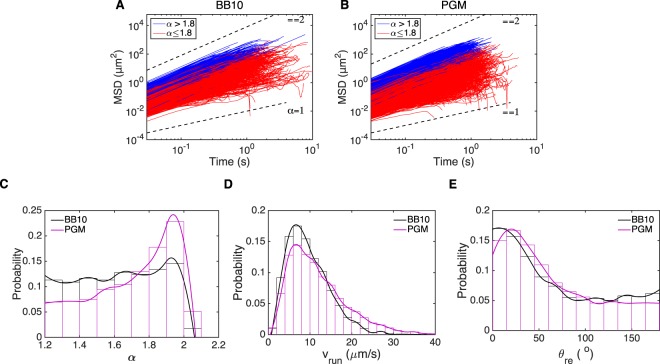
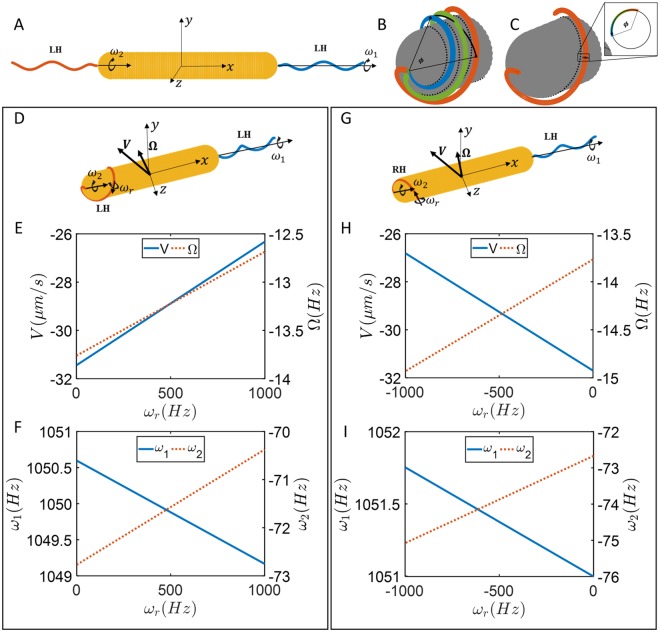
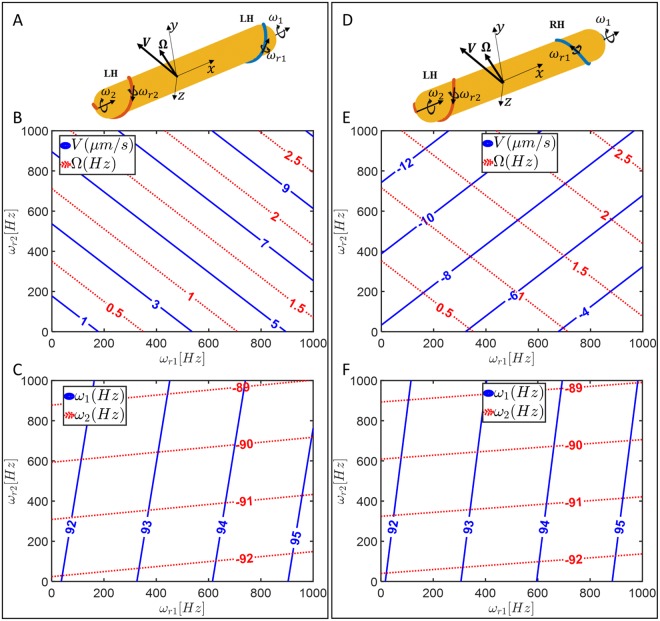
The swimming strategies of unipolar flagellated bacteria are well known but little is known about how bipolar bacteria swim. Here we examine the motility of Helicobacter suis, a bipolar gastric-ulcer-causing bacterium that infects pigs and humans. Phase-contrast microscopy of unlabeled bacteria reveals flagella bundles in two conformations, extended away from the body (E) or flipped backwards and wrapped (W) around the body. We captured videos of the transition between these two states and observed three different swimming modes in broth: with one bundle rotating wrapped around the body and the other extended (EW), both extended (EE), and both wrapped (WW). Only EW and WW modes were seen in porcine gastric mucin. The EW mode displayed ballistic trajectories while the other two displayed superdiffusive random walk trajectories with slower swimming speeds. Separation into these two categories was also observed by tracking the mean square displacement of thousands of trajectories at lower magnification. Using the Method of Regularized Stokeslets we numerically calculate the swimming dynamics of these three different swimming modes and obtain good qualitative agreement with the measurements, including the decreased speed of the less frequent modes. Our results suggest that the extended bundle dominates the swimming dynamics.
单极鞭毛细菌的游动策略众所周知,但人们对双极细菌的游动方式知之甚少。在这里,我们研究了引起猪和人类胃溃疡的双极胃幽门螺杆菌的运动能力。未标记细菌的相差显微镜显示,鞭毛束有两种构象,一种是远离身体的伸展(E),另一种是向后翻转并包裹(W)在身体周围。我们捕捉到了这两种状态之间的转换视频,并在肉汤中观察到了三种不同的游动模式:一个包裹着身体旋转的鞭毛束和另一个伸展的鞭毛束(EW)、两个都伸展的鞭毛束(EE)和两个都包裹的鞭毛束(WW)。在猪胃粘蛋白中只观察到 EW 和 WW 两种模式。EW 模式显示弹道轨迹,而另外两种模式则显示超扩散随机行走轨迹,游动速度较慢。通过在较低放大倍数下跟踪数千条轨迹的均方位移,也可以观察到这两种模式的分离。我们使用正则化 Stokeslet 方法对这三种不同的游动模式进行数值计算,并与测量结果得到很好的定性一致,包括较少出现的模式速度降低。我们的结果表明,伸展的鞭毛束主导着游动动力学。