Chen Yu-Chun, Huang Yi-Chen, Lo Yuan-Ting C, Wu Hsing-Juan, Wahlqvist Mark L, Lee Meei-Shyuan
School of Public Health, National Defense Medical Center, Taipei, Taiwan.
Department of Nutrition, China Medical University, Taichung, Taiwan.
Food Nutr Res. 2018 Sep 17;62. doi: 10.29219/fnr.v62.1565. eCollection 2018.
To compare two Nutrition and Health Surveys in Taiwan (NAHSITs) 15-18 years apart to evaluate secular changes in ultra-processed food (UPF) consumption and expenditure among Taiwanese adolescents aged 16-18 years and the influences of such changes on dietary quality.
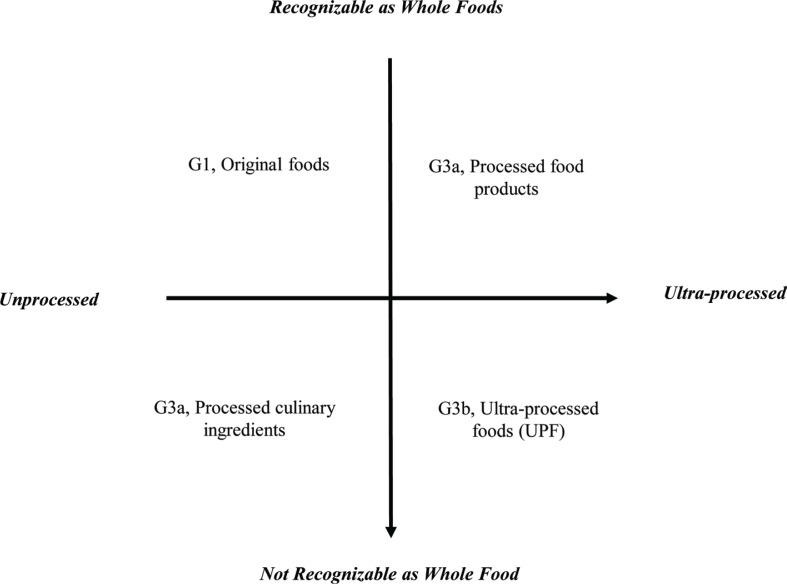
This cross-sectional study was based on two representative surveys (NAHSIT 1993-1996, = 788; NAHSIT 2011, = 1,274) of senior high school students. Dietary information and food expenditure were based on 24-h dietary recall. All food items were classified into original foods, processed culinary ingredients, processed foods, and UPFs based on NOVA criteria. Dietary quality was categorized as poor or good based on the mean of the Youth Healthy Eating Index-Taiwan Revised.
Compared to 1993-1996, adolescents consumed less energy from original foods (55 vs. 39%) but more from processed foods (12 vs. 18%) and UPFs (21 vs. 25%) in 2011, with no apparent gender differences. Those who consumed more UPFs had the lowest proportions of protein energy intake in both surveys (13.7 and 13.1%). Those who consumed more UPFs had higher levels of saturated fat and lower levels of monounsaturated and polyunsaturated fat, dietary fiber, and micronutrient intakes. The participants who consumed more UPFs and fewer original foods exhibited poorer dietary quality. Boys and girls exhibited equal UPF expenditure in both surveys despite an increase in UPF energy consumption. The adjusted odds ratios (95% confidence interval) were 1.33 (1.16-1.52) and 1.36 (1.10-1.69) for the risk of poor dietary quality with 10% increases in UPF energy intake and expenditure, respectively, in 2011.
UPF energy consumption among Taiwanese adolescents increased between 1993-1996 and 2011. Observed trends in expenditure suggest that lower UPF costs influenced food choices during this period. Increasing UPF intake and expenditure was associated with poor dietary quality.
比较间隔15 - 18年的两次台湾营养与健康调查(NAHSITs),以评估16 - 18岁台湾青少年超加工食品(UPF)消费和支出的长期变化,以及这些变化对饮食质量的影响。
这项横断面研究基于对高中生的两项代表性调查(1993 - 1996年的NAHSIT,n = 788;2011年的NAHSIT,n = 1274)。饮食信息和食品支出基于24小时饮食回顾。根据NOVA标准,所有食品项目分为原始食品、加工烹饪原料、加工食品和超加工食品。根据台湾修订版青少年健康饮食指数的平均值,将饮食质量分为差或好。
与1993 - 1996年相比,2011年青少年从原始食品中摄入的能量减少(55%对39%),但从加工食品(12%对18%)和超加工食品(21%对25%)中摄入的能量增加,且无明显性别差异。在两次调查中,摄入更多超加工食品的人蛋白质能量摄入量的比例最低(分别为13.7%和13.1%)。摄入更多超加工食品的人饱和脂肪水平较高,单不饱和脂肪和多不饱和脂肪、膳食纤维和微量营养素摄入量较低。摄入更多超加工食品且原始食品较少的参与者饮食质量较差。尽管超加工食品能量消耗增加,但在两次调查中男孩和女孩的超加工食品支出相等。2011年,超加工食品能量摄入量和支出分别增加10%时,饮食质量差的风险的调整优势比(95%置信区间)分别为1.33(1.16 - 1.52)和1.36(1.10 - 1.69)。
1993 - 1996年至2011年期间,台湾青少年的超加工食品能量消耗增加。观察到的支出趋势表明,在此期间超加工食品成本降低影响了食物选择。超加工食品摄入量和支出的增加与饮食质量差有关。