Division of Behavioral Medicine and Clinical Psychology, Cincinnati Children's Hospital Medical Center , Cincinnati , OH , USA.
Department of Pediatrics, University of Cincinnati College of Medicine , Cincinnati , OH , USA.
Behav Sleep Med. 2019 Nov-Dec;17(6):790-803. doi: 10.1080/15402002.2018.1518224. Epub 2018 Sep 27.
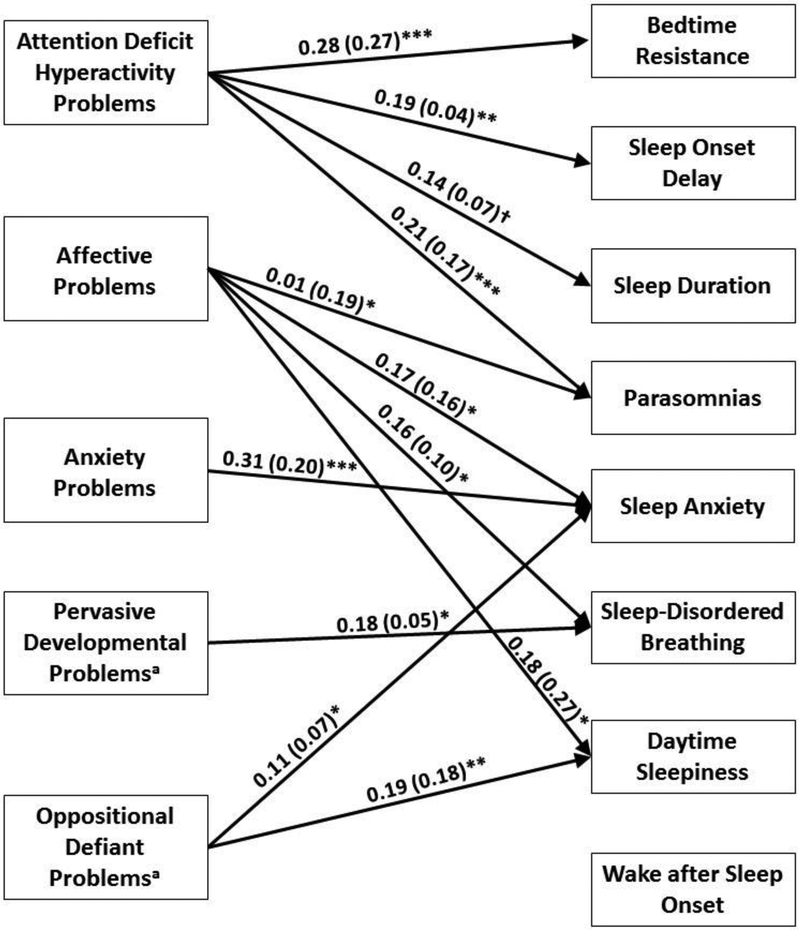
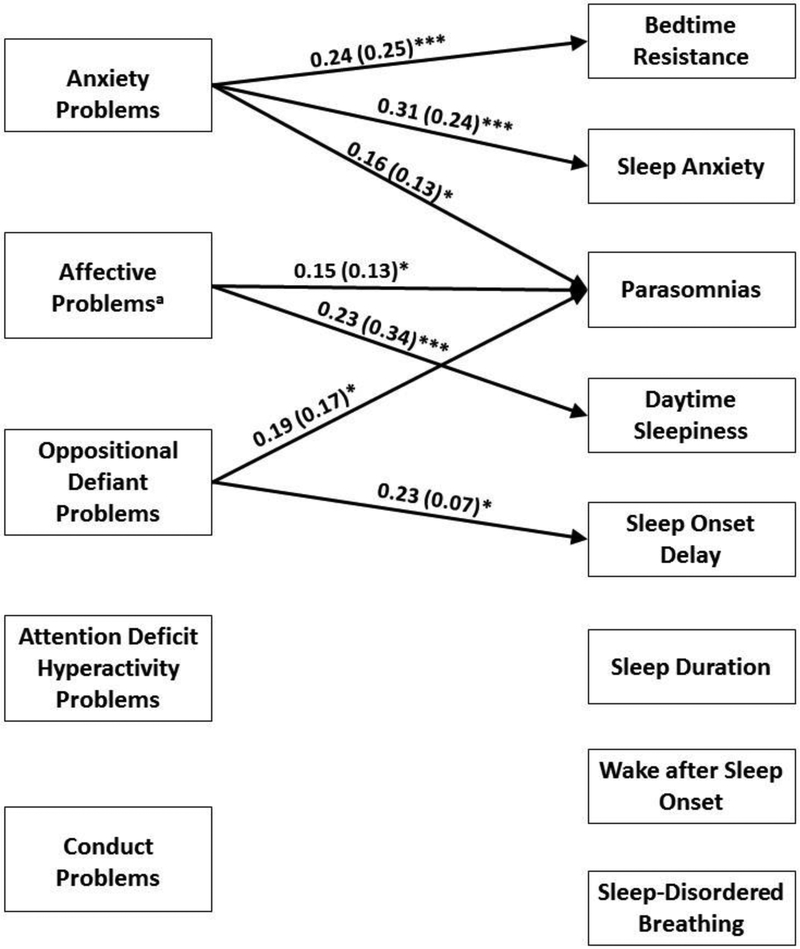
: Sleep problems and emotional and behavioral difficulties are highly correlated in community samples of youth and in youth presenting to mental health treatment. However, fewer studies have characterized the associations between sleep and psychopathology symptoms in youth presenting to pediatric sleep clinics. This retrospective, cross-sectional study examined the prevalence of psychopathology symptoms and their associations with sleep disruption in youth presenting to a behavioral sleep medicine clinic. : Participants were 373 preschoolers (1.5 to 5 years old) and 300 school age youth (6 to 10 years old) presenting to a pediatric behavioral sleep medicine clinic with a primary insomnia diagnosis. : As a part of routine clinical care, parents completed a battery of pre-evaluation measures assessing insomnia severity, sleep disturbance, history of mental health diagnosis, and psychopathology symptoms. : Both preschool and school age youth had high rates of parent-reported mental health diagnoses (35% and 74%, respectively) and clinically elevated psychopathology symptoms (69% of preschoolers and 77% of school age youth) at initial insomnia evaluation. These symptoms were significantly associated with sleep disruption, with ADHD and affective problems most consistently associated with sleep problems in preschoolers and symptoms of anxiety, affective, and behavioral problems most consistently associated with sleep problems in school age youth. : Psychopathology symptoms should be regularly assessed in youth presenting to behavioral sleep medicine clinics. Further, the role of psychopathology should be considered in insomnia conceptualization and treatment and, when appropriate, psychopathology symptoms should be targeted in treatment or appropriate referrals should be made.
睡眠问题与情绪和行为困难在社区青年样本和心理健康治疗中就诊的青年中高度相关。然而,在儿科睡眠诊所就诊的青年中,描述睡眠与精神病理学症状之间的关联的研究较少。这项回顾性、横断面研究调查了在行为睡眠医学诊所就诊的青年中精神病理学症状的患病率及其与睡眠中断的关系。
参与者为 373 名学龄前儿童(1.5 至 5 岁)和 300 名学龄儿童(6 至 10 岁),他们因原发性失眠症就诊于儿科行为睡眠医学诊所。
作为常规临床护理的一部分,父母完成了一系列预评估措施,评估失眠严重程度、睡眠障碍、心理健康诊断史和精神病理学症状。
无论是学龄前儿童还是学龄儿童,父母报告的心理健康诊断率都很高(分别为 35%和 74%),在最初的失眠评估中,有临床显著的精神病理学症状(69%的学龄前儿童和 77%的学龄儿童)。这些症状与睡眠中断明显相关,ADHD 和情感问题与学龄前儿童的睡眠问题最相关,焦虑、情感和行为问题与学龄儿童的睡眠问题最相关。
精神病理学症状应在行为睡眠医学诊所就诊的青年中定期评估。此外,在失眠概念化和治疗中应考虑精神病理学的作用,并且在适当的情况下,应在治疗中针对精神病理学症状或进行适当的转介。