Thomas Eileen, Lategan Helena, Verster Chris, Kidd Martin, Weich Lize
Department of Psychiatry, Stellenbosch University, South Africa.
Centre for Statistical Consultation, Stellenbosch University, South Africa.
S Afr J Psychiatr. 2016 Sep 29;22(1):980. doi: 10.4102/sajpsychiatry.v22i1.980. eCollection 2016.
To investigate the clinical features, prescribing patterns and outcomes of psychiatric inpatients admitted with methamphetamine-induced psychosis.
A cross-sectional, descriptive pilot study was conducted between March 2014 and August 2014 at three South African Mental Health Care Act designated hospitals prior to admission to a psychiatric hospital. Patients with methamphetamine-related psychotic symptoms according to the DSM-5 criteria were eligible. Structured face-to-face interviews were conducted and the Brief Psychiatric Rating Scale was employed as a measure of current psychopathology.
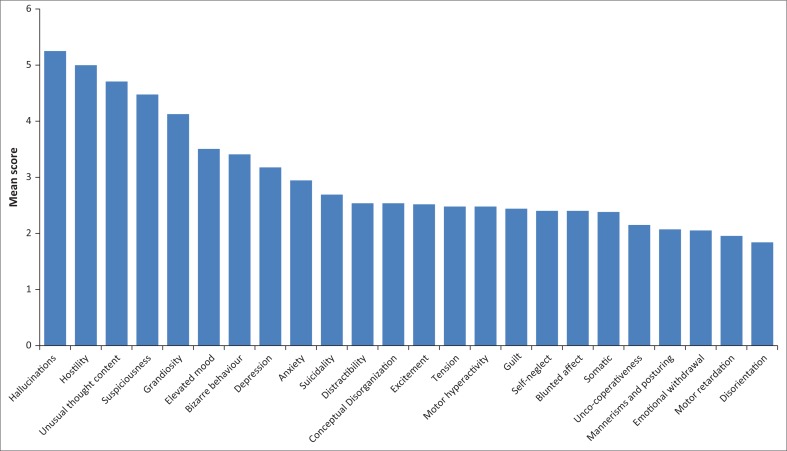
Fifty-six participants were included. Positive psychotic symptoms (e.g. hallucinations) were more prominent than negative symptoms (e.g. affective blunting). Almost half the participants (43%) had previous episodes of methamphetamine-induced psychosis. Within this group, all had defaulted on the prescribed treatment prior to admission. Only 29% of the participants had received prior formal substance-use rehabilitation as treatment for their disorder. High rates of comorbid cannabis and alcohol use (51%) were recorded. Most of the participants required transfer to specialist psychiatric hospitals. The amounts of methamphetamine used were not a predictor of the persistence of psychosis; however, the pattern of use was.
Clinical features correspond with other international findings. The currently employed model of sequential, non-integrated psychiatric and substance use treatment in this setting appears ineffective.
探讨甲基苯丙胺所致精神病性障碍住院患者的临床特征、用药模式及治疗结局。
2014年3月至2014年8月,在南非三家《精神卫生保健法》指定的医院,于患者入住精神病院之前开展了一项横断面描述性试点研究。符合《精神疾病诊断与统计手册》第5版标准的甲基苯丙胺相关精神病性症状患者纳入研究。进行结构化面对面访谈,并采用简明精神病评定量表作为当前精神病理学的测量工具。
纳入56名参与者。阳性精神病性症状(如幻觉)比阴性症状(如情感迟钝)更突出。近半数参与者(43%)既往有甲基苯丙胺所致精神病性障碍发作史。在该组中,所有人在入院前均未遵医嘱治疗。只有29%的参与者此前接受过正规的物质使用康复治疗。记录到大麻和酒精合并使用率较高(51%)。大多数参与者需要转至专科精神病医院。甲基苯丙胺的使用量并非精神病性症状持续存在的预测因素;然而,使用模式是。
临床特征与其他国际研究结果相符。在这种情况下,目前采用的先后顺序、非整合式的精神病治疗和物质使用治疗模式似乎无效。