Department of Cardiology, Hull York Medical School, Hull and East Yorkshire Medical Research and Teaching Centre, Castle Hill Hospital, Cottingham, Kingston upon Hull, HU16 5JQ, UK.
Clinical Trials Unit, Postgraduate Medical Institute, Faculty of Medical Science, Anglia Ruskin University, Bishop Hall Lane, Chelmsford, Essex, CM1 1SQ, UK.
Clin Res Cardiol. 2019 May;108(5):468-476. doi: 10.1007/s00392-018-1376-2. Epub 2018 Sep 28.
Patients with chronic conditions, such as heart failure, swim regularly and most rehabilitation exercises are conducted in warm hydrotherapy pools. However, little is known about the acute effects of warm water immersion (WWI) on cardiac haemodynamics in patients with chronic heart failure (CHF).
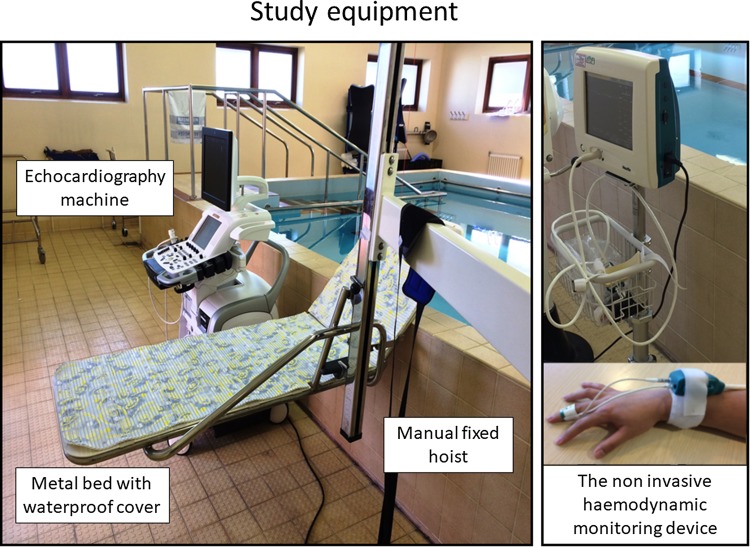
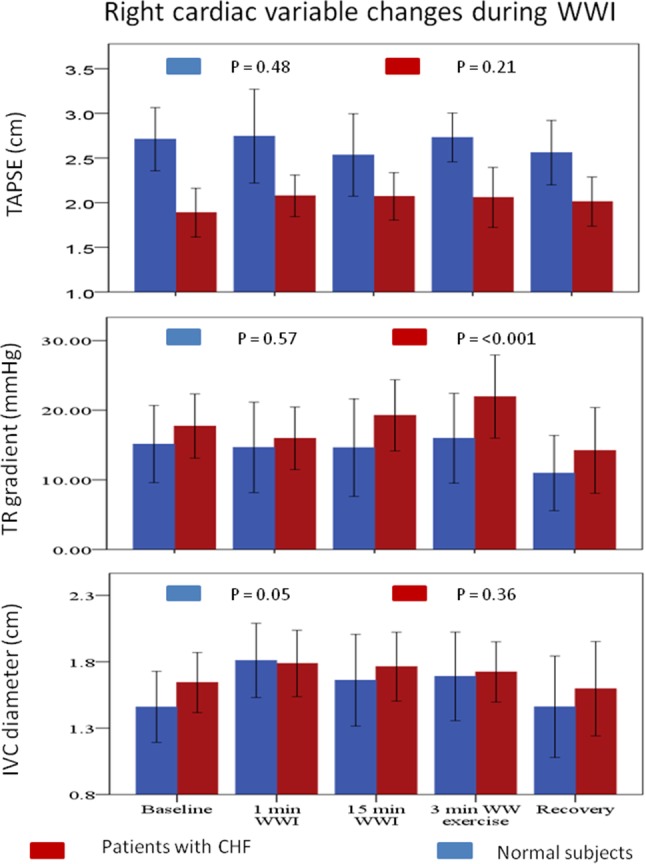
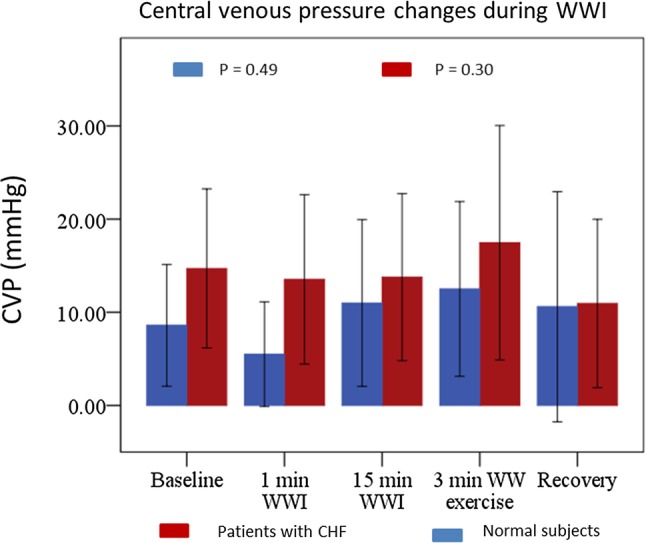
Seventeen patients with CHF (NYHA I and II; mean age 67 years, 88% male, mean left ventricular ejection fraction 33%) and 10 age-matched normal subjects were immersed up to the neck in a hydrotherapy pool (33-35 °C). Cardiac haemodynamics were measured non-invasively, and echocardiography was performed at baseline, during WWI, 3 min after kicking in the supine position and after emerging.
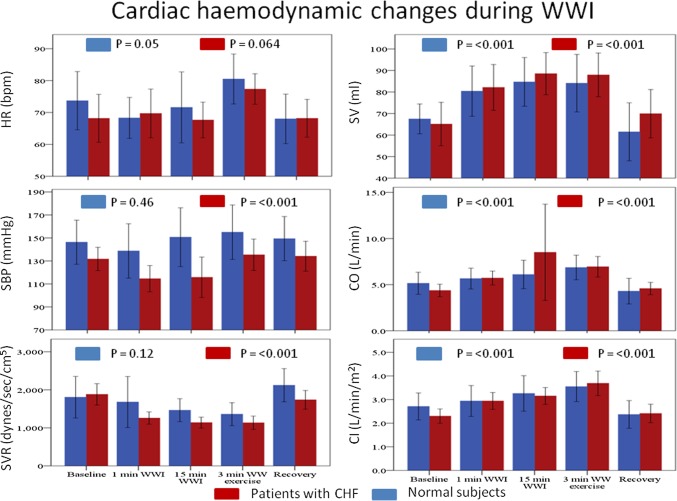
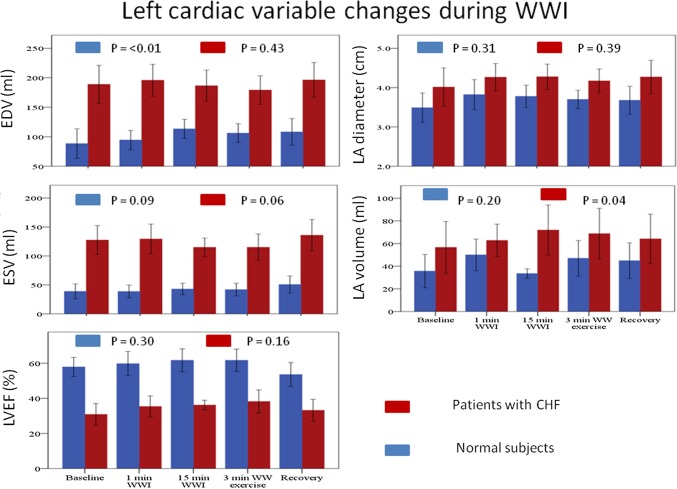
In patients with CHF, compared to baseline, WWI immediately increased stroke volume (SV, mean ± standard deviation; from 65 ± 21 to 82 ± 22 mL, p < 0.001), cardiac output (CO, from 4.4 ± 1.4 to 5.7 ± 1.6 L/min, p < 0.001) and cardiac index (CI, from 2.3 ± 0.6 to 2.9 ± 0.70 L/min/m², p < 0.001) with decreased systemic vascular resistance (from 1881 ± 582 to 1258 ± 332 dynes/s/cm, p < 0.001) and systolic blood pressure (132 ± 21 to 115 ± 23 mmHg, p < 0.001). The haemodynamic changes persisted for 15 min of WWI. In normal subjects, compared to baseline, WWI increased SV (from 68 ± 11 to 80 ± 18 mL, p < 0.001), CO (from 5.1 ± 1.9 to 5.7 ± 1.8 L/min, p < 0.001) and CI (from 2.7 ± 0.9 to 2.9 ± 1.0 L/min/m², p < 0.001).In patients with CHF, compared to baseline, WWI caused an increase in left atrial volume (from 57 ± 44 to 72 ± 46 mL, p = 0.04), without any changes in left ventricular size or function or amino terminal pro B-type natriuretic peptide.
In patients with CHF, WWI causes an acute increase in cardiac output and a fall in systemic vascular resistance.
ClinicalTrials.gov (Identifier: NCT02949544) https://clinicaltrials.gov/ct2/show/NCT02949544?cond=NCT02949544&rank=1 .
患有慢性疾病(如心力衰竭)的患者经常游泳,大多数康复运动都是在温暖的水疗池中进行。然而,对于温水浸泡(WWI)对慢性心力衰竭(CHF)患者心脏血液动力学的急性影响,知之甚少。
17 名 CHF 患者(NYHA I 和 II;平均年龄 67 岁,88%为男性,平均左心室射血分数 33%)和 10 名年龄匹配的正常受试者被浸入水疗池(33-35°C)至颈部。非侵入性测量心脏血液动力学,在基线、WWI 期间、仰卧位踢腿后 3 分钟和出水后进行超声心动图检查。
与基线相比,CHF 患者的 WWI 立即增加了每搏量(SV,平均值±标准差;从 65±21 增加到 82±22mL,p<0.001)、心输出量(CO,从 4.4±1.4 增加到 5.7±1.6L/min,p<0.001)和心指数(CI,从 2.3±0.6 增加到 2.9±0.70L/min/m²,p<0.001),同时降低了全身血管阻力(从 1881±582 减少到 1258±332 达因/秒/厘米,p<0.001)和收缩压(从 132±21 减少到 115±23mmHg,p<0.001)。WWI 持续 15 分钟,血液动力学变化持续存在。与基线相比,正常受试者的 WWI 增加了 SV(从 68±11 增加到 80±18mL,p<0.001)、CO(从 5.1±1.9 增加到 5.7±1.8L/min,p<0.001)和 CI(从 2.7±0.9 增加到 2.9±1.0L/min/m²,p<0.001)。与基线相比,CHF 患者的 WWI 导致左心房容积增加(从 57±44 增加到 72±46mL,p=0.04),而左心室大小或功能或氨基末端 B 型利钠肽无变化。
在 CHF 患者中,WWI 导致心输出量增加和全身血管阻力降低。
ClinicalTrials.gov(标识符:NCT02949544)https://clinicaltrials.gov/ct2/show/NCT02949544?cond=NCT02949544&rank=1 。