Department of Biochemistry, University of Cambridge, Tennis Court Road, Cambridge CB2 1GA, UK.
Department of Biochemistry, University of Cambridge, Tennis Court Road, Cambridge CB2 1GA, UK.
Mol Cell. 2018 Oct 18;72(2):275-285.e4. doi: 10.1016/j.molcel.2018.08.039. Epub 2018 Sep 27.
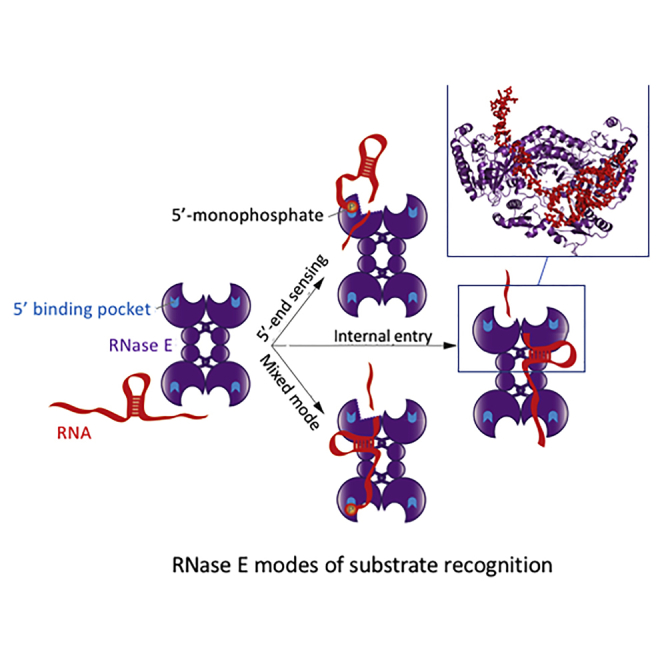
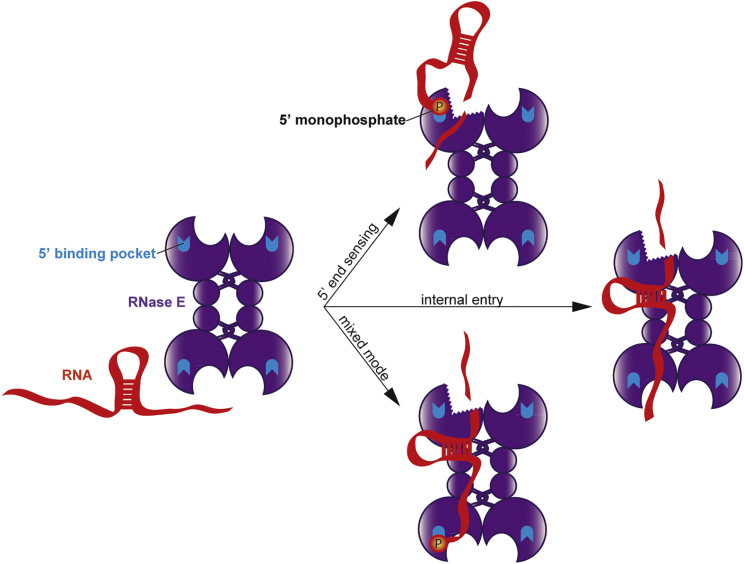
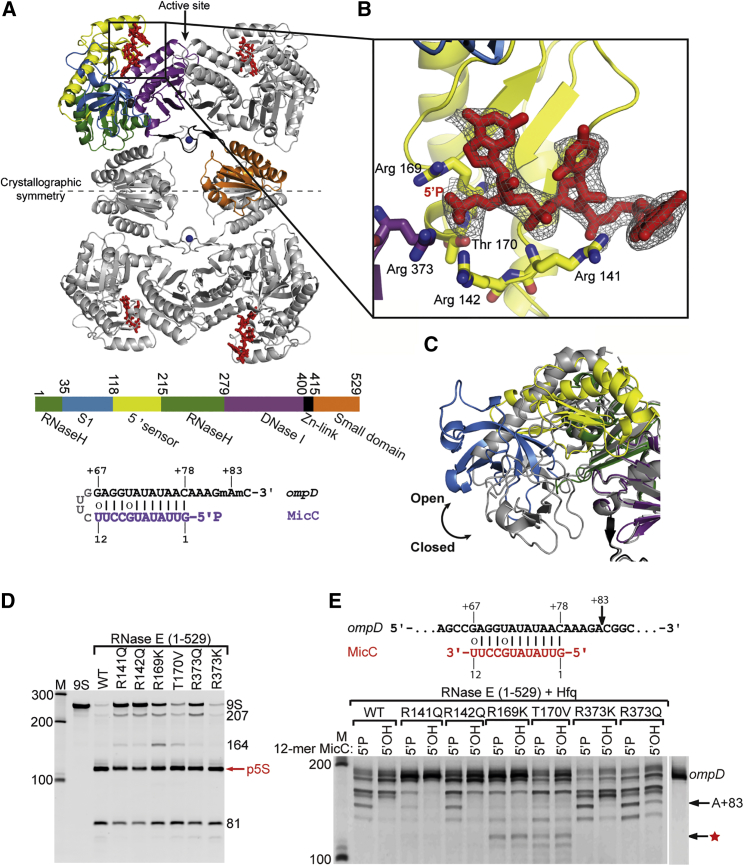
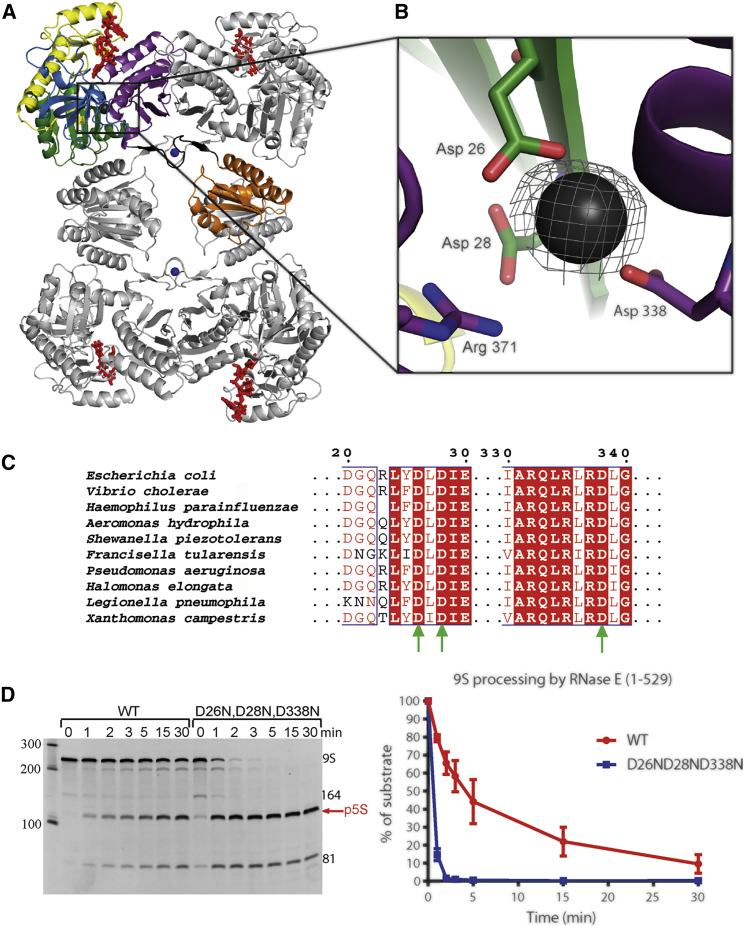
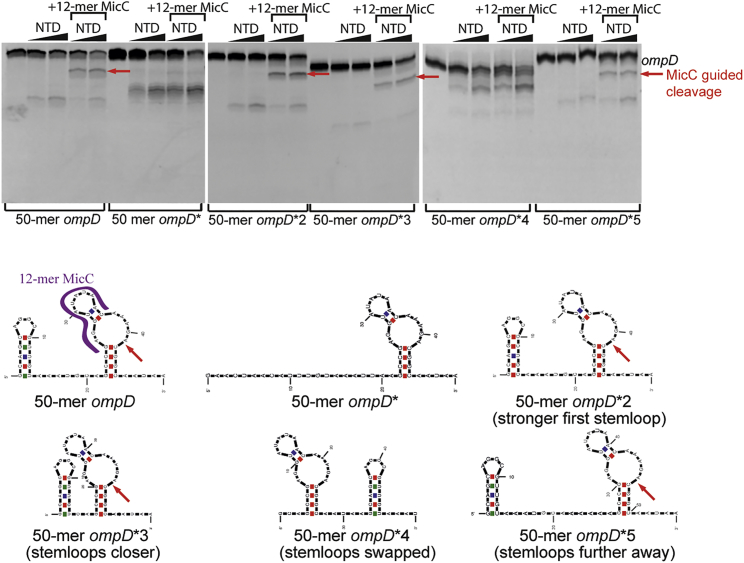
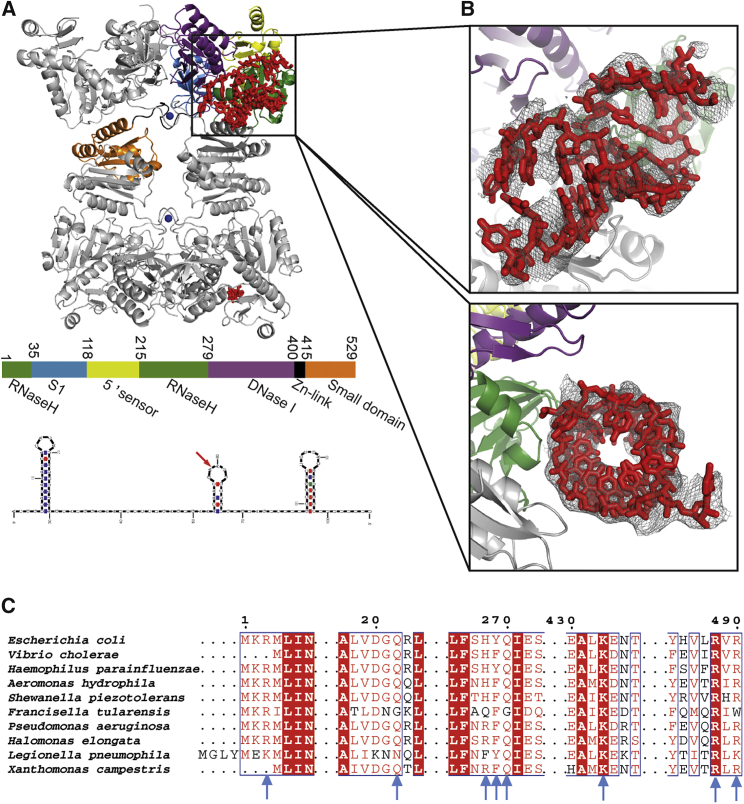
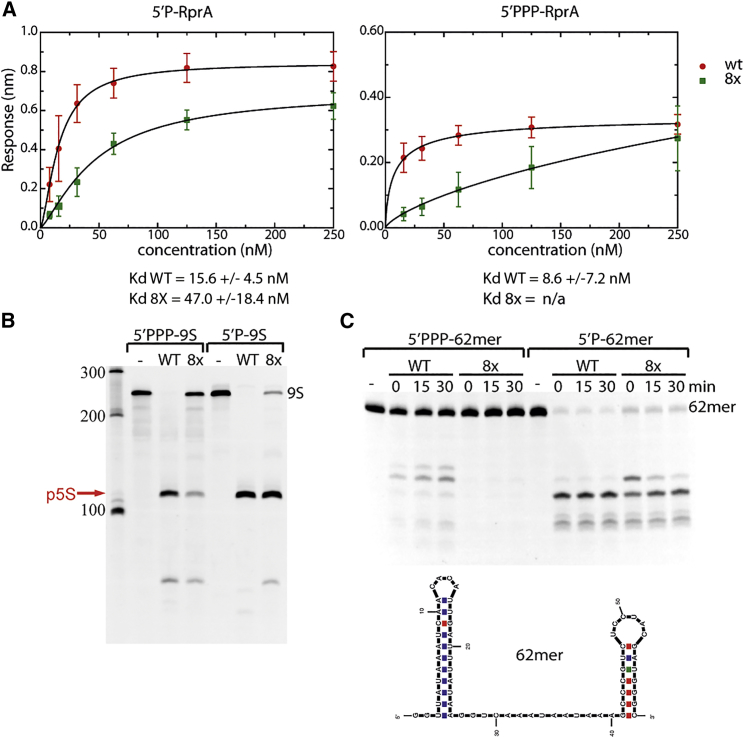
The endoribonuclease RNase E is a principal factor in RNA turnover and processing that helps to exercise fine control of gene expression in bacteria. While its catalytic activity can be strongly influenced by the chemical identity of the 5' end of RNA substrates, the enzyme can also cleave numerous substrates irrespective of the chemistry of their 5' ends through a mechanism that has remained largely unexplained. We report structural and functional data illuminating details of both operational modes. Our crystal structure of RNase E in complex with the sRNA RprA reveals a duplex recognition site that saddles an inter-protomer surface to help present substrates for cleavage. Our data also reveal an autoinhibitory pocket that modulates the overall activity of the ribonuclease. Taking these findings together, we propose how RNase E uses versatile modes of RNA recognition to achieve optimal activity and specificity.
内切核酸酶 RNase E 是一种在 RNA 周转和加工中起主要作用的因子,有助于在细菌中对基因表达进行精细调控。尽管其催化活性会受到 RNA 底物 5' 端化学性质的强烈影响,但该酶还可以通过一种基本未解释的机制切割许多不依赖于 5' 端化学性质的底物。我们报告了阐明这两种操作模式的详细结构和功能数据。我们的 RNase E 与 sRNA RprA 形成复合物的晶体结构揭示了一个双螺旋识别位点,该位点位于蛋白间表面上,有助于呈现用于切割的底物。我们的数据还揭示了一个自动抑制口袋,该口袋调节核糖核酸酶的整体活性。综合这些发现,我们提出了 RNase E 如何利用多种 RNA 识别模式来实现最佳活性和特异性。