Ehrlich Aliza T, Maroteaux Grégoire, Robe Anne, Venteo Lydie, Nasseef Md Taufiq, van Kempen Leon C, Mechawar Naguib, Turecki Gustavo, Darcq Emmanuel, Kieffer Brigitte L
IGBMC, Institut Génétique Biologie Moléculaire Cellulaire, Illkirch, France.
Douglas Mental Health University Institute and McGill University, Department of Psychiatry, Montreal, Canada.
Commun Biol. 2018 Aug 6;1:102. doi: 10.1038/s42003-018-0106-7. eCollection 2018.
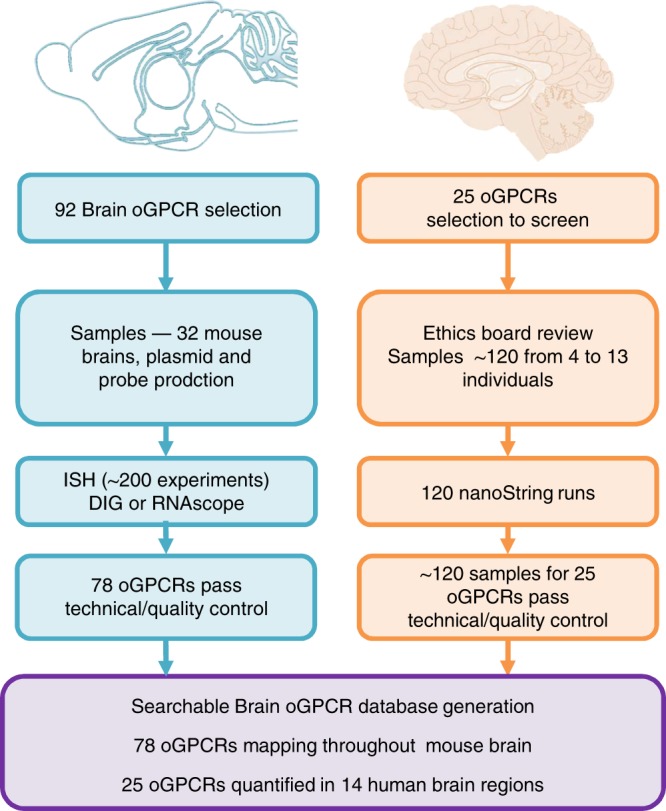
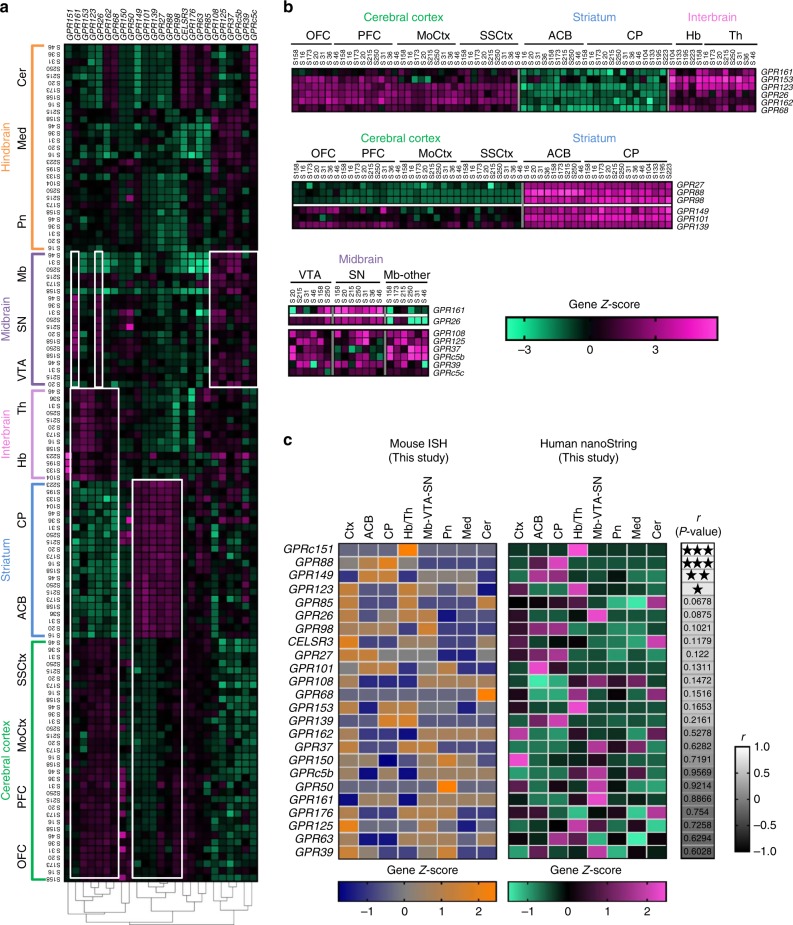
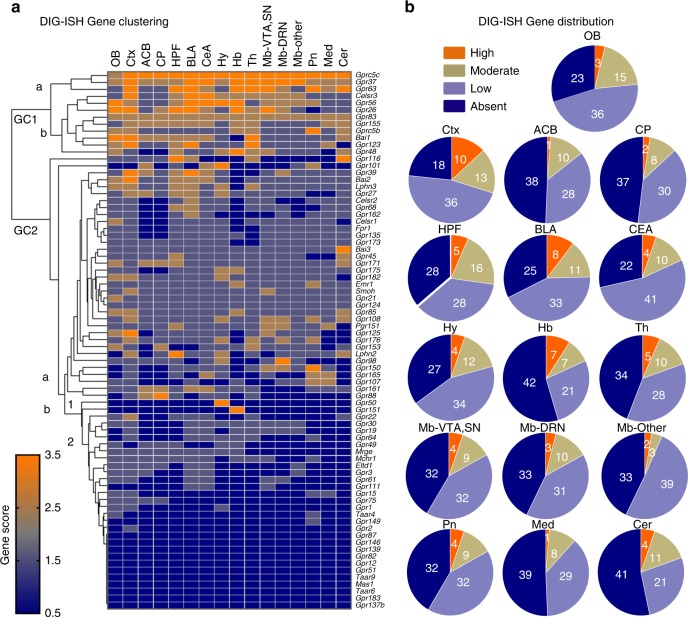
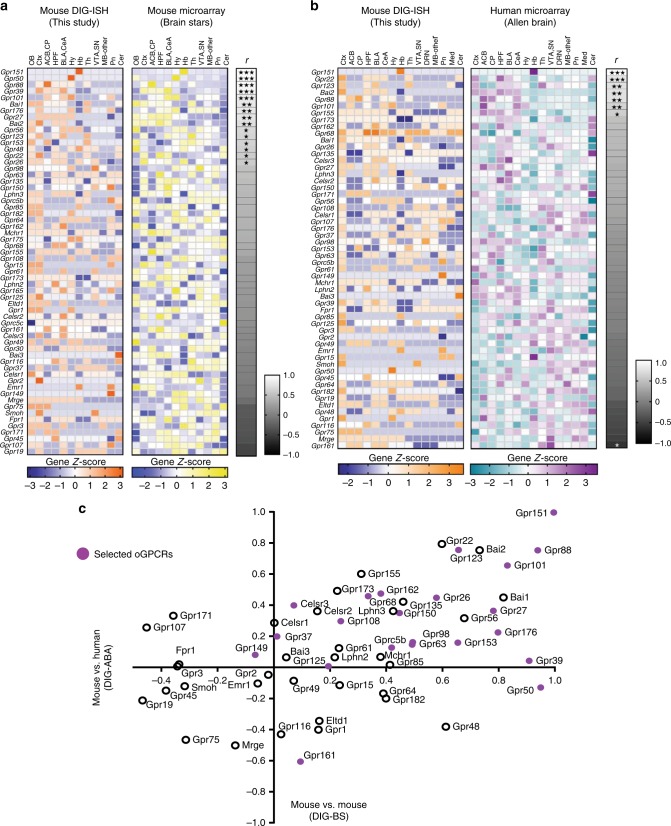
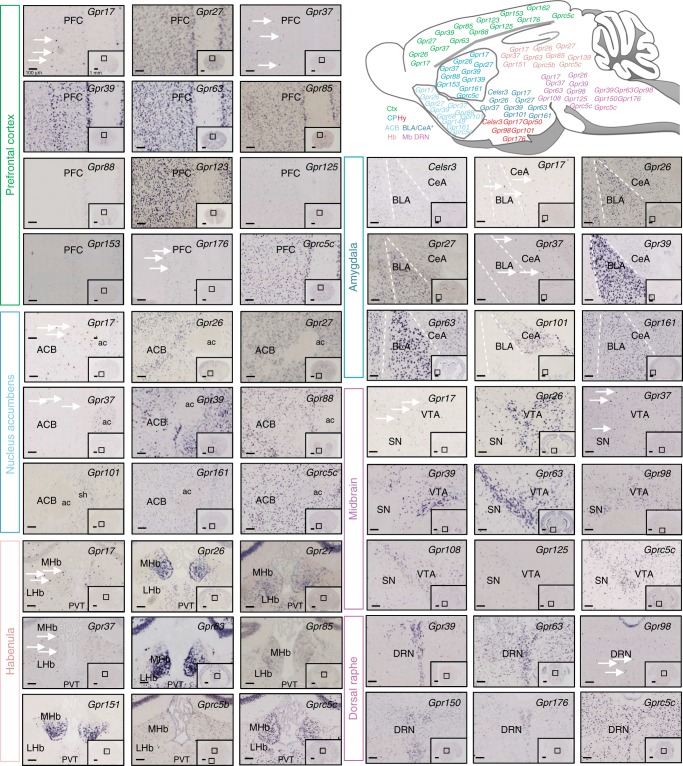
Orphan G-protein-coupled receptors (oGPCRs) possess untapped potential for drug discovery. In the brain, oGPCRs are generally expressed at low abundance and their function is understudied. Expression profiling is an essential step to position oGPCRs in brain function and disease, however public databases provide only partial information. Here, we fine-map expression of 78 brain-oGPCRs in the mouse, using customized probes in both standard and supersensitive in situ hybridization. Images are available at http://ogpcr-neuromap.douglas.qc.ca. This searchable database contains over 8000 coronal brain sections across 1350 slides, providing the first public mapping resource dedicated to oGPCRs. Analysis with public mouse (60 oGPCRs) and human (56 oGPCRs) genome-wide datasets identifies 25 oGPCRs with potential to address emotional and/or cognitive dimensions of psychiatric conditions. We probe their expression in postmortem human brains using nanoString, and included data in the resource. Correlating human with mouse datasets reveals excellent suitability of mouse models for oGPCRs in neuropsychiatric research.
孤儿G蛋白偶联受体(oGPCRs)在药物研发方面具有尚未开发的潜力。在大脑中,oGPCRs通常以低丰度表达,其功能也未得到充分研究。表达谱分析是确定oGPCRs在脑功能和疾病中作用的重要步骤,然而公共数据库仅提供部分信息。在此,我们使用定制探针,通过标准和超灵敏原位杂交技术,对小鼠中78种脑oGPCRs的表达进行了精细定位。图像可在http://ogpcr-neuromap.douglas.qc.ca获取。这个可搜索的数据库包含了1350张载玻片上的8000多张冠状脑切片,提供了首个专门针对oGPCRs的公共图谱资源。对公开的小鼠(60种oGPCRs)和人类(56种oGPCRs)全基因组数据集进行分析,确定了25种oGPCRs,它们有可能解决精神疾病的情绪和/或认知方面的问题。我们使用nanoString技术检测了它们在人类尸检大脑中的表达,并将数据纳入了该资源。将人类数据集与小鼠数据集进行关联分析,结果表明小鼠模型非常适合用于神经精神研究中的oGPCRs研究。