Institut Charles Gerhardt, UMR 5253-Université de Montpellier, CNRS, ENSCM-CC1701, Place Eugène Bataillon, F-34095 Montpellier CEDEX 05, France.
Molecules. 2018 Sep 30;23(10):2510. doi: 10.3390/molecules23102510.
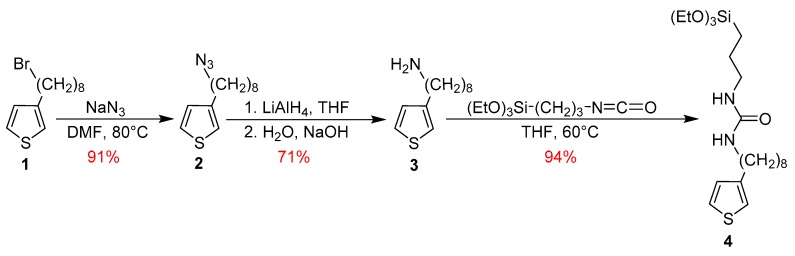
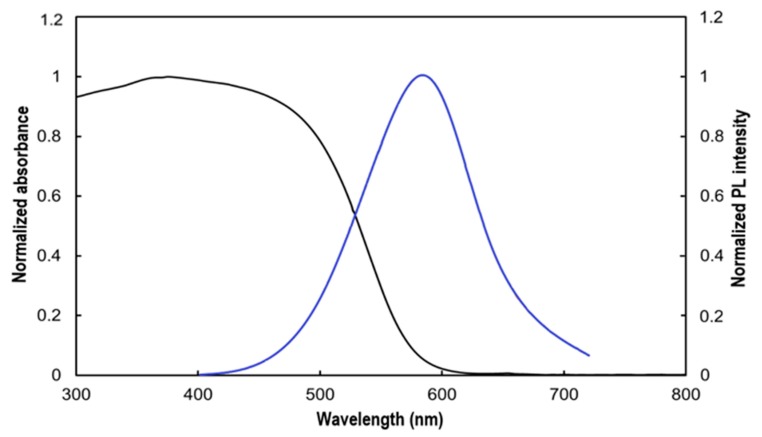
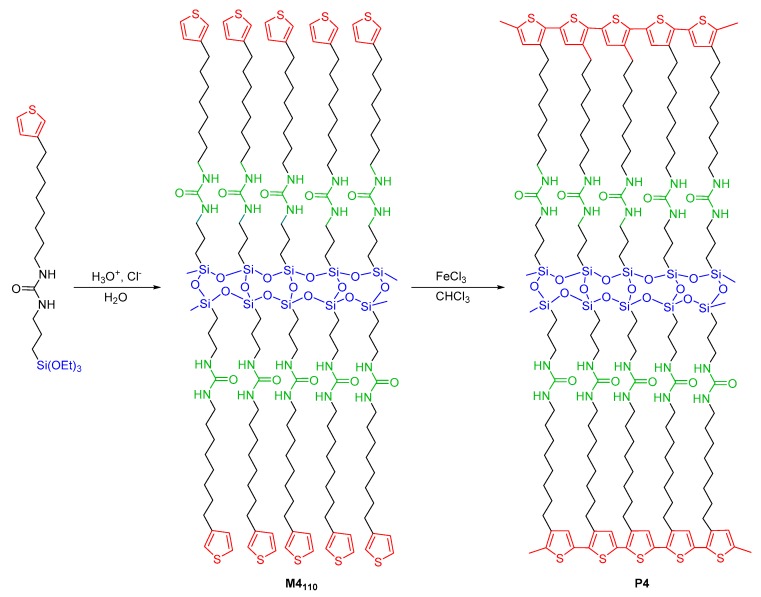
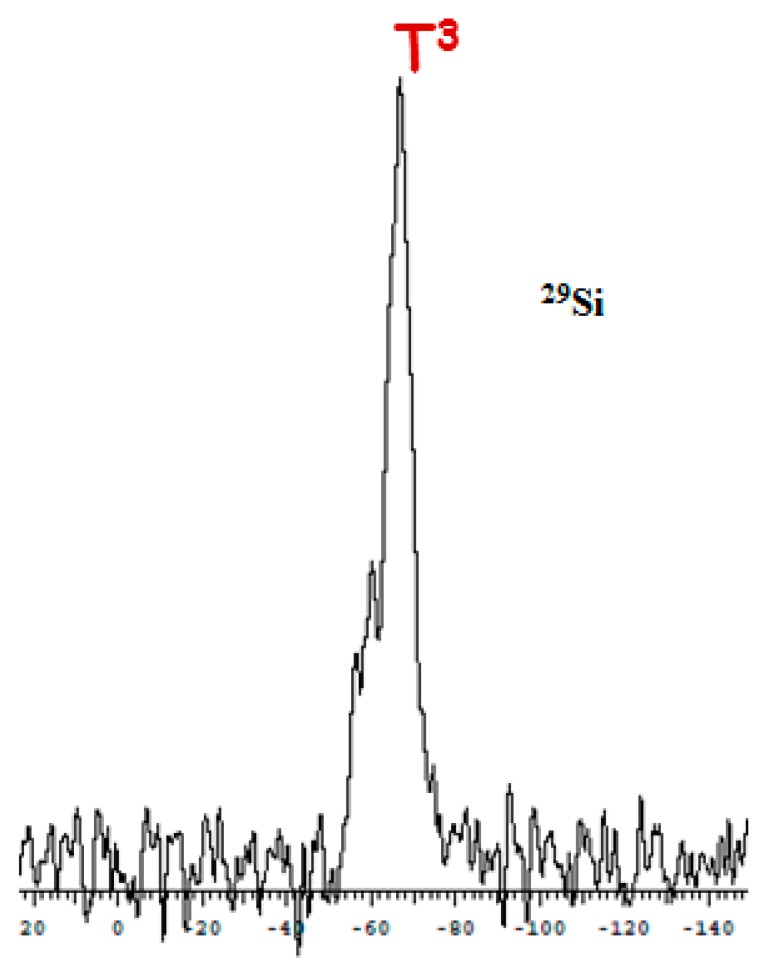
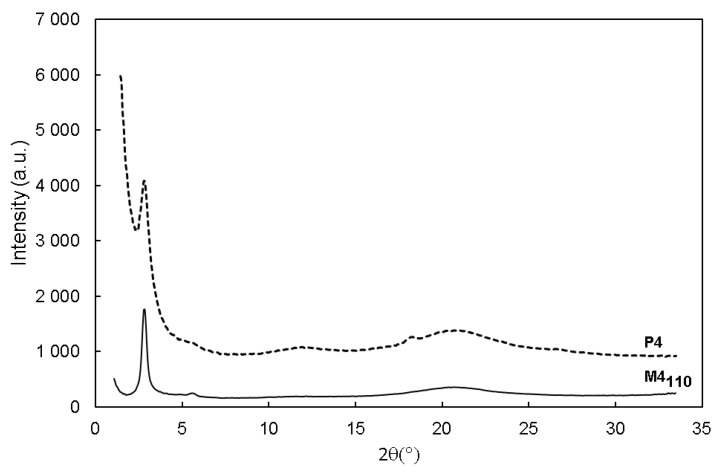
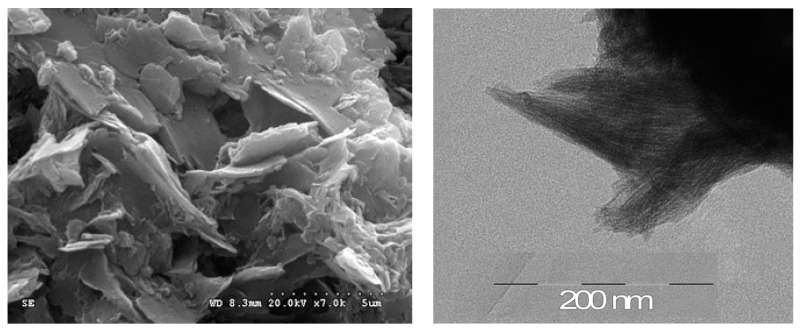
A new layered hybrid polythiophene-silica material was obtained directly by hydrolysis and polycondensation (sol-gel) of a silylated-thiophene bifunctional precursor, and its subsequent oxidative polymerization by FeCl₃. This precursor was judiciously designed to guarantee its self-assembly and the formation of a lamellar polymer-silica structure, exploiting the cooperative effect between the hydrogen bonding interactions, originating from the ureido groups and the π-stacking interactions between the thiophene units. The lamellar structure of the polythiophene-silica composite was confirmed by X-ray powder diffraction (XRD) and transmission electron microscopy (TEM) analyses. The solid-state nuclear magnetic resonance (NMR), UV-Vis, and photoluminescence spectra unambiguously indicate the incorporation of polythiophene into the silica matrix. Our work demonstrates that using a polymerizable silylated-thiophene precursor is an efficient approach towards the formation of nanostructured conjugated polymer-based hybrid materials.
一种新型的层状杂化聚噻吩-二氧化硅材料是通过硅烷化噻吩双官能团前体的水解和缩聚(溶胶-凝胶),以及随后用三氯化铁进行氧化聚合直接得到的。该前体经过精心设计,以保证其自组装和层状聚合物-二氧化硅结构的形成,利用脲基基团的氢键相互作用和噻吩单元之间的π-堆积相互作用的协同效应。通过 X 射线粉末衍射(XRD)和透射电子显微镜(TEM)分析证实了聚噻吩-二氧化硅复合材料的层状结构。固态核磁共振(NMR)、紫外-可见和光致发光光谱明确表明聚噻吩已掺入二氧化硅基质中。我们的工作表明,使用可聚合的硅烷化噻吩前体是一种有效的方法,可用于形成纳米结构的共轭聚合物基杂化材料。