Atkovska Kalina, Klingler Johannes, Oberwinkler Johannes, Keller Sandro, Hub Jochen S
Institute for Microbiology and Genetics and Goettingen Center for Molecular Biosciences, University of Goettingen, 37077 Göttingen, Germany.
Molecular Biophysics, Technische Universität Kaiserslautern (TUK), 67663 Kaiserslautern, Germany.
ACS Cent Sci. 2018 Sep 26;4(9):1155-1165. doi: 10.1021/acscentsci.8b00332. Epub 2018 Aug 14.
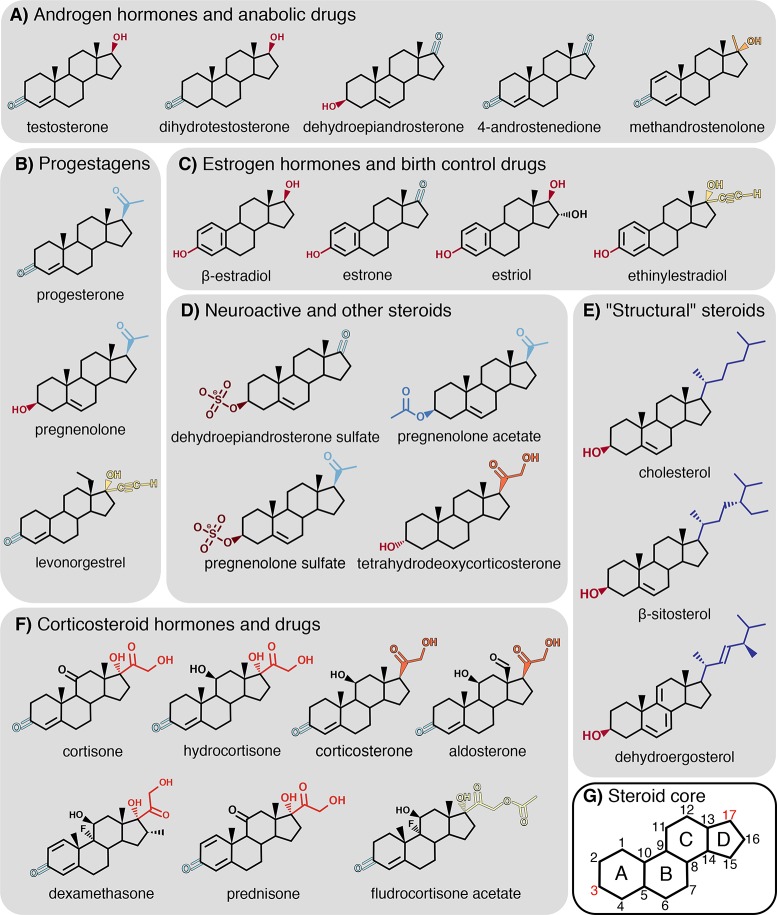
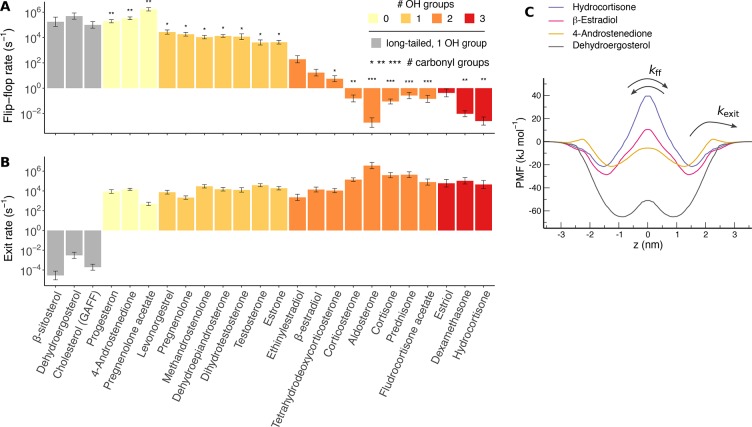
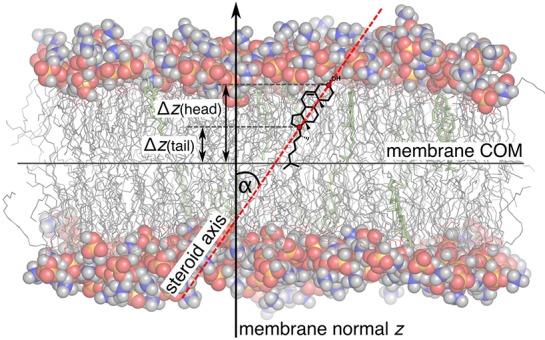
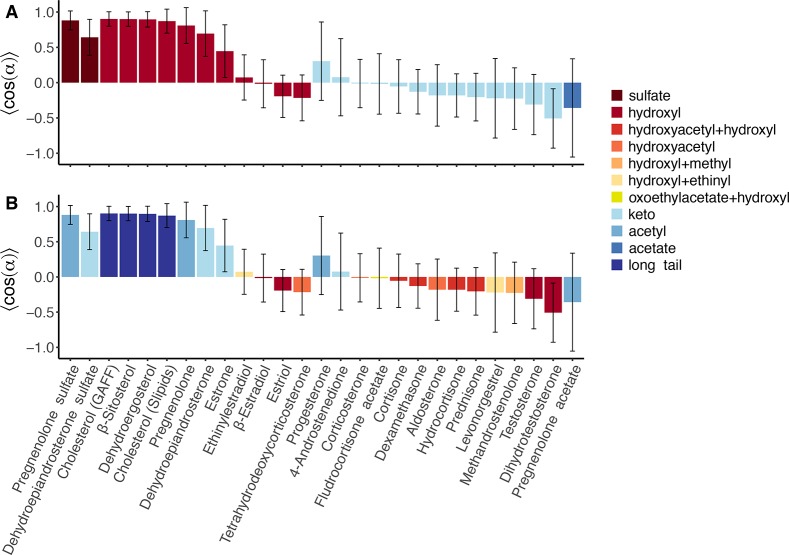
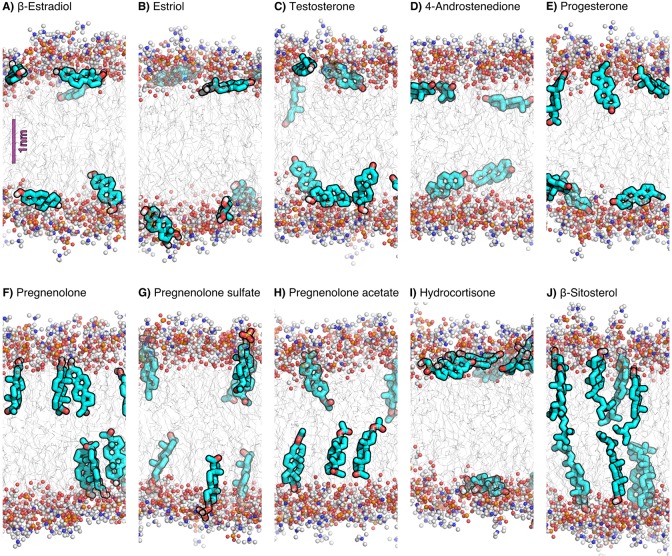
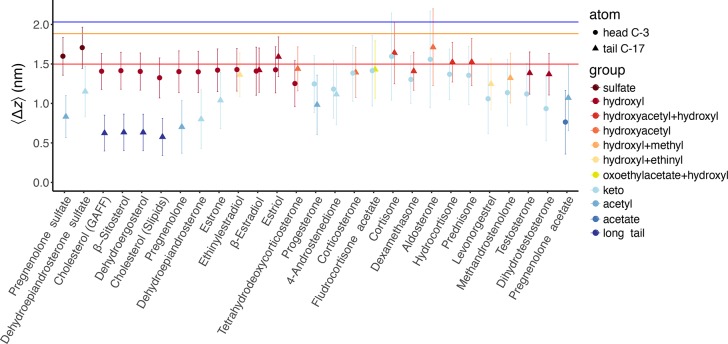
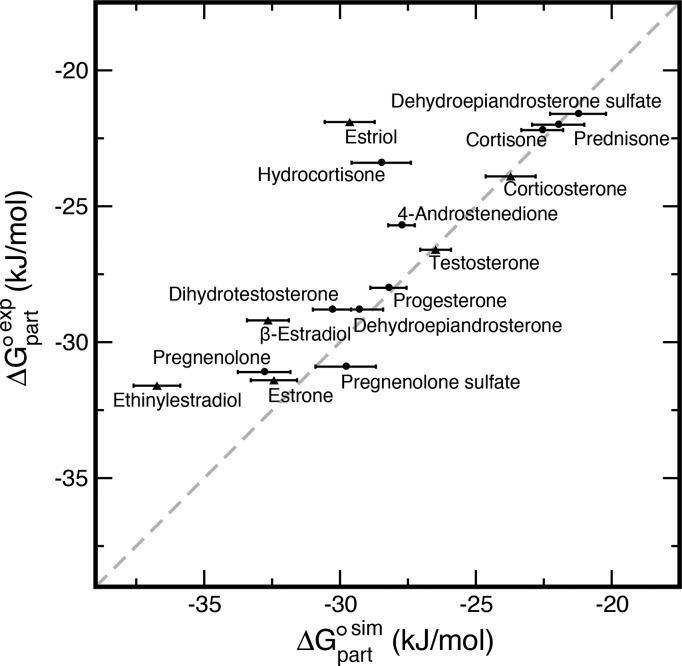
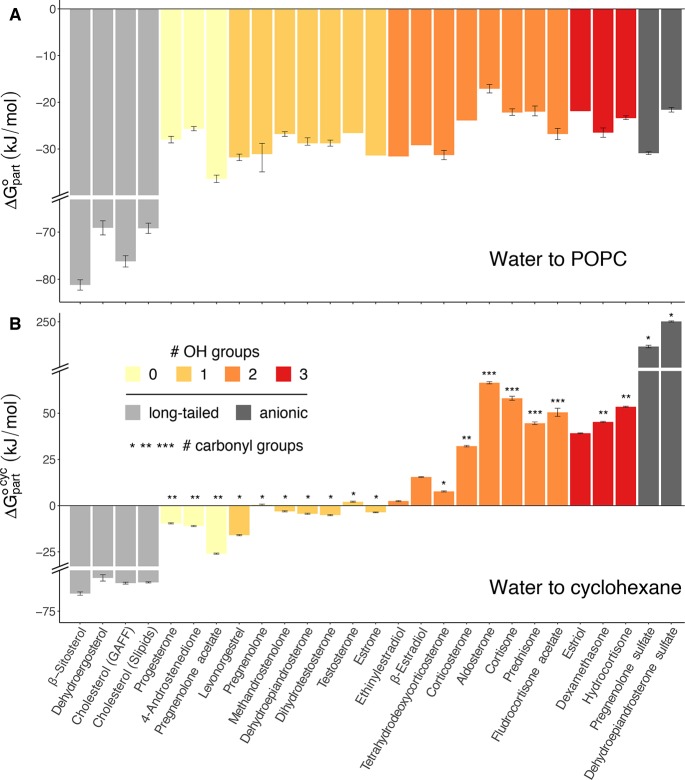
Steroids have numerous physiological functions associated with cellular signaling or modulation of the lipid membrane structure and dynamics, and as such, they have found broad pharmacological applications. Steroid-membrane interactions are relevant to multiple steps of steroid biosynthesis and action, as steroids are known to interact with neurotransmitter or membrane steroid receptors, and steroids must cross lipid membranes to exert their physiological functions. Therefore, rationalizing steroid function requires understanding of steroid-membrane interactions. We combined molecular dynamics simulations and isothermal titration calorimetry to characterize the conformations and the energetics of partitioning, in addition to the kinetics of flip-flop transitions and membrane exit, of 26 representative steroid compounds in a model lipid membrane. The steroid classes covered in this study include birth control and anabolic drugs, sex and corticosteroid hormones, neuroactive steroids, as well as steroids modulating the lipid membrane structure. We found that the conformational ensembles adopted by different steroids vary greatly, as quantified by their distributions of tilt angles and insertion depths into the membrane, ranging from well-defined steroid conformations with orientations either parallel or normal to the membrane, to wide conformational distributions. Surprisingly, despite their chemical diversity, the membrane/water partition coefficient is similar among most steroids, except for structural steroids such as cholesterol, leading to similar rates for exiting the membrane. By contrast, the rates of steroid flip-flop vary by at least 9 orders of magnitude, revealing that flip-flop is the rate-limiting step during cellular uptake of polar steroids. This study lays the ground for a quantitative understanding of steroid-membrane interactions, and it will hence be of use for studies of steroid biosynthesis and function as well as for the development and usage of steroids in a pharmacological context.
类固醇具有众多与细胞信号传导或脂质膜结构及动力学调节相关的生理功能,因此,它们在药理学上有广泛的应用。类固醇与膜的相互作用与类固醇生物合成和作用的多个步骤相关,因为已知类固醇与神经递质或膜类固醇受体相互作用,并且类固醇必须穿过脂质膜才能发挥其生理功能。因此,要阐明类固醇的功能就需要了解类固醇与膜的相互作用。我们结合了分子动力学模拟和等温滴定量热法,以表征26种代表性类固醇化合物在模型脂质膜中的构象、分配能,以及翻转跃迁和膜逸出的动力学。本研究涵盖的类固醇类别包括避孕药和合成代谢药物、性激素和皮质类固醇激素、神经活性类固醇,以及调节脂质膜结构的类固醇。我们发现,不同类固醇所采用的构象集合差异很大,通过它们的倾斜角分布和插入膜中的深度来量化,范围从与膜平行或垂直取向的明确类固醇构象到广泛的构象分布。令人惊讶的是,尽管它们化学性质多样,但除了胆固醇等结构类固醇外,大多数类固醇的膜/水分配系数相似,导致膜逸出速率相似。相比之下,类固醇的翻转速率至少相差9个数量级,这表明翻转是极性类固醇细胞摄取过程中的限速步骤。本研究为定量理解类固醇与膜的相互作用奠定了基础,因此将有助于类固醇生物合成和功能的研究,以及类固醇在药理学背景下的开发和应用。