Geng Hai-Mei, Chuang Dong-Mei, Yang Fang, Yang Yang, Liu Wei-Min, Liu Li-Hui, Tian Hong-Mei
Department of Oncology.
Department of Glioma.
Medicine (Baltimore). 2018 Sep;97(39):e11863. doi: 10.1097/MD.0000000000011863.
Aim of this study was to estimate the prevalence rate of depression in cancer patient caregivers and to identify factors affecting depression and quality of life of cancer caregivers.
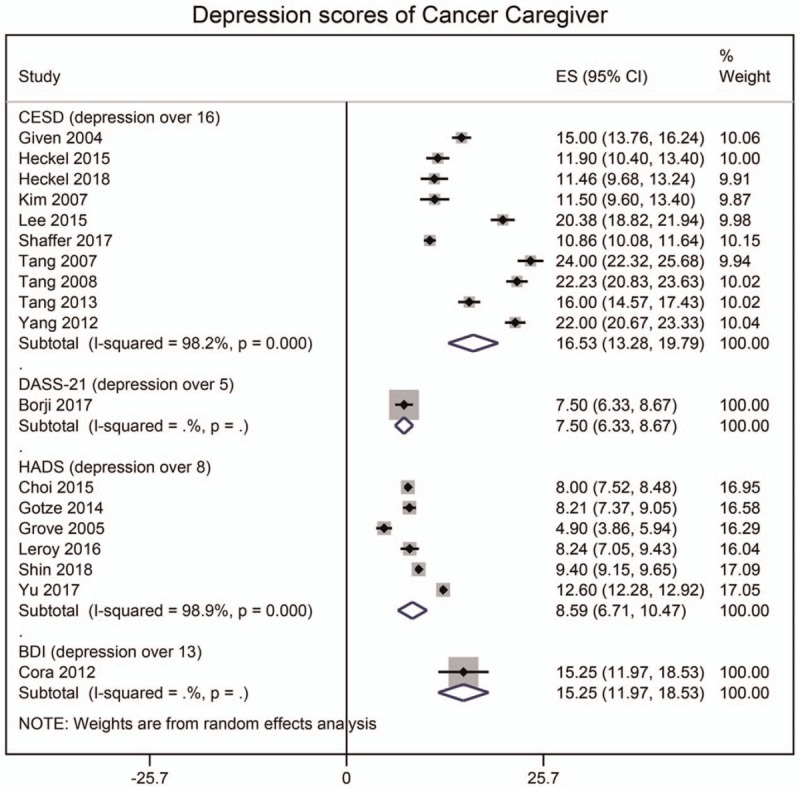
Relevant research articles were retrieved after literature search in several electronic databases. Random effects meta-analyses were performed to obtain pooled estimates of the prevalence rates of depression and anxiety; their respective scores, and quality of life scores. Significant relationships between depression and factors related to depression and quality of life reported in individual studies were identified.
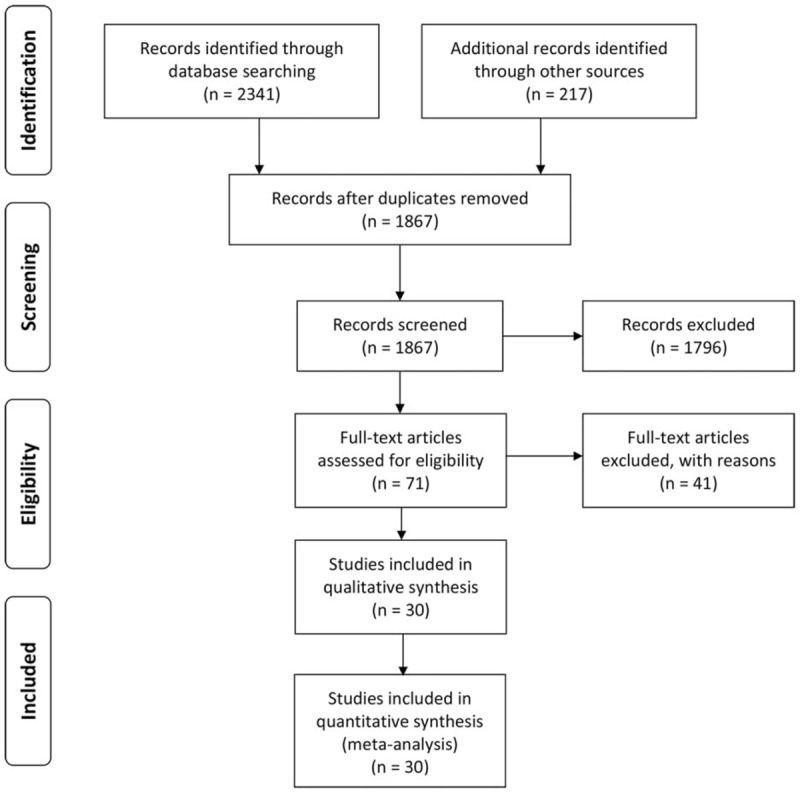
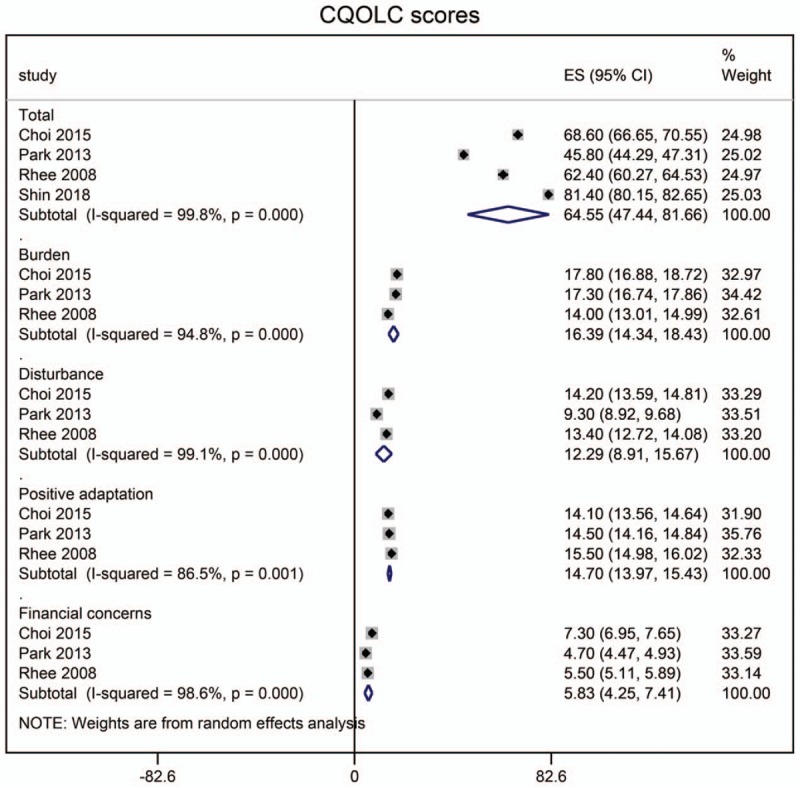
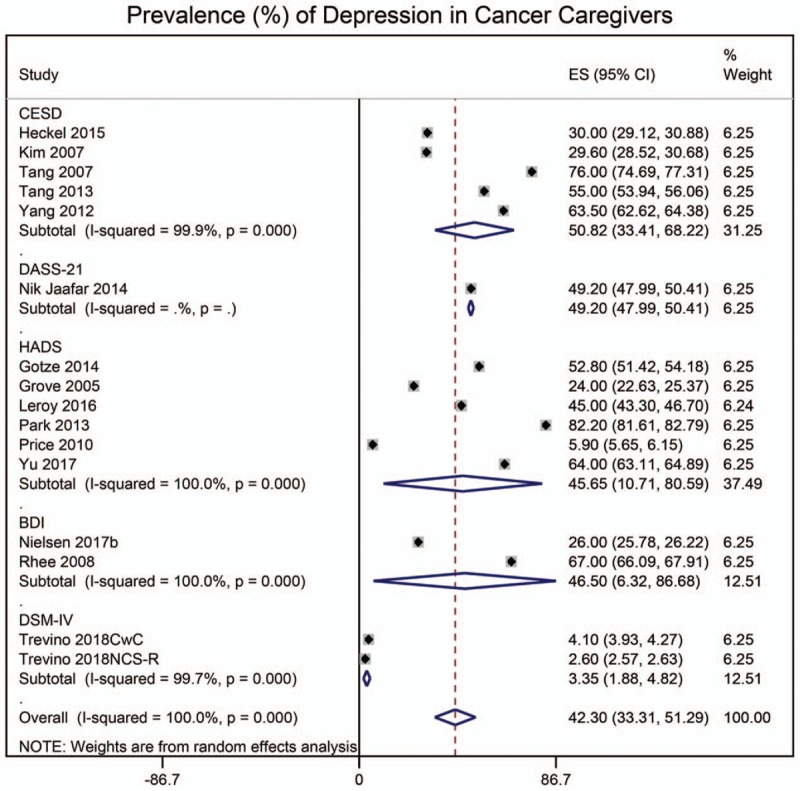
Thirty studies were included. Overall, 21,149 caregivers were appraised in these studies (age 52.65 years [95% CI: 49.65, 55.65]; 31.14% [28.40, 33.89] men). The prevalence of depression and anxiety were 42.30% [33.31, 51.29] % and 46.55% [35.59, 57.52], respectively. Quality of life score, as measured with Caregiver Quality of Life-Cancer scale was 64.55 [47.44, 81.66]. Patient's condition, caregiving burden, duration of caregiving, spouse caregiver, caregiver being unemployed, caregiver with chronic disease, caregiver's sleep quality, caregiver's avoidance, financial problems, and female sex were positively associated with depression whereas overall quality of life of caregiver, pre-loss grief, caregiver's education level, caregiver's age, caregiver's sense of coherence, and caregiver's bondage with patient were negatively associated with depression in caregivers.
A considerably high prevalence of depression is found in cancer patient caregivers. Several factors may affect depression and their quality of life of cancer patient caregivers.
本研究旨在估计癌症患者照料者中抑郁症的患病率,并确定影响癌症照料者抑郁症及生活质量的因素。
在多个电子数据库中进行文献检索后获取相关研究文章。进行随机效应荟萃分析以获得抑郁症和焦虑症患病率、各自得分及生活质量得分的合并估计值。确定个体研究中报告的抑郁症与抑郁症及生活质量相关因素之间的显著关系。
纳入30项研究。总体而言,这些研究共评估了21149名照料者(年龄52.65岁[95%置信区间:49.65, 55.65];男性占31.14%[28.40, 33.89])。抑郁症和焦虑症的患病率分别为42.30%[33.31, 51.29]%和46.55%[35.59, 57.52]。用照料者生活质量-癌症量表测量的生活质量得分为64.55[47.44, 81.66]。患者病情、照料负担、照料时长、配偶照料者、照料者失业、患有慢性病的照料者、照料者的睡眠质量、照料者的回避行为、经济问题以及女性性别与抑郁症呈正相关,而照料者的总体生活质量、丧失前的悲伤情绪、照料者的教育水平、照料者年龄、照料者的连贯感以及照料者与患者的关系与照料者的抑郁症呈负相关。
在癌症患者照料者中发现抑郁症患病率相当高。若干因素可能影响癌症患者照料者的抑郁症及其生活质量。