Samper María Dolores, Bertomeu David, Arrieta Marina Patricia, Ferri José Miguel, López-Martínez Juan
Instituto de Tecnología de Materiales, Univesitat Politècnica de València, 03801 Alcoy-Alicante, Spain.
Instituto de Ciencia y Tecnología de Polímeros (ICTP-CSIC), 28006 Madrid, Spain.
Materials (Basel). 2018 Oct 2;11(10):1886. doi: 10.3390/ma11101886.
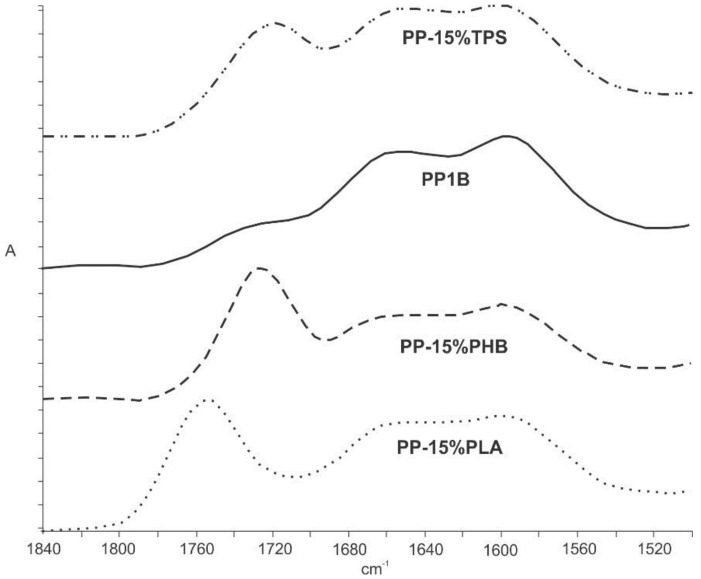
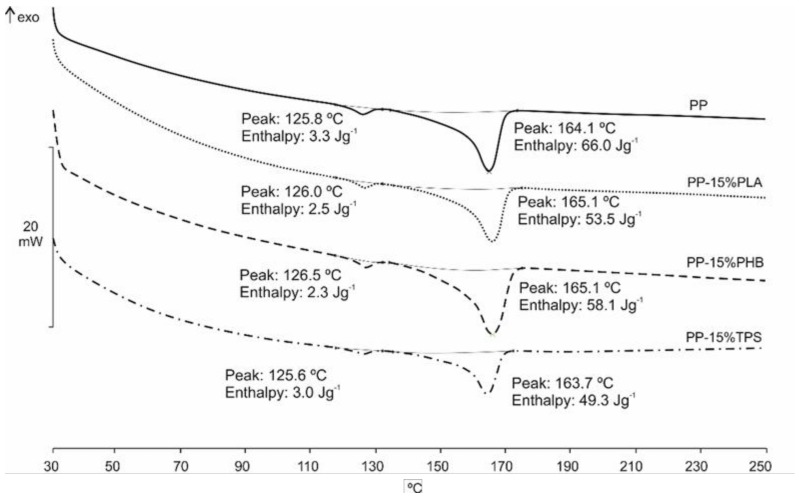
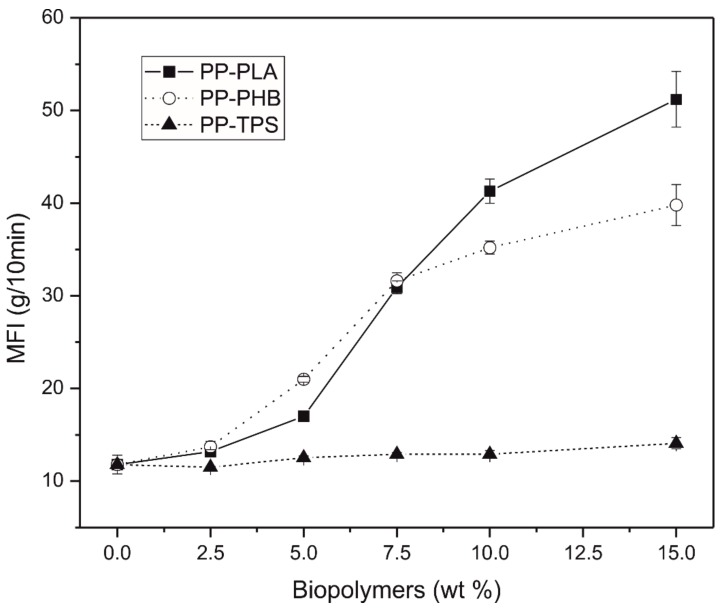
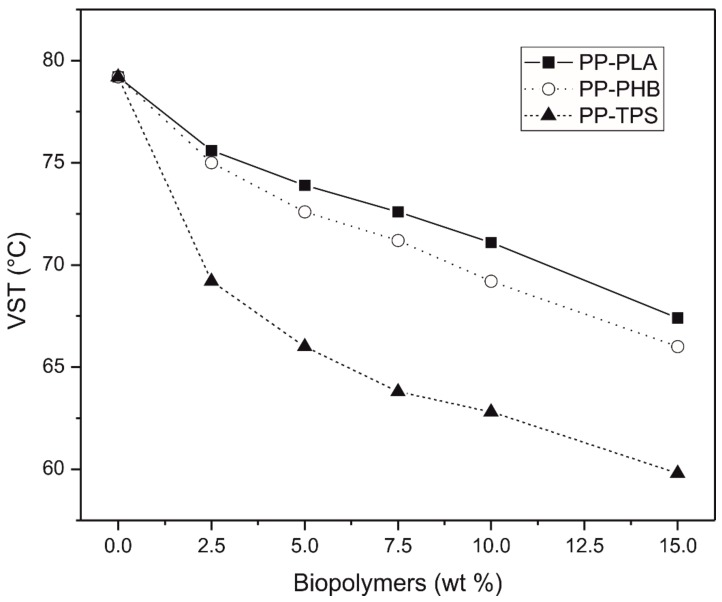
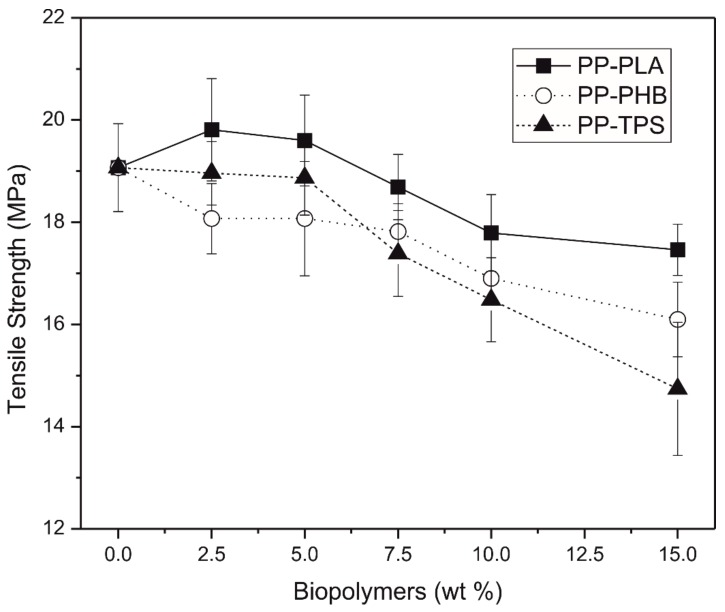
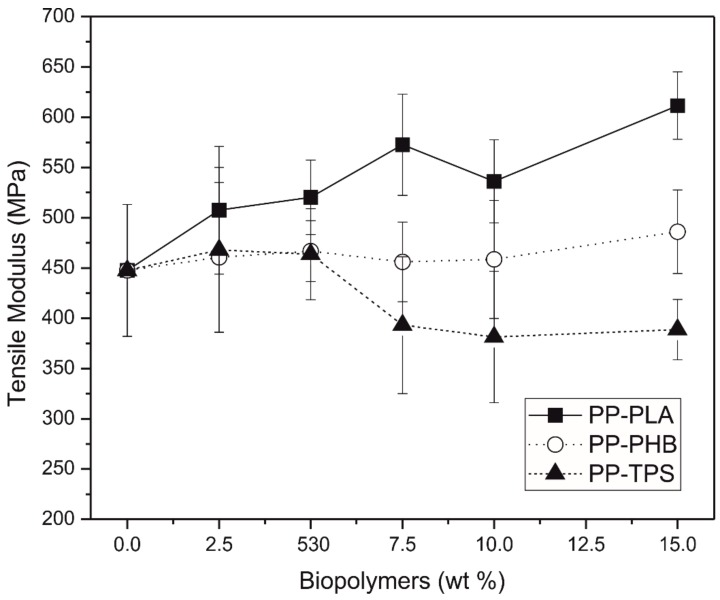
Recycling polymers is common due to the need to reduce the environmental impact of these materials. Polypropylene (PP) is one of the polymers called 'commodities polymers' and it is commonly used in a wide variety of short-term applications such as food packaging and agricultural products. That is why a large amount of PP residues that can be recycled are generated every year. However, the current increasing introduction of biodegradable polymers in the food packaging industry can negatively affect the properties of recycled PP if those kinds of plastics are disposed with traditional plastics. For this reason, the influence that generates small amounts of biodegradable polymers such as polylactic acid (PLA), polyhydroxybutyrate (PHB) and thermoplastic starch (TPS) in the recycled PP were analyzed in this work. Thus, recycled PP was blended with biodegradables polymers by melt extrusion followed by injection moulding process to simulate the industrial conditions. Then, the obtained materials were evaluated by studding the changes on the thermal and mechanical performance. The results revealed that the vicat softening temperature is negatively affected by the presence of biodegradable polymers in recycled PP. Meanwhile, the melt flow index was negatively affected for PLA and PHB added blends. The mechanical properties were affected when more than 5 wt.% of biodegradable polymers were present. Moreover, structural changes were detected when biodegradable polymers were added to the recycled PP by means of FTIR, because of the characteristic bands of the carbonyl group (between the band 1700⁻1800 cm) appeared due to the presence of PLA, PHB or TPS. Thus, low amounts (lower than 5 wt.%) of biodegradable polymers can be introduced in the recycled PP process without affecting the overall performance of the final material intended for several applications, such as food packaging, agricultural films for farming and crop protection.
由于需要减少这些材料对环境的影响,聚合物回收很常见。聚丙烯(PP)是被称为“通用聚合物”的聚合物之一,它常用于各种短期应用,如食品包装和农产品包装。这就是为什么每年会产生大量可回收的PP残渣。然而,如果将这类塑料与传统塑料一起处理,食品包装行业目前越来越多地引入可生物降解聚合物可能会对回收PP的性能产生负面影响。因此,本研究分析了在回收PP中引入少量可生物降解聚合物(如聚乳酸(PLA)、聚羟基丁酸酯(PHB)和热塑性淀粉(TPS))所产生的影响。因此,通过熔融挤出然后注塑成型工艺将回收PP与可生物降解聚合物共混,以模拟工业条件。然后,通过研究热性能和机械性能的变化来评估所得材料。结果表明,回收PP中可生物降解聚合物的存在会对维卡软化温度产生负面影响。同时,添加PLA和PHB的共混物的熔体流动指数受到负面影响。当可生物降解聚合物的含量超过5 wt.%时,机械性能会受到影响。此外,通过傅里叶变换红外光谱(FTIR)检测到,当将可生物降解聚合物添加到回收PP中时会发生结构变化,这是由于PLA、PHB或TPS的存在导致羰基特征峰(在1700⁻1800 cm波段之间)出现。因此,在回收PP过程中可以引入少量(低于5 wt.%)的可生物降解聚合物,而不会影响最终材料在多种应用(如食品包装、农业种植和作物保护用农用薄膜)中的整体性能。