Department of Radiology, Royal Marsden Hospital, London, UK.
Department of Radiology, St James' University Hospital, Leeds, UK.
BMJ Open. 2018 Oct 2;8(10):e018499. doi: 10.1136/bmjopen-2017-018499.
Following a diagnosis of cancer, the detailed assessment of prognostic stage by radiology is a crucial determinant of initial therapeutic strategy offered to patients. Pretherapeutic stage by imaging is known to be inconsistently documented. We tested whether the completeness of cancer staging radiology reports could be improved through a nationally introduced pilot of proforma-based reporting for a selection of six common cancers.
Prospective interventional study comparing the completeness of radiology cancer staging reports before and after the introduction of proforma reporting.
Twenty-one UK National Health Service hospitals.
1283 cancer staging radiology reports were submitted.
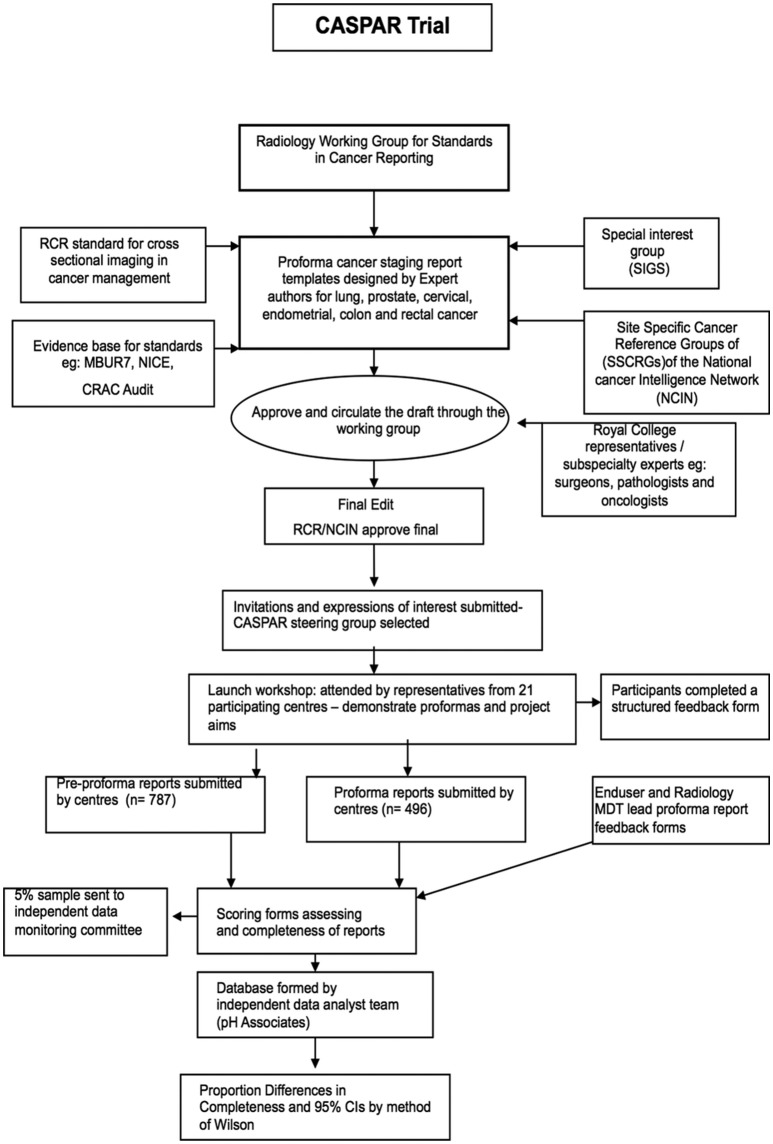
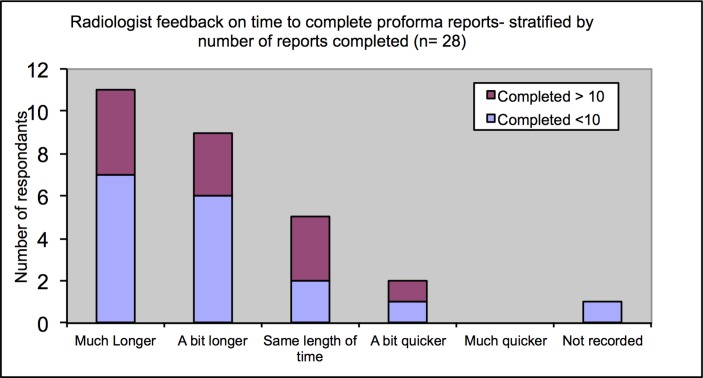
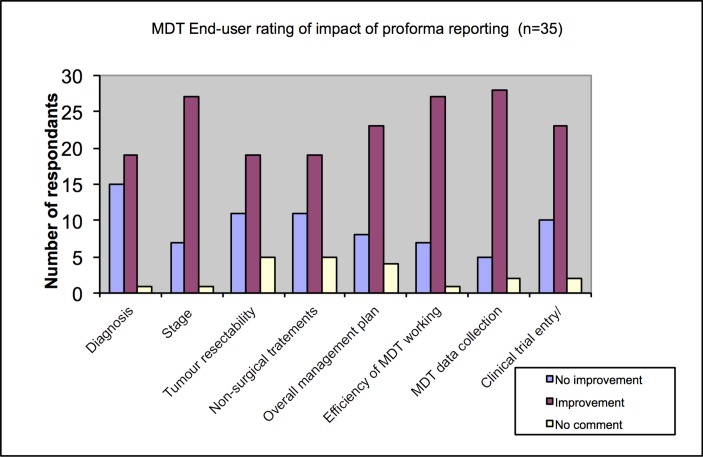
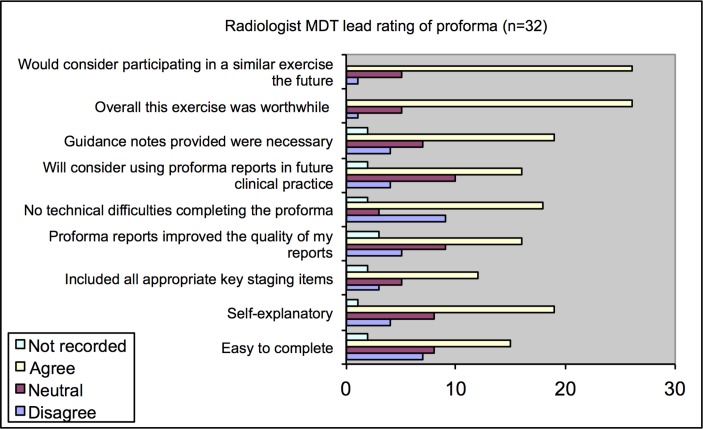
Radiology staging reports across the six cancers types were evaluated before and after the implementation of proforma-based reporting. Report completeness was assessed using scoring forms listing the presence or absence of predetermined key staging data. Qualitative data regarding proforma implementation and usefulness were collected from questionnaires provided to radiologists and end-users.
Electronic proforma-based reporting was successfully implemented in 15 of the 21 centres during the evaluation period. A total of 787 preproforma and 496 postproforma staging reports were evaluated. In the preproforma group, only 48.7% (5586/11 470) of key staging items were present compared with 87.3% (6043/6920) in the postproforma group. Thus, the introduction of proforma reporting produced a 78% improvement in staging completeness . This increase was seen across all cancer types and centres. The majority of participants found proforma reporting improved cancer reporting quality for their clinical practice .
The implementation of proforma reporting results in a significant improvement in the completeness of cancer staging reports. Proforma-based assessment of cancer stage enables objective comparisons of patient outcomes across centres. It should therefore become an auditable quality standard for cancer care.
癌症诊断后,放射学对预后分期的详细评估是向患者提供初始治疗策略的关键决定因素。影像学的治疗前分期已知记录不一致。我们通过在六个常见癌症中选择的试点项目来测试是否可以通过引入基于表格的报告来提高癌症分期放射学报告的完整性。
比较引入表格报告前后放射学癌症分期报告的完整性的前瞻性干预研究。
英国 21 家国家卫生服务医院。
提交了 1283 份癌症分期放射学报告。
在实施基于表格的报告前后,对六种癌症类型的放射学分期报告进行评估。使用列出预定关键分期数据的存在或缺失的评分表评估报告的完整性。从提供给放射科医生和最终用户的问卷中收集有关表格实施和有用性的定性数据。
在评估期间,15 个中心成功实施了电子基于表格的报告。评估了 787 份预表格和 496 份后表格分期报告。在前表格组中,只有 48.7%(5586/11470)的关键分期项目存在,而在后表格组中,这一比例为 87.3%(6043/6920)。因此,引入表格报告使分期完整性提高了 78%。这种增加见于所有癌症类型和中心。大多数参与者发现表格报告提高了他们临床实践中的癌症报告质量。
表格报告的实施可显著提高癌症分期报告的完整性。基于表格的癌症分期评估能够实现对中心之间患者结果的客观比较。因此,它应成为癌症护理的可审计质量标准。