Kaufmann Dan, Brennan K C
Headache Physiology Lab, Department of Neurology, University of Utah, Salt Lake City, UT, United States.
Front Cell Neurosci. 2018 Sep 19;12:294. doi: 10.3389/fncel.2018.00294. eCollection 2018.
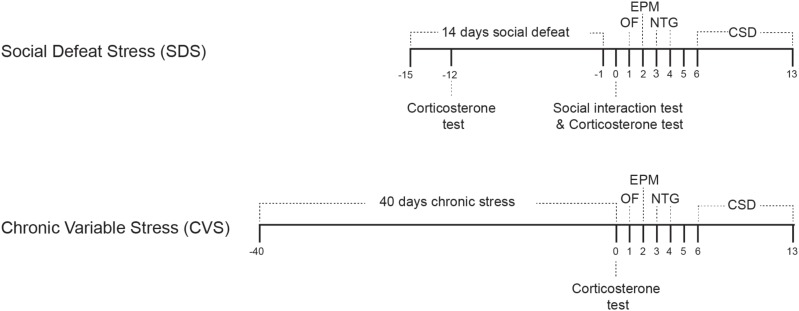
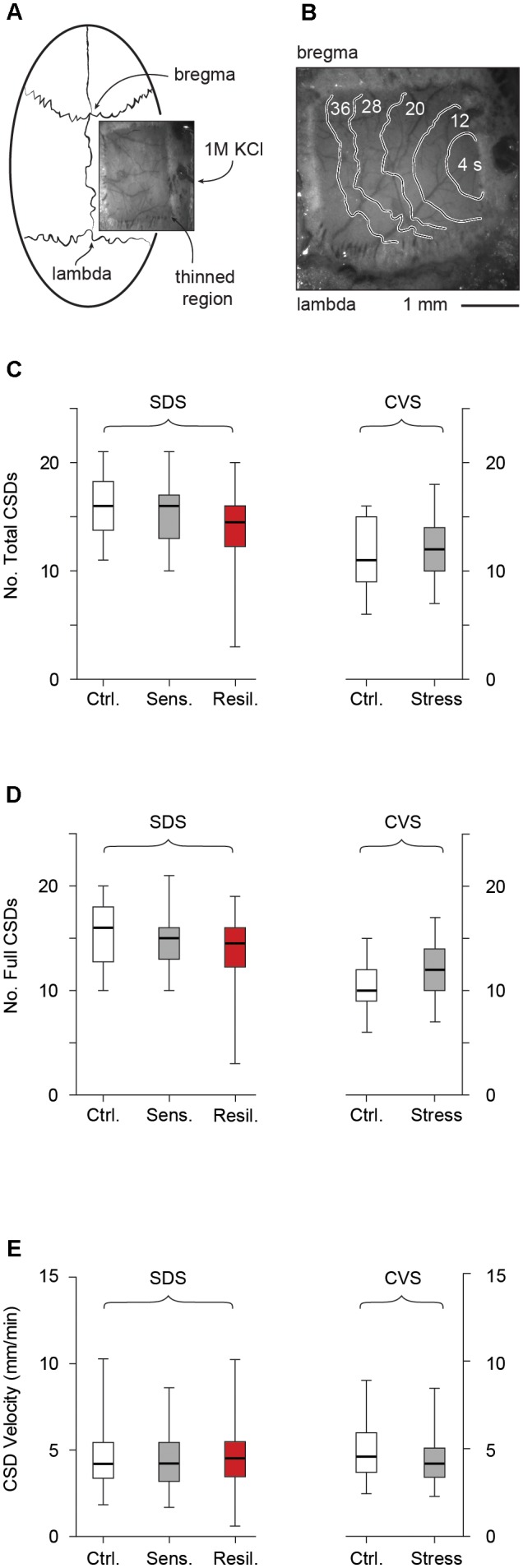
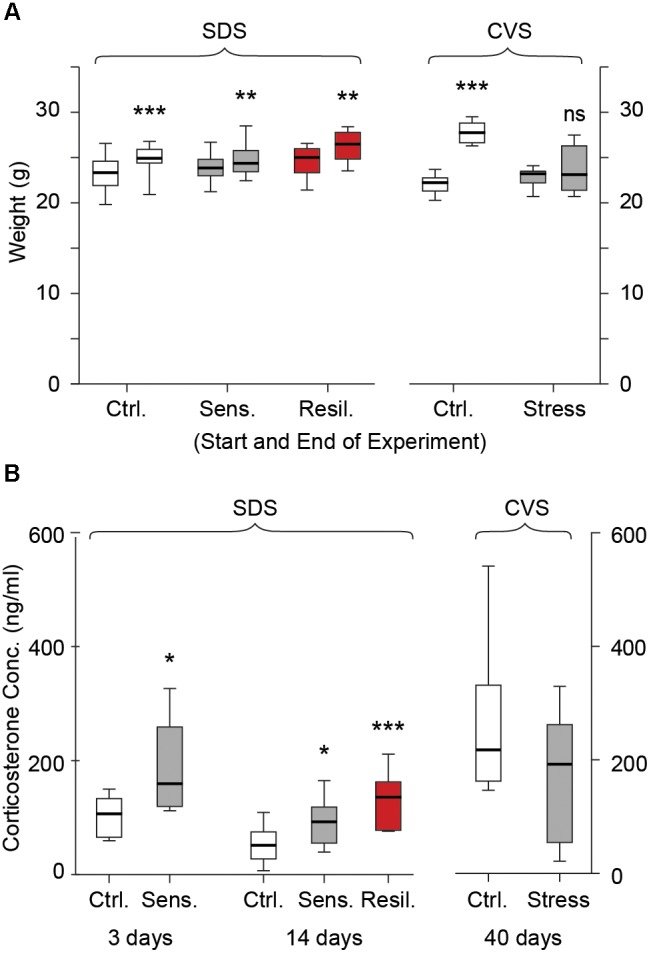
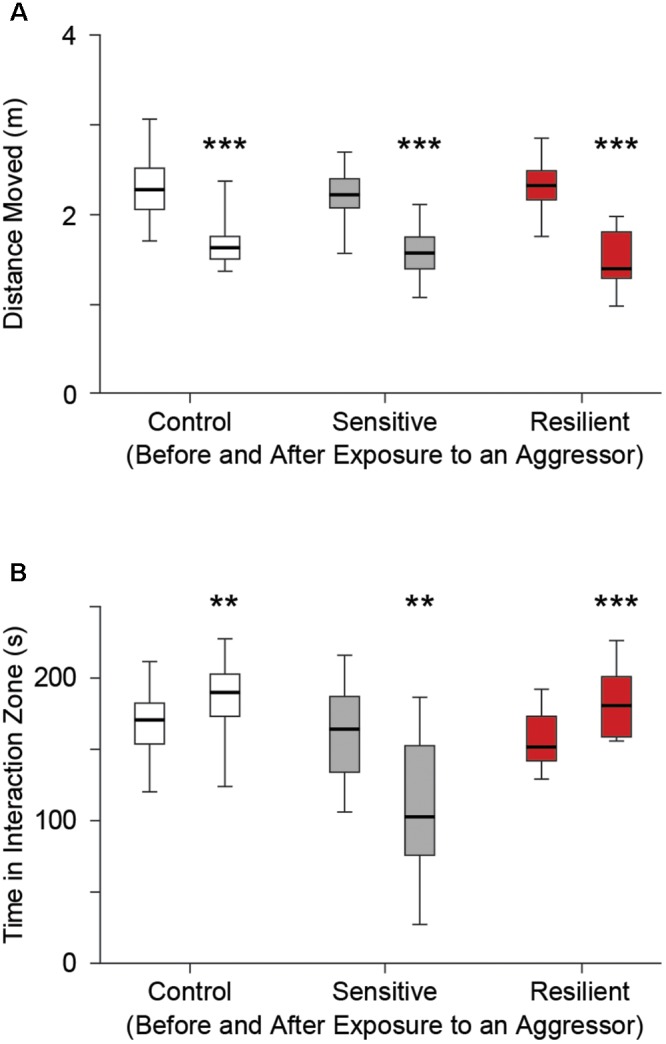
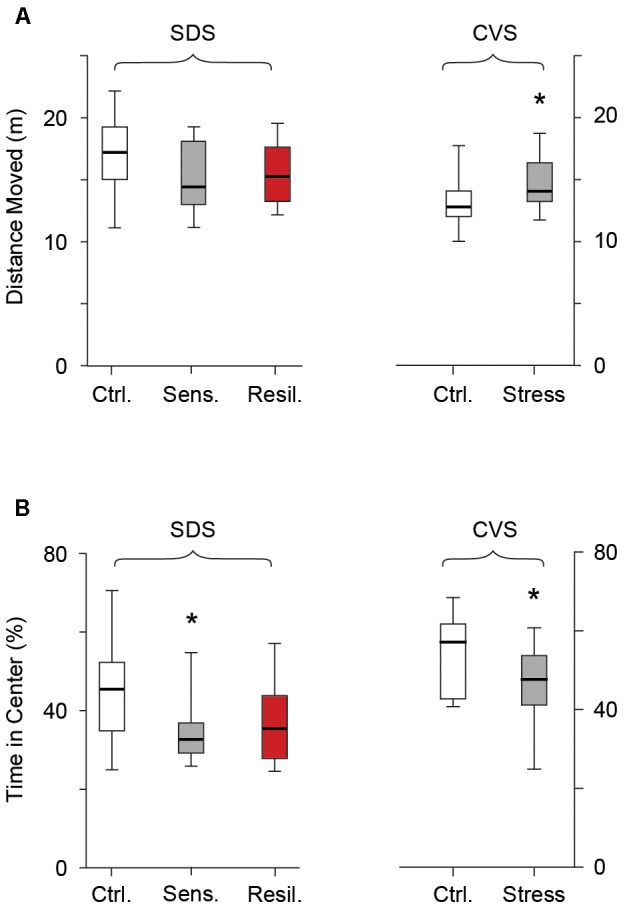
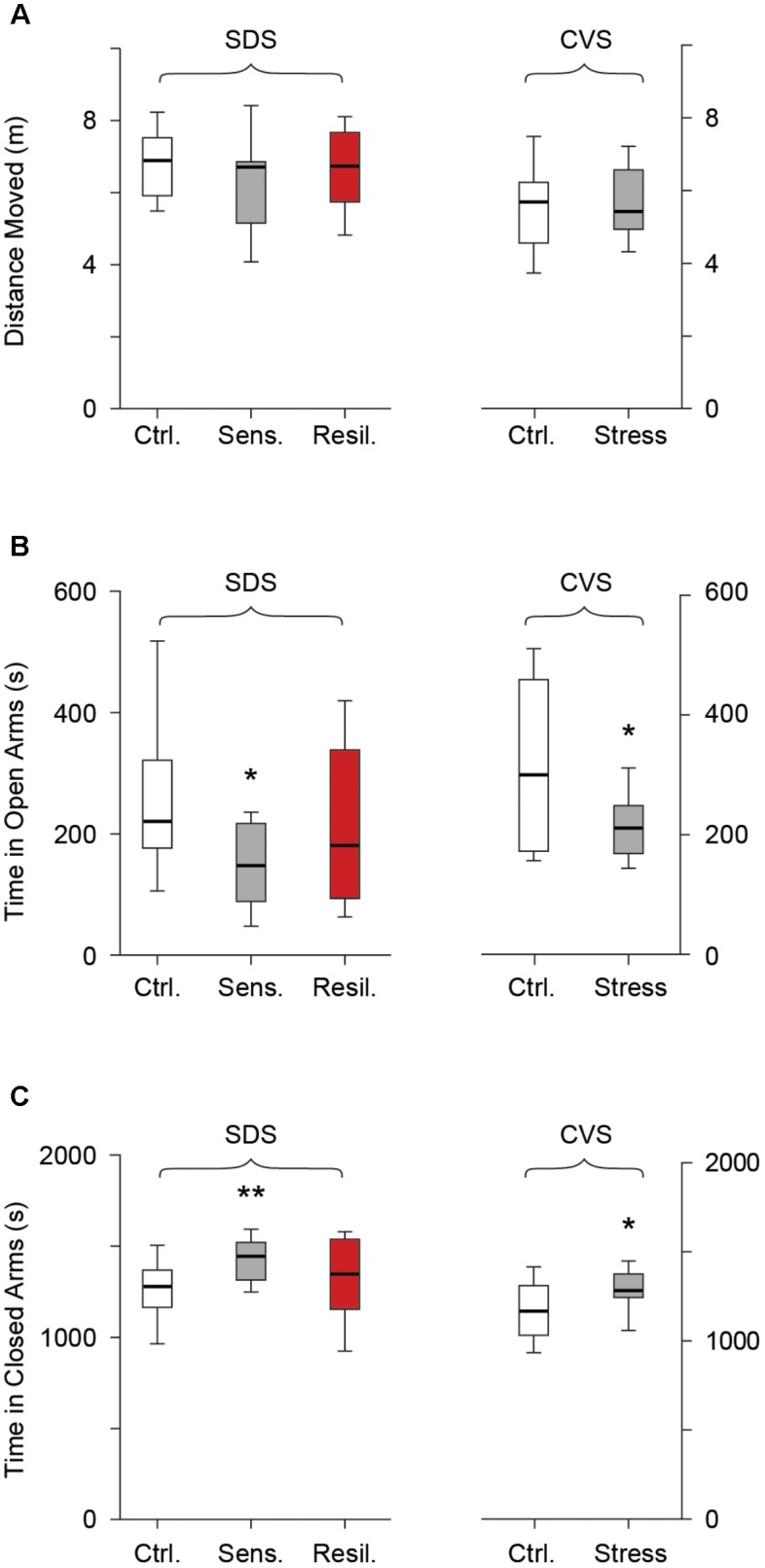
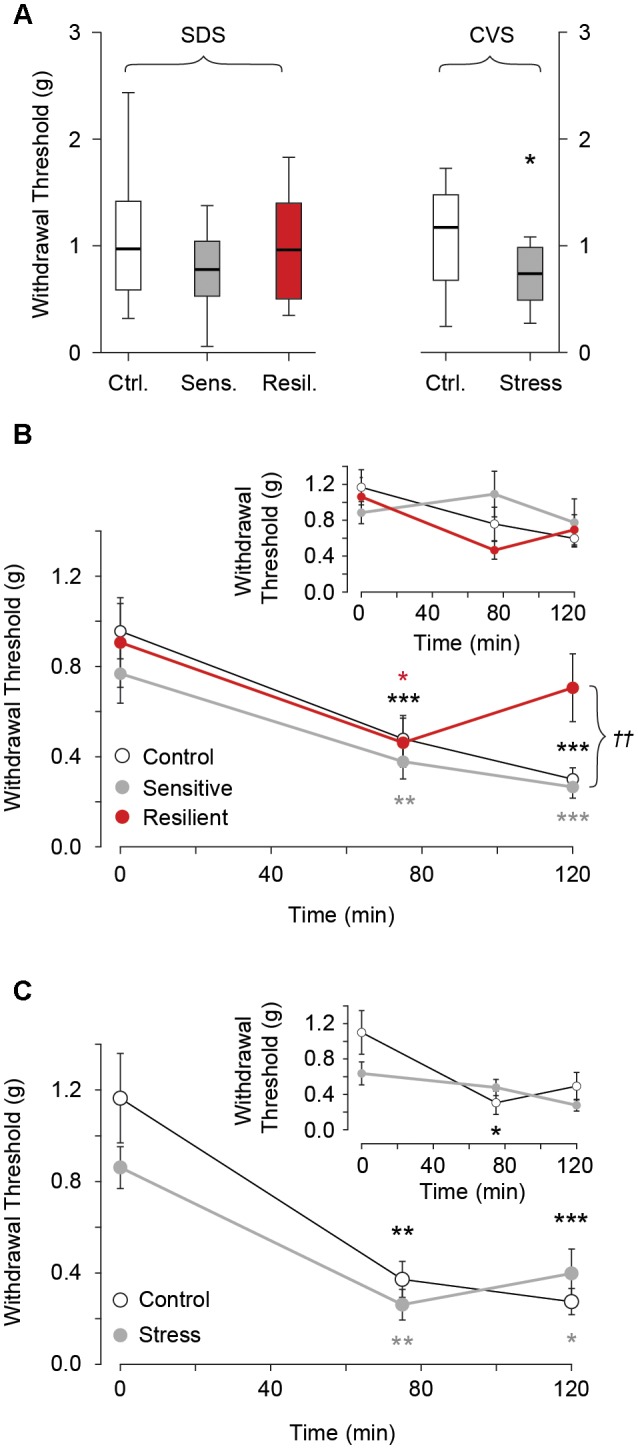
Migraine is a disabling neurological disorder affecting 12% of the world's population. Stress is a major reported trigger and exacerbator of migraine. We evaluated the effects of two chronic stress paradigms on migraine relevant phenotypes in male C57Bl/6 mice. Fifty six mice were used in a 14 day social defeat stress (SDS) and twenty three mice were used in a 40 day chronic variable stress (CVS) paradigm. Anxiety measures were evaluated using the open field and elevated plus maze (EPM) tests. Migraine relevant phenotypes were evaluated using the nitroglycerin (NTG) and cortical spreading depression (CSD) models. Stress sensitive SDS mice and chronically stressed CVS mice showed decreased exploration in the open field and reduced time spent in the open arms of the EPM compared to controls. Stress sensitive and resilient SDS mice had increased serum corticosterone levels, and stressed mice in the CVS paradigm had decreased weight gain compared to controls, providing combined behavioral and physiological evidence of a stress response. In the CVS paradigm but not the SDS paradigm, the stressed group showed a significant decrease in baseline mechanical withdrawal threshold compared to controls. All groups showed a significant reduction in withdrawal threshold after treatment with NTG, but the reduction was not larger in SDS or CVS than in controls. Interestingly, stress resilient SDS mice showed a rapid recovery from NTG effects that was not seen in other groups. No difference in CSD frequency or velocity was seen between stress and control mice in either stress paradigms. We observed distinct effects of stress on generalized pain response, migraine relevant pain, and migraine relevant excitability. CVS but not SDS was associated with a reduced mechanical withdrawal threshold, consistent with a generalized pain response to chronic stress. Neither SDS nor CVS exacerbated phenotypes considered specifically relevant to migraine - withdrawal to NTG, and susceptibility to CSD. However, the significantly reduced response of stress resilient mice to the NTG stimulus may represent a specific migraine-resistant phenotype.
偏头痛是一种致残性神经疾病,影响着全球12%的人口。压力是偏头痛的主要诱发因素和加重因素。我们评估了两种慢性应激模式对雄性C57Bl/6小鼠偏头痛相关表型的影响。56只小鼠用于14天的社会挫败应激(SDS)实验,23只小鼠用于40天的慢性可变应激(CVS)实验。使用旷场实验和高架十字迷宫(EPM)实验评估焦虑指标。使用硝酸甘油(NTG)和皮层扩散性抑制(CSD)模型评估偏头痛相关表型。与对照组相比,应激敏感的SDS小鼠和长期应激的CVS小鼠在旷场实验中的探索行为减少,在EPM实验中在开放臂停留的时间缩短。应激敏感和有恢复力的SDS小鼠血清皮质酮水平升高,CVS实验中的应激小鼠与对照组相比体重增加减少,提供了应激反应的行为和生理综合证据。在CVS实验而非SDS实验中,应激组与对照组相比基线机械性撤足阈值显著降低。所有组在用NTG治疗后撤足阈值均显著降低,但SDS组或CVS组的降低幅度并不比对照组更大。有趣的是,应激有恢复力的SDS小鼠对NTG效应的恢复速度很快,其他组未见此现象。在两种应激模式下,应激小鼠和对照小鼠之间的CSD频率或速度均无差异。我们观察到应激对全身性疼痛反应、偏头痛相关疼痛和偏头痛相关兴奋性有不同影响。CVS而非SDS与机械性撤足阈值降低有关,这与对慢性应激的全身性疼痛反应一致。SDS和CVS均未加重与偏头痛特别相关的表型——对NTG的撤足反应和对CSD的易感性。然而,应激有恢复力的小鼠对NTG刺激的反应显著降低可能代表一种特定的偏头痛抗性表型。