Finney Alexandra Christine, Orr Anthony Wayne
Department of Cellular Biology and Anatomy, Louisiana State University Health Sciences Center Shreveport, Shreveport, LA, United States.
Department of Molecular and Cellular Physiology, Louisiana State University Health Sciences Center Shreveport, Shreveport, LA, United States.
Front Physiol. 2018 Sep 19;9:1311. doi: 10.3389/fphys.2018.01311. eCollection 2018.
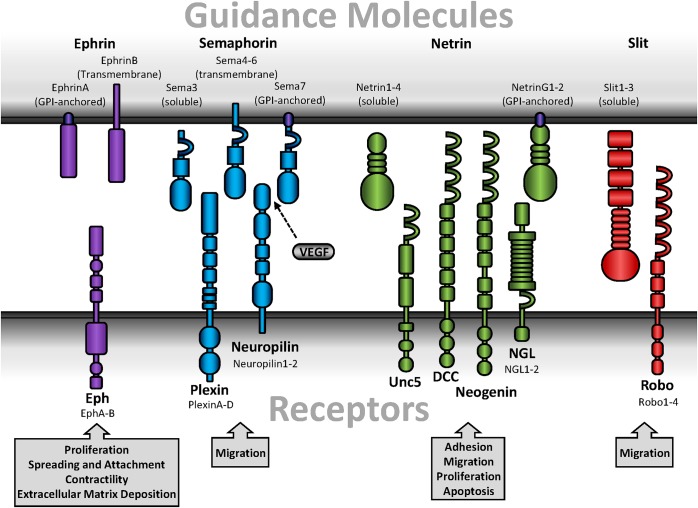
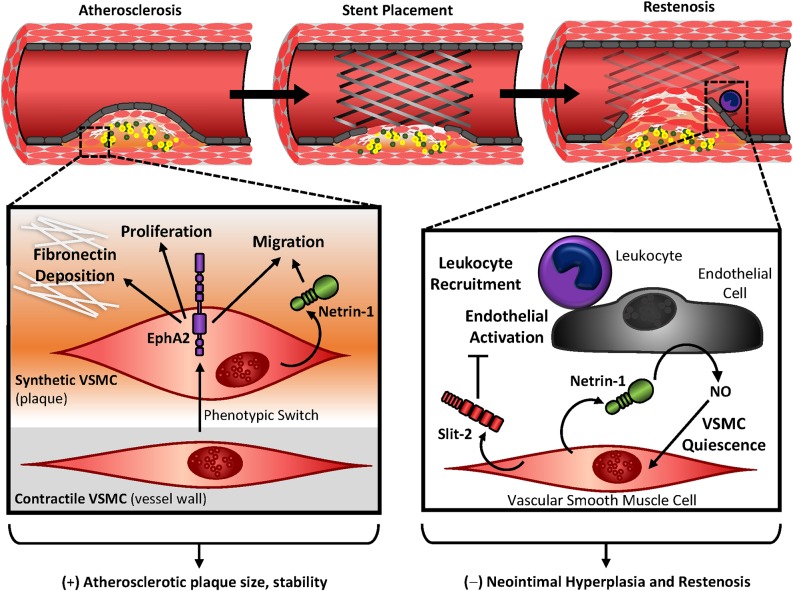
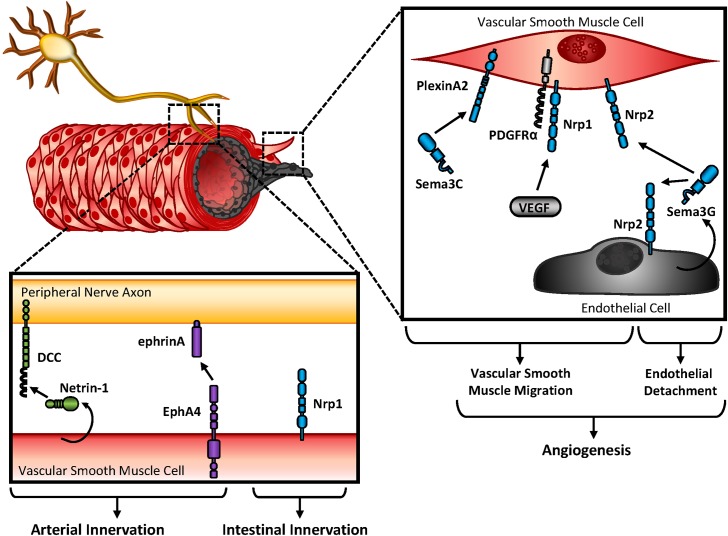
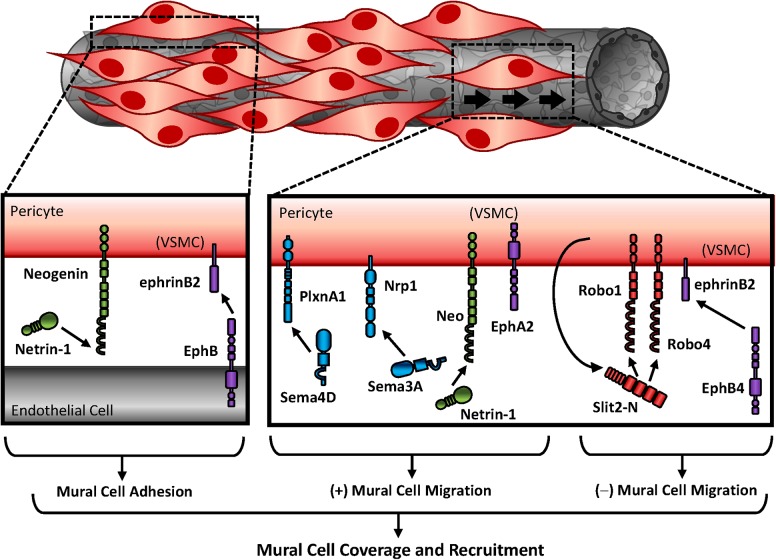
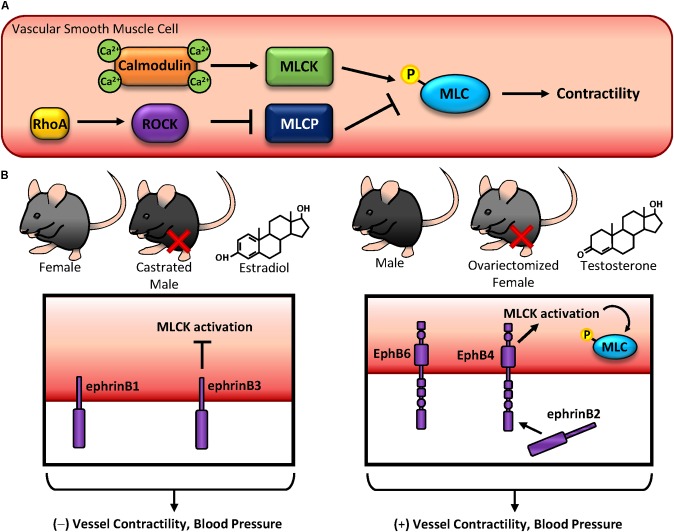
Several highly conserved families of guidance molecules, including ephrins, Semaphorins, Netrins, and Slits, play conserved and distinct roles in tissue remodeling during tissue patterning and disease pathogenesis. Primarily, these guidance molecules function as either secreted or surface-bound ligands that interact with their receptors to activate a variety of downstream effects, including cell contractility, migration, adhesion, proliferation, and inflammation. Vascular smooth muscle cells, contractile cells comprising the medial layer of the vessel wall and deriving from the mural population, regulate vascular tone and blood pressure. While capillaries lack a medial layer of vascular smooth muscle, mural-derived pericytes contribute similarly to capillary tone to regulate blood flow in various tissues. Furthermore, pericyte coverage is critical in vascular development, as perturbations disrupt vascular permeability and viability. During cardiovascular disease, smooth muscle cells play a more dynamic role in which suppression of contractile markers, enhanced proliferation, and migration lead to the progression of aberrant vascular remodeling. Since many types of guidance molecules are expressed in vascular smooth muscle and pericytes, these may contribute to blood vessel formation and aberrant remodeling during vascular disease. While vascular development is a large focus of the existing literature, studies emerged to address post-developmental roles for guidance molecules in pathology and are of interest as novel therapeutic targets. In this review, we will discuss the roles of guidance molecules in vascular smooth muscle and pericyte function in development and disease.
几种高度保守的导向分子家族,包括ephrins、Semaphorins、Netrins和Slits,在组织模式形成和疾病发病机制过程中的组织重塑中发挥着保守且独特的作用。这些导向分子主要作为分泌型或表面结合型配体发挥作用,它们与受体相互作用以激活多种下游效应,包括细胞收缩性、迁移、黏附、增殖和炎症。血管平滑肌细胞是构成血管壁中层并源自壁细胞群体的收缩性细胞,可调节血管张力和血压。虽然毛细血管缺乏血管平滑肌的中层,但源自壁细胞的周细胞对毛细血管张力也有类似作用,以调节各种组织中的血流。此外,周细胞覆盖在血管发育中至关重要,因为其扰动会破坏血管通透性和活力。在心血管疾病期间,平滑肌细胞发挥着更动态的作用,其中收缩标记物的抑制、增殖增强和迁移会导致异常血管重塑的进展。由于多种类型的导向分子在血管平滑肌和周细胞中表达,它们可能在血管疾病期间促成血管形成和异常重塑。虽然血管发育是现有文献的一大重点,但也有研究开始探讨导向分子在病理学中的发育后作用,并且作为新型治疗靶点受到关注。在本综述中,我们将讨论导向分子在血管平滑肌和周细胞在发育和疾病中的功能中的作用。