Division of Reproductive Sciences, Department of Obstetrics and Gynecology, University of Wisconsin-Madison, Madison, WI, United States.
Division of Reproductive Endocrinology and Infertility, Department of Obstetrics and Gynecology, University of Wisconsin-Madison, Madison, WI, United States.
Front Immunol. 2018 Sep 19;9:2087. doi: 10.3389/fimmu.2018.02087. eCollection 2018.
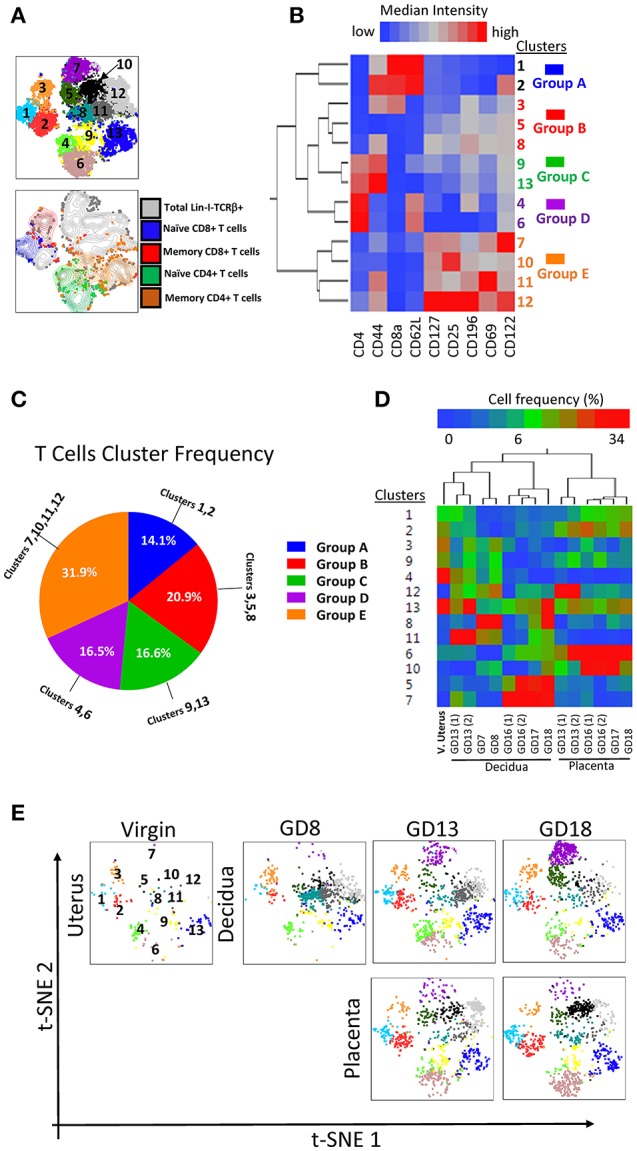
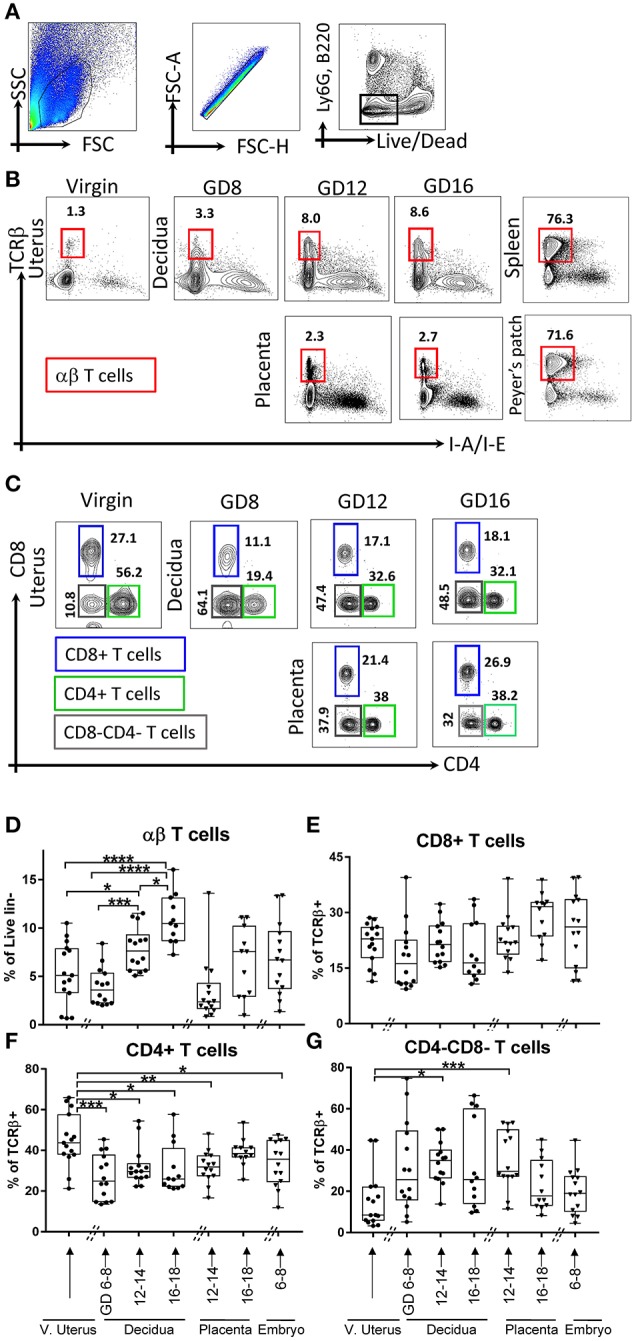
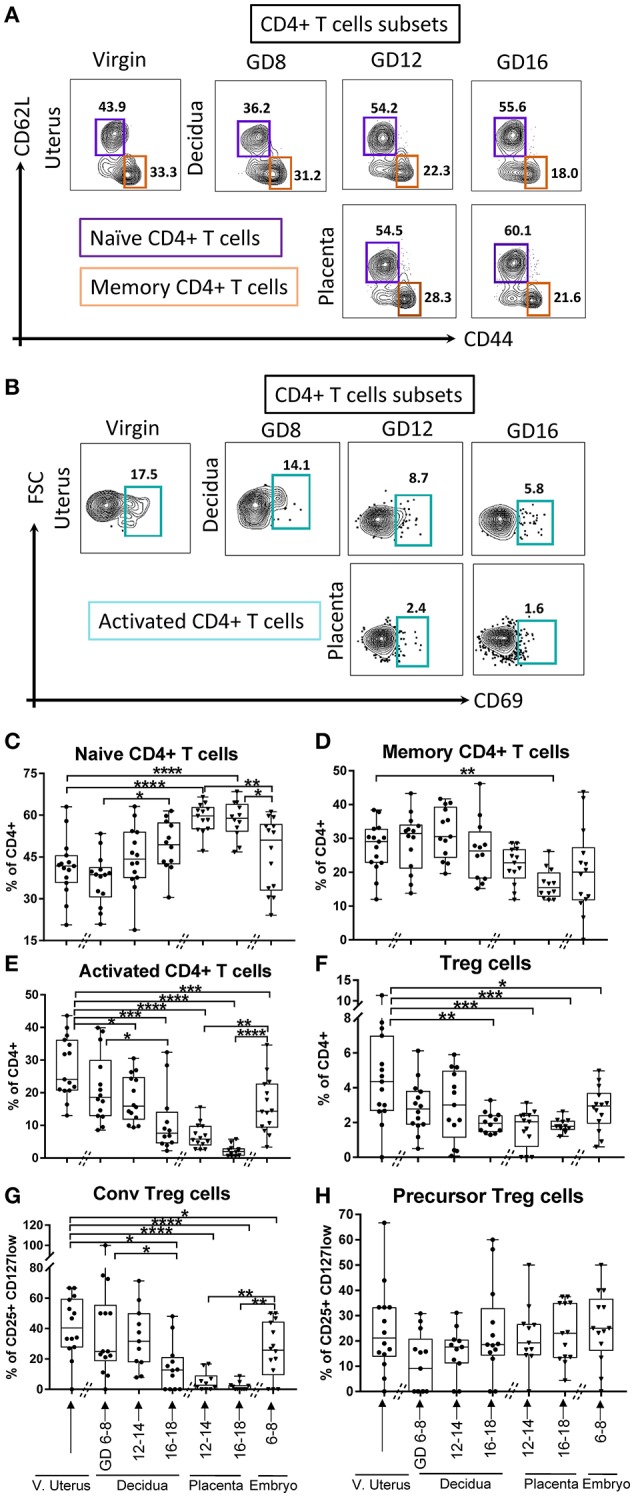
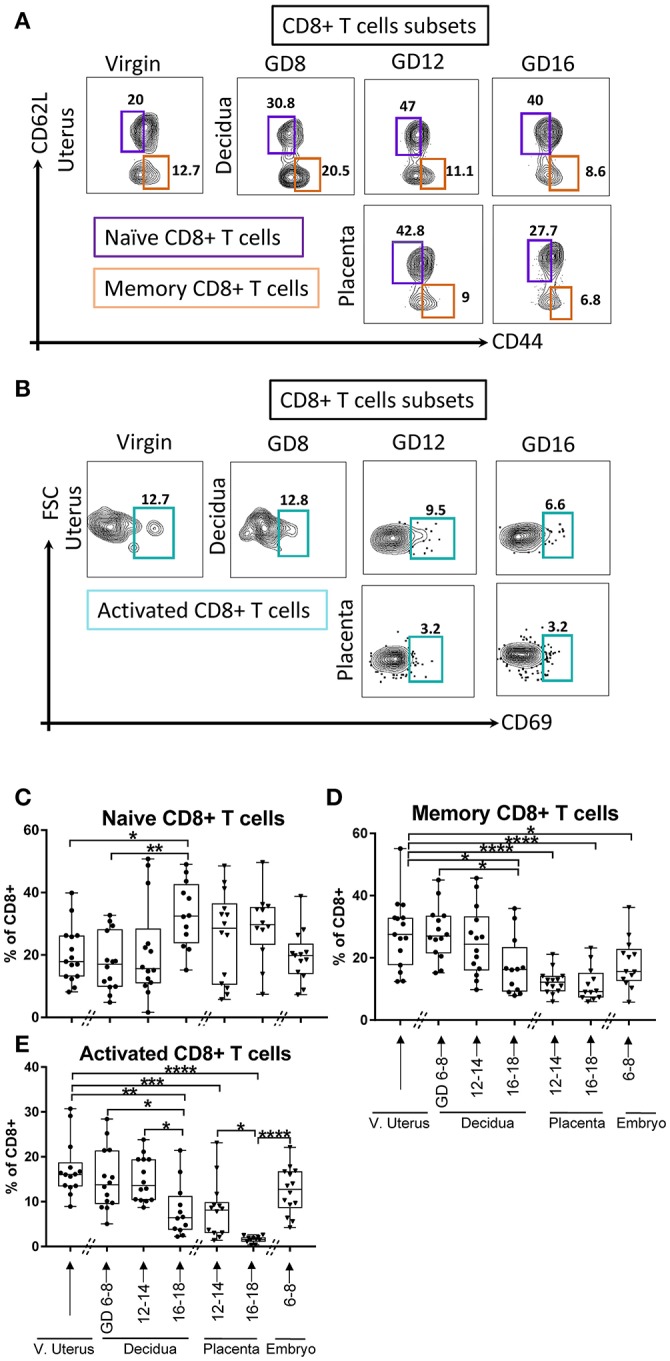
Adaptive immune system, principally governed by the T cells-dendritic cells (DCs) nexus, is an essential mediator of gestational fetal tolerance and protection against infection. However, the exact composition and dynamics of DCs and T cell subsets in gestational tissues are not well understood. These are controlled in human physiology by a complex interplay of alloantigen distribution and presentation, cellular/humoral active and passive tolerance, hormones/chemokines/angiogenic factors and their gradients, systemic and local microbial communities. Reductive discrimination of these factors in physiology and pathology of model systems and humans requires simplification of the model and increased resolution of interrogative technologies. As a baseline, we have studied the gestational tissue dynamics in the syngeneic C57BL/6 mice, as the simplest immunological environment, and focused on validating the approach to increased data density and computational analysis pipeline afforded by highly polychromatic flow cytometry and machine learning interpretation. We mapped DC and T cell subsets, and comprehensively examined their maternal (decidual)-fetal (placental) interface dynamics. Both frequency and composition of decidual DCs changed across gestation, with a dramatic increase in myeloid DCs in early pregnancy, and exclusion of plasmacytoid DCs. CD4+ T cells, in contrast, were lower at all gestational ages and an unusual CD4CD8TCRαβgroup was prominent at mid-pregnancy. Dimensionality reduction with machine learning-aided clustering revealed that CD4CD8 T cells were phenotypically different from CD4+ and CD8+ T cells. Additionally, divergence between maternal decidual and fetal placental compartment was prominent, with absence of DCs from the placenta, but not decidua or embryo. These results provide a novel framework and a syngeneic baseline on which the specific role of alloantigen/tolerance, polymicrobial environment, and models of pregnancy pathology can be precisely modeled and analyzed.
适应性免疫系统主要由 T 细胞-树突状细胞(DCs)的相互作用来调控,是妊娠胎儿耐受和抗感染的重要介质。然而,妊娠组织中 DC 和 T 细胞亚群的确切组成和动态还不太清楚。在人类生理学中,这些是由同种异体抗原分布和呈递、细胞/体液主动和被动耐受、激素/趋化因子/血管生成因子及其梯度、全身和局部微生物群落的复杂相互作用来控制的。在模型系统和人类的生理学和病理学中,还原这些因素的辨别需要简化模型并提高询问技术的分辨率。作为基线,我们研究了同基因 C57BL/6 小鼠的妊娠组织动力学,作为最简单的免疫环境,并专注于验证通过高度多色流式细胞术和机器学习解释提供的数据密度增加和计算分析管道的方法。我们绘制了 DC 和 T 细胞亚群的图谱,并全面检查了它们在母体(蜕膜)-胎儿(胎盘)界面的动态变化。蜕膜 DC 的频率和组成在整个妊娠过程中都发生了变化,早孕时髓样 DC 显著增加,浆细胞样 DC 被排除在外。相反,CD4+T 细胞在所有妊娠年龄都较低,而在妊娠中期,一种不寻常的 CD4CD8TCRαβ 群体则较为突出。通过机器学习辅助聚类进行的降维揭示了 CD4CD8T 细胞在表型上与 CD4+和 CD8+T 细胞不同。此外,母体蜕膜和胎儿胎盘隔室之间的差异很明显,胎盘没有 DC,但蜕膜或胚胎中有。这些结果提供了一个新的框架和同基因基线,在此基础上可以精确地建模和分析同种异体抗原/耐受、多微生物环境和妊娠病理模型的特定作用。