Core Lab Glycobiol & Glycoengn,college of Basic Sciences, Dalian Medical University, Dalian , Liaoning, China.
Hum Reprod. 2018 Nov 1;33(11):2060-2073. doi: 10.1093/humrep/dey290.
How does aquaporin-3 (AQP3) affect endometrial receptivity?
AQP3, which is regulated by the combination and estrogen (E2) and progesterone (P4), induces epithelial-mesenchymal transition (EMT) of endometrial epithelial cells.
Embryo implantation is an extremely complex process, and endometrial receptivity is essential for successful embryo implantation. Estrogen and progesterone regulate endometrial receptivity. AQP3, which is regulated by estrogen (E2), increases cell migration and invasion ability by regulating the expression of EMT-related factors and influencing the reorganization of the actin cytoskeleton.
STUDY DESIGN, SIZE, DURATION: This study investigated the pathophysiological significance of AQP3 in human endometrial function during different phases of the menstrual cycle.
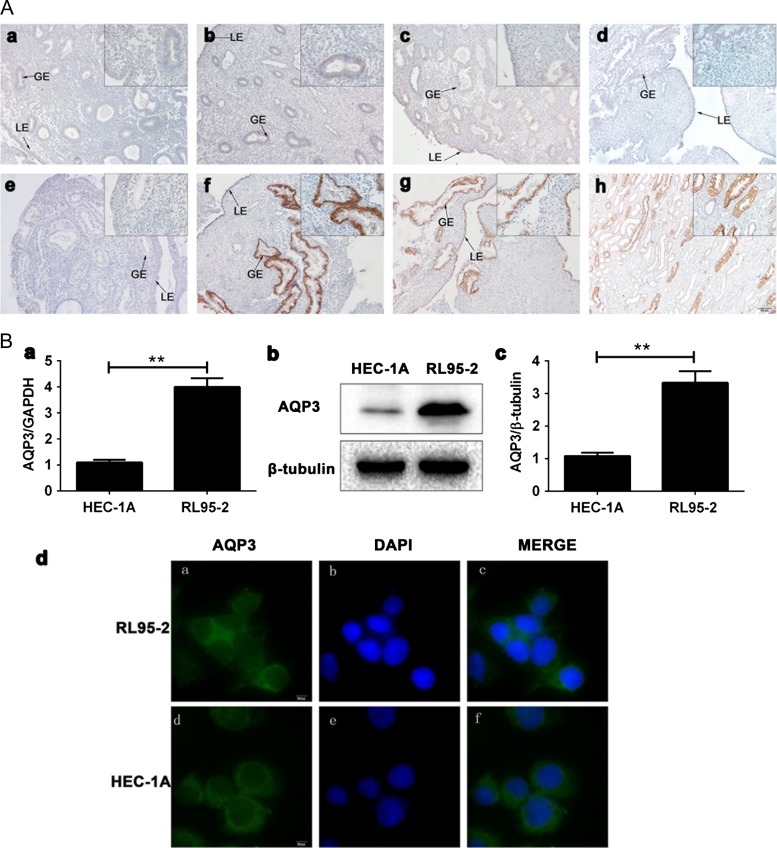
PARTICIPANTS/MATERIALS, SETTING, METHODS: AQP3 expression levels during different phases of the menstrual cycle were measured using immunohistochemical assays. In cells of different receptivity (high-receptive RL95-2 cells and low-receptive HEC-1A cells), the expression of AQP3 was measured using western blotting, qRT-PCR and immunofluorescence assays. Activities of AQP3, and its regulation by E2 and P4, were studied through in-vitro experiments using RL95-2 cells.
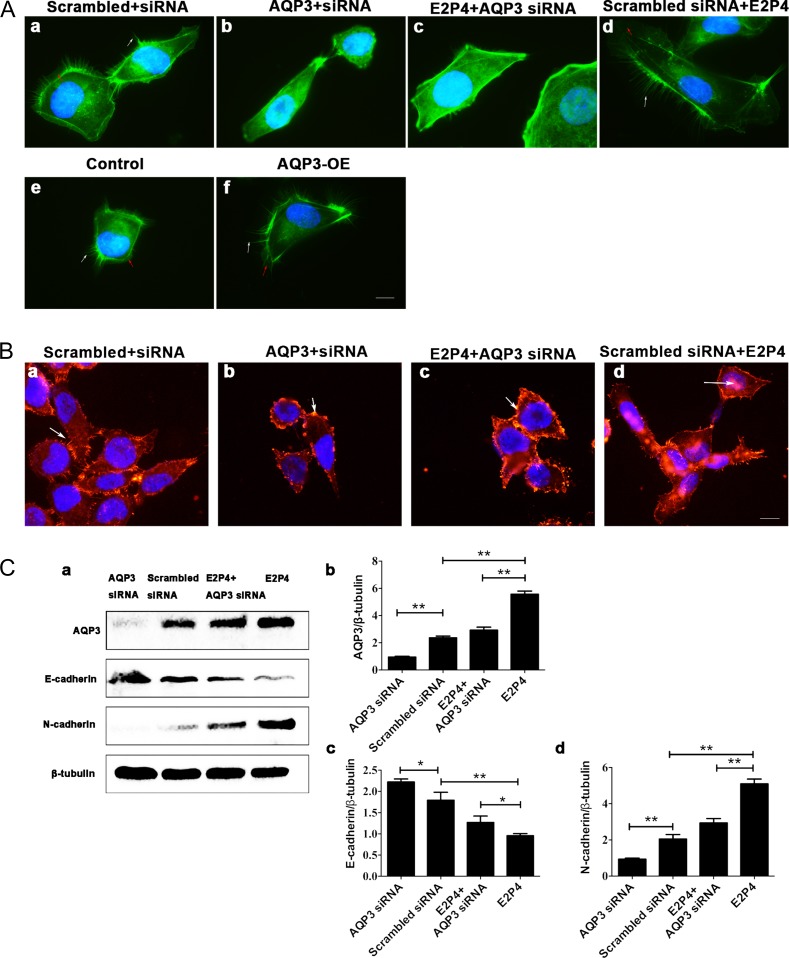
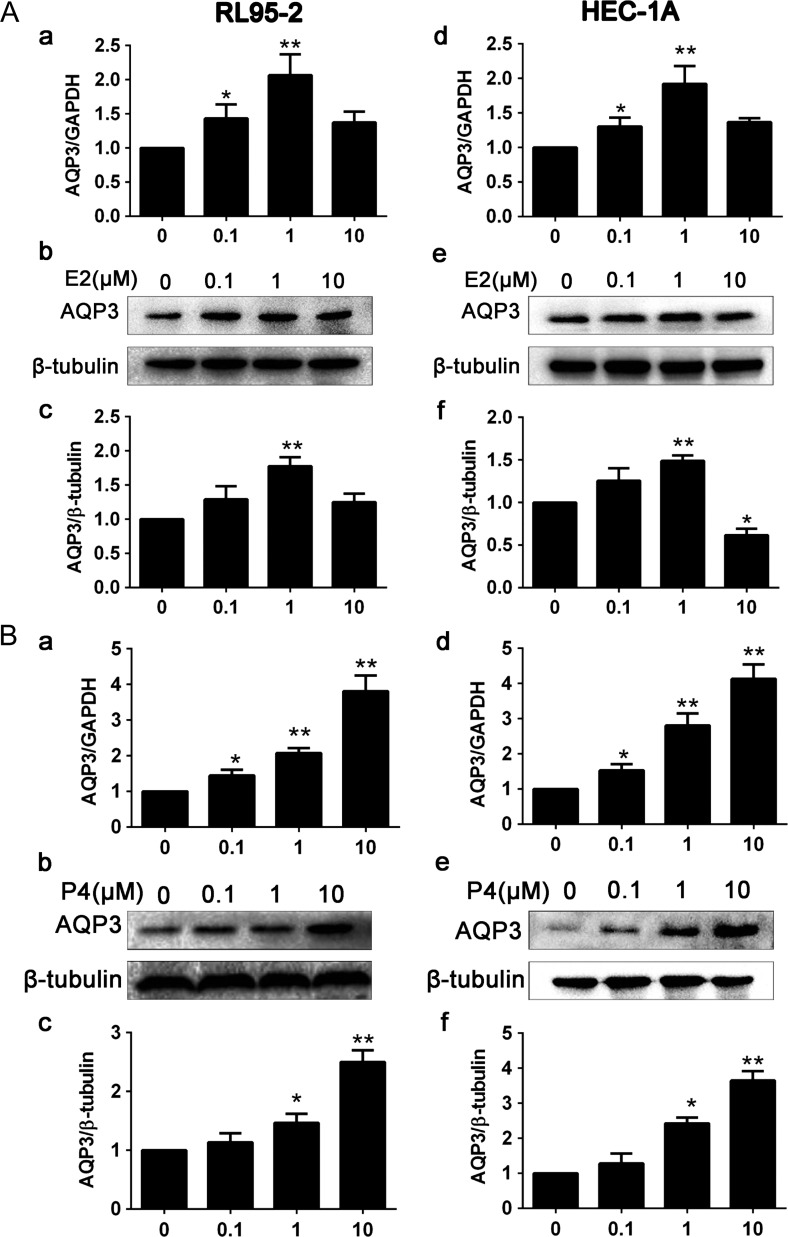
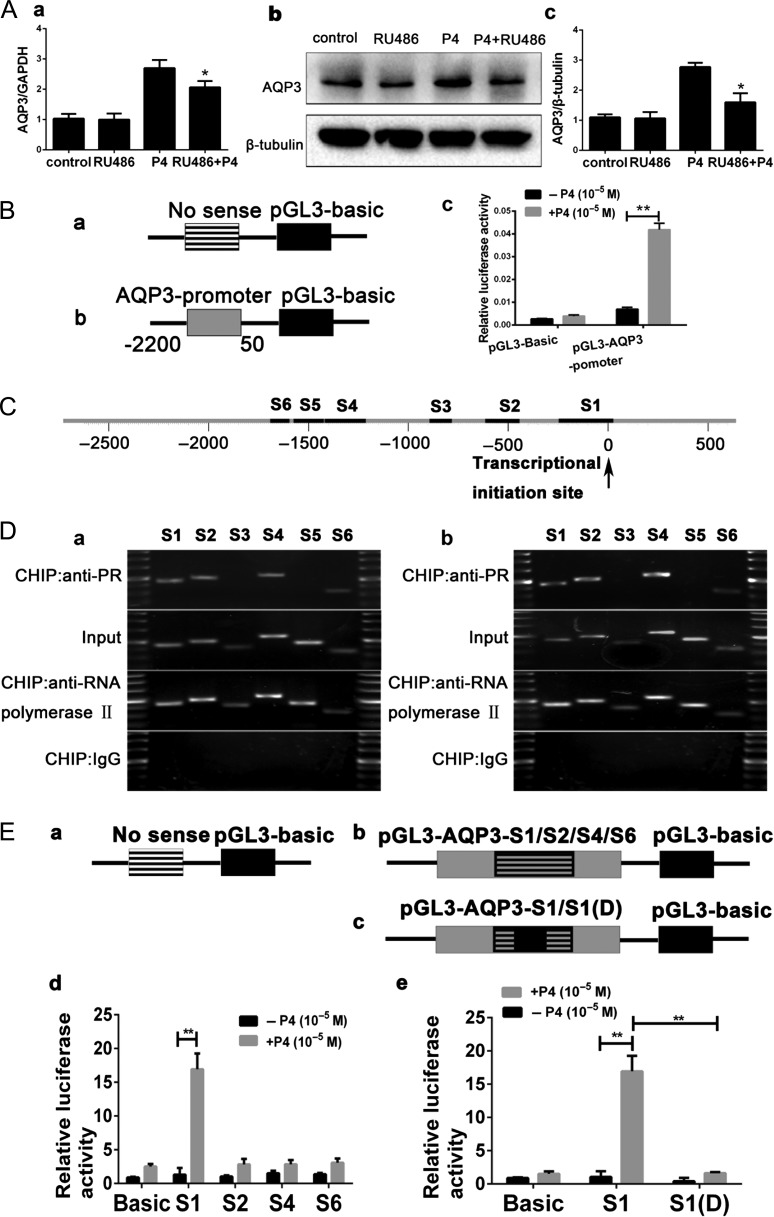
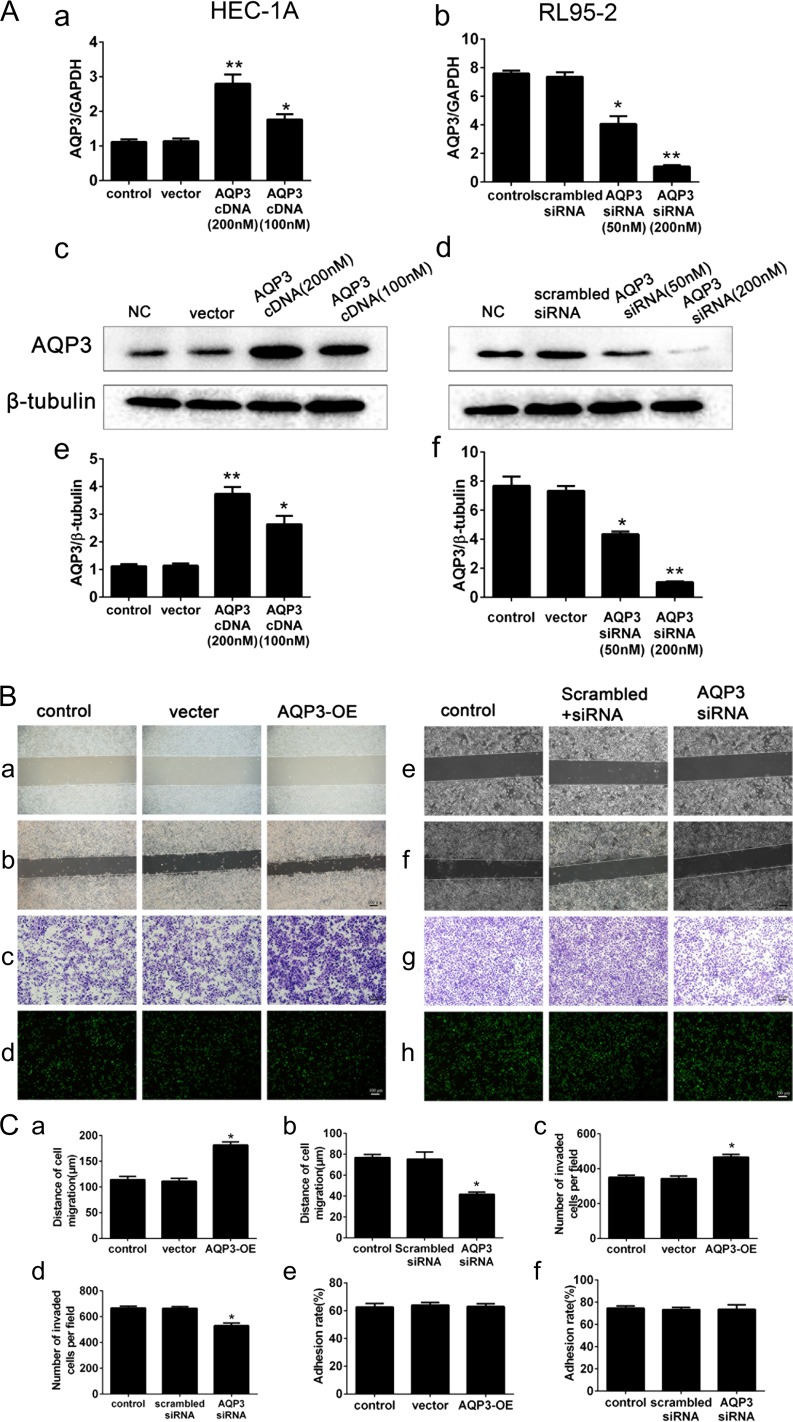
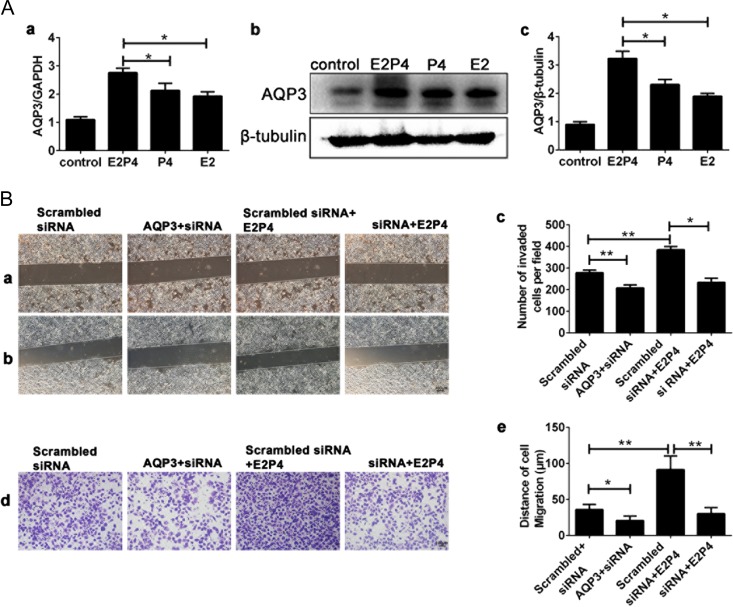
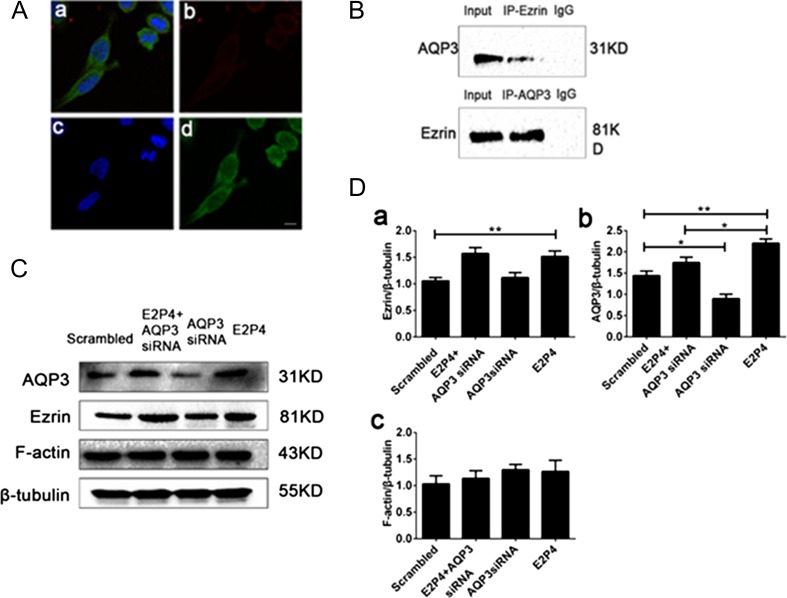
AQP3 expression in the mid- and late-secretory phases of the human endometrium is significantly higher than in other phases. Since AQP3 expression levels were higher in RL95-2 cells than in HEC-1A cells, mechanisms of AQP3 regulation by E2 and P4 were studied using RL95-2 cells. We provided the first report that P4 up-regulates AQP3 by directly targeting the promoter of the AQP3 gene. The up-regulation of AQP3 expression by a combination of E2 and P4 is significantly higher than that caused by either E2 or P4 alone. Together E2 and P4 promote RL95-2 cell migration and invasion by inducing EMT through AQP3. We also found that AQP3 co-localizes with ezrin and affects the formation of filopodia and lamellipodia during the E2 and P4-induced EMT process but has no effect on the expression of ezrin and F-actin.
N/A.
LIMITATIONS, REASONS FOR CAUTION: It is still unclear whether AQP3 is a main regulator of endometrial receptivity or one of several factors influencing the process.
Further investigation on AQP3 may contribute to a greater understanding of endometrial receptivity.
STUDY FUNDING/COMPETING INTEREST(S): This work was supported by the National Natural Scientific Grants of China (No. 31570798), the Program for Liaoning Excellent Talents in University (LR2017042), the Doctoral Scientific Research Foundation of Liaoning province (201601236), and the Liaoning Provincial Program for Top Discipline of Basic Medical Sciences. There are no conflicts of interest.
水通道蛋白 3(AQP3)如何影响子宫内膜容受性?
AQP3 受雌二醇(E2)和孕酮(P4)的组合调节,诱导子宫内膜上皮细胞的上皮-间充质转化(EMT)。
胚胎着床是一个极其复杂的过程,而子宫内膜容受性是胚胎着床成功的关键。雌激素和孕激素调节子宫内膜容受性。AQP3 受雌激素(E2)调节,通过调节 EMT 相关因子的表达和影响肌动蛋白细胞骨架的重组,增加细胞迁移和侵袭能力。
研究设计、规模、持续时间:本研究旨在探讨 AQP3 在人类子宫内膜不同月经周期阶段的功能中的病理生理意义。
参与者/材料、设置、方法:使用免疫组织化学检测不同月经周期阶段 AQP3 的表达水平。在不同受体(高受体 RL95-2 细胞和低受体 HEC-1A 细胞)中,通过 Western blot、qRT-PCR 和免疫荧光检测 AQP3 的表达。通过 RL95-2 细胞的体外实验研究 AQP3 的活性及其对 E2 和 P4 的调节作用。
人子宫内膜中中晚期分泌期 AQP3 的表达明显高于其他阶段。由于 RL95-2 细胞中 AQP3 的表达水平高于 HEC-1A 细胞,因此使用 RL95-2 细胞研究了 E2 和 P4 对 AQP3 的调节机制。我们首次报道 P4 通过直接靶向 AQP3 基因的启动子而上调 AQP3。E2 和 P4 的组合上调 AQP3 的表达明显高于单独使用 E2 或 P4。E2 和 P4 共同通过 AQP3 诱导 EMT,促进 RL95-2 细胞的迁移和侵袭。我们还发现 AQP3 与 ezrin 共定位,并影响 E2 和 P4 诱导的 EMT 过程中形成的丝状伪足和片状伪足,而对 ezrin 和 F-actin 的表达没有影响。
无。
局限性、谨慎的原因:目前尚不清楚 AQP3 是否是子宫内膜容受性的主要调节因子,还是影响该过程的几个因素之一。
对 AQP3 的进一步研究可能有助于更好地理解子宫内膜容受性。
研究资金/竞争利益:本工作得到国家自然科学基金(No. 31570798)、辽宁省高校优秀人才支持计划(LR2017042)、辽宁省博士科研启动基金(201601236)和辽宁省基础医学重点学科项目的资助。没有利益冲突。