Li Ting, Wang Lei, Zhang Yonghuan, Guo Xinyi, Chen Xinze, Zhang Fumiao, Yang Guiwen, Wen Wujun, Li Hua
Shandong Provincial Key Laboratory of Animal Resistance Biology, College of Life Sciences, Shandong Normal University, Jinan, 250014, China.
Key Laboratory for Sustainable Development of Marine Fisheries, Ministry of Agriculture, Yellow Sea Fisheries Research Institute, Chinese Academy of Fishery Sciences, Qingdao, 266071, China.
BMC Vet Res. 2018 Oct 3;14(1):299. doi: 10.1186/s12917-018-1613-y.
In the host immune system, perforin is a cytotoxic effector molecule that eliminate virus-infected and malignant cells. Moreover, some recent studies also imply the involvement of perforin in antibacterial immunity. Common carp (Cyprinus carpio L.), one of the most economically important fish species in China, has a high susceptibility to viruses and bacteria. Thus far, in common carp, no data are available regarding the identification and immunologic function of the perforin.
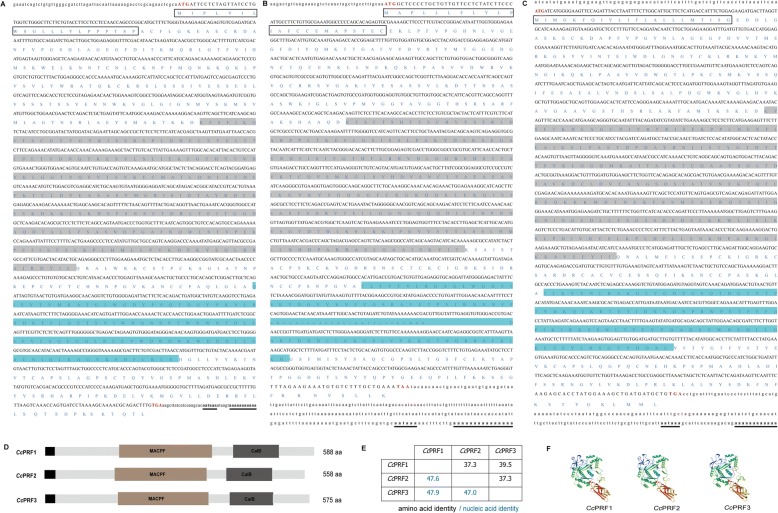
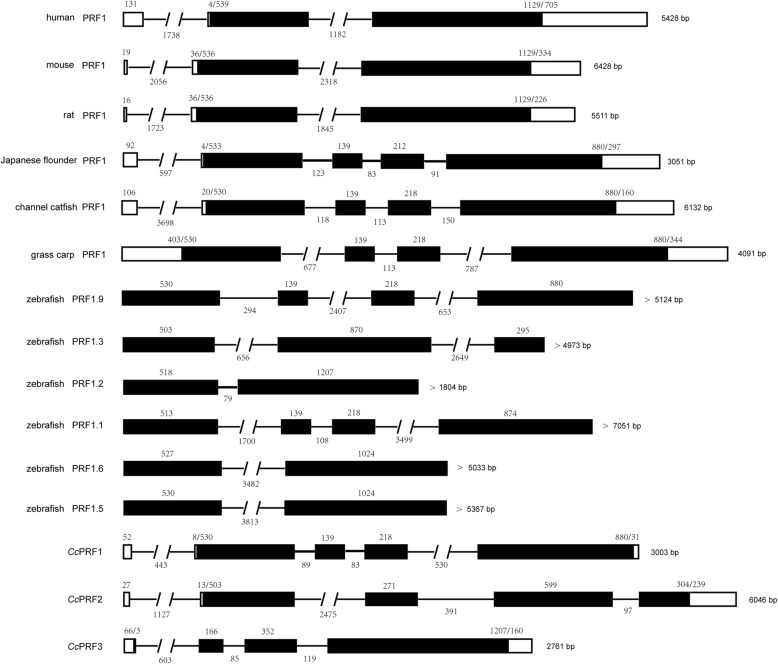
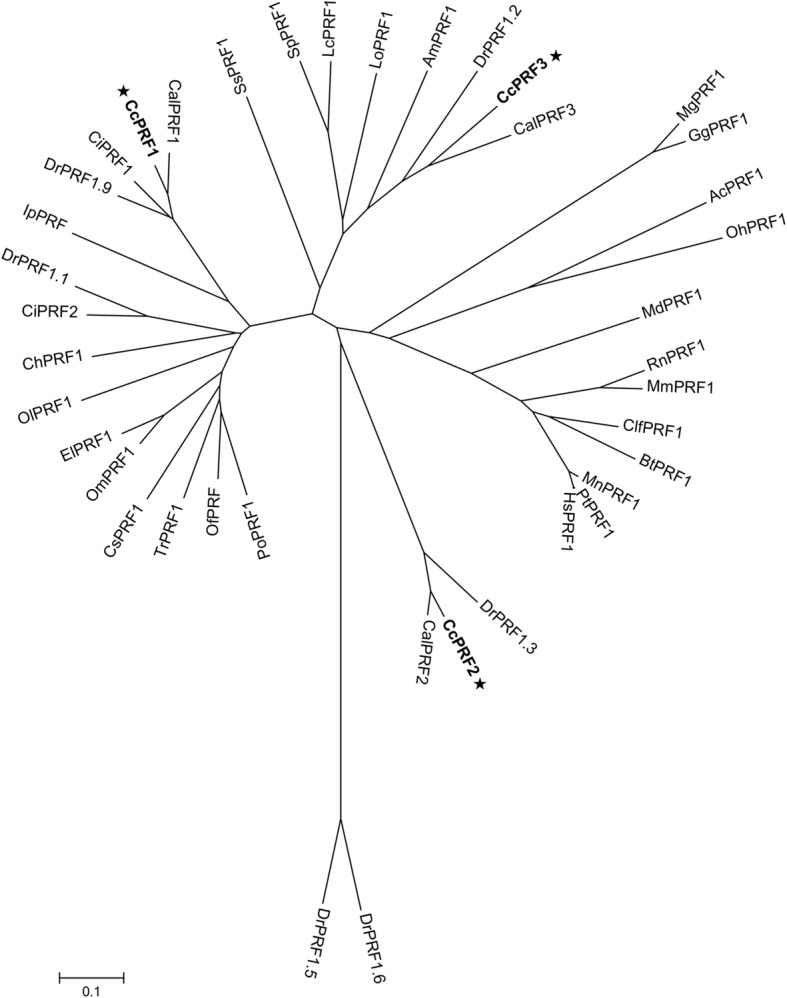
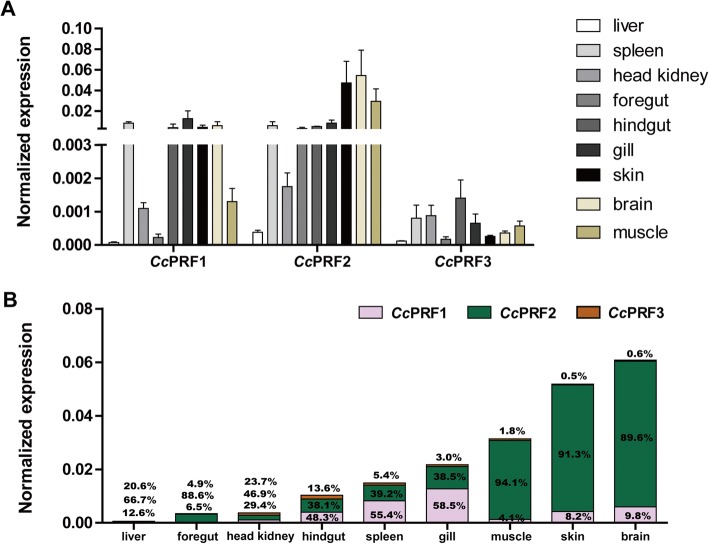
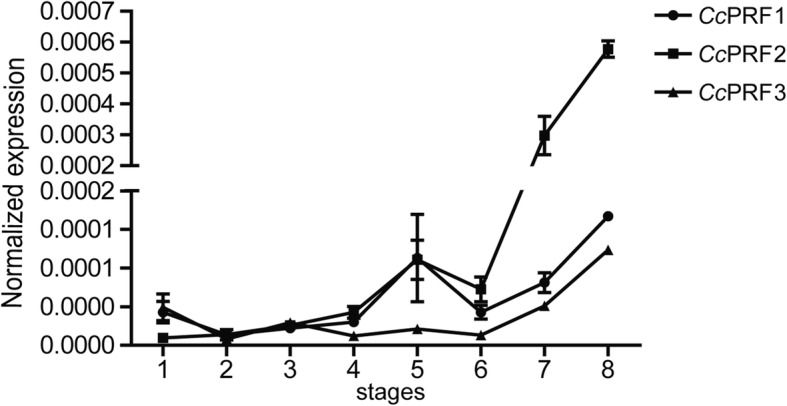
In the present study, the cDNA and genomic DNA sequences of three perforin isoform genes were cloned and characterized in common carp, named CcPRF1, CcPRF2 and CcPRF3. Amino acid sequences of the three CcPRFs were quite different, with identities ranged from 37.3 to 39.5%. Phylogenetic analysis showed that three CcPRFs, each in a separate sub-branch, possessed closer evolutionary relationship with other teleost perforins, especially with cyprinid fishes, than higher vertebrates. Expression analysis revealed that each CcPRF gene was differentially expressed in all of the nine tested tissues. During larvae ontogeny, each CcPRF displayed a distinct expression pattern, while with a common expression peak at 22 days post hatching (dph). Moreover, in vivo or in vitro, after stimulation with polyI:C, LPS and Aeromonas hydrophila, each CcPRF was induced significantly, with differential expression dynamics.
Our findings suggest that perforin might play significant roles in larval immune system and in the immune defense of common carp against viral and bacterial pathogens. Meantime, the differential expression dynamics seem to imply possible different cellular locations or functional differences across various CcPRF isoforms.
在宿主免疫系统中,穿孔素是一种细胞毒性效应分子,可清除病毒感染细胞和恶性细胞。此外,最近的一些研究还表明穿孔素参与抗菌免疫。鲤鱼(Cyprinus carpio L.)是中国经济价值最重要的鱼类之一,对病毒和细菌高度敏感。迄今为止,关于鲤鱼穿孔素的鉴定和免疫功能尚无相关数据。
在本研究中,克隆并鉴定了鲤鱼中三个穿孔素亚型基因的cDNA和基因组DNA序列,分别命名为CcPRF1、CcPRF2和CcPRF3。三种CcPRF的氨基酸序列差异较大,同源性在37.3%至39.5%之间。系统发育分析表明,三种CcPRF各自位于一个单独的亚分支中,与其他硬骨鱼的穿孔素,尤其是鲤科鱼类的穿孔素,比与高等脊椎动物的穿孔素具有更密切的进化关系。表达分析显示,每个CcPRF基因在所有九个测试组织中均有差异表达。在幼鱼个体发育过程中,每个CcPRF呈现出独特的表达模式,但在孵化后22天(dph)有一个共同的表达峰值。此外,在体内或体外,用聚肌胞苷酸(polyI:C)、脂多糖(LPS)和嗜水气单胞菌刺激后,每个CcPRF均被显著诱导,且表达动态存在差异。
我们的研究结果表明,穿孔素可能在鲤鱼幼鱼免疫系统以及鲤鱼抵御病毒和细菌病原体的免疫防御中发挥重要作用。同时,差异表达动态似乎暗示了不同CcPRF亚型可能存在不同的细胞定位或功能差异。