MMWR Morb Mortal Wkly Rep. 2018 Oct 5;67(39):1081-1087. doi: 10.15585/mmwr.mm6739a2.
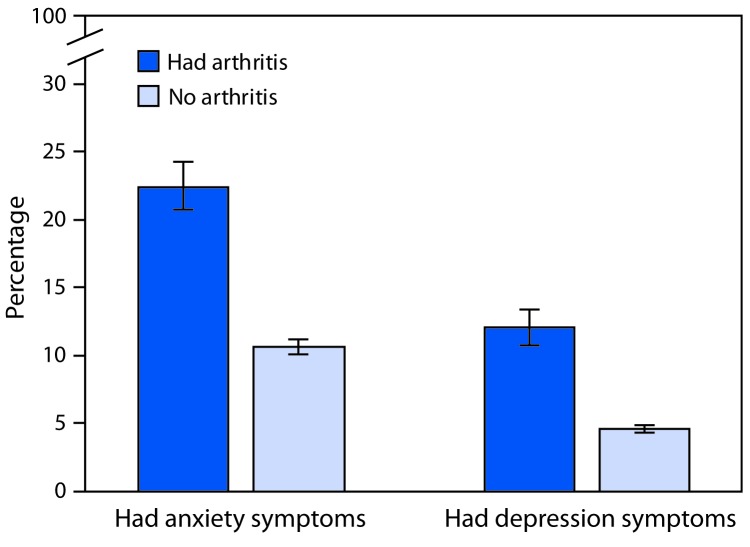
An estimated 54.4 million (22.7%) U.S. adults have doctor-diagnosed arthritis (1). A report in 2012 found that, among adults aged ≥45 years with arthritis, approximately one third reported having anxiety or depression, with anxiety more common than depression (2). Studies examining mental health conditions in adults with arthritis have focused largely on depression, arthritis subtypes, and middle-aged and older adults, or have not been nationally representative (3). To address these knowledge gaps, CDC analyzed 2015-2017 National Health Interview Survey (NHIS) data* to estimate the national prevalence of clinically relevant symptoms of anxiety and depression among adults aged ≥18 years with arthritis. Among adults with arthritis, age-standardized prevalences of symptoms of anxiety and depression were 22.5% and 12.1%, respectively, compared with 10.7% and 4.7% among adults without arthritis. Successful treatment approaches to address anxiety and depression among adults with arthritis are multifaceted and include screenings, referrals to mental health professionals, and evidence-based strategies such as regular physical activity and participation in self-management education to improve mental health.
据估计,美国有 5440 万(22.7%)成年人患有医生诊断的关节炎(1)。2012 年的一份报告发现,在≥45 岁患有关节炎的成年人中,约有三分之一报告有焦虑或抑郁,焦虑比抑郁更常见(2)。研究关节炎患者心理健康状况的研究主要集中在抑郁症、关节炎亚型、中年和老年人,或者不具有全国代表性(3)。为了弥补这些知识空白,疾病预防控制中心分析了 2015-2017 年全国健康访谈调查(NHIS)的数据*,以估计≥18 岁患有关节炎的成年人中与临床相关的焦虑和抑郁症状的全国流行率。在关节炎患者中,焦虑和抑郁症状的年龄标准化患病率分别为 22.5%和 12.1%,而无关节炎患者的患病率分别为 10.7%和 4.7%。针对关节炎成年人的焦虑和抑郁问题,成功的治疗方法是多方面的,包括筛查、向心理健康专业人员转介,以及定期进行身体活动和参与自我管理教育等循证策略,以改善心理健康。