Biology Department, Vassar College, Poughkeepsie, New York, United States of America.
Parasitic Diseases Branch, Centers for Disease Control and Prevention, Atlanta, Georgia, United States of America.
PLoS Negl Trop Dis. 2018 Oct 4;12(10):e0006747. doi: 10.1371/journal.pntd.0006747. eCollection 2018 Oct.
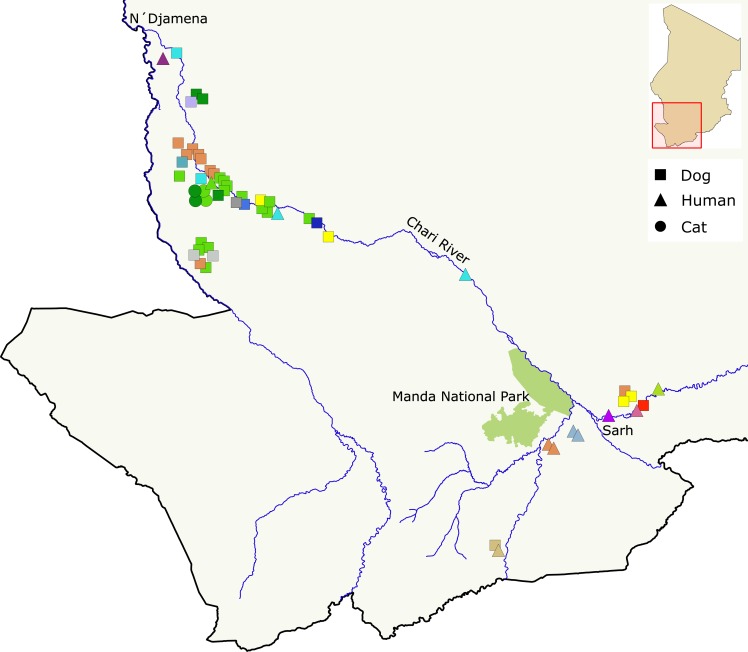
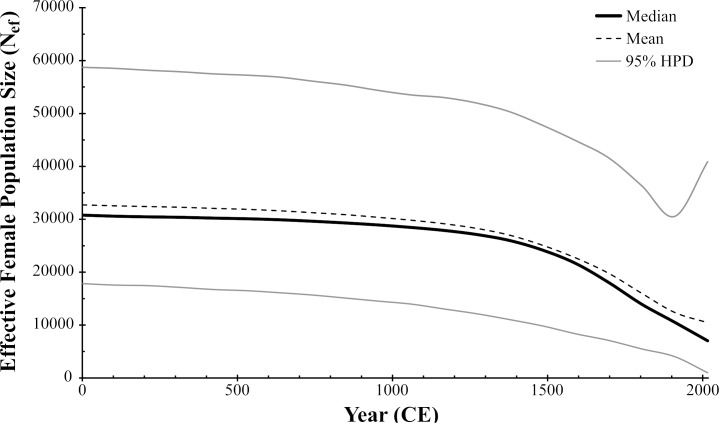
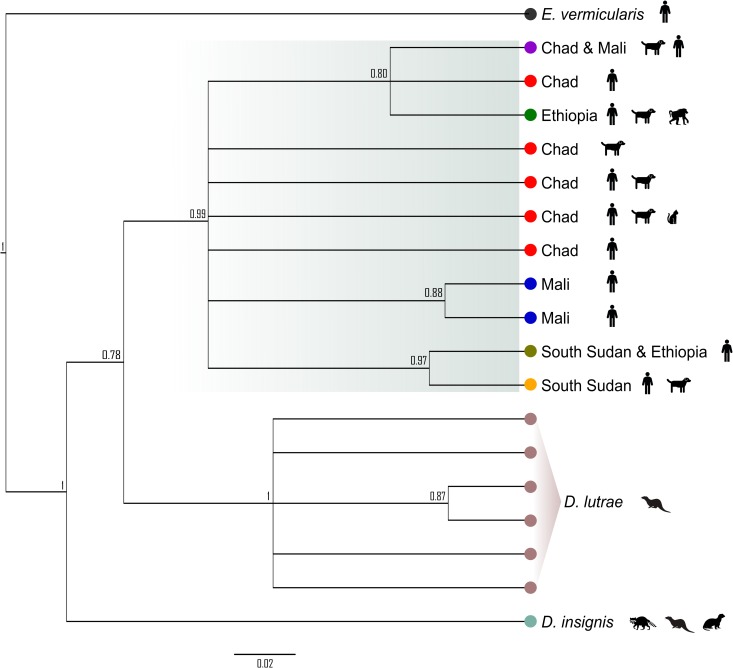
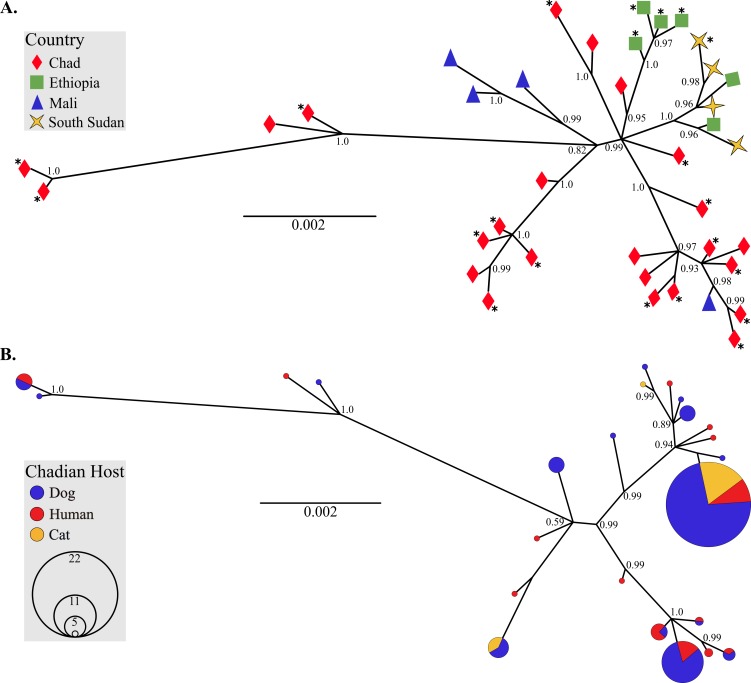
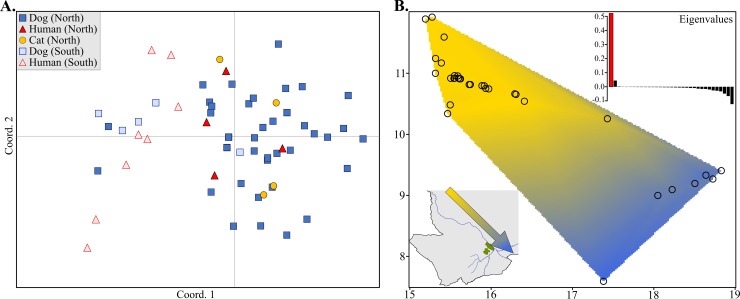
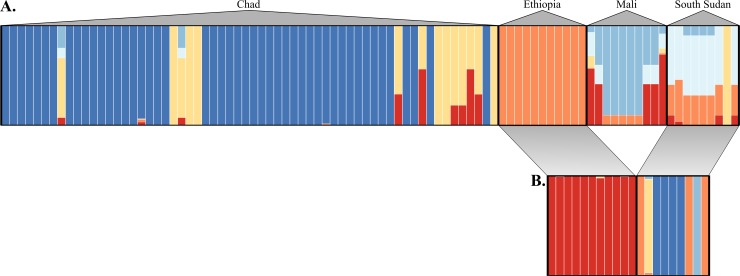
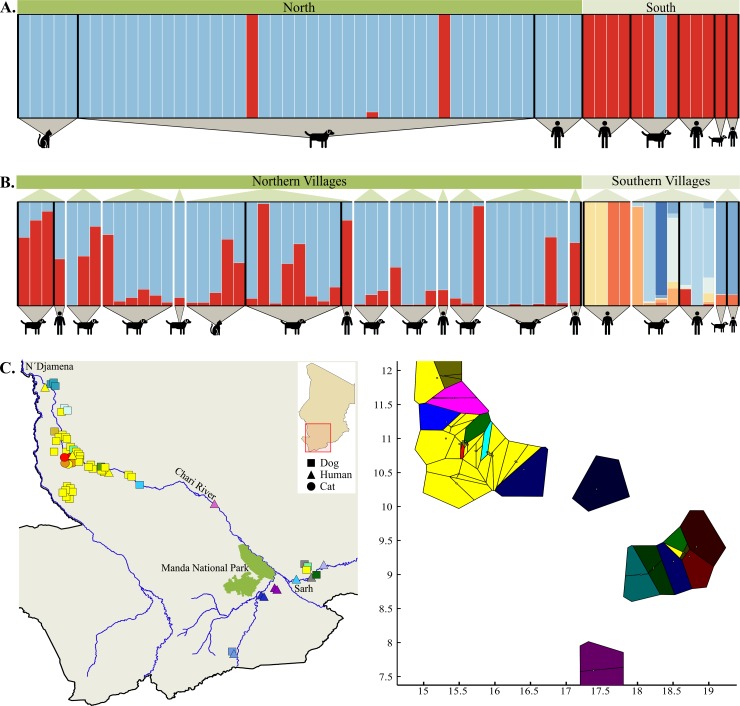
Following almost 10 years of no reported cases, Guinea worm disease (GWD or dracunculiasis) reemerged in Chad in 2010 with peculiar epidemiological patterns and unprecedented prevalence of infection among non-human hosts, particularly domestic dogs. Since 2014, animal infections with Guinea worms have also been observed in the other three countries with endemic transmission (Ethiopia, Mali, and South Sudan), causing concern and generating interest in the parasites' true taxonomic identity and population genetics. We present the first extensive population genetic data for Guinea worm, investigating mitochondrial and microsatellite variation in adult female worms from both human and non-human hosts in the four endemic countries to elucidate the origins of Chad's current outbreak and possible host-specific differences between parasites. Genetic diversity of Chadian Guinea worms was considerably higher than that of the other three countries, even after controlling for sample size through rarefaction, and demographic analyses are consistent with a large, stable parasite population. Genealogical analyses eliminate the other three countries as possible sources of parasite reintroduction into Chad, and sequence divergence and distribution of genetic variation provide no evidence that parasites in human and non-human hosts are separate species or maintain isolated transmission cycles. Both among and within countries, geographic origin appears to have more influence on parasite population structure than host species. Guinea worm infection in non-human hosts has been occasionally reported throughout the history of the disease, particularly when elimination programs appear to be reaching their end goals. However, no previous reports have evaluated molecular support of the parasite species identity. Our data confirm that Guinea worms collected from non-human hosts in the remaining endemic countries of Africa are Dracunculus medinensis and that the same population of worms infects both humans and dogs in Chad. Our genetic data and the epidemiological evidence suggest that transmission in the Chadian context is currently being maintained by canine hosts.
在没有报告病例近 10 年后,2010 年乍得再次出现麦地那龙线虫病(麦地那龙线虫病或麦地那龙线虫病),其流行模式具有独特性,非人类宿主(尤其是家犬)的感染率前所未有。自 2014 年以来,在其他三个流行传播的国家(埃塞俄比亚、马里和南苏丹)也观察到了动物感染麦地那龙线虫,这引起了人们对寄生虫真正分类学身份和种群遗传学的关注。我们首次提供了广泛的麦地那龙线虫种群遗传数据,调查了来自四个流行国家的人类和非人类宿主的成年雌性线虫的线粒体和微卫星变异,以阐明乍得目前疫情的起源以及寄生虫之间可能存在的宿主特异性差异。乍得麦地那龙线虫的遗传多样性明显高于其他三个国家,即使通过稀疏化控制样本量也是如此,并且人口统计分析与庞大而稳定的寄生虫种群一致。系统发育分析排除了其他三个国家作为寄生虫重新引入乍得的可能来源,遗传变异的序列分歧和分布也没有证据表明人类和非人类宿主中的寄生虫是不同的物种或维持独立的传播循环。无论是在国家之间还是在国家内部,地理起源似乎对寄生虫种群结构的影响大于宿主物种。在疾病的历史进程中,非人类宿主偶尔会报告麦地那龙线虫感染,尤其是在消除计划似乎即将达到最终目标时。然而,以前没有报告评估寄生虫物种身份的分子支持。我们的数据证实,从非洲剩余流行国家的非人类宿主中收集的麦地那龙线虫是麦地那龙线虫,而且在乍得,同一群体的寄生虫同时感染人和狗。我们的遗传数据和流行病学证据表明,在乍得的情况下,传播目前由犬宿主维持。