Animal & Veterinary Sciences, SRUC, Roslin Institute Building, Easter Bush, Midlothian, United Kingdom.
The Roslin Institute and Royal (Dick) School of Veterinary Studies, University of Edinburgh, Edinburgh, Midlothian, United Kingdom.
PLoS One. 2018 Oct 4;13(10):e0205122. doi: 10.1371/journal.pone.0205122. eCollection 2018.
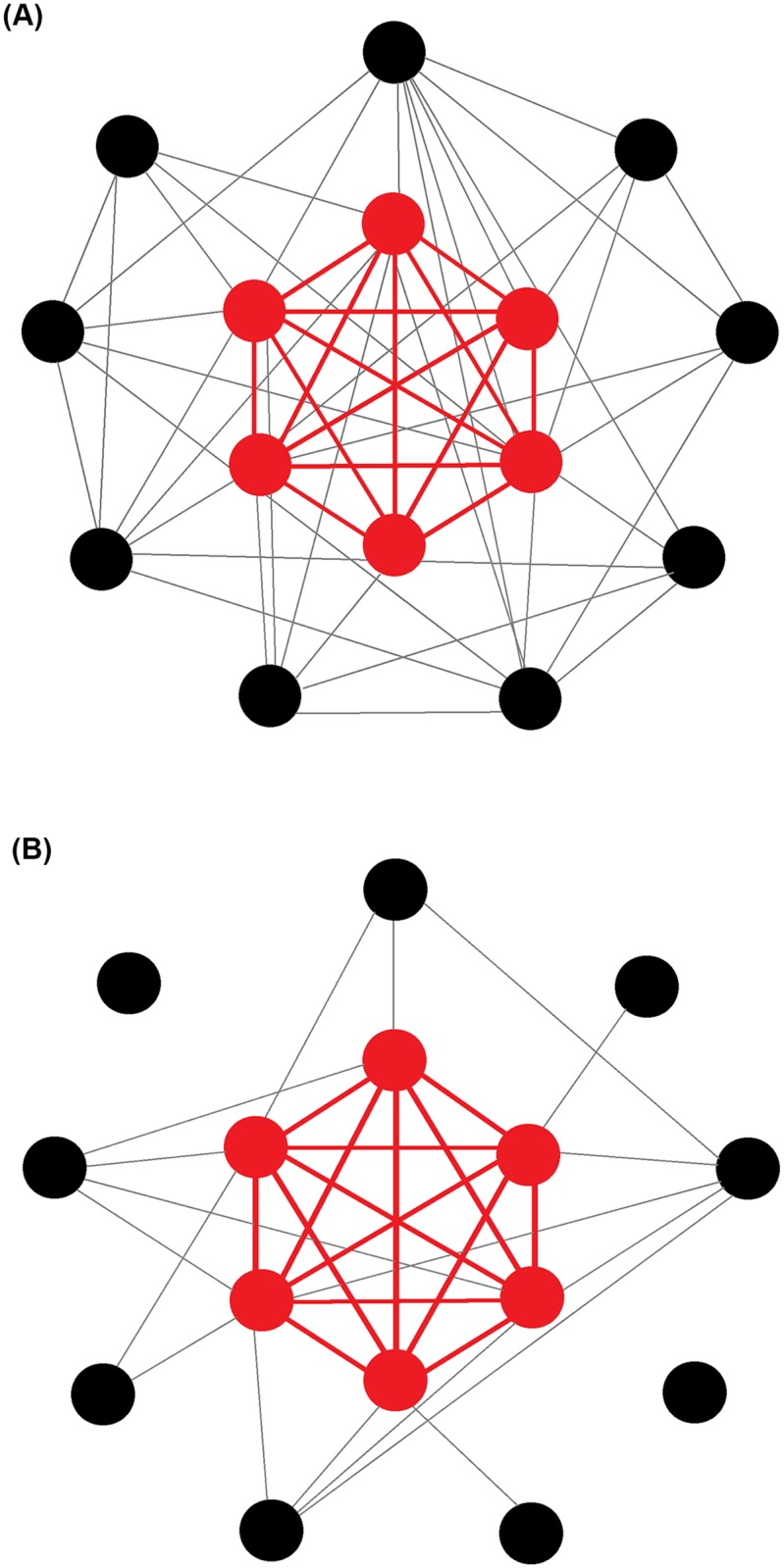
Post-mixing aggression in pigs is a harmful and costly behaviour which negatively impacts both animal welfare and farm efficiency. There is vast unexplained variation in the amount of acute and chronic aggression that dyadic behaviours do not fully explain. This study hypothesised that certain pen-level network properties may improve prediction of lesion outcomes due to the incorporation of indirect social interactions that are not captured by dyadic traits. Utilising current SNA theory, we investigate whether pen-level network properties affect the number of aggression-related injuries at 24 hours and 3 weeks post-mixing (24hr-PM and 3wk-PM). Furthermore we compare the predictive value of network properties to conventional dyadic traits. A total of 78 pens were video recorded for 24hr post-mixing. Each aggressive interaction that occurred during this time period was used to construct the pen-level networks. The relationships between network properties at 24hr and the pen level injuries at 24hr-PM and 3wk-PM were analysed using mixed models and verified using permutation tests. The results revealed that network properties at 24hr could predict long term aggression (3wk-PM) better than dyadic traits. Specifically, large clique formation in the first 24hr-PM predicted fewer injuries at 3wk-PM and high betweenness centralisation at 24hr-PM predicted increased rates of injury at 3wk-PM. This study demonstrates that network properties present during the first 24hr-PM have predictive value for chronic aggression, and have potential to allow identification and intervention for at risk groups.
猪的混群后攻击行为是一种有害且昂贵的行为,会对动物福利和农场效率产生负面影响。在急性和慢性攻击行为的数量上存在着巨大的未被解释的变异,而二元行为并不能完全解释这些变异。本研究假设,某些圈舍级网络特性可以通过纳入二元特征无法捕捉到的间接社会相互作用,从而提高对损伤结果的预测能力。本研究利用当前的 SNA 理论,探讨了圈舍级网络特性是否会影响混群后 24 小时(24hr-PM)和 3 周(3wk-PM)的攻击性损伤数量。此外,我们还比较了网络特性与传统二元特征的预测价值。共有 78 个猪圈在混群后 24 小时进行了录像。在这段时间内发生的每一次攻击性相互作用都被用来构建圈舍级网络。使用混合模型分析了 24 小时时的网络特性与 24hr-PM 和 3wk-PM 时的圈舍级损伤之间的关系,并使用置换检验进行了验证。结果表明,24 小时时的网络特性比二元特征更能预测长期攻击(3wk-PM)。具体来说,24hr-PM 时大的团块形成预测了 3wk-PM 时的损伤减少,而 24hr-PM 时的高介数中心度预测了 3wk-PM 时的损伤增加。本研究表明,24hr-PM 期间出现的网络特性对慢性攻击具有预测价值,并有可能识别和干预高危群体。