Department of Developmental Neurobiology, St. Jude Children's Research Hospital, Memphis, TN, USA.
Department of Developmental Neurobiology, St. Jude Children's Research Hospital, Memphis, TN, USA.
Curr Opin Neurobiol. 2019 Feb;54:83-89. doi: 10.1016/j.conb.2018.09.003. Epub 2018 Oct 2.
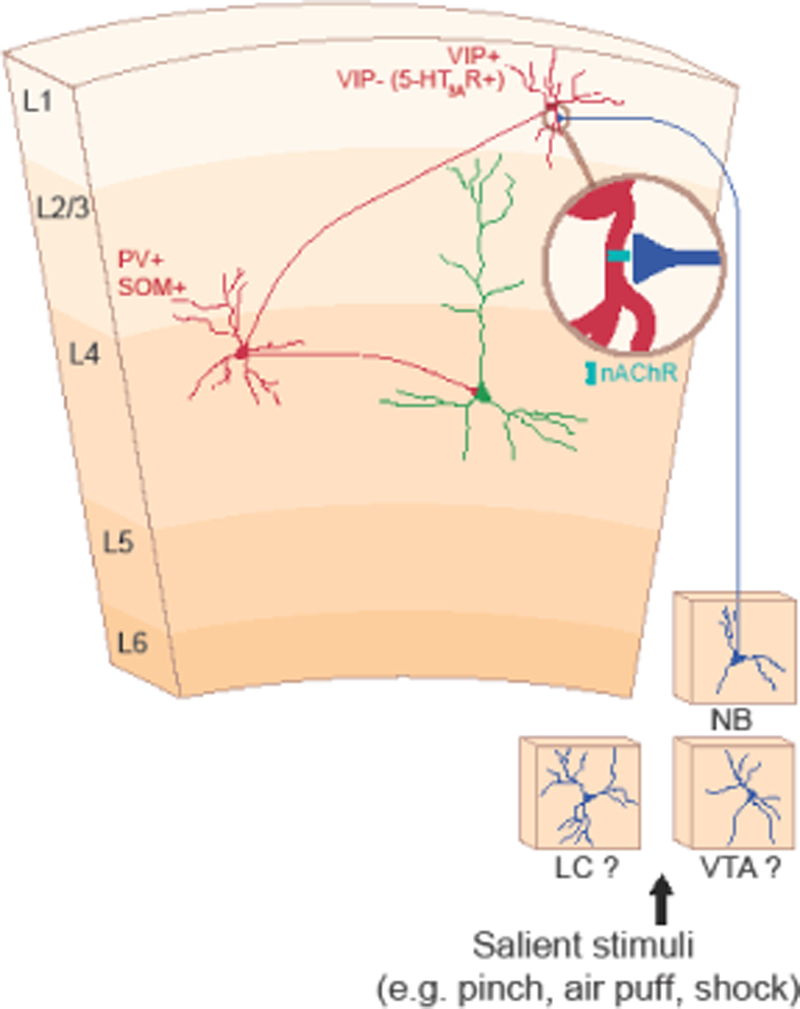
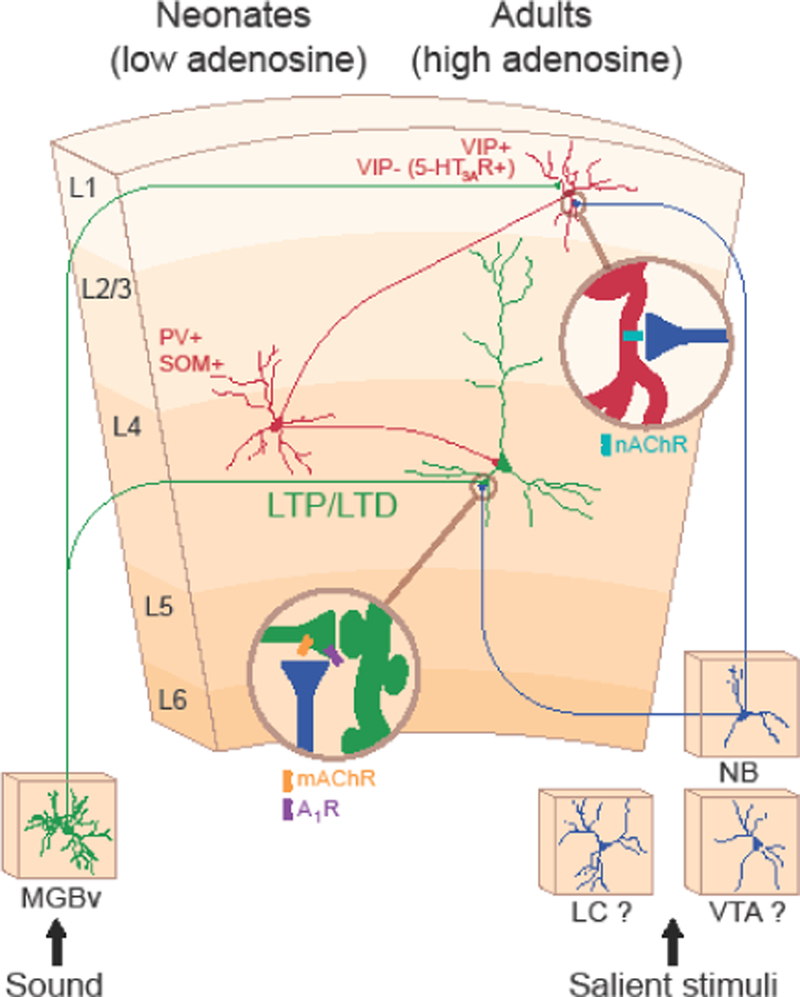
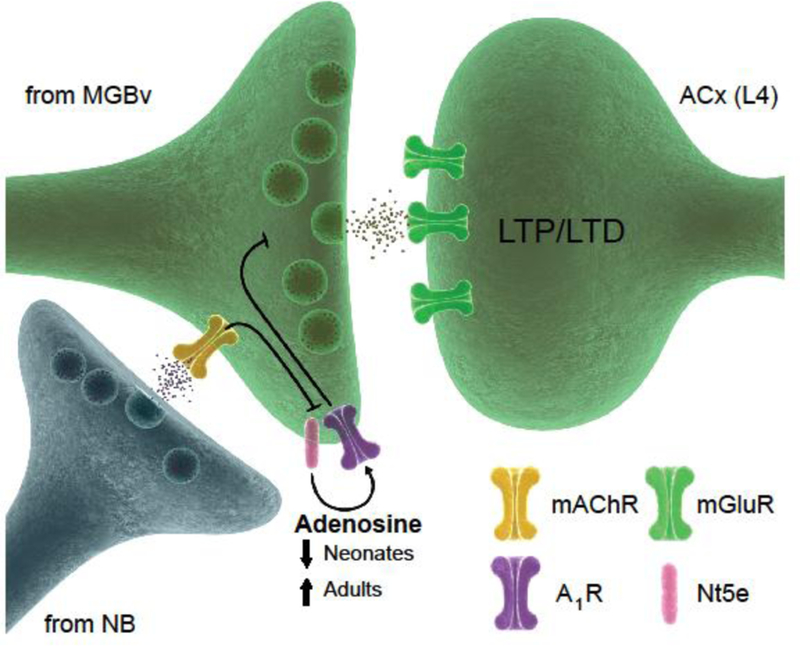
Cortical circuits are particularly sensitive to incoming sensory information during well-defined intervals of postnatal development called 'critical periods'. The critical period for cortical plasticity closes in adults, thus restricting the brain's ability to indiscriminately store new sensory information. For example, children acquire language in an exposure-based manner, whereas learning language in adulthood requires more effort and attention. It has been suggested that pairing sounds with the activation of neuromodulatory circuits involved in attention reopens this critical period. Here, we review two critical period hypotheses related to neuromodulation: cortical disinhibition and thalamic adenosine. We posit that these mechanisms co-regulate the critical period for auditory cortical plasticity. We also discuss ways to reopen this period and rejuvenate cortical plasticity in adults.
皮质电路在称为“关键期”的出生后发育的特定时间段内对传入的感觉信息特别敏感。皮质可塑性的关键期在成年人中关闭,从而限制了大脑随意储存新感觉信息的能力。例如,儿童以基于暴露的方式学习语言,而成年人学习语言则需要更多的努力和注意力。有人提出,将声音与涉及注意力的神经调制回路的激活相配对,可以重新打开这个关键期。在这里,我们回顾了与神经调制相关的两个关键期假说:皮质去抑制和丘脑腺苷。我们假设这些机制共同调节听觉皮质可塑性的关键期。我们还讨论了重新开放这一时期并使成年人大脑皮质可塑性恢复活力的方法。