Robinson Max, Glusman Gustavo
Institute for Systems Biology, 401 Terry Ave N, Seattle, WA 98109, USA.
Genes (Basel). 2018 Oct 4;9(10):481. doi: 10.3390/genes9100481.
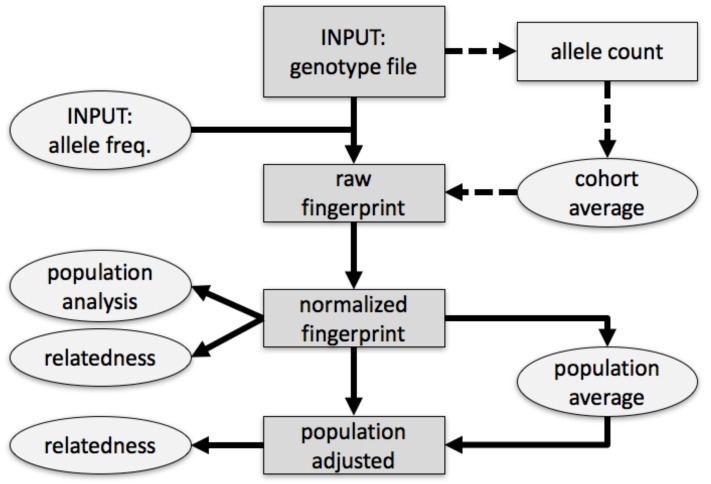
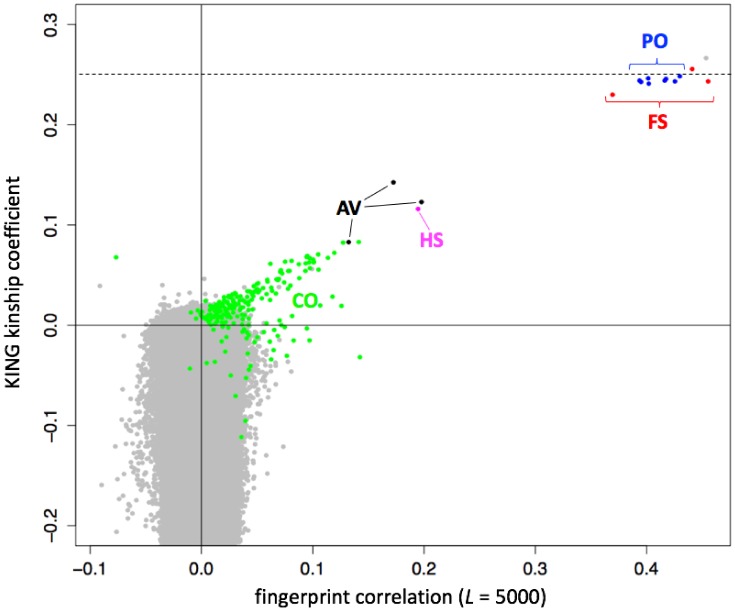
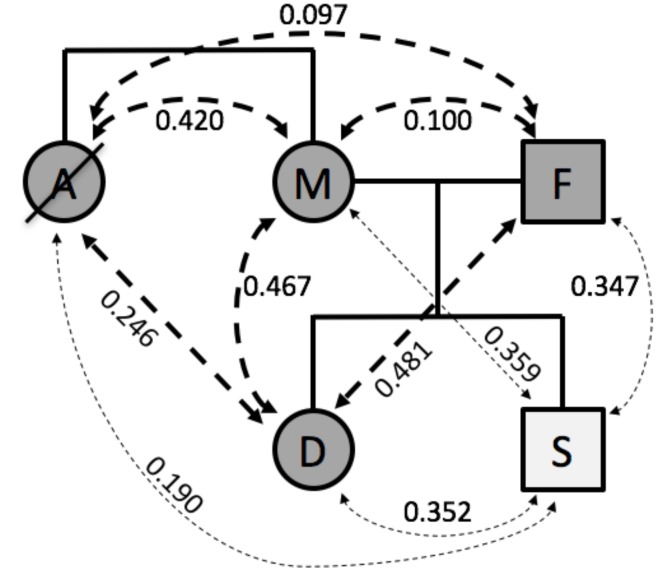
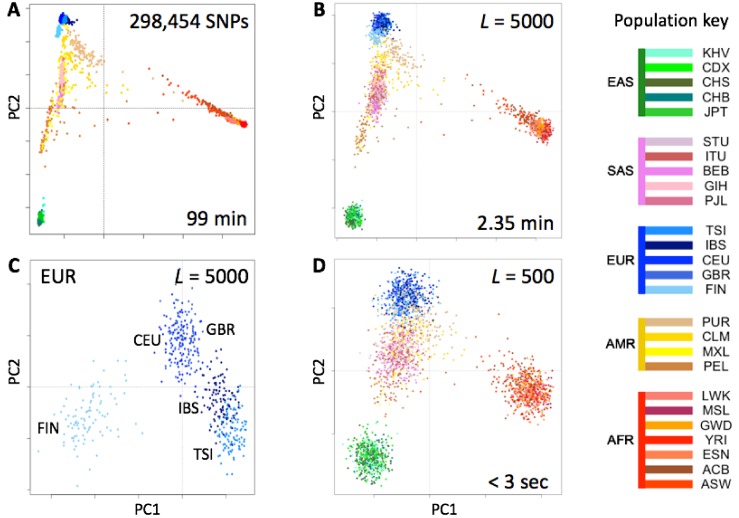
Genetic testing has expanded out of the research laboratory into medical practice and the direct-to-consumer market. Rapid analysis of the resulting genotype data now has a significant impact. We present a method for summarizing personal genotypes as 'genotype fingerprints' that meets these needs. Genotype fingerprints can be derived from any single nucleotide polymorphism-based assay, and remain comparable as chip designs evolve to higher marker densities. We demonstrate that these fingerprints support distinguishing types of relationships among closely related individuals and closely related individuals from individuals from the same background population, as well as high-throughput identification of identical genotypes, individuals in known background populations, and de novo separation of subpopulations within a large cohort through extremely rapid comparisons. Although fingerprints do not preserve anonymity, they provide a useful degree of privacy by summarizing a genotype while preventing reconstruction of individual marker states. Genotype fingerprints are therefore well-suited as a format for public aggregation of genetic information to support ancestry and relatedness determination without revealing personal health risk status.
基因检测已从研究实验室扩展到医学实践和直接面向消费者的市场。对由此产生的基因型数据进行快速分析如今产生了重大影响。我们提出了一种将个人基因型总结为“基因型指纹”的方法,以满足这些需求。基因型指纹可从任何基于单核苷酸多态性的检测中得出,并且随着芯片设计向更高标记密度发展,它们仍具有可比性。我们证明,这些指纹有助于区分亲缘关系密切的个体之间的关系类型,以及将亲缘关系密切的个体与来自相同背景人群的个体区分开来,同时还能通过极其快速的比较对相同基因型、已知背景人群中的个体进行高通量识别,以及在一个大型队列中对亚群进行从头分离。虽然指纹不能保证匿名性,但它们通过总结基因型同时防止个体标记状态的重建,提供了一定程度的有用隐私。因此,基因型指纹非常适合作为遗传信息公共汇总的一种形式,以支持血统和亲属关系的确定,而不透露个人健康风险状况。