Department of Electrical and Computer Engineering, Schulich School of Engineering, University of Calgary, Calgary, AB T2N 1N4, Canada.
Sensors (Basel). 2018 Oct 4;18(10):3329. doi: 10.3390/s18103329.
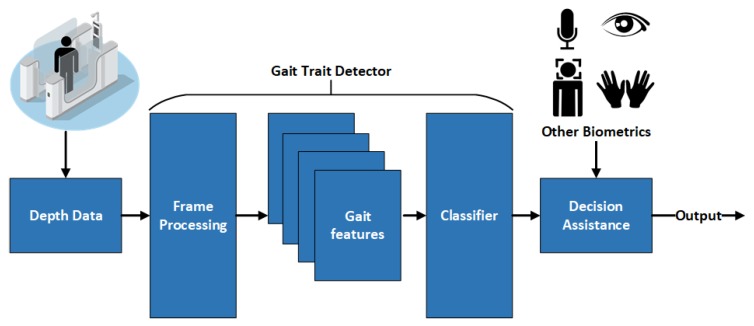
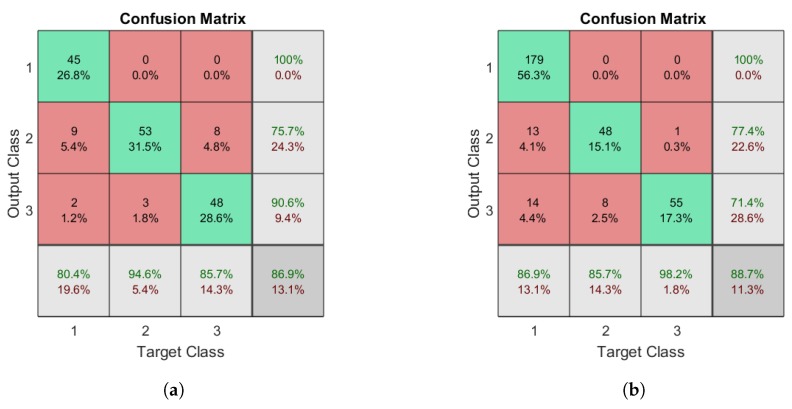
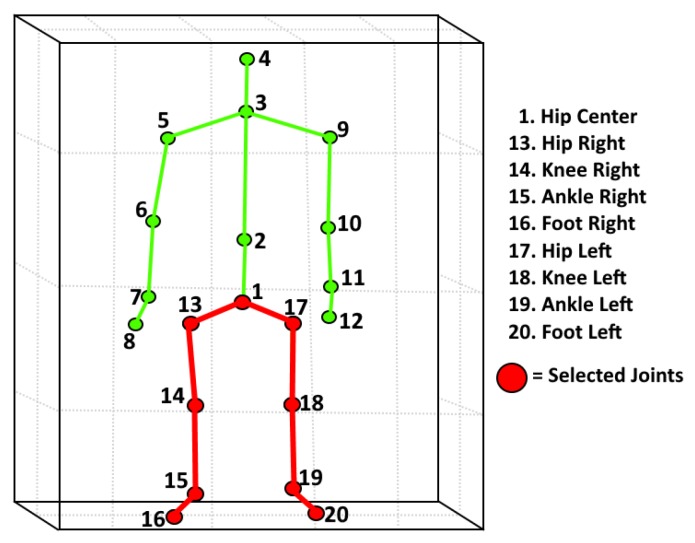
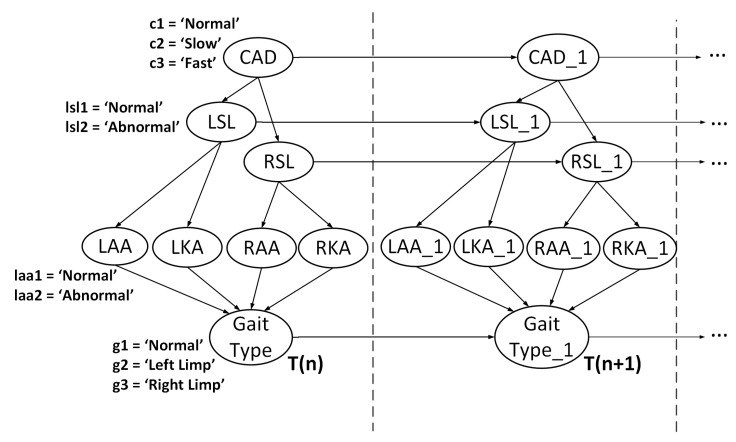
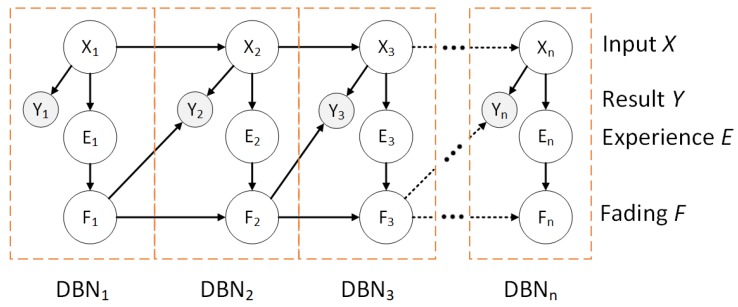
This paper focuses on gait abnormality type identification-specifically, recognizing antalgic gait. Through experimentation, we demonstrate that detecting an individual's gait type is a viable biometric that can be used along with other common biometrics for applications such as forensics. To classify gait, the gait data is represented by coordinates that reflect the body joint coordinates obtained using a Microsoft Kinect v2 system. Features such as cadence, stride length, and other various joint angles are extracted from the input data. Using approaches such as the dynamic Bayesian network, the obtained features are used to model as well as perform gait type classification. The proposed approach is compared with other classification techniques and experimental results reveal that it is capable of obtaining a 88.68% recognition rate. The results illustrate the potential of using a dynamic Bayesian network for gait abnormality classification.
本文专注于步态异常类型识别,特别是识别痛性步态。通过实验,我们证明了检测个体的步态类型是一种可行的生物识别特征,可以与其他常见的生物识别特征一起用于法医等应用。为了对步态进行分类,步态数据由坐标表示,这些坐标反映了使用 Microsoft Kinect v2 系统获得的身体关节坐标。从输入数据中提取诸如步频、步长和其他各种关节角度等特征。使用动态贝叶斯网络等方法,从获得的特征用于建模以及进行步态类型分类。将所提出的方法与其他分类技术进行比较,实验结果表明,它能够获得 88.68%的识别率。结果表明,使用动态贝叶斯网络进行步态异常分类具有潜力。