Murphy Con, Byrne Stephen, Ahmed Gul, Kenny Andrew, Gallagher James, Harvey Harry, O'Farrell Eoin, Bird Brian
Medical Oncology, Bon Secours Cork, University College Cork School of Medicine, Cork, Ireland.
School of Pharmacy, University College Cork National University of Ireland, Cork, Ireland.
Dose Response. 2018 Oct 1;16(4):1559325818803042. doi: 10.1177/1559325818803042. eCollection 2018 Oct-Dec.
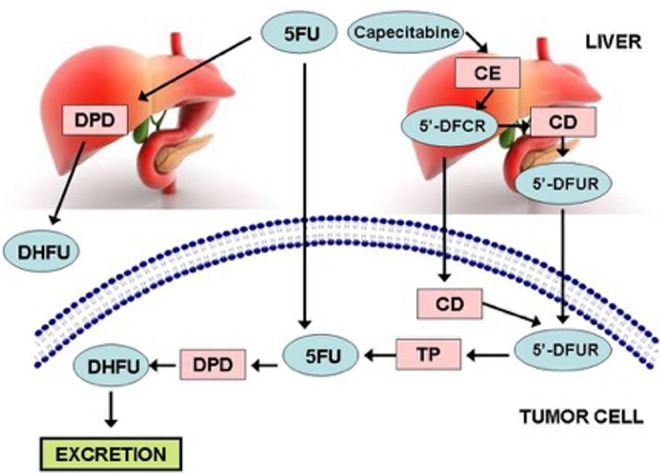
Severe toxicity is experienced by a substantial minority of patients receiving fluoropyrimidine-based chemotherapy, with approximately 20% of these severe toxicities attributable to polymorphisms in the gene. The codes for the enzyme dihydropyrimidine dehydrogenase (DPD) important in the metabolism of fluoropyrimidine-based chemotherapy. We questioned whether prospective mutation analysis in all patients commencing such therapy would prove more cost-effective than reactive testing of patients experiencing severe toxicity.
All patients experiencing severe toxicity from fluoropyrimidine-based chemotherapy for colorectal cancer in an Irish private hospital over a 3-year period were tested for 4 polymorphisms previously associated with toxicity. The costs associated with an index admission for toxicity in DPD-deficient patients were examined. A cost analysis was undertaken comparing the anticipated cost of implementing screening for mutations versus current usual care. One-way sensitivity analysis was conducted on known input variables. An alternative scenario analysis from the perspective of the Irish health-care payer (responsible for public hospitals) was also performed.
Of 134 patients commencing first-line fluoropyrimidine chemotherapy over 3 years, 30 (23%) patients developed grade 3/4 toxicity. Of these, 17% revealed heterozygote mutations. The cost of hospitalization for the -mutated patients was €232 061, while prospectively testing all 134 patients would have cost €23 718. Prospective testing would result in cost savings across all scenarios.
The cost of hospital admission for severe chemotherapy-related toxicity is significantly higher than the cost of prospective testing of each patient commencing fluoropyrimidine chemotherapy.
接受氟嘧啶类化疗的患者中有相当一部分会出现严重毒性反应,其中约20%的严重毒性反应归因于该基因的多态性。该基因编码二氢嘧啶脱氢酶(DPD),这是氟嘧啶类化疗代谢过程中的一种重要酶。我们质疑对所有开始此类治疗的患者进行前瞻性突变分析是否比仅对出现严重毒性反应的患者进行反应性检测更具成本效益。
对一家爱尔兰私立医院3年内因氟嘧啶类化疗治疗结直肠癌而出现严重毒性反应的所有患者,检测4种先前与毒性相关的多态性。研究了DPD缺乏患者因毒性反应首次住院的相关费用。进行了成本分析,比较了实施突变筛查的预期成本与当前常规治疗成本。对已知输入变量进行了单向敏感性分析。还从爱尔兰医疗保健支付方(负责公立医院)的角度进行了替代情景分析。
在3年期间开始一线氟嘧啶化疗的134例患者中,30例(23%)出现3/4级毒性反应。其中,17%显示杂合子突变。携带突变患者的住院费用为232061欧元,而对所有134例患者进行前瞻性检测的费用为23718欧元。前瞻性检测在所有情景下都将节省成本。
严重化疗相关毒性反应的住院费用显著高于对每位开始氟嘧啶化疗的患者进行前瞻性检测的费用。