Institute of Physiological Chemistry, University Medical Center Johannes Gutenberg University Mainz, 55128 Mainz, Germany.
Institute of Molecular Biology (IMB), 55128 Mainz, Germany.
Cell Stem Cell. 2018 Oct 4;23(4):557-571.e8. doi: 10.1016/j.stem.2018.09.008.
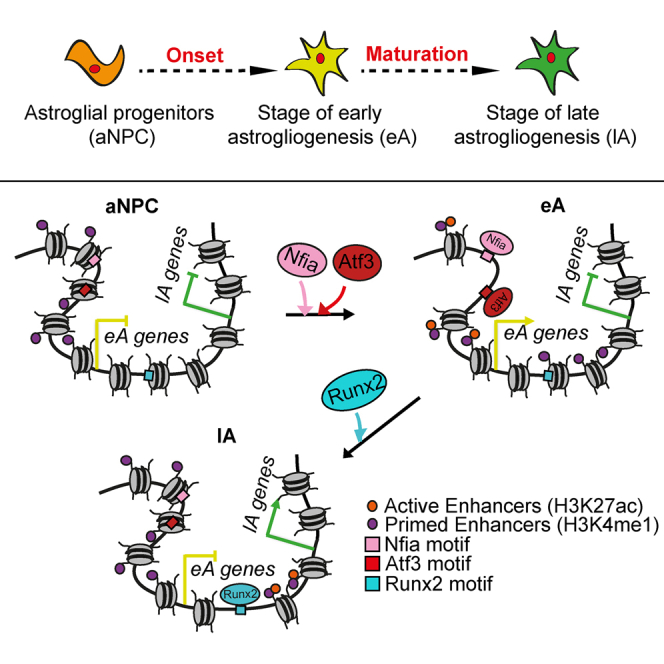
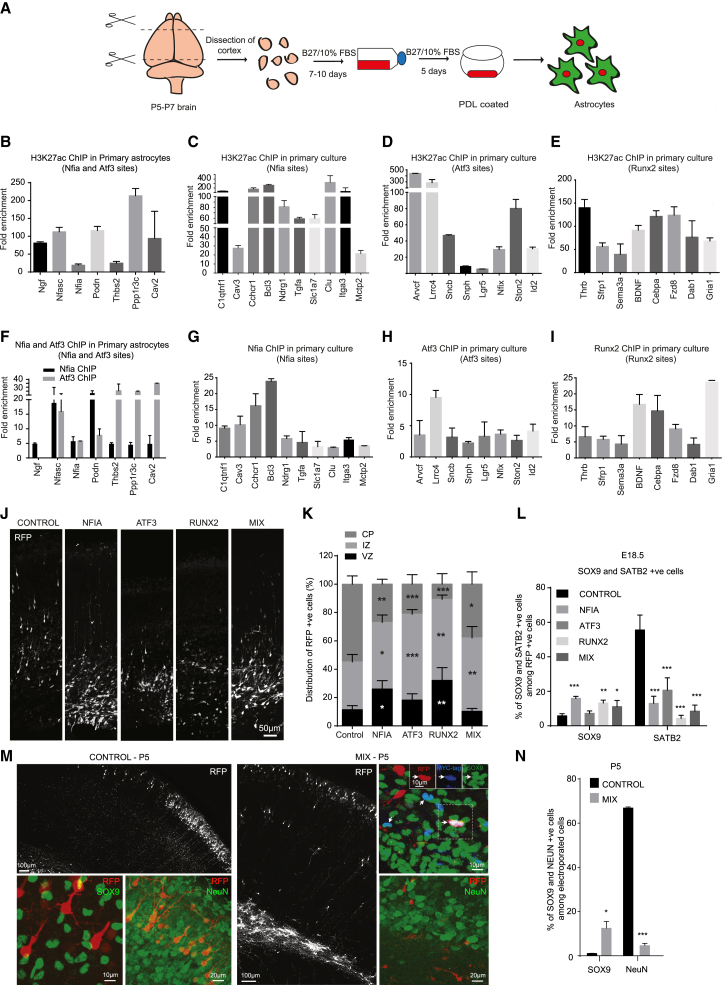
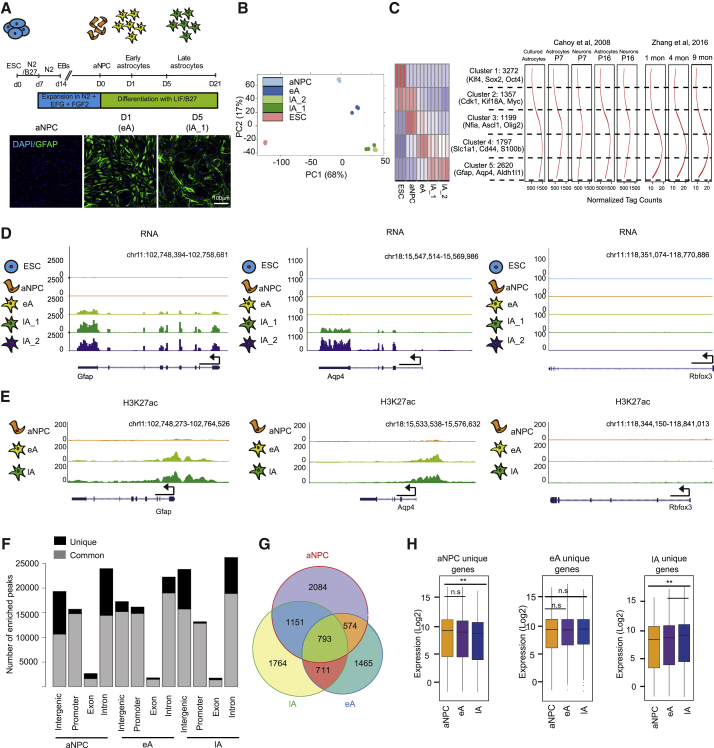
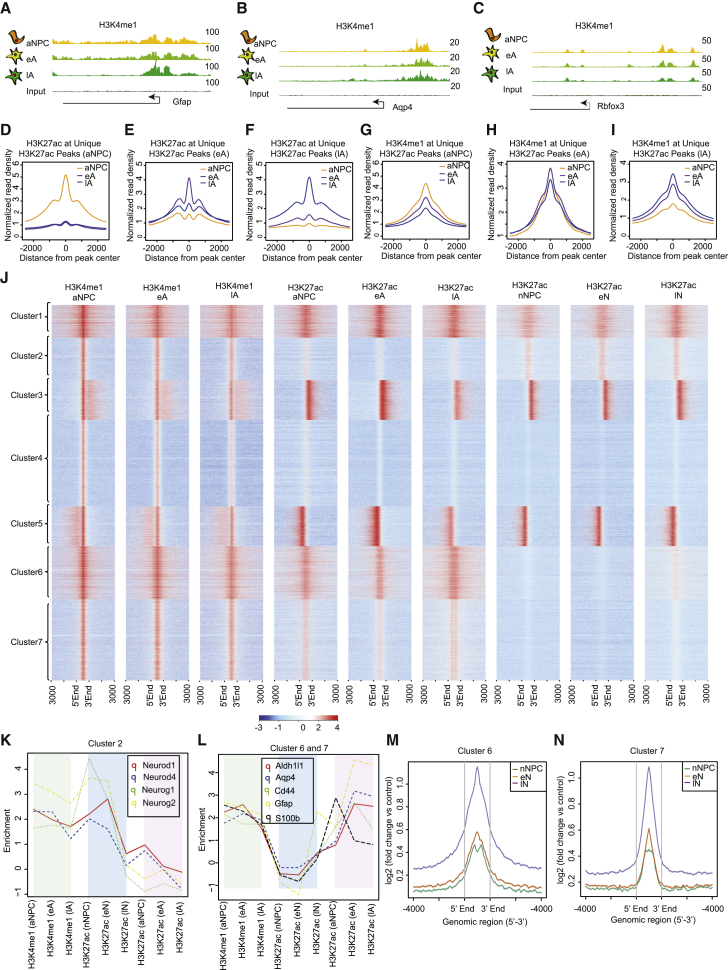
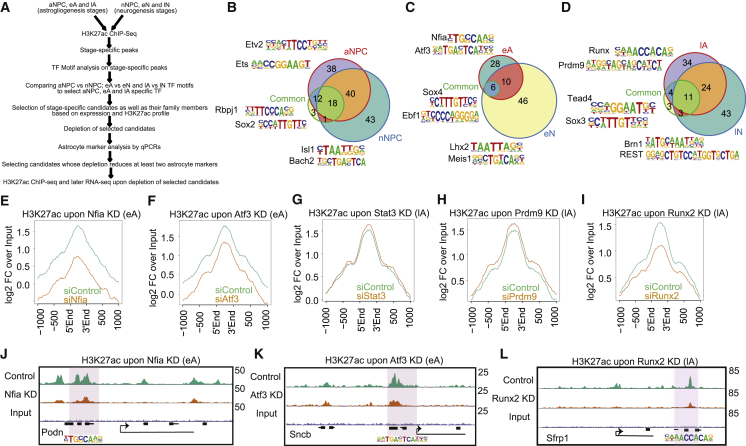
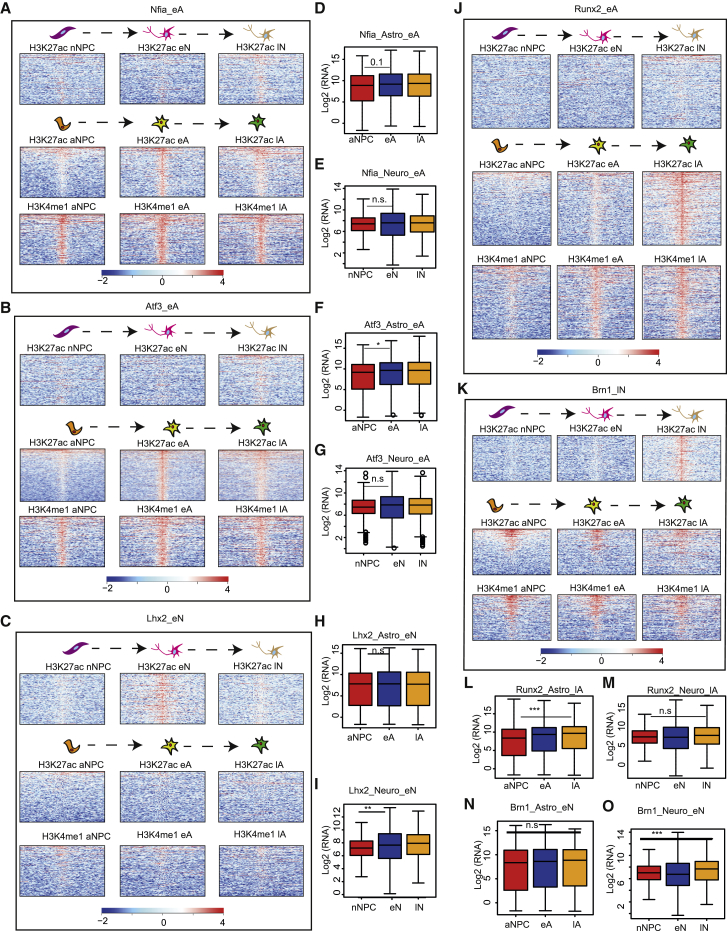
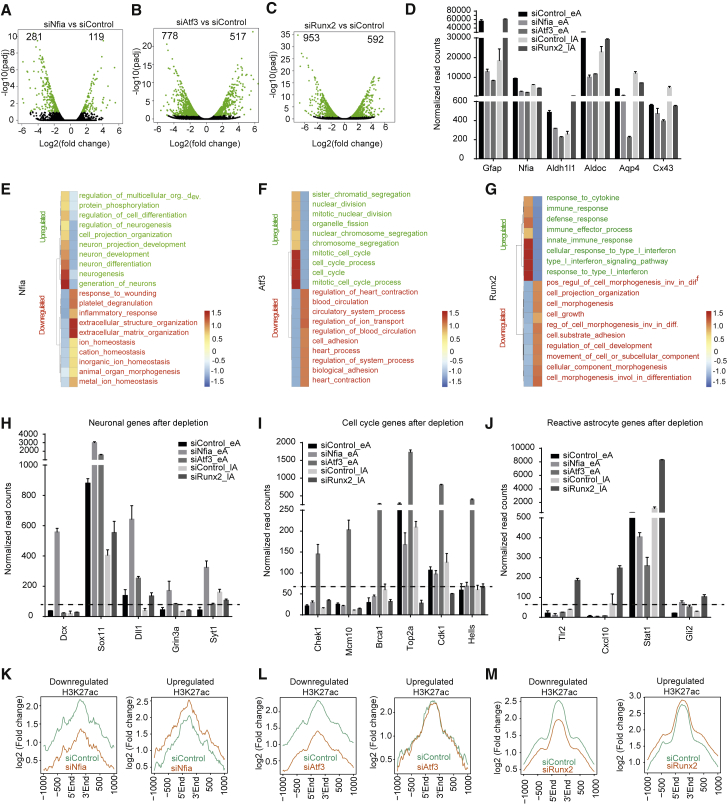
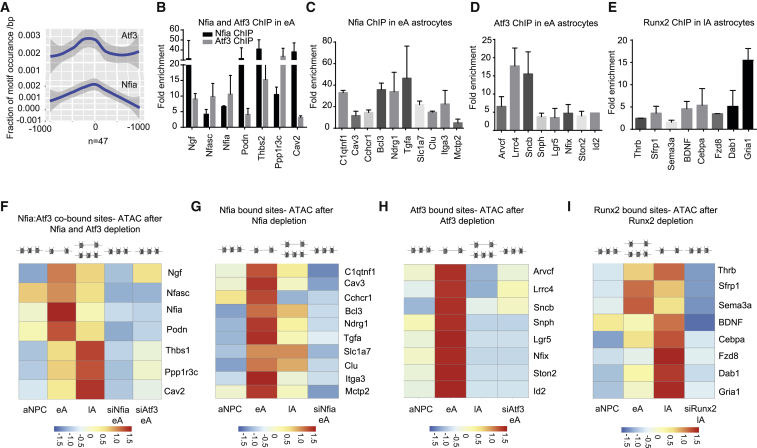
A broad molecular framework of how neural stem cells are specified toward astrocyte fate during brain development has proven elusive. Here we perform comprehensive and integrated transcriptomic and epigenomic analyses to delineate gene regulatory programs that drive the developmental trajectory from mouse embryonic stem cells to astrocytes. We report molecularly distinct phases of astrogliogenesis that exhibit stage- and lineage-specific transcriptomic and epigenetic signatures with unique primed and active chromatin regions, thereby revealing regulatory elements and transcriptional programs underlying astrocyte generation and maturation. By searching for transcription factors that function at these elements, we identified NFIA and ATF3 as drivers of astrocyte differentiation from neural precursor cells while RUNX2 promotes astrocyte maturation. These transcription factors facilitate stage-specific gene expression programs by switching the chromatin state of their target regulatory elements from primed to active. Altogether, these findings provide integrated insights into the genetic and epigenetic mechanisms steering the trajectory of astrogliogenesis.
在大脑发育过程中,神经干细胞如何被特化成为星形胶质细胞的分子机制一直难以捉摸。在这里,我们进行了全面综合的转录组学和表观基因组学分析,以描绘驱动从小鼠胚胎干细胞到星形胶质细胞的发育轨迹的基因调控程序。我们报告了星形胶质细胞发生的分子上不同的阶段,这些阶段表现出阶段和谱系特异性的转录组和表观遗传特征,具有独特的启动和活跃染色质区域,从而揭示了星形胶质细胞生成和成熟的调控元件和转录程序。通过搜索在这些元件上起作用的转录因子,我们发现 NFIA 和 ATF3 是神经前体细胞向星形胶质细胞分化的驱动因子,而 RUNX2 则促进星形胶质细胞成熟。这些转录因子通过将其靶调控元件的染色质状态从启动状态切换到活跃状态,促进了特定阶段的基因表达程序。总的来说,这些发现为指导星形胶质细胞发生轨迹的遗传和表观遗传机制提供了综合的见解。