Cho Oh-Hyun, Bae In-Gyu, Moon Song Mi, Park Seong Yeon, Kwak Yee Gyung, Kim Baek-Nam, Yu Shi Nae, Jeon Min Hyok, Kim Tark, Choo Eun Ju, Lee Eun Jung, Kim Tae Hyong, Choi Seong-Ho, Chung Jin-Won, Kang Kyung-Chung, Lee Jung Hee, Lee Yu-Mi, Lee Mi Suk, Park Ki-Ho
Department of Internal Medicine, Gyeongsang National University Changwon Hospital.
Department of Internal Medicine, Gyeongsang National University College of Medicine, Jinju.
Medicine (Baltimore). 2018 Oct;97(40):e12629. doi: 10.1097/MD.0000000000012629.
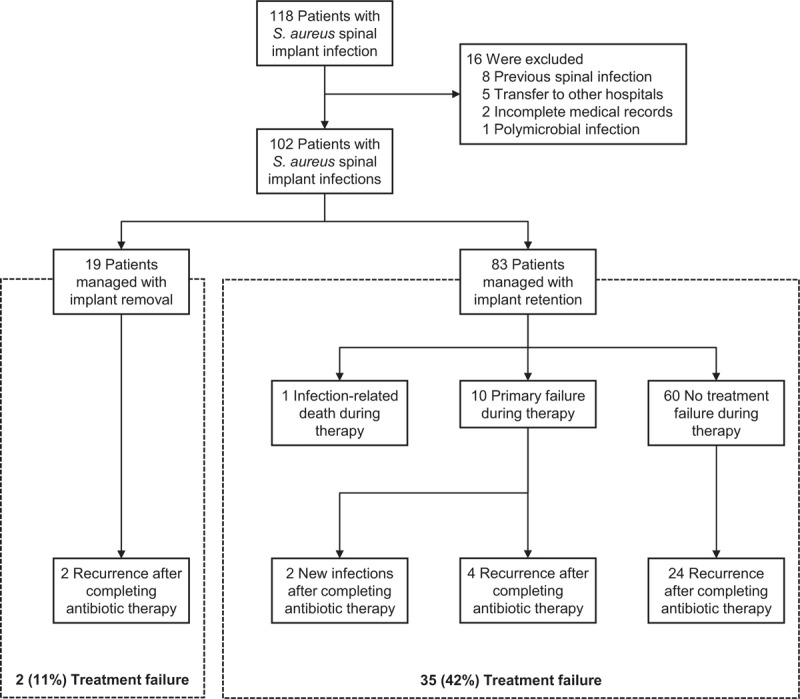
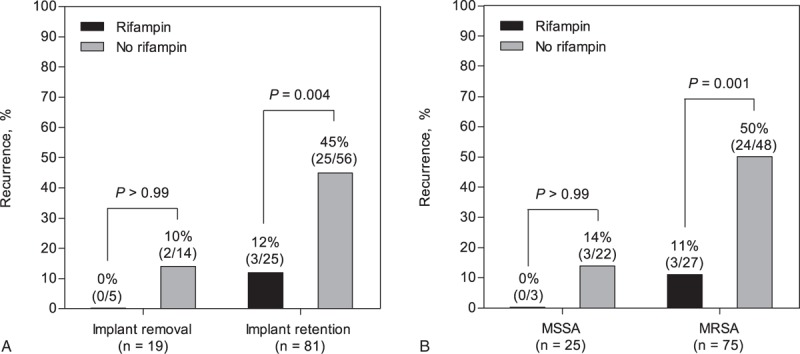
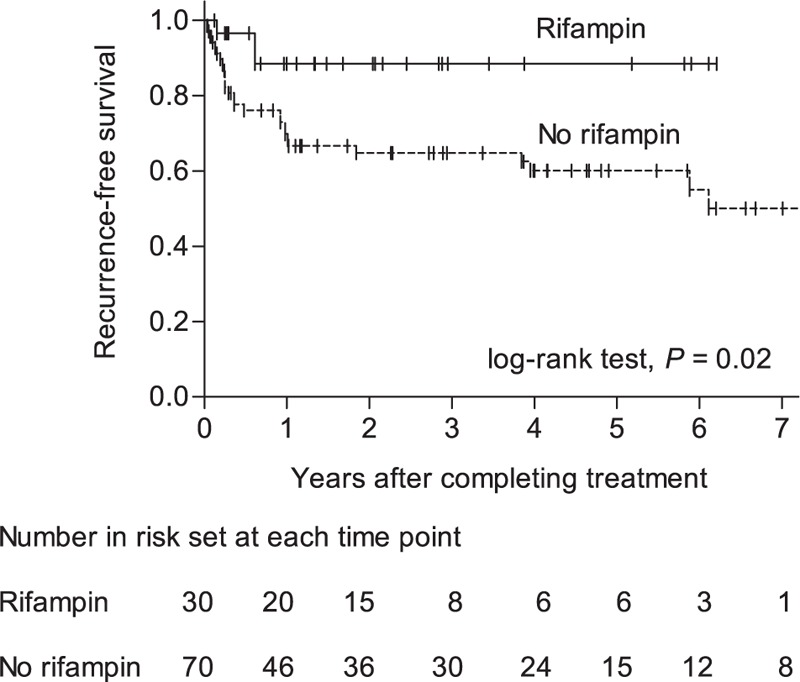
Spinal implant infection is a rare but significant complication of spinal fusion surgery, and the most common pathogen is Staphylococcus aureus. It is difficult to treat due to this pathogen's biofilm-forming ability and antibiotic resistance. We evaluated the therapeutic outcome of treatments for S aureus spinal implant infections. We retrospectively reviewed all patients with S aureus spinal implant infections at 11 tertiary-care hospitals over a 9-year period. Parameters predictive of treatment failure and recurrence were analyzed by Cox regression. Of the 102 patients with infections, 76 (75%) were caused by methicillin-resistant S aureus (MRSA) and 51 (50%) were late-onset infections. In all, 83 (81%) patients were managed by debridement, antibiotics, and implant retention (DAIR) and 19 (19%) had their implants removed. The median duration of all antibiotic therapies was 52 days. During a median follow-up period of 32 months, treatment failure occurred in 37 (36%) cases. The median time to treatment failure was 113 days, being <1 year in 30 (81%) patients. DAIR (adjusted hazard ratio [aHR], 6.27; P = .01) and MRSA infection (aHR, 4.07; P = .009) were independently associated with treatment failure. Rifampin-based combination treatments exhibited independent protective effects on recurrence (aHR, 0.23; P = .02). In conclusion, among patients with S aureus spinal implant infections, MRSA and DAIR were independent risk factors for treatment failure, and these risk factors were present in the majority of patients. In this difficult-to-treat population, the overall treatment failure rate was 36%; rifampin may improve the outcomes of patients with S aureus spinal implant infections.
脊柱植入物感染是脊柱融合手术中一种罕见但严重的并发症,最常见的病原体是金黄色葡萄球菌。由于这种病原体具有形成生物膜的能力和抗生素耐药性,因此难以治疗。我们评估了金黄色葡萄球菌脊柱植入物感染的治疗效果。我们回顾性分析了9年间11家三级医疗机构中所有金黄色葡萄球菌脊柱植入物感染患者的情况。通过Cox回归分析预测治疗失败和复发的参数。在102例感染患者中,76例(75%)由耐甲氧西林金黄色葡萄球菌(MRSA)引起,51例(50%)为迟发性感染。共有83例(81%)患者接受了清创、抗生素治疗和植入物保留(DAIR),19例(19%)患者的植入物被取出。所有抗生素治疗的中位持续时间为52天。在中位随访期32个月期间,37例(36%)患者出现治疗失败。治疗失败的中位时间为113天,30例(81%)患者在1年内出现治疗失败。DAIR(调整后风险比[aHR],6.27;P = 0.01)和MRSA感染(aHR,4.07;P = 0.009)与治疗失败独立相关。基于利福平的联合治疗对复发具有独立的保护作用(aHR,0.23;P = 0.02)。总之,在金黄色葡萄球菌脊柱植入物感染患者中,MRSA和DAIR是治疗失败的独立危险因素,且这些危险因素在大多数患者中存在。在这个难以治疗的人群中,总体治疗失败率为36%;利福平可能改善金黄色葡萄球菌脊柱植入物感染患者的治疗效果。