Center for Genome Science, National Institute of Health, Osong Health Technology Administration Complex, Chungcheongbuk-do, Republic of Korea.
Center for Biomedical Science, National Institute of Health, Osong Health Technology Administration Complex, Chungcheonbuk-do, Republic of Korea.
Sci Rep. 2018 Oct 5;8(1):14862. doi: 10.1038/s41598-018-33238-9.
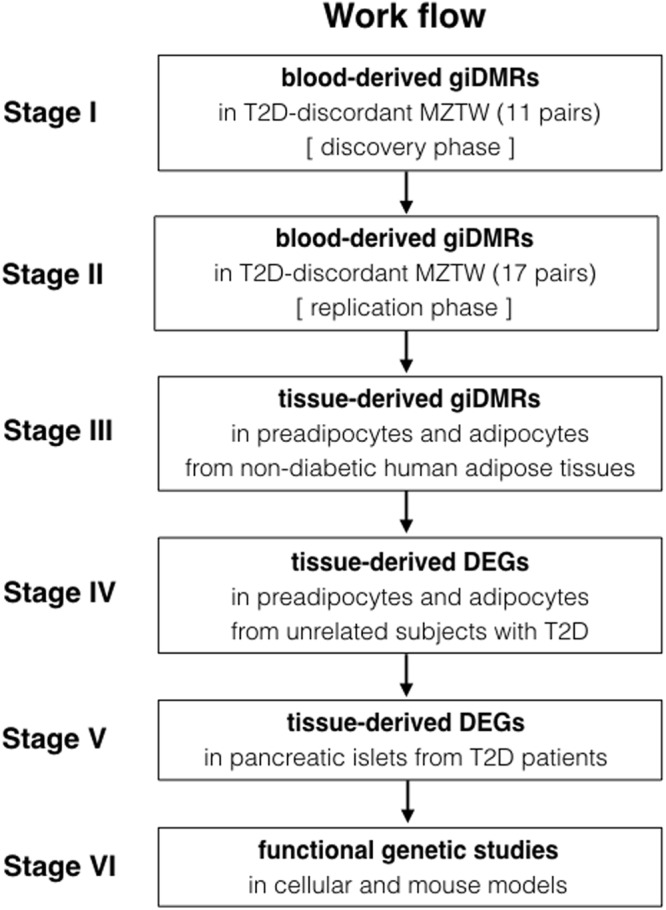
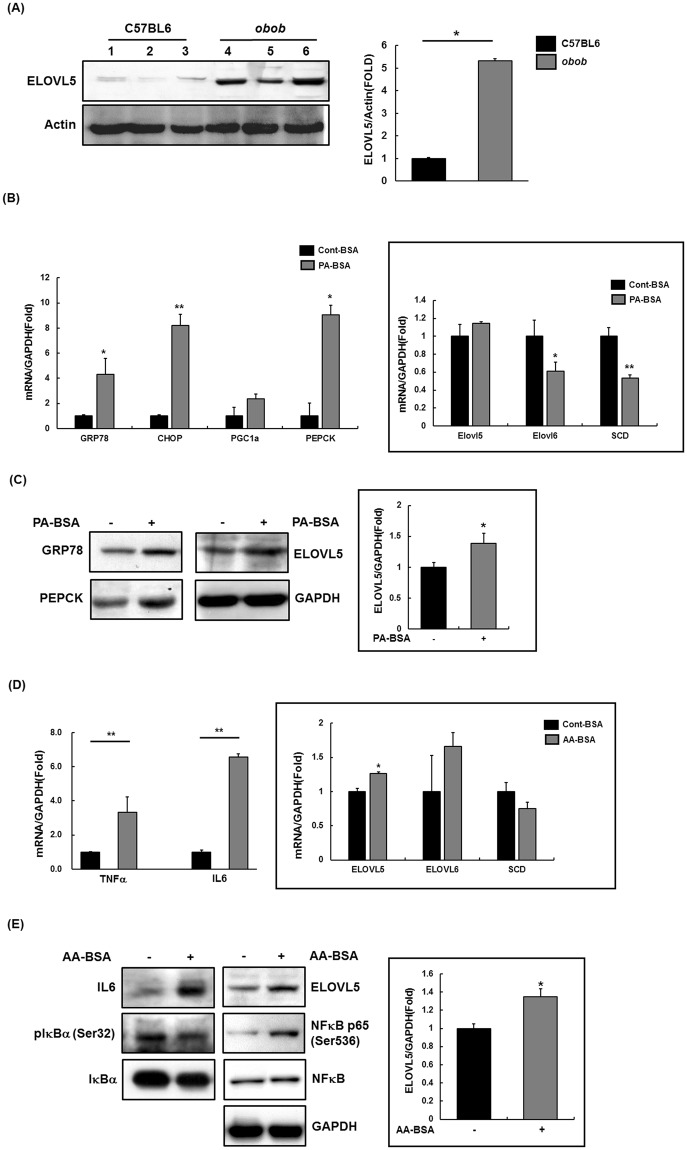
Genome-wide DNA methylation has been implicated in complex human diseases. Here, we identified epigenetic biomarkers for type 2 diabetes (T2D) underlying obesogenic environments. In a blood-based DNA methylation analysis of 11 monozygotic twins (MZTW) discordant for T2D, we discovered genetically independent candidate methylation sites. In a follow-up replication study (17 MZTW pairs) for external validation, we replicated the T2D-association at a novel CpG signal in the ELOVL fatty acid elongase 5 (ELOVL5) gene specific to T2D-discordant MZTW. For concordant DNA methylation signatures in tissues, we further confirmed that a CpG site (cg18681426) was associated with adipogenic differentiation between human preadipocytes and adipocytes isolated from the same biopsy sample. In addition, the ELOVL5 gene was significantly differentially expressed in adipose tissues from unrelated T2D patients and in human pancreatic islets. Our results demonstrate that blood-derived DNA methylation is associated with T2D risk as a proxy for cumulative epigenetic status in human adipose and pancreatic tissues. Moreover, ELOVL5 expression was increased in cellular and mouse models of induced obesity-related diabetes. These findings may provide new insights into epigenetic architecture by uncovering methylation-based biomarkers.
全基因组 DNA 甲基化与复杂人类疾病有关。在这里,我们鉴定了肥胖环境下 2 型糖尿病(T2D)的表观遗传生物标志物。在对 11 对 T2D 不一致的同卵双胞胎(MZTW)的基于血液的 DNA 甲基化分析中,我们发现了具有遗传独立性的候选甲基化位点。在后续的外部验证复制研究(17 对 MZTW 双胞胎)中,我们在 ELOVL5 基因中一个新的 CpG 信号中复制了与 T2D 不一致的 MZTW 相关的 T2D 关联,该信号在 T2D 不一致的 MZTW 中是特异性的。对于组织中一致的 DNA 甲基化特征,我们进一步证实,一个 CpG 位点(cg18681426)与从相同活检样本中分离的人类前脂肪细胞和脂肪细胞之间的成脂分化有关。此外,ELOVL5 基因在来自无关 T2D 患者的脂肪组织和人类胰岛中差异表达显著。我们的结果表明,血液衍生的 DNA 甲基化与 T2D 风险相关,可作为人类脂肪和胰腺组织中累积表观遗传状态的替代物。此外,ELOVL5 表达在诱导肥胖相关糖尿病的细胞和小鼠模型中增加。这些发现可能通过揭示基于甲基化的生物标志物,为表观遗传结构提供新的见解。