MRC Laboratory of Molecular Biology, Cambridge CB2 0QH, UK.
MRC Laboratory of Molecular Biology, Cambridge CB2 0QH, UK.
Mol Cell. 2018 Nov 1;72(3):469-481.e7. doi: 10.1016/j.molcel.2018.08.037. Epub 2018 Oct 4.
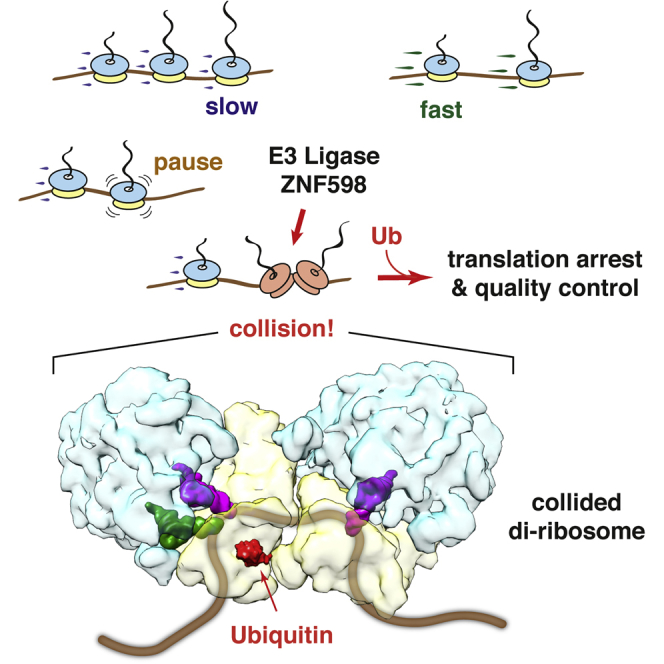
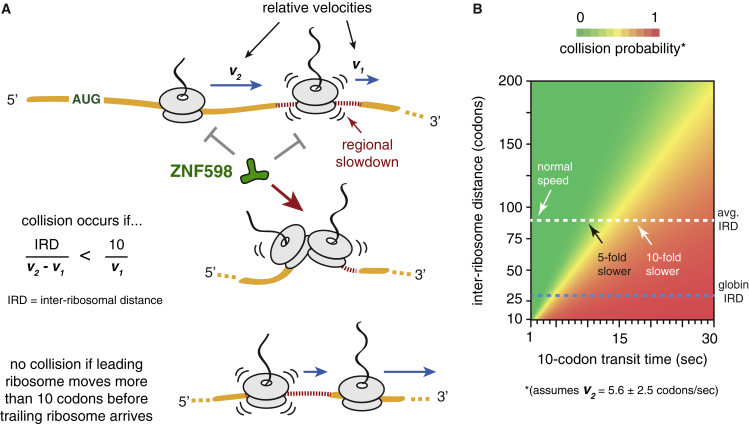
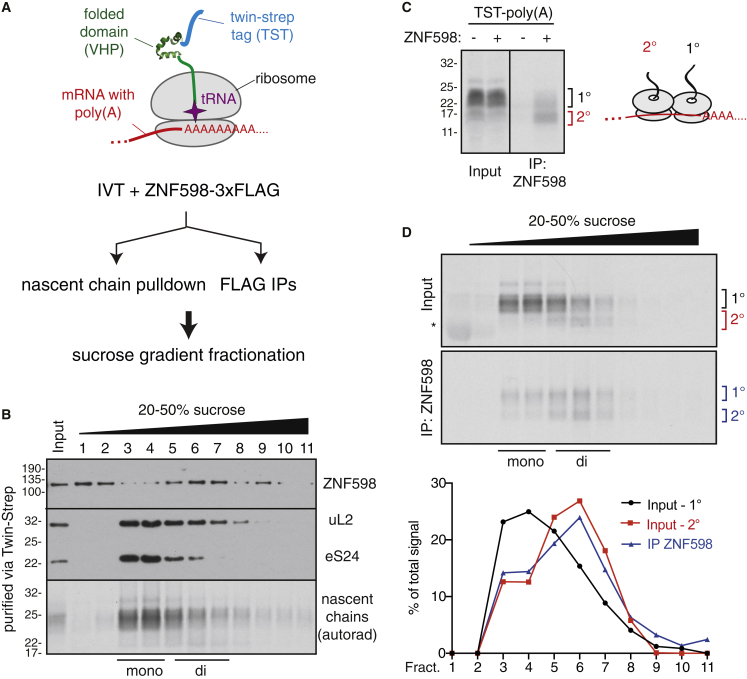
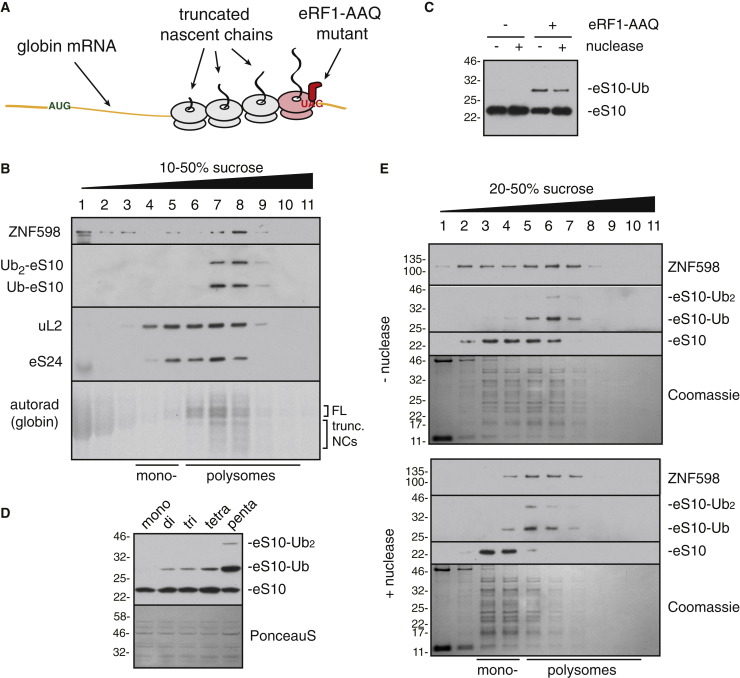
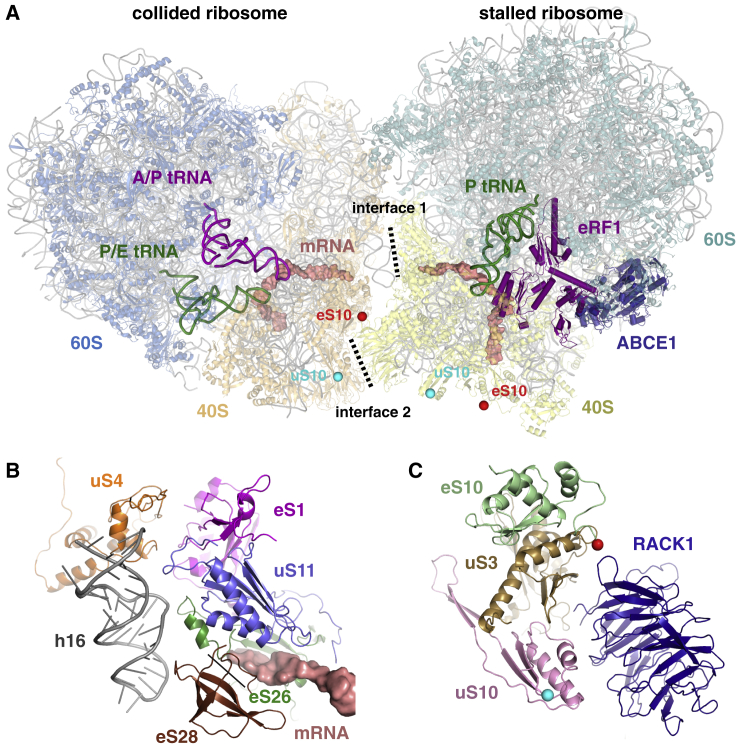
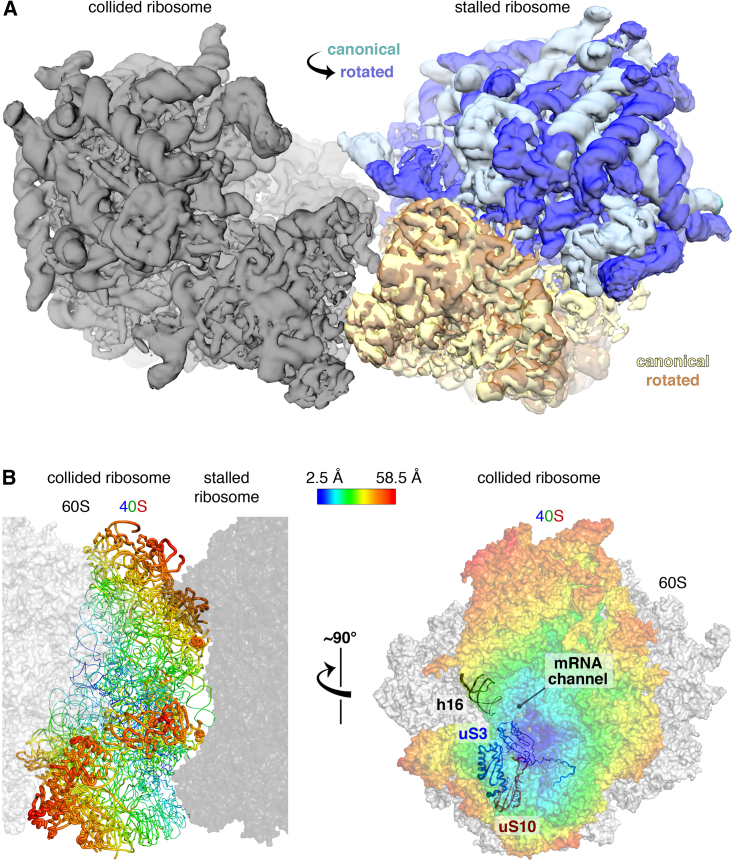
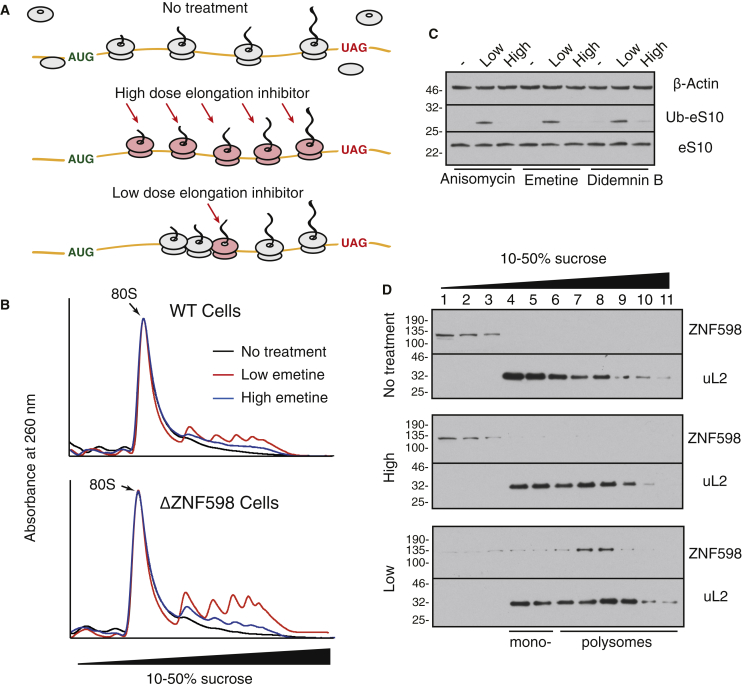
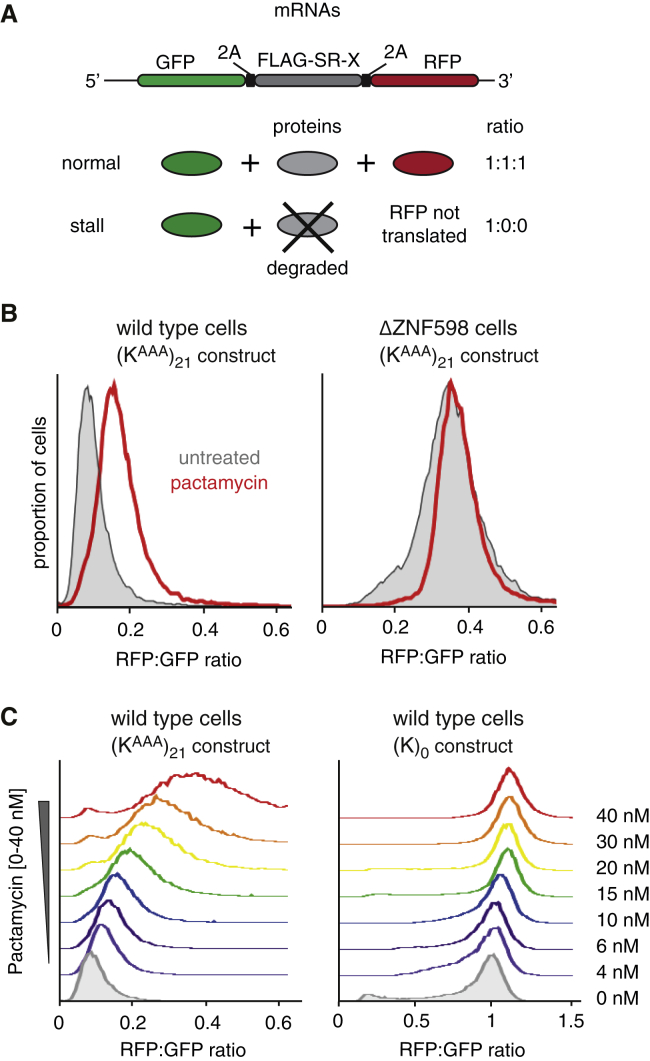
Aberrantly slow translation elicits quality control pathways initiated by the ubiquitin ligase ZNF598. How ZNF598 discriminates physiologic from pathologic translation complexes and ubiquitinates stalled ribosomes selectively is unclear. Here, we find that the minimal unit engaged by ZNF598 is the collided di-ribosome, a molecular species that arises when a trailing ribosome encounters a slower leading ribosome. The collided di-ribosome structure reveals an extensive 40S-40S interface in which the ubiquitination targets of ZNF598 reside. The paucity of 60S interactions allows for different ribosome rotation states, explaining why ZNF598 recognition is indifferent to how the leading ribosome has stalled. The use of ribosome collisions as a proxy for stalling allows the degree of tolerable slowdown to be tuned by the initiation rate on that mRNA; hence, the threshold for triggering quality control is substrate specific. These findings illustrate how higher-order ribosome architecture can be exploited by cellular factors to monitor translation status.
异常缓慢的翻译会引发由泛素连接酶 ZNF598 启动的质量控制途径。ZNF598 如何区分生理和病理翻译复合物,并选择性地上调翻译暂停的核糖体,目前尚不清楚。在这里,我们发现 ZNF598 结合的最小单位是碰撞双核糖体,这是一种当尾随核糖体遇到较慢的前导核糖体时产生的分子物种。碰撞双核糖体结构揭示了一个广泛的 40S-40S 界面,其中包含 ZNF598 的泛素化靶标。由于 60S 相互作用很少,因此允许不同的核糖体旋转状态,这解释了为什么 ZNF598 的识别与前导核糖体如何暂停无关。使用核糖体碰撞作为暂停的替代物,可以通过该 mRNA 的起始速率来调整可容忍的减速程度;因此,触发质量控制的阈值是底物特异性的。这些发现说明了细胞因子如何利用高级核糖体结构来监测翻译状态。