Guydosh Nicholas R, Green Rachel
Howard Hughes Medical Institute, Department of Molecular Biology and Genetics, Johns Hopkins University School of Medicine, Baltimore, Maryland 21205, USA.
RNA. 2017 May;23(5):749-761. doi: 10.1261/rna.060418.116. Epub 2017 Feb 13.
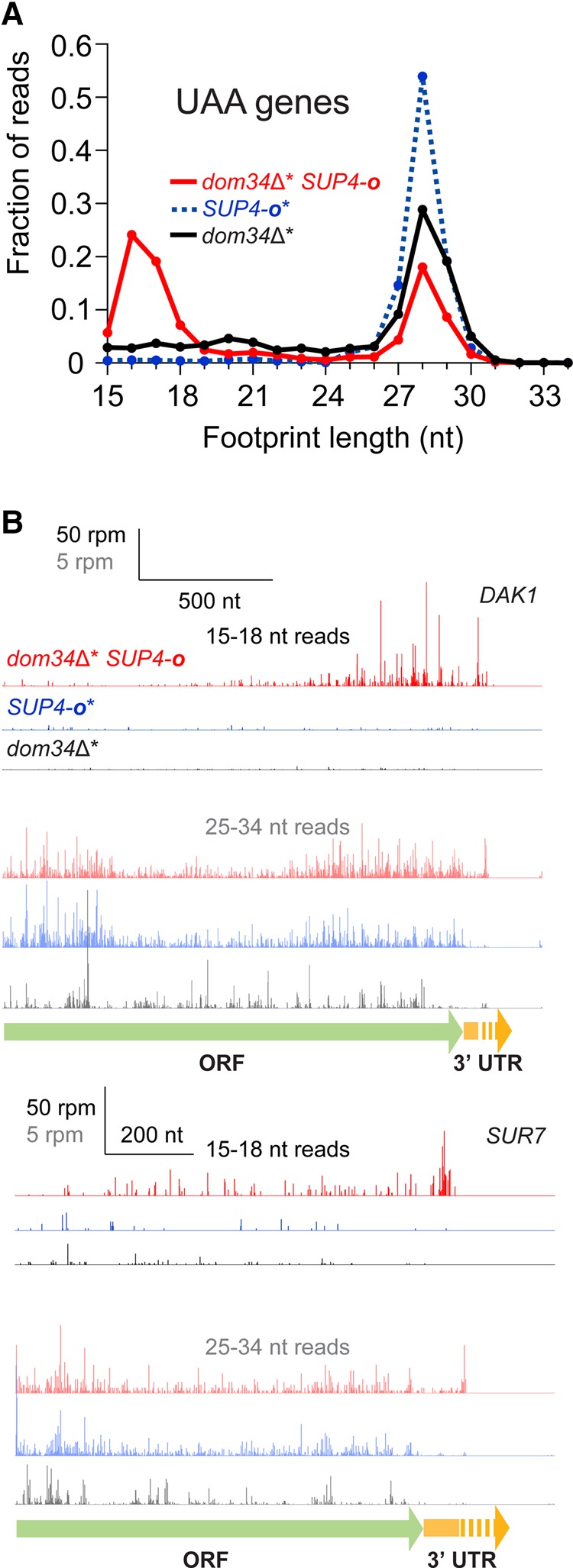
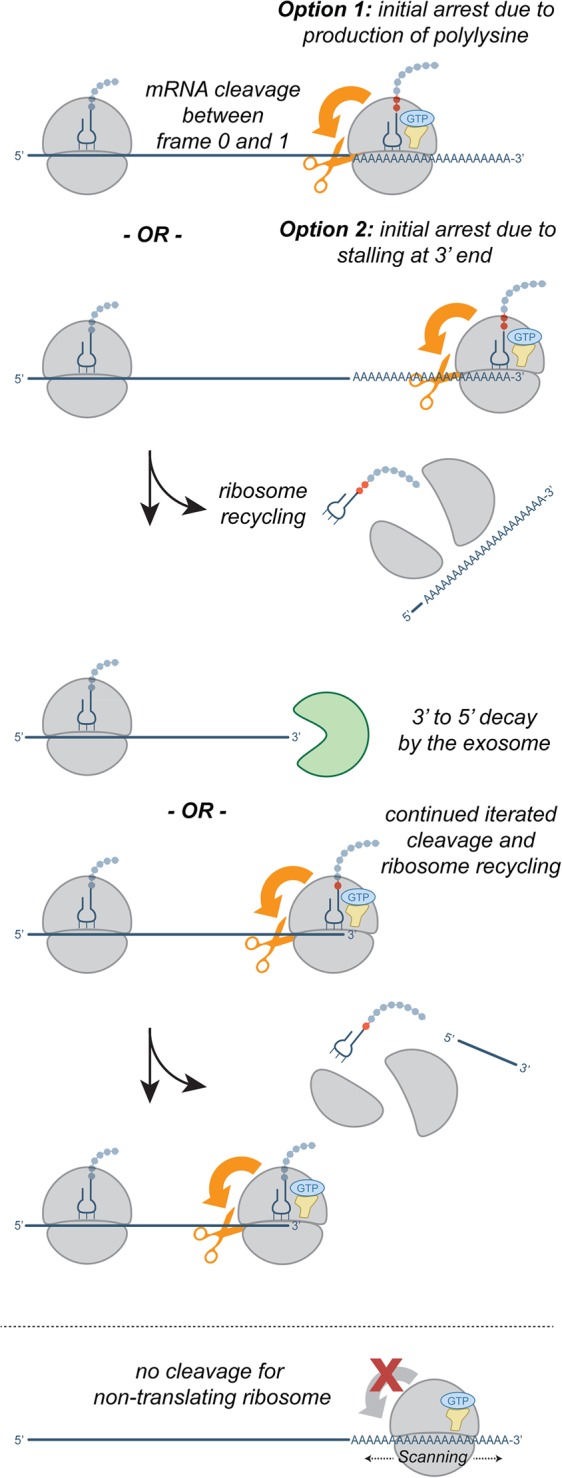
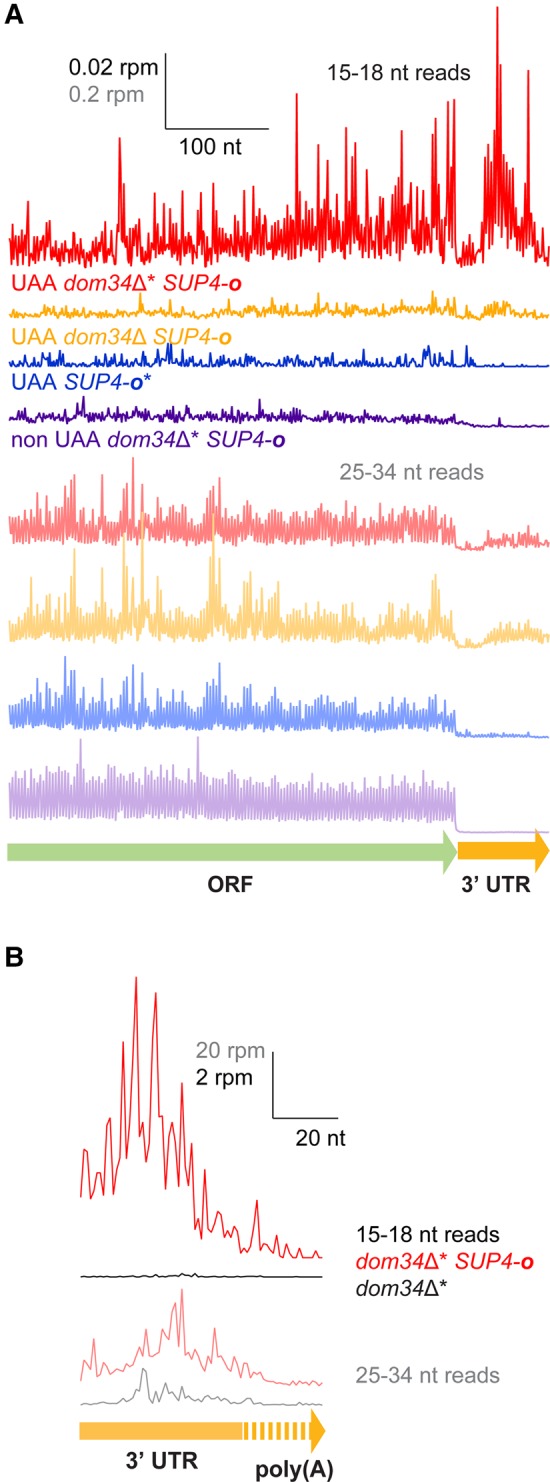
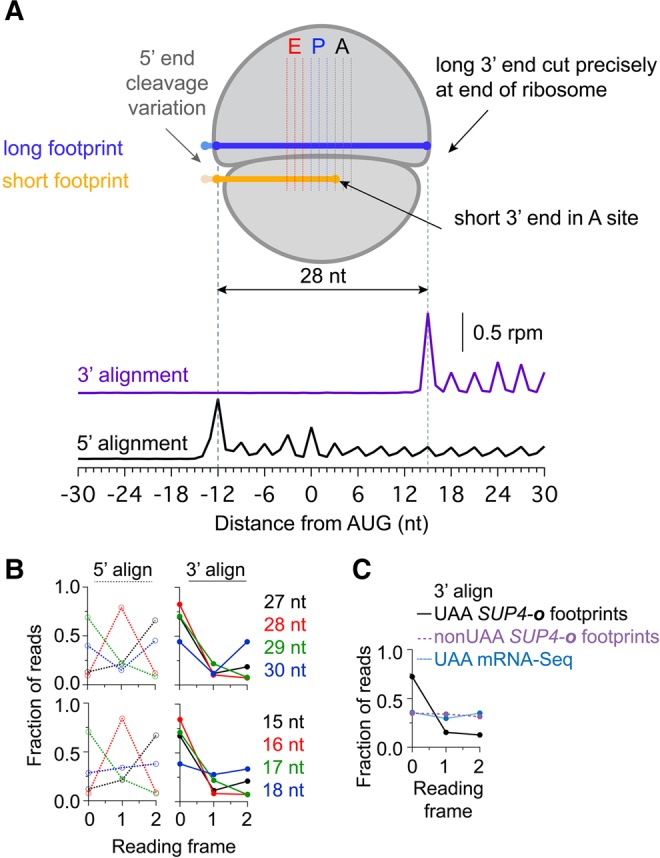
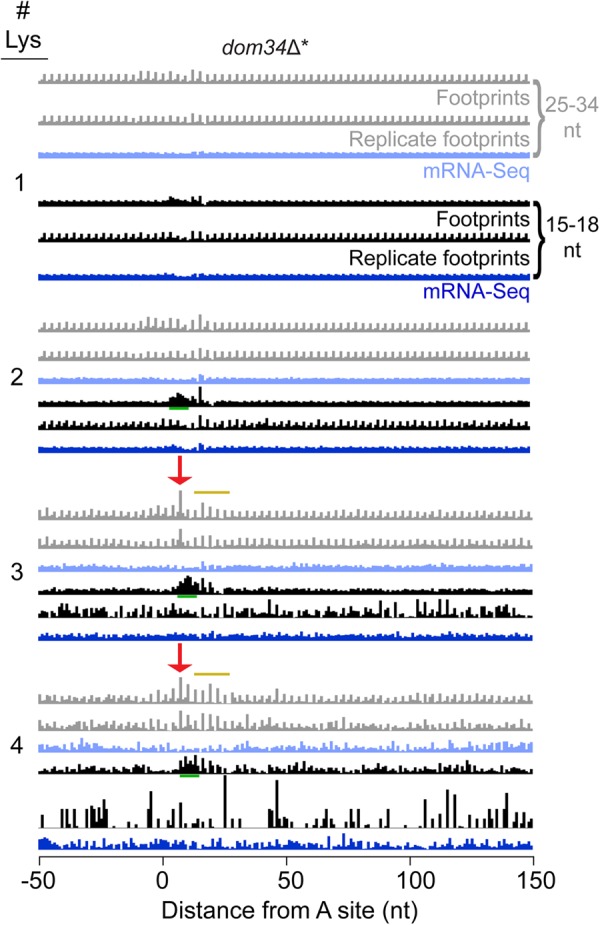
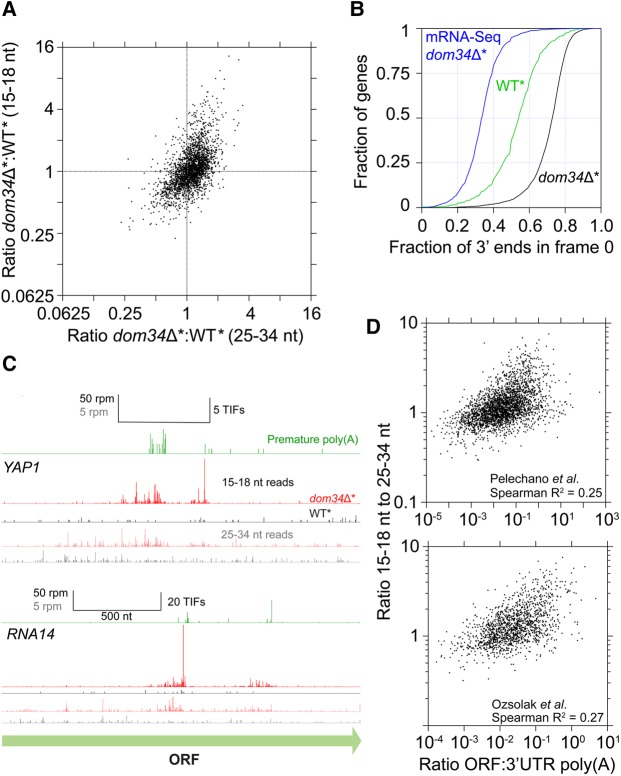
Translation of poly(A) tails leads to mRNA cleavage but the mechanism and global pervasiveness of this "nonstop/no-go" decay process is not understood. Here we performed ribosome profiling (in a yeast strain lacking exosome function) of short 15-18 nucleotides mRNA footprints to identify ribosomes stalled at 3' ends of mRNA decay intermediates. In this background, we found mRNA cleavage extending hundreds of nucleotides upstream of ribosome stalling in poly(A) and predominantly in one reading frame. These observations suggest that decay-triggering endonucleolytic cleavage is closely associated with the ribosome. Surprisingly, ribosomes appeared to accumulate (i.e., stall) in the transcriptome when as few as three consecutive ORF-internal lysine codons were positioned in the A, P, and E sites though significant mRNA degradation was not observed. Endonucleolytic cleavage was found, however, at sites of premature polyadenylation (encoding polylysine) and rescue of the ribosomes stalled at these sites was dependent on Dom34. These results suggest this process may be critical when changes in the polyadenylation site occur during development, tumorigenesis, or when translation termination/recycling is impaired.
聚腺苷酸(poly(A))尾巴的翻译会导致mRNA切割,但这种“无终止/无进展”衰变过程的机制和整体普遍性尚不清楚。在这里,我们对短的15 - 18个核苷酸的mRNA足迹进行了核糖体分析(在缺乏外切体功能的酵母菌株中),以鉴定在mRNA衰变中间体3'末端停滞的核糖体。在此背景下,我们发现mRNA切割在聚腺苷酸化中核糖体停滞位点上游数百个核苷酸处延伸,且主要在一个阅读框中。这些观察结果表明,引发衰变的内切核酸酶切割与核糖体密切相关。令人惊讶的是,当A、P和E位点中仅定位有三个连续的开放阅读框(ORF)内部赖氨酸密码子时,核糖体似乎在转录组中积累(即停滞),尽管未观察到明显的mRNA降解。然而,在内切核酸酶切割发生在过早聚腺苷酸化(编码多聚赖氨酸)的位点,并且停滞在这些位点的核糖体的拯救依赖于Dom34。这些结果表明,当在发育、肿瘤发生过程中聚腺苷酸化位点发生变化,或翻译终止/再循环受损时,这个过程可能至关重要。