Villate-Beitia Ilia, Truong Norman F, Gallego Idoia, Zárate Jon, Puras Gustavo, Pedraz José Luis, Segura Tatiana
NanoBioCel Group, School of Pharmacy, University of the Basque Country (UPV/EHU), 01006 Vitoria-Gasteiz, Spain. Email:
Biomedical Research Networking Center in Bioengineering, Biomaterials and Nanomedicine (CIBER-BBN), Vitoria-Gasteiz, Spain.
RSC Adv. 2018 Sep 17;8(56):31934-31942. doi: 10.1039/c8ra05125a. Epub 2018 Sep 12.
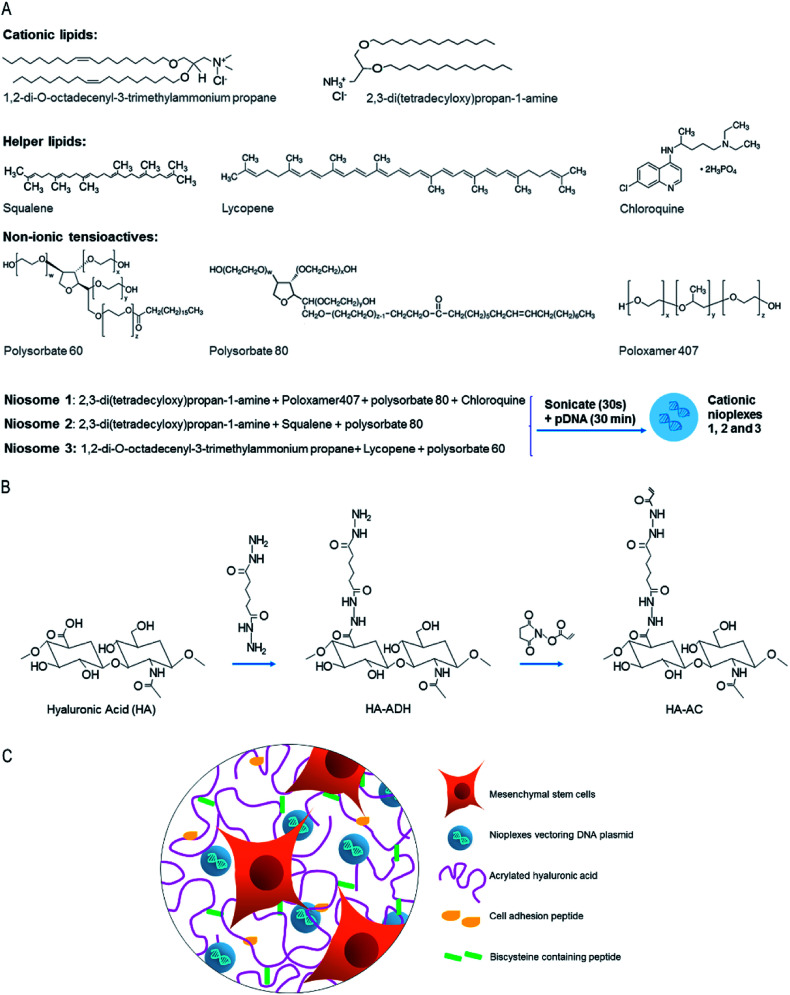
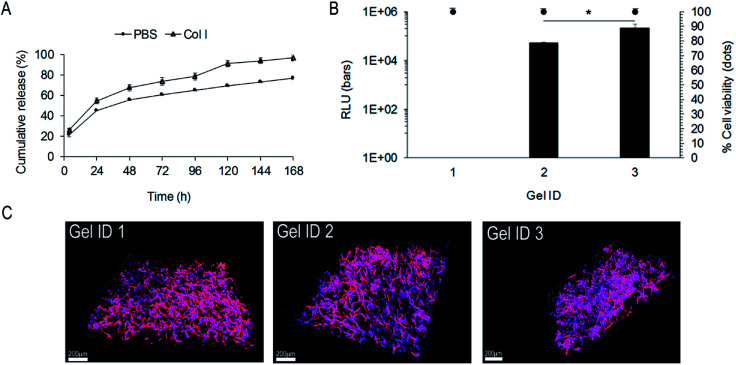
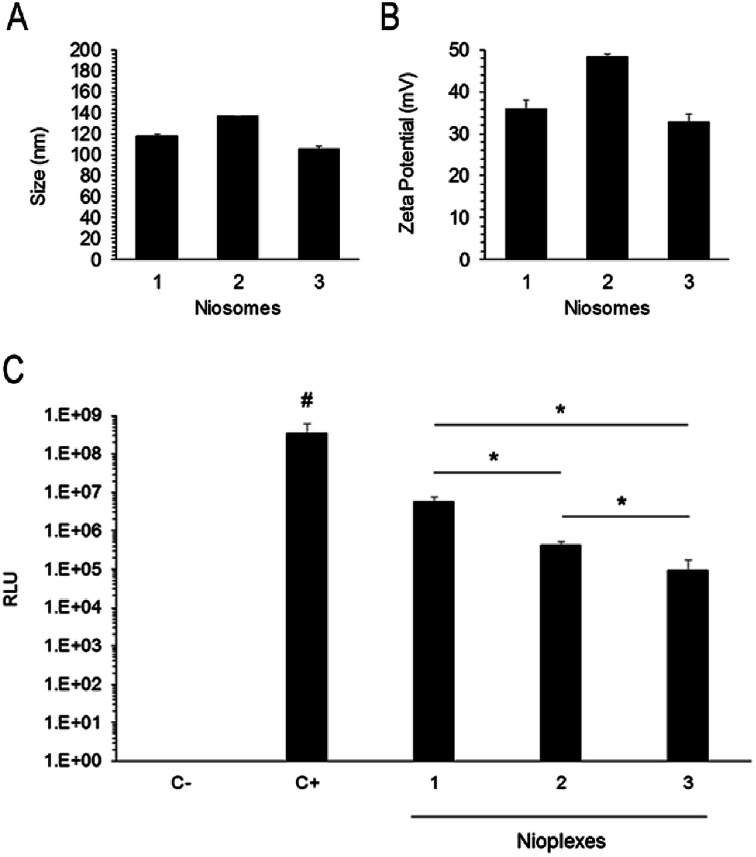
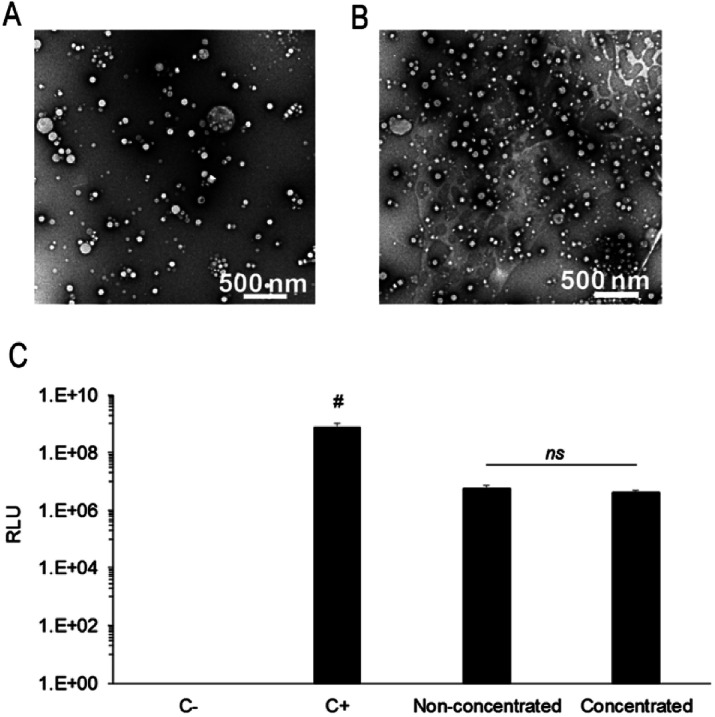
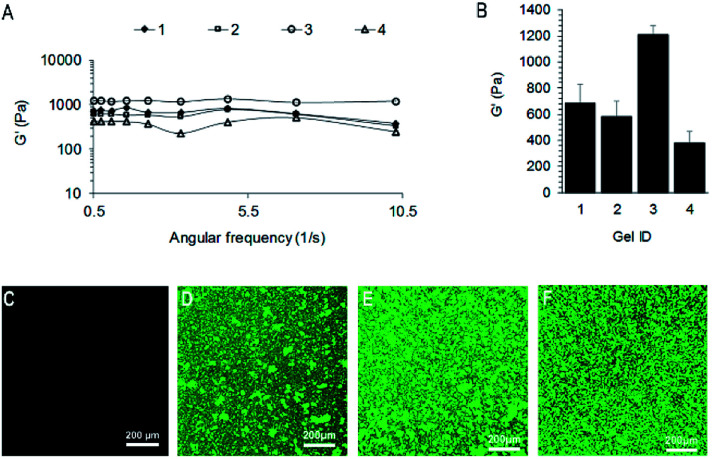
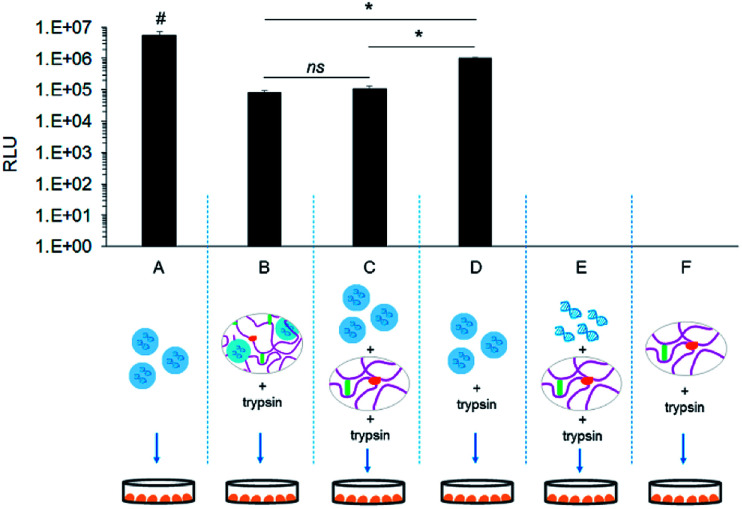
The lack of ideal non-viral gene carriers has motivated the combination of delivery systems and tissue-engineered scaffolds, which may offer relevant advantages such as enhanced stability and reduced toxicity. In this work, we evaluated a new combination between niosome non-viral vectors and hyaluronic acid (HA) hydrogel scaffolds, both widely studied due to their biocompatibility as well as their ability to incorporate a wide variety of molecules. We evaluated three different niosome formulations (niosomes , and ) varying in composition of cationic lipid, helper lipid and non-ionic tensioactives. Niosomes and nioplexes obtained upon the addition of plasmid DNA were characterized in terms of size, polydispersity, zeta potential and ability to transfect mouse bone marrow cloned mesenchymal stem cells (mMSCs) in 2D culture. Niosome was selected for encapsulation in HA hydrogels due to its higher transfection efficiency and the formulation was concentrated in order to be able to incorporate higher amounts of DNA within HA hydrogels. Nioplex-loaded HA hydrogels were characterized in terms of biomechanical properties, particle distribution, nioplex release kinetics and ability to transfect encapsulated mMSCs in 3D culture. Our results showed that nioplex-loaded HA hydrogel scaffolds presented little or no particle aggregation, allowed for extensive cell spreading and were able to efficiently transfect encapsulated mMSCs with high cellular viability. We believe that the knowledge gained through this model can be utilized to design novel and effective platforms for local and non-viral gene delivery applications.
理想的非病毒基因载体的缺乏促使人们将递送系统与组织工程支架相结合,这种结合可能具有增强稳定性和降低毒性等相关优势。在这项工作中,我们评估了一种新型的组合,即脂质体非病毒载体与透明质酸(HA)水凝胶支架的组合,这两者因其生物相容性以及能够包载多种分子的能力而得到广泛研究。我们评估了三种不同的脂质体制剂(脂质体 、 和 ),它们在阳离子脂质、辅助脂质和非离子表面活性剂的组成上有所不同。对添加质粒DNA后得到的脂质体和脂质体复合物进行了尺寸、多分散性、zeta电位以及在二维培养中转染小鼠骨髓克隆间充质干细胞(mMSCs)能力的表征。由于脂质体 的转染效率较高,因此选择将其封装在HA水凝胶中,并对该制剂进行浓缩,以便能够在HA水凝胶中包载更多的DNA。对负载脂质体复合物的HA水凝胶进行了生物力学性能、颗粒分布、脂质体复合物释放动力学以及在三维培养中转染封装的mMSCs能力的表征。我们的结果表明,负载脂质体复合物的HA水凝胶支架几乎没有或没有颗粒聚集,允许细胞广泛铺展,并且能够以高细胞活力有效地转染封装的mMSCs。我们相信,通过这个模型获得的知识可用于设计用于局部和非病毒基因递送应用的新型有效平台。