• 文献检索
  • 文档翻译
  • 深度研究
  • 学术资讯
  • Suppr Zotero 插件Zotero 插件
  • 邀请有礼
  • 套餐&价格
  • 历史记录
应用&插件
Suppr Zotero 插件Zotero 插件浏览器插件Mac 客户端Windows 客户端微信小程序
定价
高级版会员购买积分包购买API积分包
服务
文献检索文档翻译深度研究API 文档MCP 服务
关于我们
关于 Suppr公司介绍联系我们用户协议隐私条款
关注我们

Suppr 超能文献

核心技术专利:CN118964589B侵权必究
粤ICP备2023148730 号-1Suppr @ 2026

文献检索

告别复杂PubMed语法,用中文像聊天一样搜索,搜遍4000万医学文献。AI智能推荐,让科研检索更轻松。

立即免费搜索

文件翻译

保留排版,准确专业,支持PDF/Word/PPT等文件格式,支持 12+语言互译。

免费翻译文档

深度研究

AI帮你快速写综述,25分钟生成高质量综述,智能提取关键信息,辅助科研写作。

立即免费体验

青少年运动员脑震荡后的自主神经功能:使用24小时记录方法对心率变异性的探索。

Autonomic Function Following Concussion in Youth Athletes: An Exploration of Heart Rate Variability Using 24-hour Recording Methodology.

作者信息

Paniccia Melissa, Taha Tim, Keightley Michelle, Thomas Scott, Verweel Lee, Murphy James, Wilson Katherine, Reed Nick

机构信息

Concussion Centre, Bloorview Research Institute, Holland Bloorview Kids Rehabilitation Hospital;

Faculty of Kinesiology and Physical Education, University of Toronto.

出版信息

J Vis Exp. 2018 Sep 21(139):58203. doi: 10.3791/58203.

DOI:10.3791/58203
PMID:30295657
原文链接:https://pmc.ncbi.nlm.nih.gov/articles/PMC6235273/
Abstract

Participation in organized sports makes a significant contribution to youth development, but places youth at a higher risk for sustaining a concussion. To date, return-to-activity decision-making has been anchored in the monitoring of self-reported concussion symptoms and neurocognitive testing. However, multi-modal assessments that corroborate objective physiological measures with traditional subjective symptom reporting are needed and can be valuable. Heart rate variability (HRV) is a non-invasive physiological indicator of the autonomic nervous system, capturing the reciprocal interplay between the sympathetic and parasympathetic nervous systems. There is a dearth of literature exploring the effect of concussion on HRV in youth athletes, and developmental differences preclude the application of adult findings to a pediatric population. Further, the current state of HRV methodology has primarily included short-term (5-15 min) recordings, by using resting state or short-term physical exertion testing to elucidate changes following concussion. The novelty in utilizing a 24 h recording methodology is that it has the potential to capture natural variation in autonomic function, directly related to the activities a youth athlete performs on a regular basis. Within a prospective, longitudinal research setting, this novel approach to quantifying autonomic function can provide important information regarding the recovery trajectory, alongside traditional self-report symptom measures. Our objectives regarding a 24 h recording methodology were to (1) evaluate the physiological effects of a concussion in youth athletes, and (2) describe the trajectory of physiological change, while considering the resolution of self-reported post-concussion symptoms. To achieve these objectives, non-invasive sensor technology was implemented. The raw beat-to-beat time intervals captured can be transformed to derive time domain and frequency domain measures, which reflect an individual's ability to adapt and be flexible to their ever-changing environment. By using non-invasive heart rate technology, autonomic function can be quantified outside of a traditional controlled research setting.

摘要

参与有组织的体育运动对青少年发展有重大贡献,但也使青少年遭受脑震荡的风险更高。迄今为止,恢复活动的决策一直基于对自我报告的脑震荡症状和神经认知测试的监测。然而,需要将客观生理指标与传统主观症状报告相结合的多模式评估,且这种评估可能很有价值。心率变异性(HRV)是自主神经系统的一种非侵入性生理指标,反映交感神经系统和副交感神经系统之间的相互作用。目前缺乏关于脑震荡对青少年运动员HRV影响的文献,而且发育差异使得不能将成人的研究结果应用于儿科人群。此外,目前HRV方法主要包括短期(5 - 15分钟)记录,通过静息状态或短期体力消耗测试来阐明脑震荡后的变化。采用24小时记录方法的新颖之处在于它有可能捕捉自主功能的自然变化,这与青少年运动员日常进行的活动直接相关。在一项前瞻性纵向研究中,这种量化自主功能的新方法可以与传统的自我报告症状测量一起,提供有关恢复轨迹的重要信息。我们关于24小时记录方法的目标是:(1)评估脑震荡对青少年运动员的生理影响;(2)描述生理变化轨迹,同时考虑自我报告的脑震荡后症状的缓解情况。为实现这些目标,采用了非侵入性传感器技术。捕获的逐搏时间间隔原始数据可以进行转换,以得出反映个体适应不断变化环境能力的时域和频域测量值。通过使用非侵入性心率技术,可以在传统的受控研究环境之外量化自主功能。
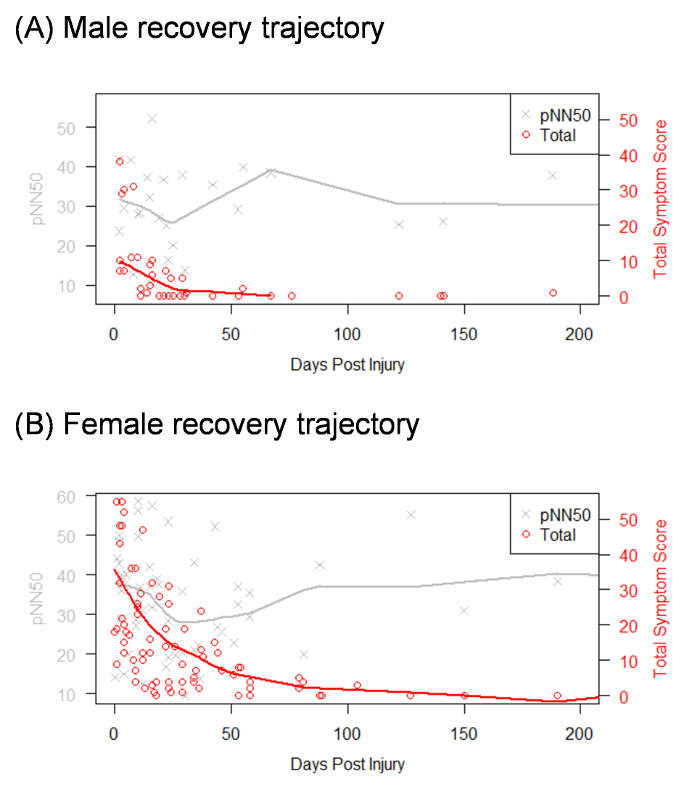
https://cdn.ncbi.nlm.nih.gov/pmc/blobs/bdb4/6235273/32f7ede85788/jove-139-58203-2.jpg
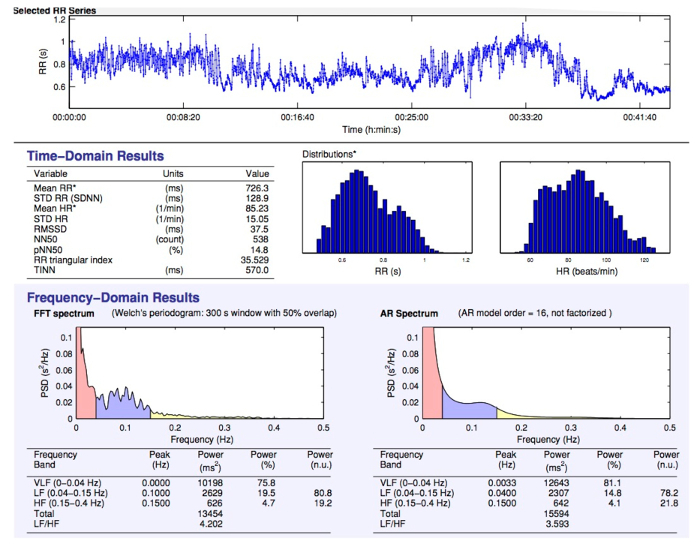
https://cdn.ncbi.nlm.nih.gov/pmc/blobs/bdb4/6235273/931fa975a447/jove-139-58203-0.jpg
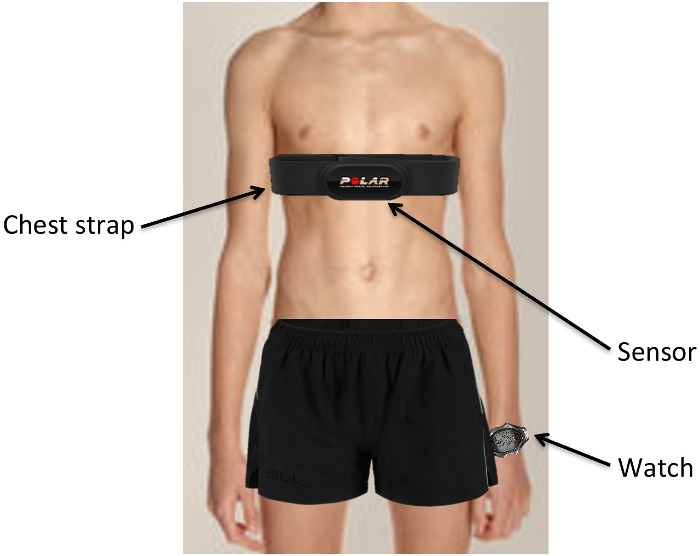
https://cdn.ncbi.nlm.nih.gov/pmc/blobs/bdb4/6235273/c7898b1b170a/jove-139-58203-1.jpg
https://cdn.ncbi.nlm.nih.gov/pmc/blobs/bdb4/6235273/32f7ede85788/jove-139-58203-2.jpg
https://cdn.ncbi.nlm.nih.gov/pmc/blobs/bdb4/6235273/931fa975a447/jove-139-58203-0.jpg
https://cdn.ncbi.nlm.nih.gov/pmc/blobs/bdb4/6235273/c7898b1b170a/jove-139-58203-1.jpg
https://cdn.ncbi.nlm.nih.gov/pmc/blobs/bdb4/6235273/32f7ede85788/jove-139-58203-2.jpg

相似文献

1
Autonomic Function Following Concussion in Youth Athletes: An Exploration of Heart Rate Variability Using 24-hour Recording Methodology.青少年运动员脑震荡后的自主神经功能:使用24小时记录方法对心率变异性的探索。
J Vis Exp. 2018 Sep 21(139):58203. doi: 10.3791/58203.
2
Heart Rate Variability in Healthy Non-Concussed Youth Athletes: Exploring the Effect of Age, Sex, and Concussion-Like Symptoms.健康未受过脑震荡的青少年运动员的心率变异性:探讨年龄、性别和类似脑震荡症状的影响。
Front Neurol. 2018 Jan 18;8:753. doi: 10.3389/fneur.2017.00753. eCollection 2017.
3
Heart rate variability following youth concussion: how do autonomic regulation and concussion symptoms differ over time postinjury?青少年脑震荡后的心率变异性:受伤后自主调节和脑震荡症状如何随时间变化?
BMJ Open Sport Exerc Med. 2018 Oct 1;4(1):e000355. doi: 10.1136/bmjsem-2018-000355. eCollection 2018.
4
Heart rate variability and implication for sport concussion.心率变异性及其对运动性脑震荡的影响
Clin Physiol Funct Imaging. 2018 Sep;38(5):733-742. doi: 10.1111/cpf.12487. Epub 2017 Nov 16.
5
American Medical Society for Sports Medicine position statement: concussion in sport.美国运动医学学会立场声明:运动性脑震荡。
Br J Sports Med. 2013 Jan;47(1):15-26. doi: 10.1136/bjsports-2012-091941.
6
A multi-modal approach to assessing recovery in youth athletes following concussion.一种评估青少年运动员脑震荡后恢复情况的多模式方法。
J Vis Exp. 2014 Sep 25(91):51892. doi: 10.3791/51892.
7
Comparison of physiological outcomes after dynamic exertion between athletes at return to sport from concussion and controls: Preliminary findings.脑震荡恢复运动的运动员与对照组在动态运动后生理结果的比较:初步研究结果。
J Sci Med Sport. 2023 Dec;26(12):682-687. doi: 10.1016/j.jsams.2023.09.014. Epub 2023 Sep 22.
8
Heart Rate Variability of Athletes Across Concussion Recovery Milestones: A Preliminary Study.运动员在脑震荡恢复各阶段的心率变异性:一项初步研究。
Clin J Sport Med. 2017 May;27(3):288-295. doi: 10.1097/JSM.0000000000000337.
9
Persisting Effects of Concussion on Heart Rate Variability during Physical Exertion.脑震荡对体力活动期间心率变异性的持续影响。
J Neurotrauma. 2016 May 1;33(9):811-7. doi: 10.1089/neu.2015.3989. Epub 2015 Oct 8.
10
Concussion History and Heart Rate Variability During Bouts of Acute Stress.脑震荡史与急性应激发作时的心率变异性。
J Athl Train. 2022 Aug 1;57(8):741-747. doi: 10.4085/1062-6050-0314.21.

本文引用的文献

1
Heart Rate Variability in Healthy Non-Concussed Youth Athletes: Exploring the Effect of Age, Sex, and Concussion-Like Symptoms.健康未受过脑震荡的青少年运动员的心率变异性:探讨年龄、性别和类似脑震荡症状的影响。
Front Neurol. 2018 Jan 18;8:753. doi: 10.3389/fneur.2017.00753. eCollection 2017.
2
Clinical and non-clinical depression and anxiety in young people: A scoping review on heart rate variability.年轻人的临床与非临床抑郁及焦虑:关于心率变异性的范围综述
Auton Neurosci. 2017 Dec;208:1-14. doi: 10.1016/j.autneu.2017.08.008. Epub 2017 Aug 26.
3
Autonomic Dysfunction after Mild Traumatic Brain Injury.
轻度创伤性脑损伤后的自主神经功能障碍
Brain Sci. 2017 Aug 11;7(8):100. doi: 10.3390/brainsci7080100.
4
Dove and hawk profiles in youth concussion: Rethinking occupational performance.
Can J Occup Ther. 2017 Apr;84(2):111-118. doi: 10.1177/0008417416688302. Epub 2017 Jan 1.
5
What is the physiological time to recovery after concussion? A systematic review.脑震荡后生理恢复时间是多久?一项系统综述。
Br J Sports Med. 2017 Jun;51(12):935-940. doi: 10.1136/bjsports-2016-097464. Epub 2017 Apr 28.
6
Consensus statement on concussion in sport-the 5 international conference on concussion in sport held in Berlin, October 2016.《运动性脑震荡共识声明——2016年10月于柏林召开的第五届国际运动性脑震荡会议》
Br J Sports Med. 2017 Jun;51(11):838-847. doi: 10.1136/bjsports-2017-097699. Epub 2017 Apr 26.
7
A Physiological Approach to Prolonged Recovery From Sport-Related Concussion.一种针对运动相关脑震荡后长期恢复的生理学方法。
J Athl Train. 2017 Mar;52(3):299-308. doi: 10.4085/1062-6050-51.11.08.
8
Multi-Disciplinary Management of Athletes with Post-Concussion Syndrome: An Evolving Pathophysiological Approach.脑震荡后综合征运动员的多学科管理:一种不断发展的病理生理学方法。
Front Neurol. 2016 Aug 24;7:136. doi: 10.3389/fneur.2016.00136. eCollection 2016.
9
Psychological and Physiological Markers of Stress in Concussed Athletes Across Recovery Milestones.脑震荡运动员在恢复各阶段的压力心理和生理标志物
J Head Trauma Rehabil. 2017 May/Jun;32(3):E38-E48. doi: 10.1097/HTR.0000000000000252.
10
Heart Rate Variability of Athletes Across Concussion Recovery Milestones: A Preliminary Study.运动员在脑震荡恢复各阶段的心率变异性:一项初步研究。
Clin J Sport Med. 2017 May;27(3):288-295. doi: 10.1097/JSM.0000000000000337.