Qian Qi
Division of Nephrology and Hypertension, Department of Medicine, Mayo Clinic, College of Medicine, Rochester, USA.
Nephrology (Carlton). 2018 Oct;23 Suppl 4(Suppl Suppl 4):44-49. doi: 10.1111/nep.13465.
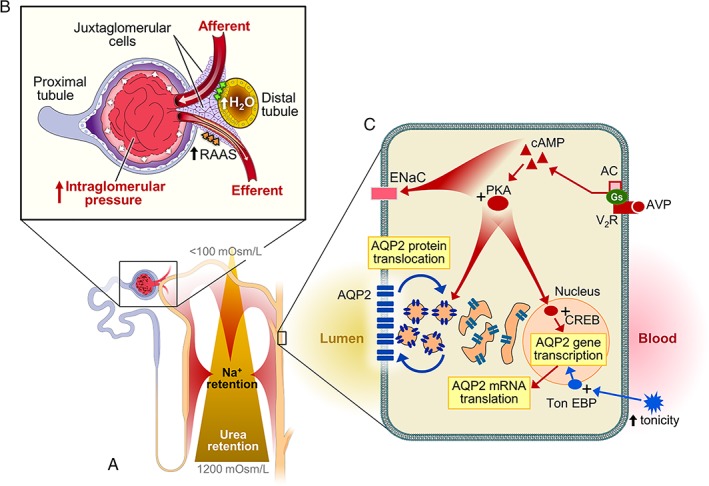
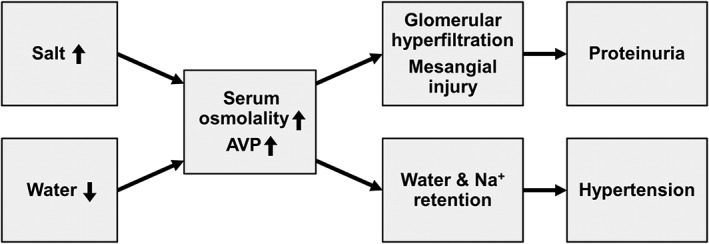
Our knowledge on sodium and water homeostasis and regulation continues to evolve. A considerable amount of new information in this area has emerged in recent years. This review summarizes existing and new literature and discusses complex multi-organ effects of high-salt and low-water intake and role of arginine vasopressin in this process, as well as the potential clinical significance of non-osmotic sodium storage pool and rhythmicity of urine sodium excretion. It has become clear that sodium and water dysregulation can exert profound effects on kidney and vascular health, far greater than previously recognized. Maladaptation to a combined high-salt and low-water intake can be linked to the growing epidemic of hypertension and chronic kidney disease.
我们对钠和水平衡及调节的认识不断发展。近年来,该领域出现了大量新信息。本综述总结了现有和新的文献,讨论了高盐和低水摄入的复杂多器官效应以及精氨酸加压素在此过程中的作用,以及非渗透性钠储存池的潜在临床意义和尿钠排泄的节律性。很明显,钠和水调节异常可对肾脏和血管健康产生深远影响,远比之前认识到的要大。对高盐和低水联合摄入的适应不良可能与高血压和慢性肾脏病的日益流行有关。