Anselmi L, Bove C, Coleman F H, Le K, Subramanian M P, Venkiteswaran K, Subramanian T, Travagli R A
1Department of Neural and Behavioral Sciences, Penn State-College of Medicine, Hershey, PA USA.
2Department of Neurology, Penn State-College of Medicine, Hershey, PA USA.
NPJ Parkinsons Dis. 2018 Sep 27;4:30. doi: 10.1038/s41531-018-0066-0. eCollection 2018.
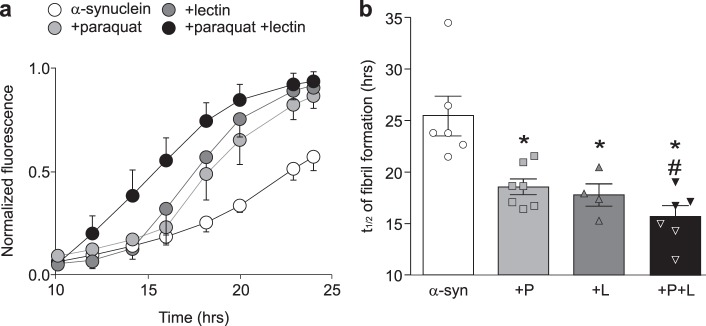
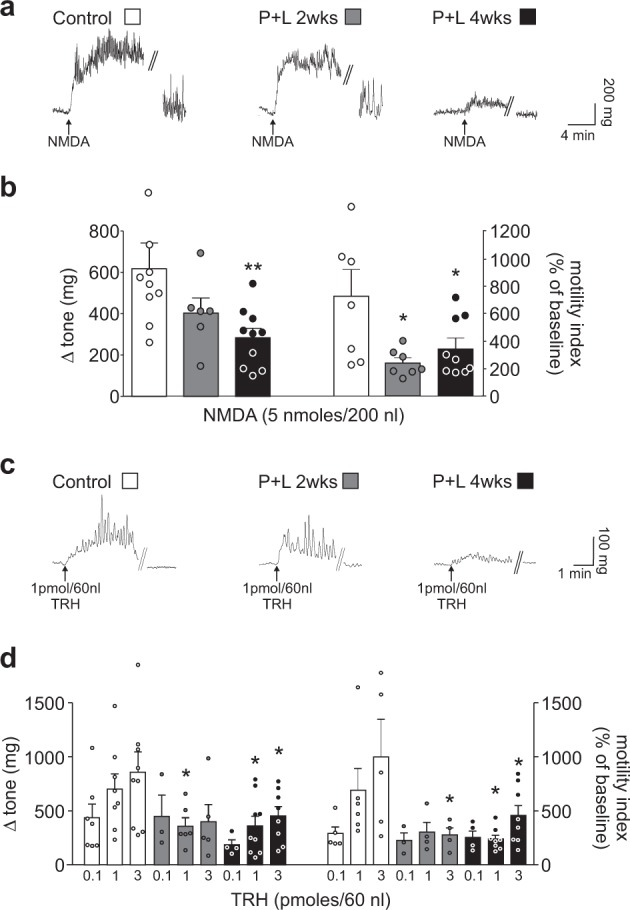
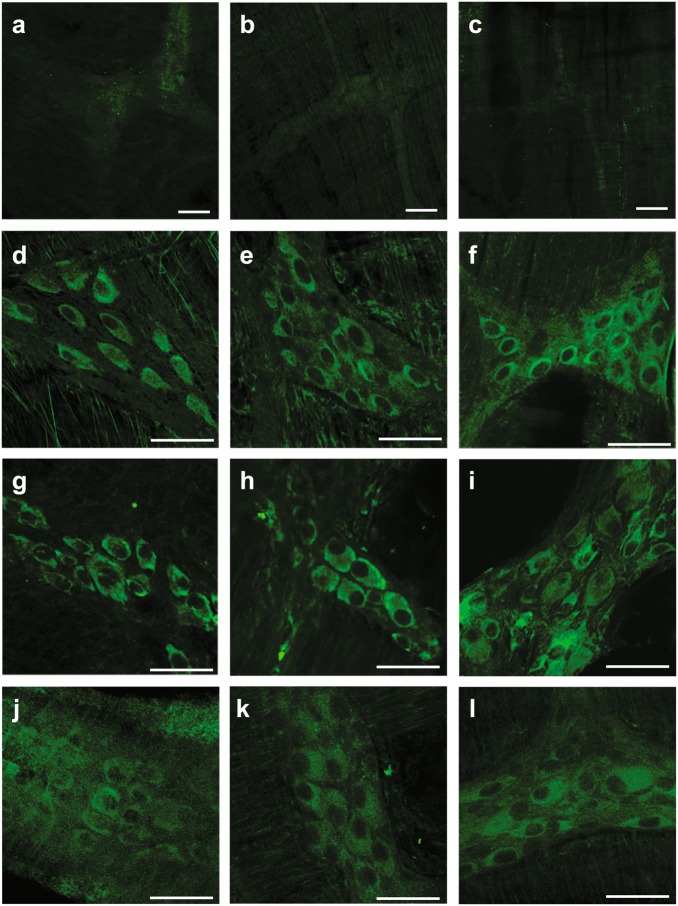
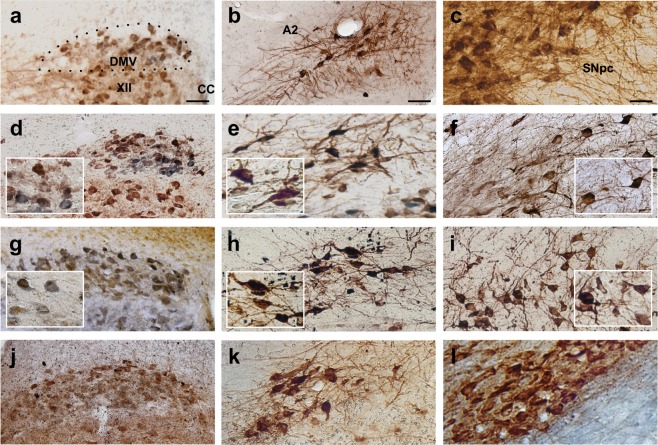
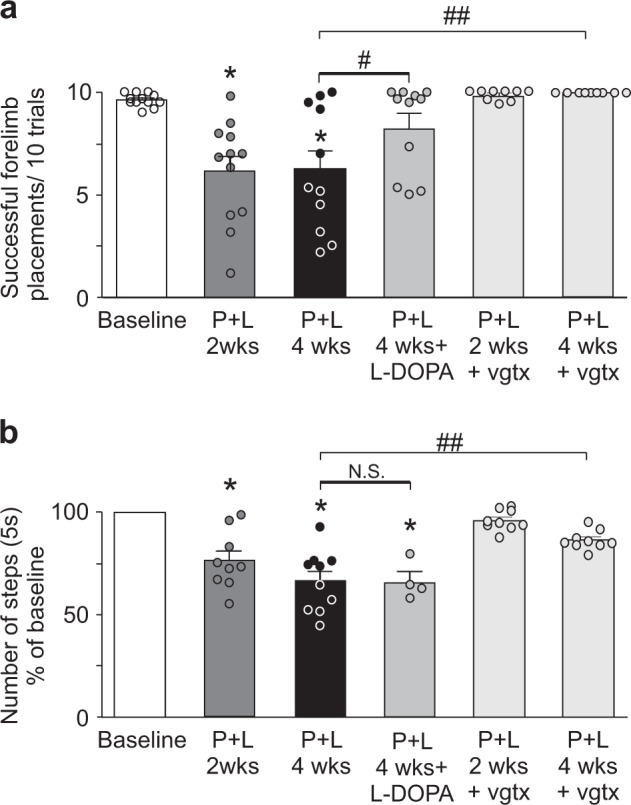
Increasing evidence suggests that environmental neurotoxicants or misfolded α-synuclein generated by such neurotoxicants are transported from the gastrointestinal tract to the central nervous system via the vagus nerve, triggering degeneration of dopaminergic neurons in the substantia nigra pars compacta (SNpc) and causing Parkinson's disease (PD). We tested the hypothesis that gastric co-administration of subthreshold doses of lectins and paraquat can recreate the pathology and behavioral manifestations of PD in rats. A solution containing paraquat + lectin was administered daily for 7 days via gastric gavage, followed by testing for Parkinsonian behavior and gastric dysmotility. At the end of the experiment, brainstem and midbrain tissues were analyzed for the presence of misfolded α-synuclein and neuronal loss in the SNpc and in the dorsal motor nucleus of the vagus (DMV). Misfolded α-synuclein was found in DMV and SNpc neurons. A significant decrease in tyrosine hydroxylase positive dopaminergic neurons was noted in the SNpc, conversely there was no apparent loss of cholinergic neurons of the DMV. Nigrovagally-evoked gastric motility was impaired in treated rats prior to the onset of parkinsonism, the motor deficits of which were improved by l-dopa treatment. Vagotomy prevented the development of parkinsonian symptoms and constrained the appearance of misfolded α-synuclein to myenteric neurons. These data demonstrate that co-administration of subthreshold doses of paraquat and lectin induces progressive, l-dopa-responsive parkinsonism that is preceded by gastric dysmotility. This novel preclinical model of environmentally triggered PD provides functional support for Braak's staging hypothesis of idiopathic PD.
越来越多的证据表明,环境神经毒素或由这类神经毒素产生的错误折叠的α-突触核蛋白通过迷走神经从胃肠道转运至中枢神经系统,引发黑质致密部(SNpc)中多巴胺能神经元的变性,进而导致帕金森病(PD)。我们检验了如下假说:胃内共同给予阈下剂量的凝集素和百草枯可在大鼠中重现PD的病理和行为表现。通过胃管饲法每日给予含百草枯+凝集素的溶液,持续7天,随后检测帕金森样行为和胃动力障碍。在实验结束时,分析脑干和中脑组织中错误折叠的α-突触核蛋白的存在情况以及SNpc和迷走神经背运动核(DMV)中的神经元丢失情况。在DMV和SNpc神经元中发现了错误折叠的α-突触核蛋白。注意到SNpc中酪氨酸羟化酶阳性的多巴胺能神经元显著减少,相反,DMV的胆碱能神经元没有明显丢失。在帕金森病症状出现之前,经处理的大鼠中迷走神经诱发的胃动力受损,其运动缺陷可通过左旋多巴治疗得到改善。迷走神经切断术可预防帕金森病症状的发展,并将错误折叠的α-突触核蛋白的出现限制在肌间神经元中。这些数据表明,阈下剂量的百草枯和凝集素共同给药可诱发进行性的、对左旋多巴有反应的帕金森病,且在此之前会出现胃动力障碍。这种由环境触发的PD的新型临床前模型为特发性PD的Braak分期假说提供了功能支持。