F.M. Kirby Neurobiology Center, Department of Neurology, Boston Children's Hospital, Harvard Medical School, Boston, MA, USA; Department of Neurology and Neurotherapeutics, UT Southwestern Medical Center, Dallas, TX, USA.
Department of Neurobiology, Harvard Medical School, Boston, MA, USA.
Cell Rep. 2018 Oct 9;25(2):357-367.e4. doi: 10.1016/j.celrep.2018.09.039.
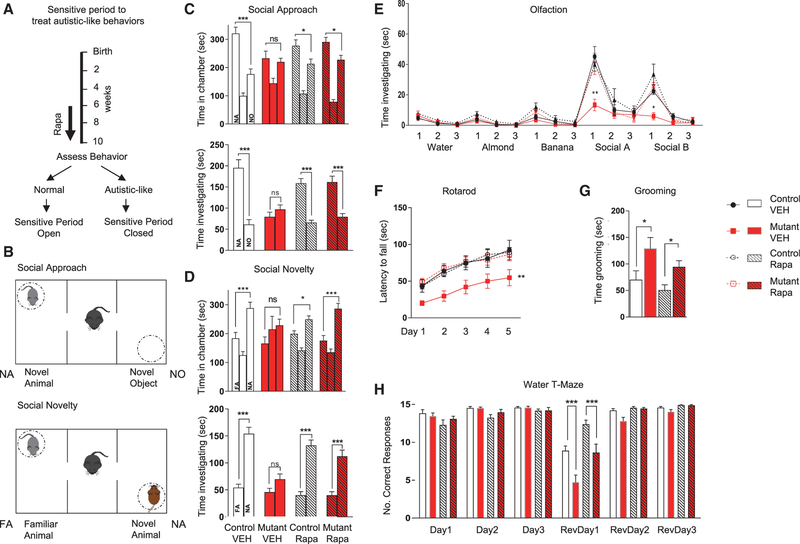
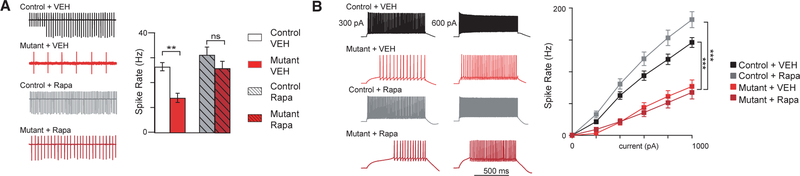
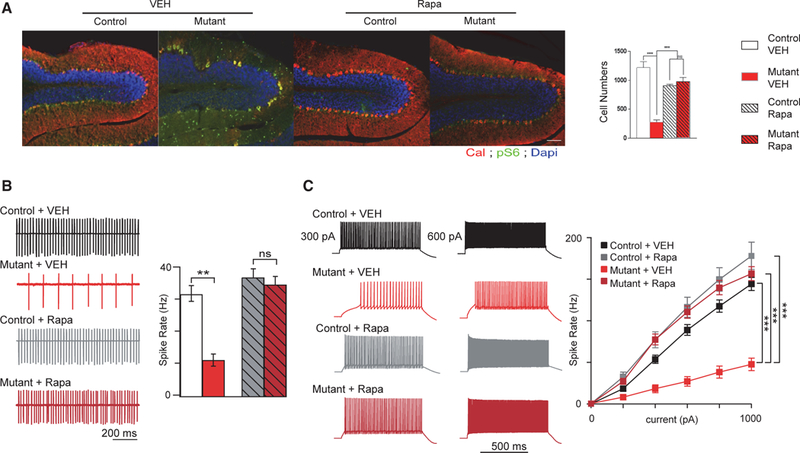
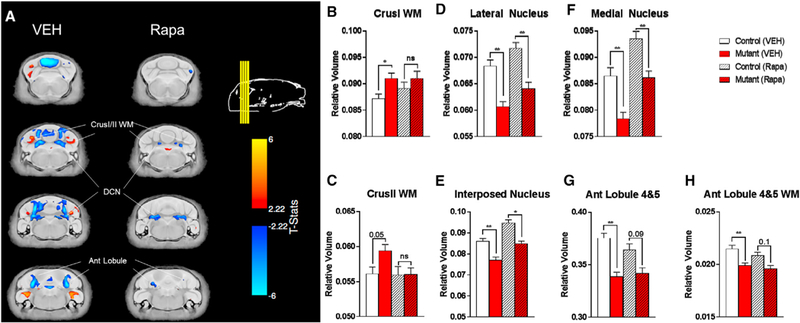
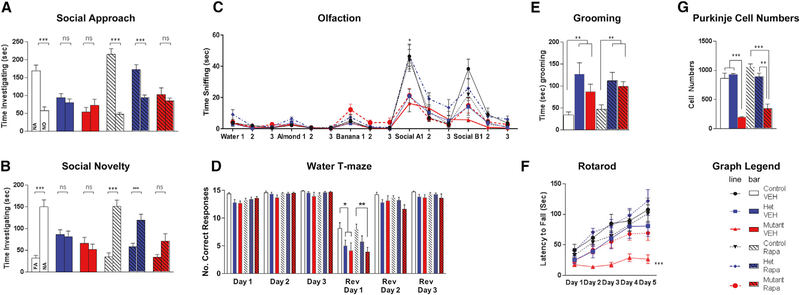
Despite a prevalence exceeding 1%, mechanisms underlying autism spectrum disorders (ASDs) are poorly understood, and targeted therapies and guiding parameters are urgently needed. We recently demonstrated that cerebellar dysfunction is sufficient to generate autistic-like behaviors in a mouse model of tuberous sclerosis complex (TSC). Here, using the mechanistic target of rapamycin (mTOR)-specific inhibitor rapamycin, we define distinct sensitive periods for treatment of autistic-like behaviors with sensitive periods extending into adulthood for social behaviors. We identify cellular and electrophysiological parameters that may contribute to behavioral rescue, with rescue of Purkinje cell survival and excitability corresponding to social behavioral rescue. In addition, using anatomic and diffusion-based MRI, we identify structural changes in cerebellar domains implicated in ASD that correlate with sensitive periods of specific autism-like behaviors. These findings thus not only define treatment parameters into adulthood, but also support a mechanistic basis for the targeted rescue of autism-related behaviors.
尽管自闭症谱系障碍(ASD)的患病率超过 1%,但其发病机制仍不清楚,因此迫切需要有针对性的治疗方法和指导参数。我们最近证明,小脑功能障碍足以在结节性硬化症(TSC)的小鼠模型中产生类似自闭症的行为。在这里,我们使用雷帕霉素(mTOR)特异性抑制剂雷帕霉素,定义了治疗自闭症样行为的不同敏感时期,并且社交行为的敏感时期可以延伸到成年期。我们确定了可能有助于行为恢复的细胞和电生理参数,浦肯野细胞的存活和兴奋性的恢复与社交行为的恢复相对应。此外,我们还使用解剖学和基于扩散的 MRI 来识别与 ASD 相关的小脑域的结构变化,这些变化与特定自闭症样行为的敏感时期相关。这些发现不仅定义了进入成年期的治疗参数,还为自闭症相关行为的靶向治疗提供了机制基础。