Department of Neurology, F.M. Kirby Center for Neurobiology, Boston Children's Hospital, Harvard Medical School, Boston, MA, USA.
Harvard Stem Cell Institute, Harvard University, Cambridge, MA, USA.
Mol Psychiatry. 2018 Nov;23(11):2167-2183. doi: 10.1038/s41380-018-0018-4. Epub 2018 Feb 15.
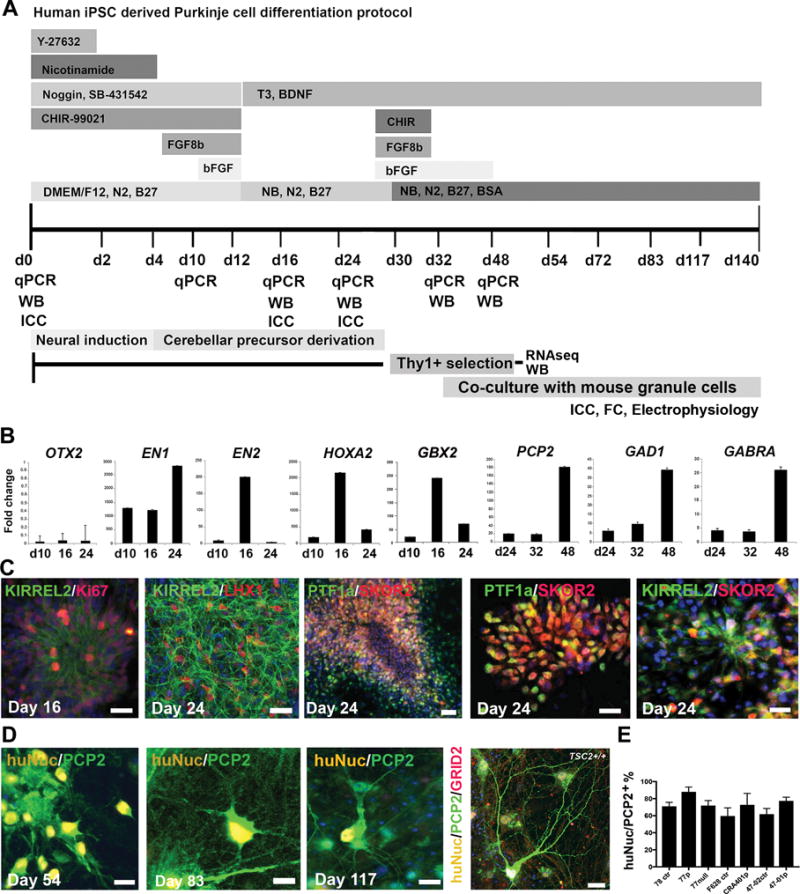
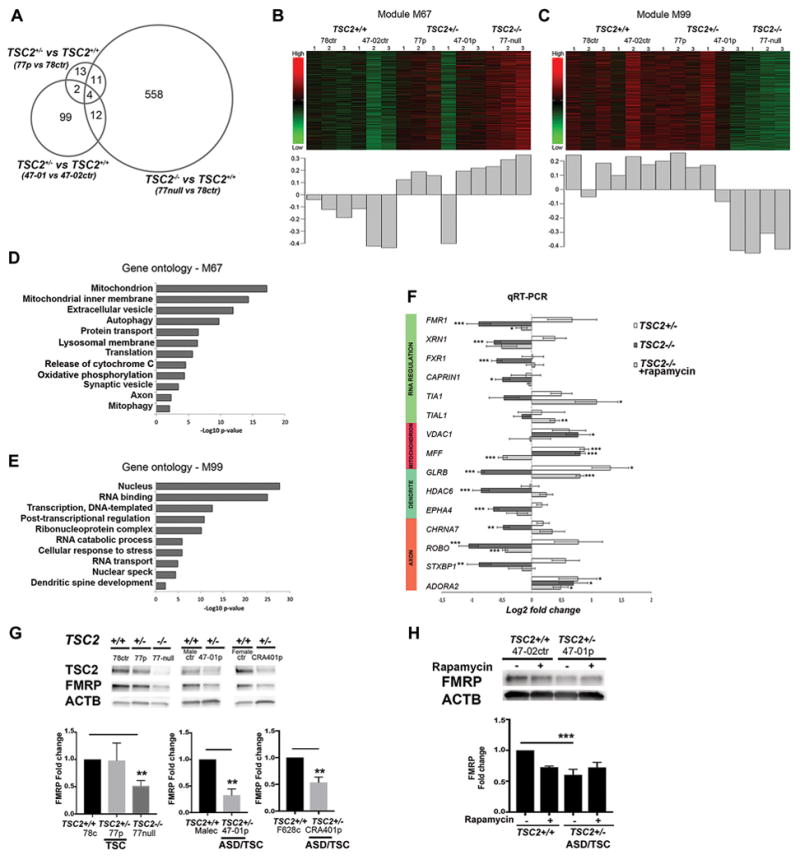
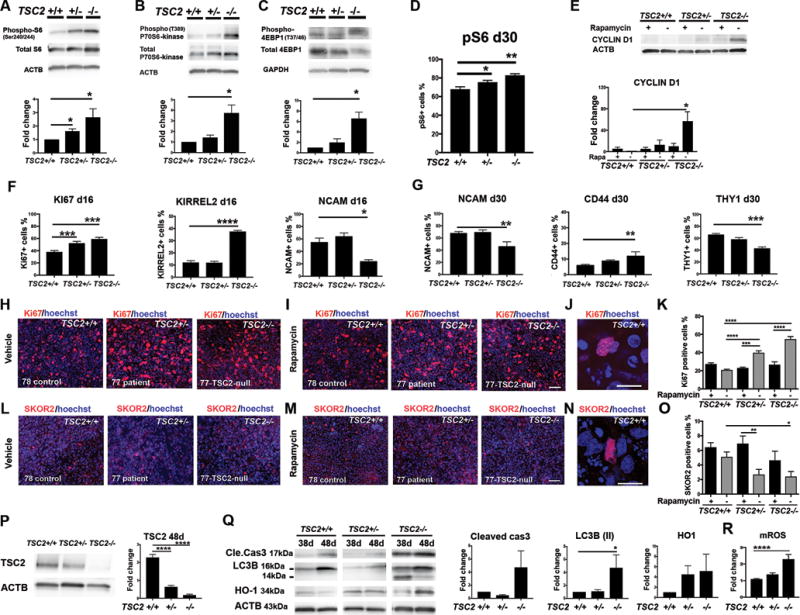
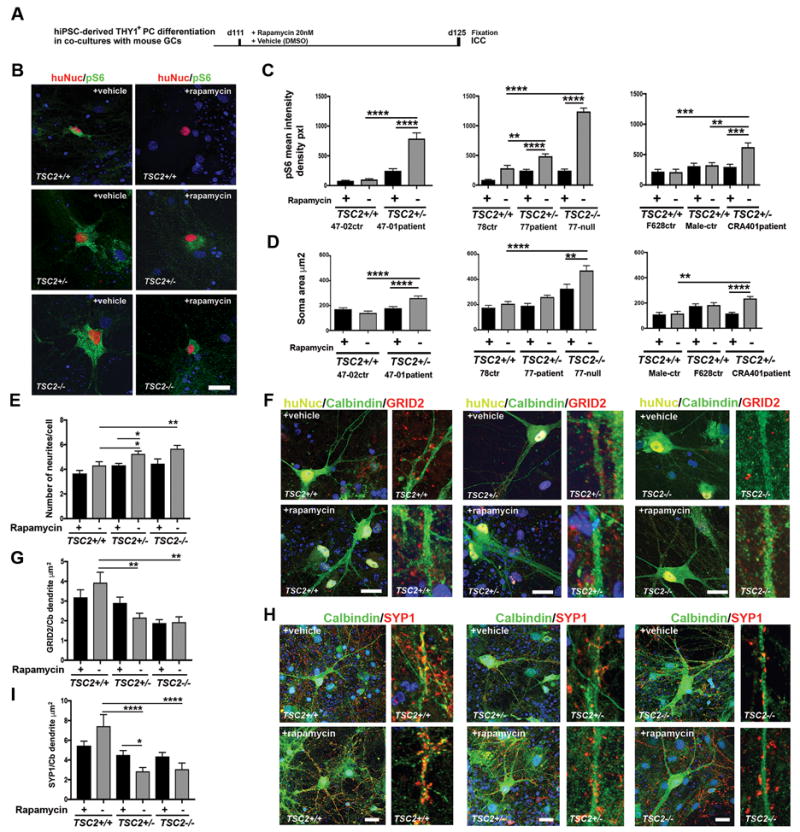
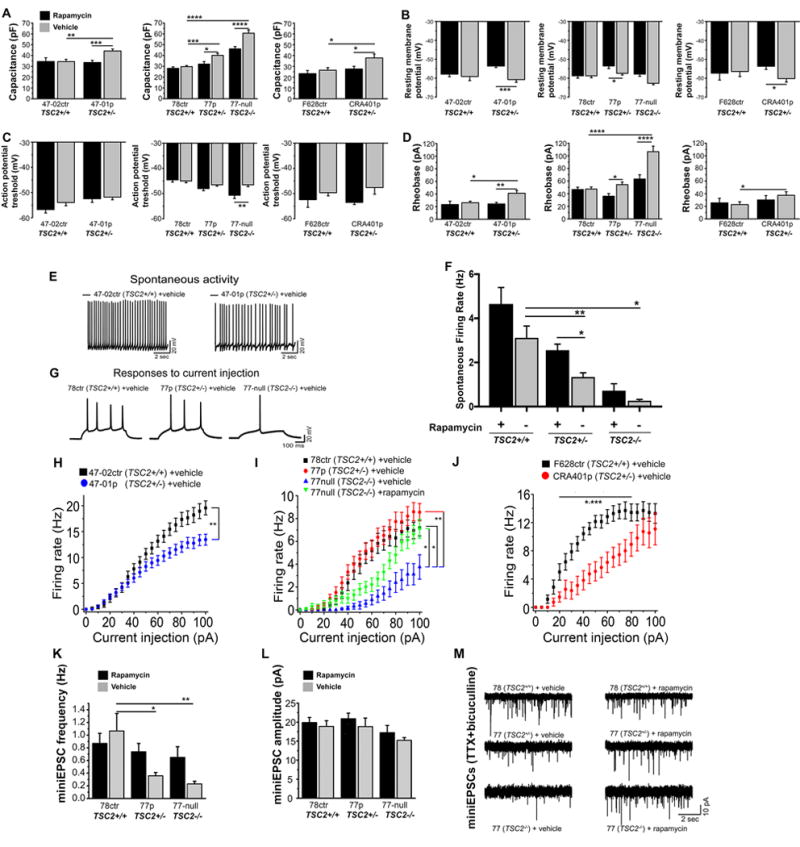
Accumulating evidence suggests that cerebellar dysfunction early in life is associated with autism spectrum disorder (ASD), but the molecular mechanisms underlying the cerebellar deficits at the cellular level are unclear. Tuberous sclerosis complex (TSC) is a neurocutaneous disorder that often presents with ASD. Here, we developed a cerebellar Purkinje cell (PC) model of TSC with patient-derived human induced pluripotent stem cells (hiPSCs) to characterize the molecular mechanisms underlying cerebellar abnormalities in ASD and TSC. Our results show that hiPSC-derived PCs from patients with pathogenic TSC2 mutations displayed mTORC1 pathway hyperactivation, defects in neuronal differentiation and RNA regulation, hypoexcitability and reduced synaptic activity when compared with those derived from controls. Our gene expression analyses revealed downregulation of several components of fragile X mental retardation protein (FMRP) targets in TSC2-deficient hiPSC-PCs. We detected decreased expression of FMRP, glutamate receptor δ2 (GRID2), and pre- and post-synaptic markers such as synaptophysin and PSD95 in the TSC2-deficient hiPSC-PCs. The mTOR inhibitor rapamycin rescued the deficits in differentiation, synaptic dysfunction, and hypoexcitability of TSC2 mutant hiPSC-PCs in vitro. Our findings suggest that these gene expression changes and cellular abnormalities contribute to aberrant PC function during development in TSC affected individuals.
越来越多的证据表明,生命早期小脑功能障碍与自闭症谱系障碍(ASD)有关,但小脑在细胞水平上的缺陷的分子机制尚不清楚。结节性硬化症(TSC)是一种神经皮肤疾病,常伴有 ASD。在这里,我们使用患者来源的诱导多能干细胞(hiPSC)建立了 TSC 的小脑浦肯野细胞(PC)模型,以表征 ASD 和 TSC 中小脑异常的分子机制。我们的研究结果表明,与对照组相比,源自致病性 TSC2 突变患者的 hiPSC 衍生的 PC 显示 mTORC1 途径过度激活、神经元分化和 RNA 调节缺陷、兴奋性降低和突触活动减少。我们的基因表达分析显示,在 TSC2 缺陷的 hiPSC-PC 中,脆性 X 智力低下蛋白(FMRP)靶标中的几个成分下调。我们在 TSC2 缺陷的 hiPSC-PC 中检测到 FMRP、谷氨酸受体 δ2(GRID2)和突触前和突触后标志物(如突触小体和 PSD95)的表达减少。mTOR 抑制剂雷帕霉素可挽救 TSC2 突变 hiPSC-PC 体外分化、突触功能障碍和兴奋性降低的缺陷。我们的研究结果表明,这些基因表达变化和细胞异常导致 TSC 个体发育过程中 PC 功能异常。