Laboratory of Ligand Engineering, Institute of Biotechnology of the Czech Academy of Sciences, v. v. i., BIOCEV Research Center, Průmyslová 595, 252 50 Vestec, Czech Republic.
Laboratory of Molecular Biology of the Bacterial Pathogens, Institute of Microbiology, Czech Academy of Sciences, v. v. i., Vídeňská 1083, 142 20 Prague, Czech Republic.
Int J Mol Sci. 2018 Oct 9;19(10):3089. doi: 10.3390/ijms19103089.
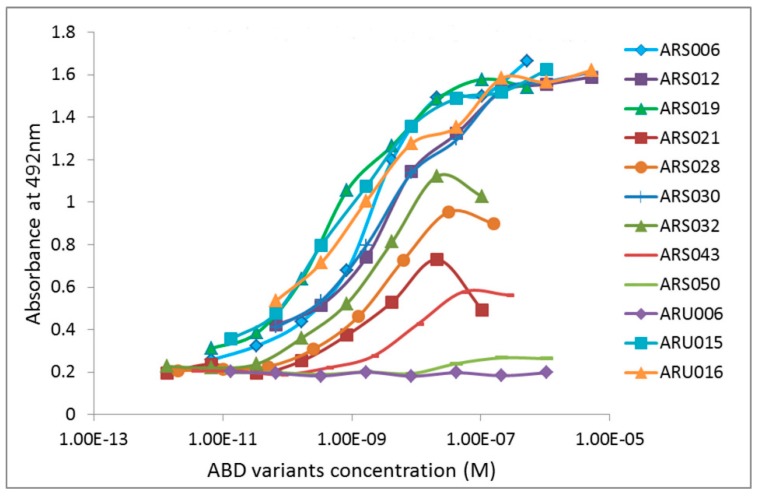
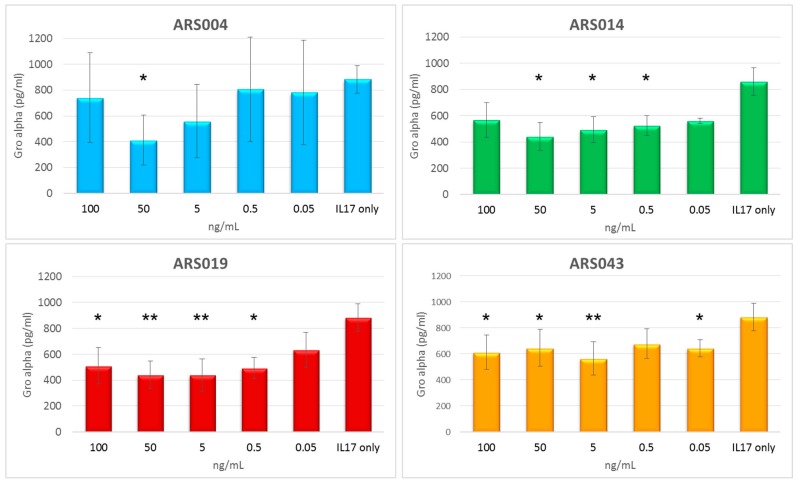
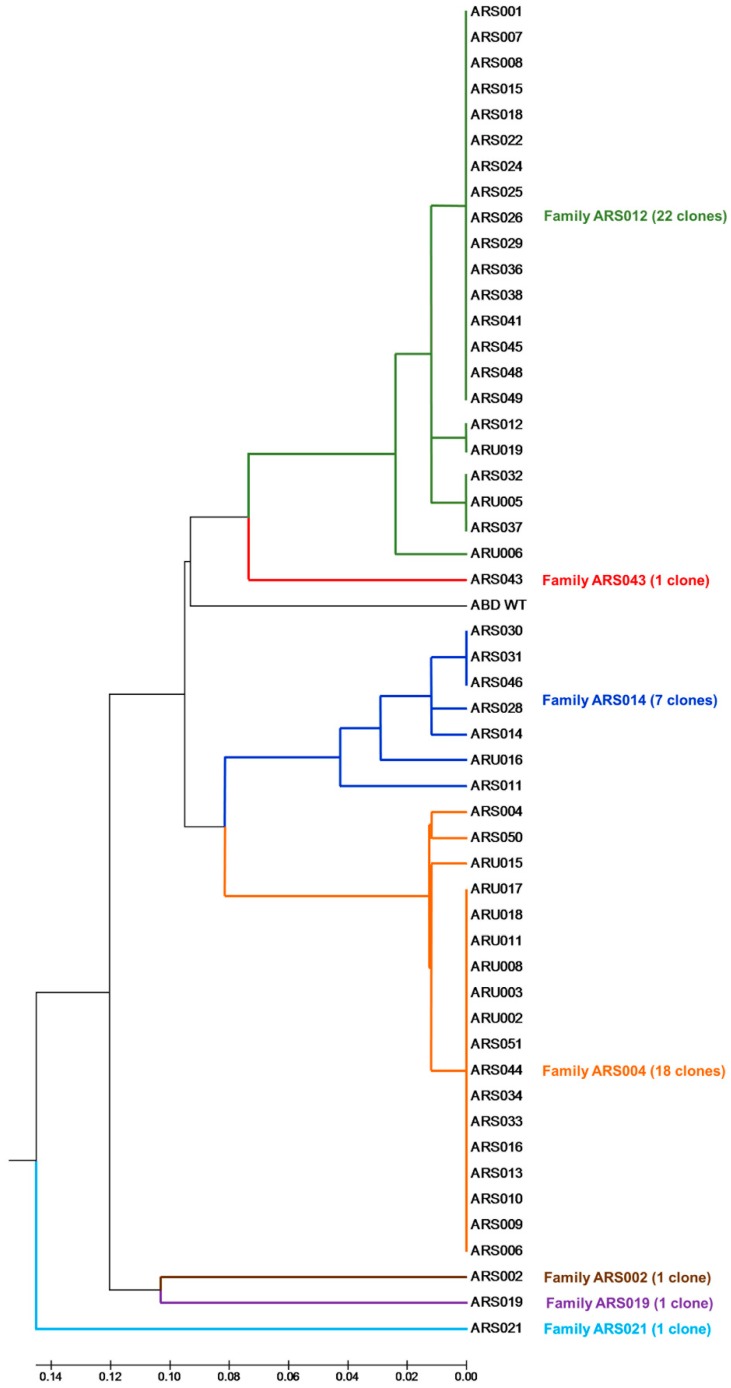
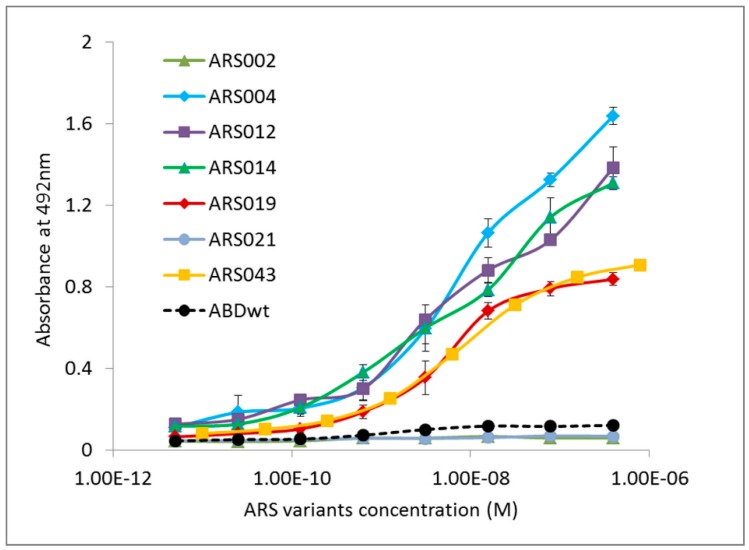
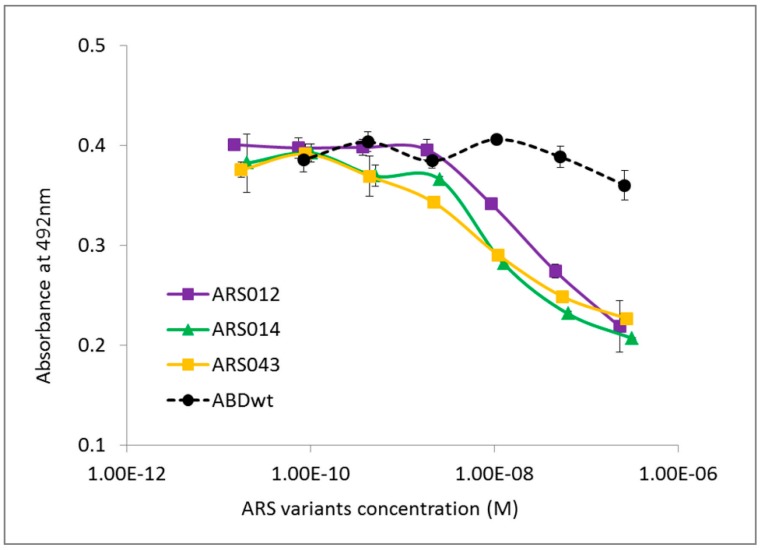
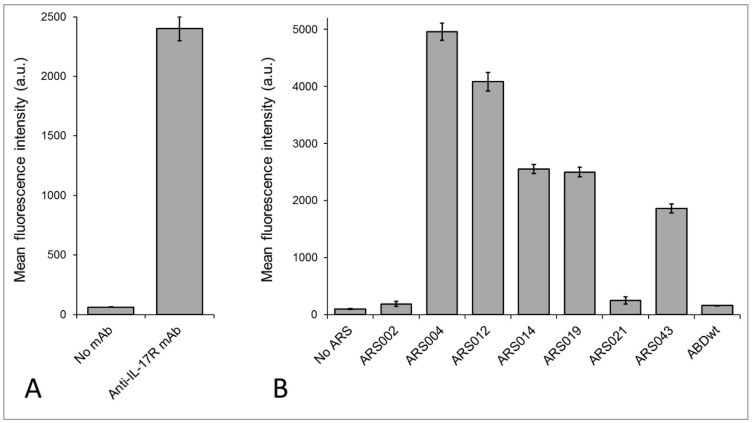
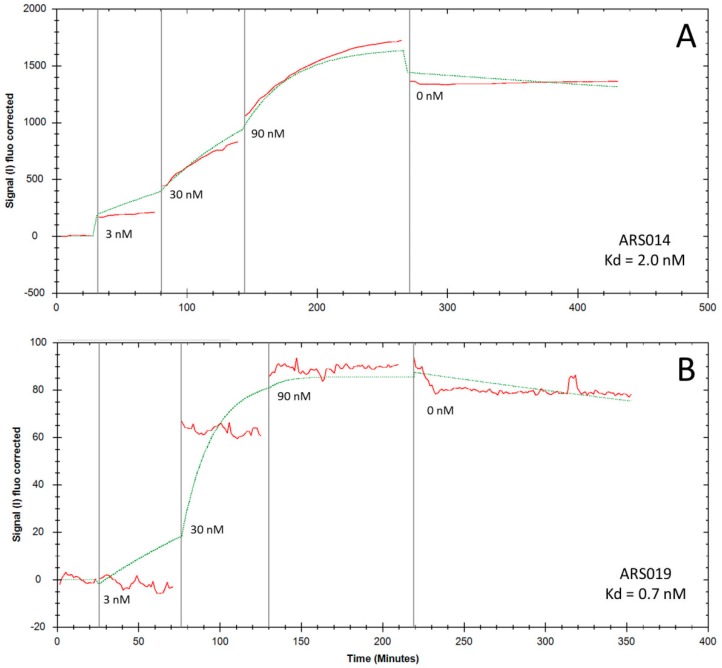
Interleukin 17 (IL-17) and its cognate receptor A (IL-17RA) play a crucial role in Th17 cells-mediated pro-inflammatory pathway and pathogenesis of several autoimmune disorders including psoriasis. IL-17 is mainly produced by activated Th-17 helper cells upon stimulation by IL-23 and, via binding to its receptors, mediates IL-17-driven cell signaling in keratinocytes. Hyper-proliferation of keratinocytes belongs to major clinical manifestations in psoriasis. To modulate IL-17-mediated inflammatory cascade, we generated a unique collection of IL-17RA-targeting protein binders that prevent from binding of human IL-17A cytokine to its cell-surface receptor. To this goal, we used a highly complex combinatorial library derived from scaffold of albumin-binding domain (ABD) of streptococcal protein G, and ribosome display selection, to yield a collection of ABD-derived high-affinity ligands of human IL-17RA, called ARS binders. From 67 analyzed ABD variants, 7 different sequence families were identified. Representatives of these groups competed with human IL-17A for binding to recombinant IL-17RA receptor as well as to IL-17RA-Immunoglobulin G chimera, as tested in enzyme-linked immunosorbent assay (ELISA). Five ARS variants bound to IL-17RA-expressing THP-1 cells and blocked binding of human IL-17 cytokine to the cell surface, as tested by flow cytometry. Three variants exhibited high-affinity binding with a nanomolar value to human keratinocyte HaCaT cells, as measured using Ligand Tracer Green Line. Upon IL-17-stimulated activation, ARS variants inhibited secretion of Gro-α (CXCL1) by normal human skin fibroblasts in vitro. Thus, we identified a novel class of inhibitory ligands that might serve as immunosuppressive IL-17RA-targeted non-IgG protein antagonists.
白细胞介素 17(IL-17)及其同源受体 A(IL-17RA)在 Th17 细胞介导的促炎途径和几种自身免疫性疾病的发病机制中发挥着关键作用,包括银屑病。IL-17 主要由激活的 Th-17 辅助细胞在 IL-23 的刺激下产生,通过与受体结合,介导角质形成细胞中的 IL-17 驱动的细胞信号转导。角质形成细胞的过度增殖是银屑病的主要临床表现之一。为了调节 IL-17 介导的炎症级联反应,我们生成了一组独特的 IL-17RA 靶向蛋白结合物,这些结合物可阻止人白细胞介素 17A 细胞因子与其细胞表面受体结合。为此,我们使用了源自链球菌蛋白 G 的白蛋白结合结构域(ABD)的高度复杂组合文库,并通过核糖体展示选择,产生了一组称为 ARS 结合物的 ABD 衍生的高亲和力人 IL-17RA 配体。从 67 个分析的 ABD 变体中,确定了 7 个不同的序列家族。这些组的代表与重组人 IL-17RA 受体以及 IL-17RA-免疫球蛋白 G 嵌合体竞争结合,如酶联免疫吸附测定(ELISA)所示。五种 ARS 变体与人 IL-17RA 表达的 THP-1 细胞结合,并阻断人白细胞介素 17 细胞因子与细胞表面的结合,如通过流式细胞术测试。三种变体与人角质形成细胞 HaCaT 细胞以纳摩尔亲和力结合,如使用 Ligand Tracer Green Line 测量。在 IL-17 刺激激活后,ARS 变体抑制体外正常人皮肤成纤维细胞分泌 Gro-α(CXCL1)。因此,我们鉴定了一类新型的抑制性配体,它们可能作为免疫抑制性的靶向 IL-17RA 的非免疫球蛋白 G 蛋白拮抗剂。