Sung Hye Youn, Lee Ji Yeoun, Park Ae Kyung, Moon Youn Joo, Jo Inho, Park Eun-Mi, Wang Kyu-Chang, Phi Ji Hoon, Ahn Jung-Hyuck, Kim Seung-Ki
Department of Biochemistry, Ewha Womans University College of Medicine, Seoul, Korea.
Department of Anatomy, Seoul National University College of Medicine, Seoul, Korea.
J Stroke. 2018 Sep;20(3):350-361. doi: 10.5853/jos.2018.00962. Epub 2018 Sep 30.
The pathogenesis of moyamoya disease (MMD) remains poorly understood, and no reliable molecular biomarkers for MMD have been identified to date. The present study aimed to identify epigenetic biomarkers for use in the diagnosis of MMD.
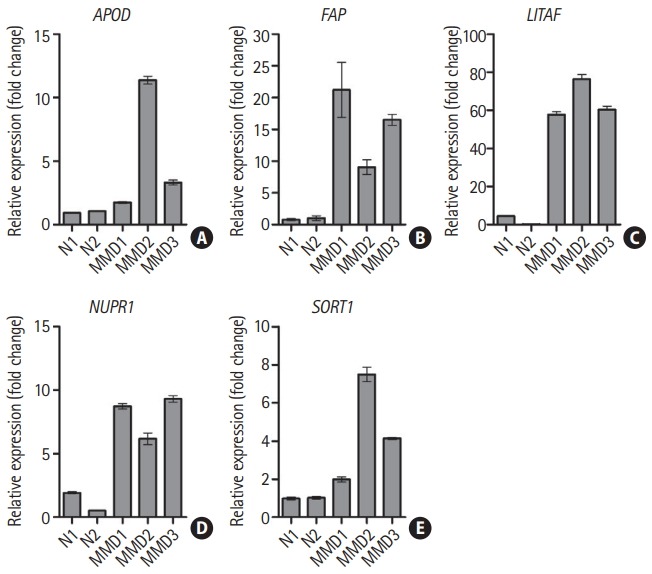
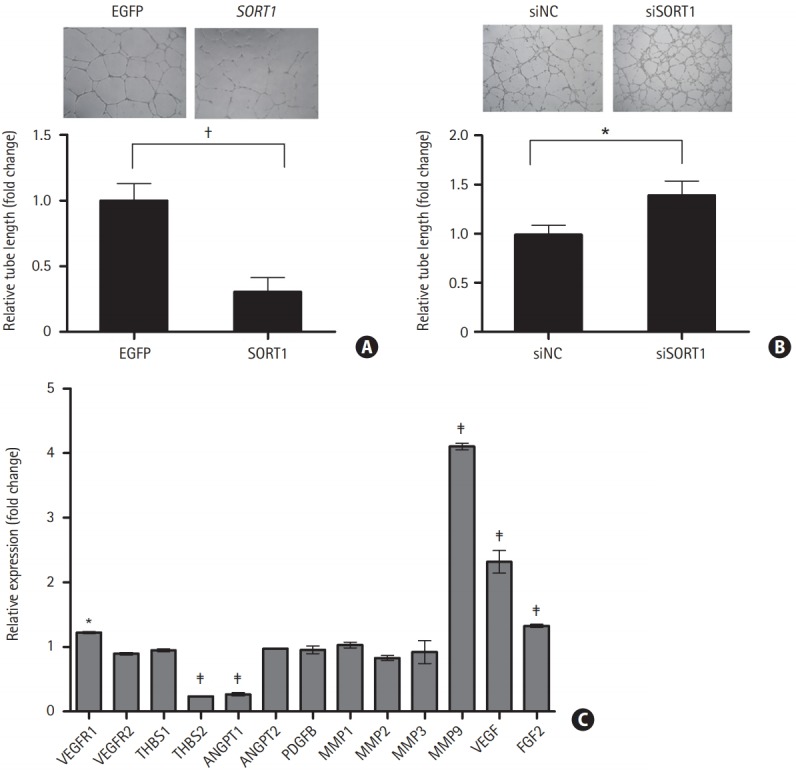
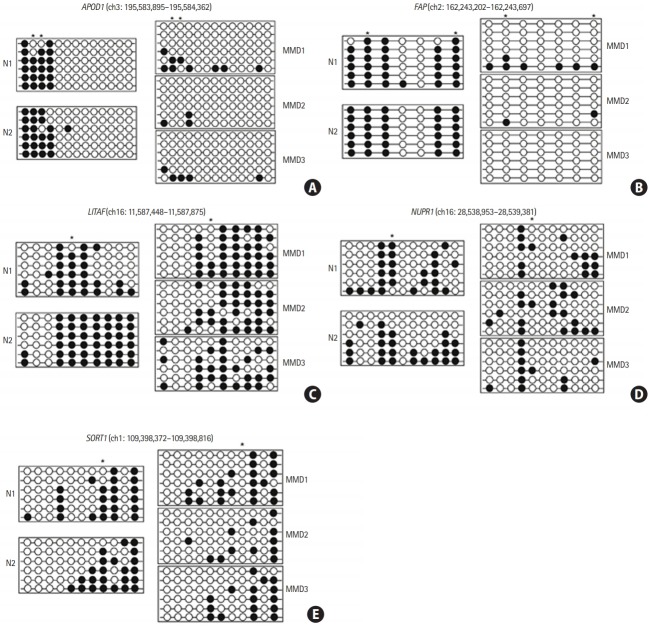
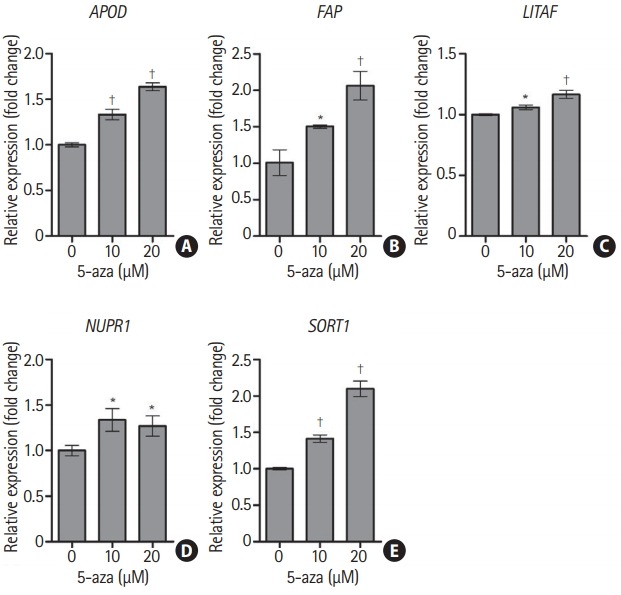
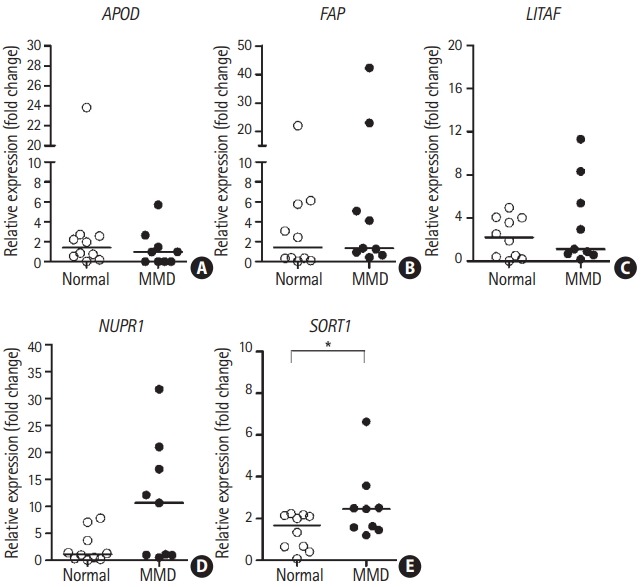
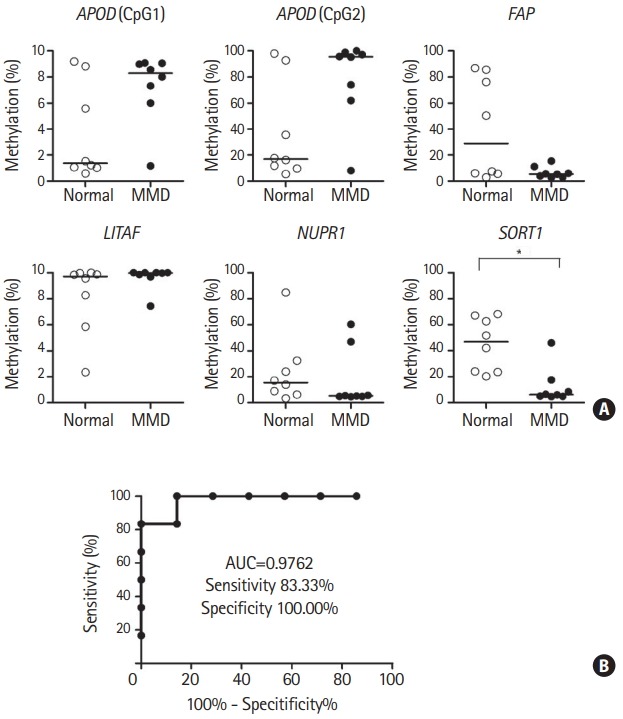
We performed integrated analyses of gene expression profiles and DNA methylation profiles in endothelial colony forming cells (ECFCs) from three patients with MMD and two healthy individuals. Candidate gene mRNA expression and DNA methylation status were further validated using reverse transcription-quantitative polymerase chain reaction (RT-qPCR) and pyrosequencing analysis of an expanded ECFC sample set from nine patients with MMD and ten controls. We evaluated the diagnostic accuracy of the potential biomarkers identified here using receiver operating characteristic curve analyses and further measured major angiogenic factor expression levels using a tube formation assay and RT-qPCR.
Five candidate genes were selected via integrated analysis; all five were upregulated by hypomethylation of specific promoter CpG sites. After further validation in an expanded sample set, we identified a candidate biomarker gene, sortilin 1 (SORT1). DNA methylation status at a specific SORT1 promoter CpG site in ECFCs readily distinguished patients with MMD from the normal controls with high accuracy (area under the curve 0.98, sensitivity 83.33%, specificity 100%). Furthermore, SORT1 overexpression suppressed endothelial cell tube formation and modulated major angiogenic factor and matrix metalloproteinase-9 expression, implying SORT1 involvement in MMD pathogenesis.
s Our findings suggest that DNA methylation status at the SORT1 promoter CpG site may be a potential biomarker for MMD.
烟雾病(MMD)的发病机制仍未完全明确,迄今为止尚未发现可靠的MMD分子生物标志物。本研究旨在鉴定用于MMD诊断的表观遗传生物标志物。
我们对3例MMD患者和2名健康个体的内皮祖细胞(ECFCs)进行了基因表达谱和DNA甲基化谱的综合分析。使用逆转录定量聚合酶链反应(RT-qPCR)和焦磷酸测序分析,对来自9例MMD患者和10名对照的扩大ECFC样本集进一步验证候选基因mRNA表达和DNA甲基化状态。我们使用受试者工作特征曲线分析评估此处鉴定的潜在生物标志物的诊断准确性,并使用管形成试验和RT-qPCR进一步测量主要血管生成因子表达水平。
通过综合分析选择了5个候选基因;所有5个基因均因特定启动子CpG位点的低甲基化而上调。在扩大样本集中进一步验证后,我们鉴定出一个候选生物标志物基因,即sortilin 1(SORT1)。ECFCs中特定SORT1启动子CpG位点的DNA甲基化状态能够准确地区分MMD患者和正常对照(曲线下面积0.98,敏感性83.33%,特异性100%)。此外,SORT1过表达抑制内皮细胞管形成,并调节主要血管生成因子和基质金属蛋白酶-9的表达,这表明SORT1参与了MMD的发病机制。
我们的研究结果表明,SORT1启动子CpG位点的DNA甲基化状态可能是MMD的潜在生物标志物。