Faculty of Biology, Medicine and Health, AV Hill Building, The University of Manchester, Oxford Road, Manchester, M13 9PL, UK.
Department of Immunology and Inflammation, Humanitas Clinical and Research Center, 20089, Rozzano, MI, Italy.
J Mol Med (Berl). 2018 Dec;96(12):1319-1332. doi: 10.1007/s00109-018-1698-6. Epub 2018 Oct 13.
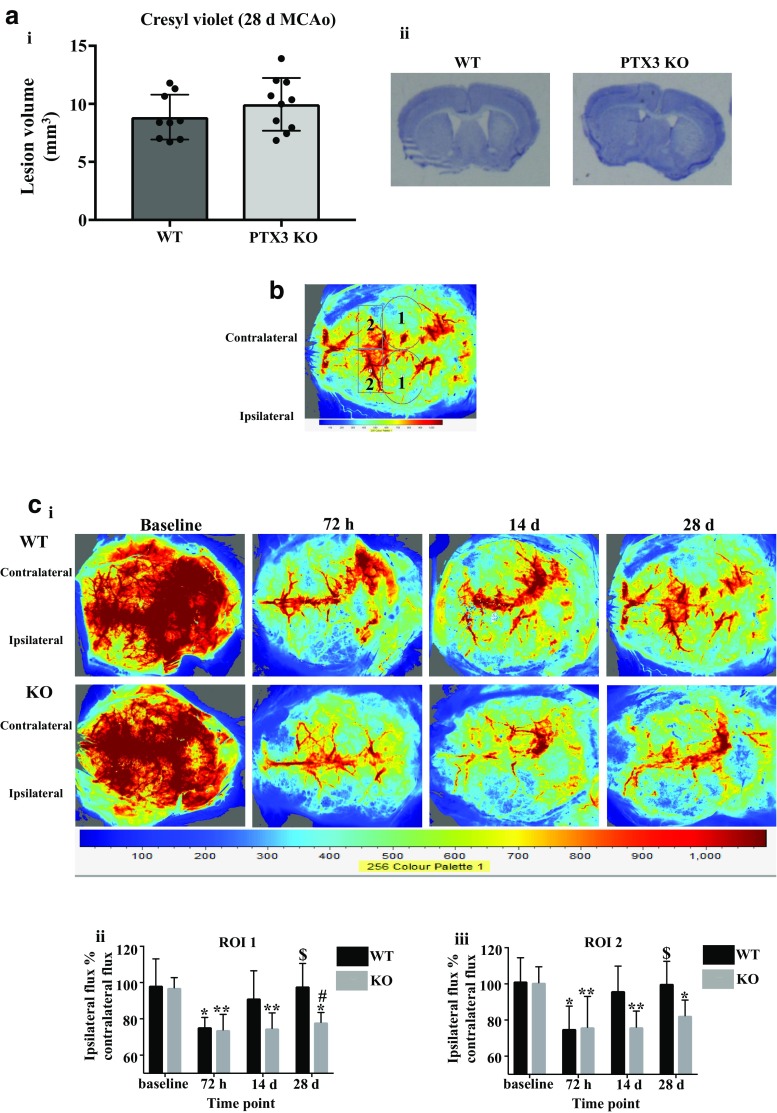
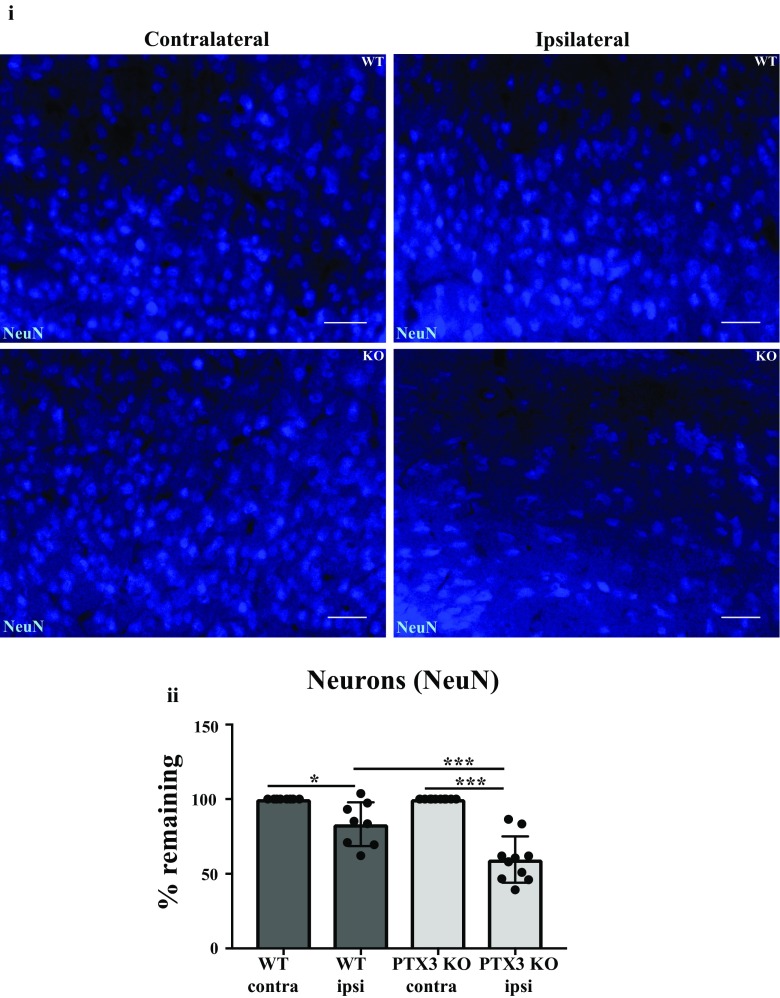
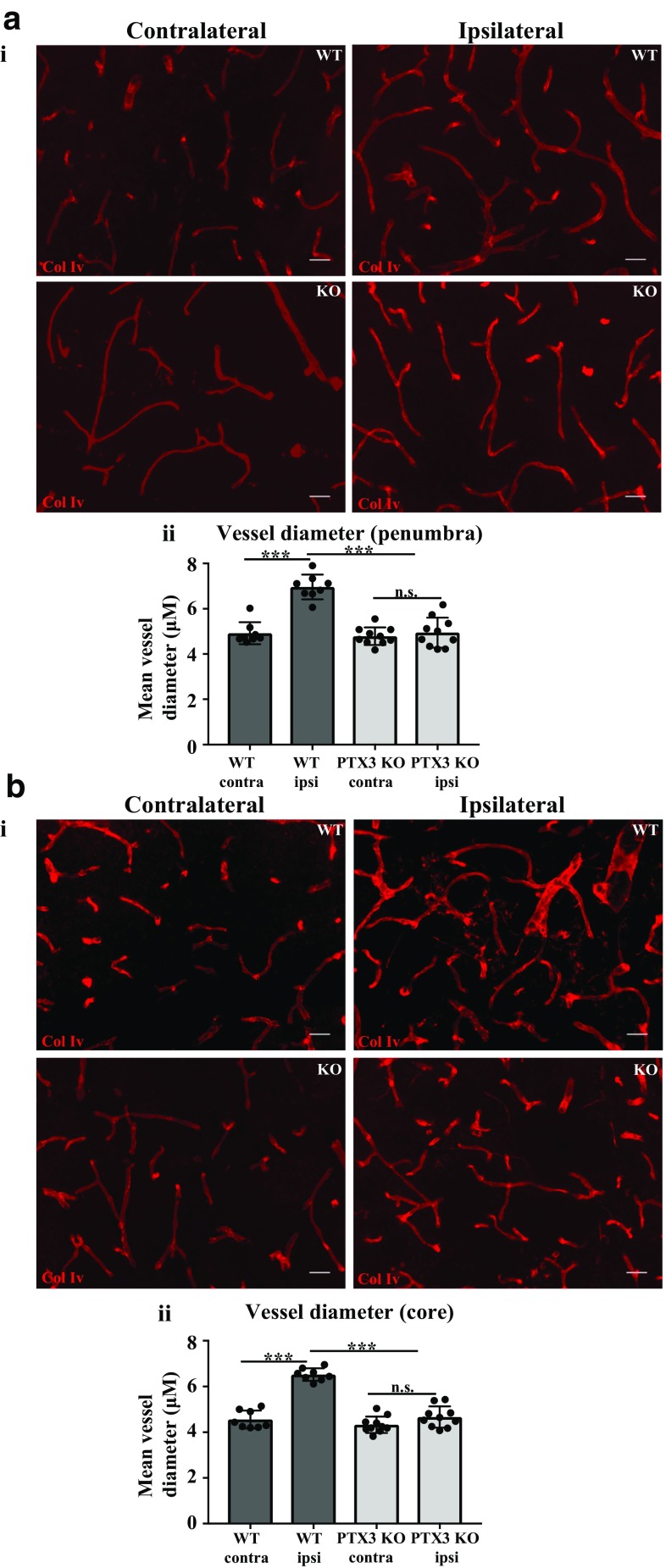
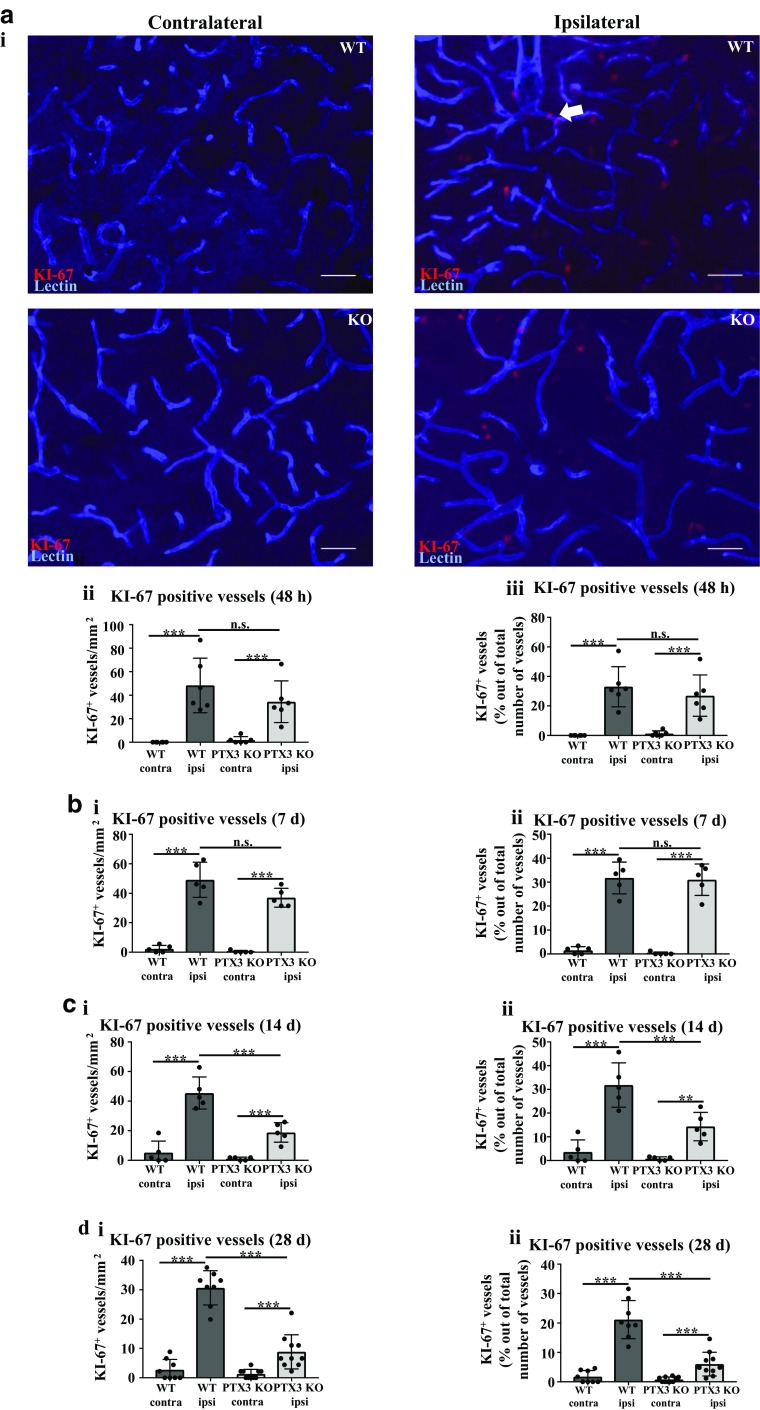
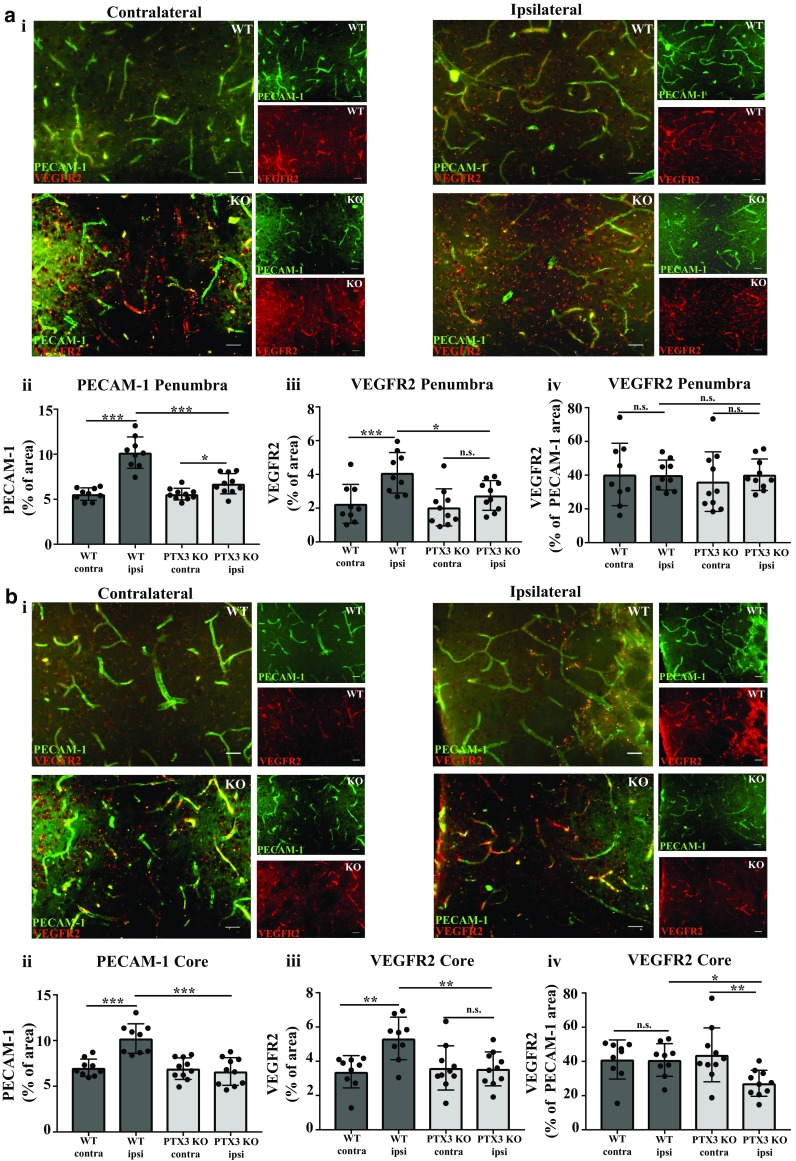
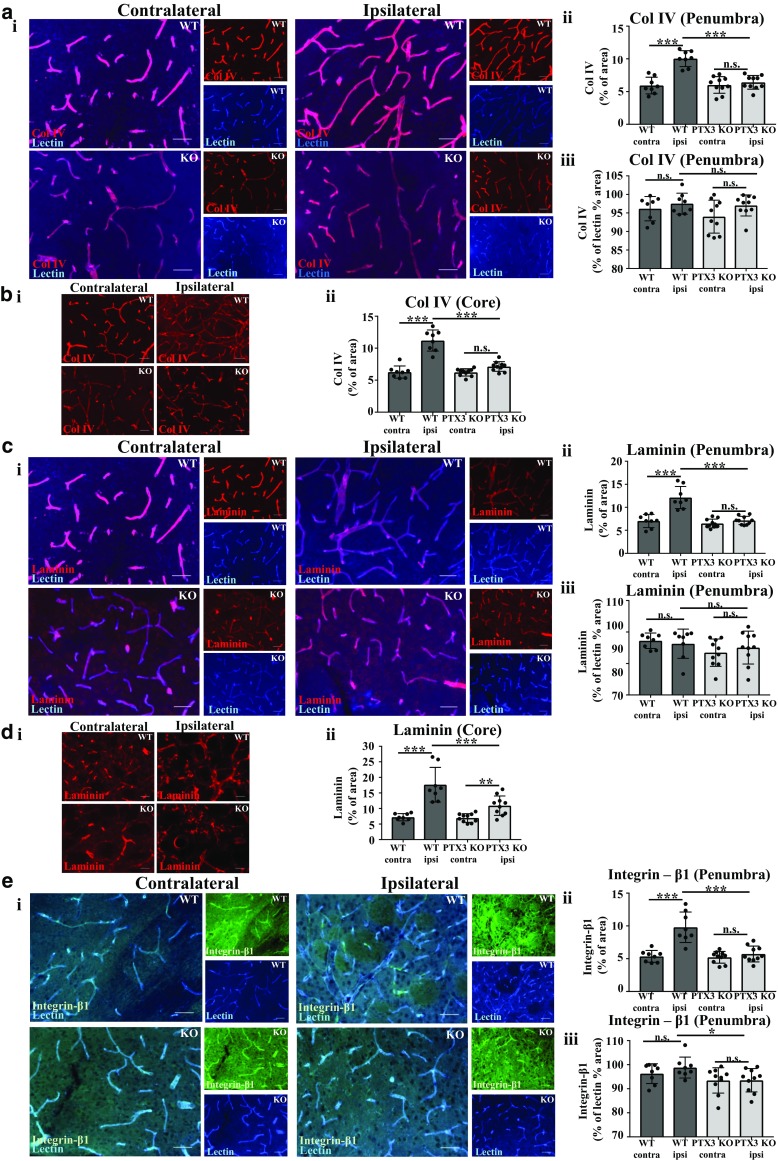
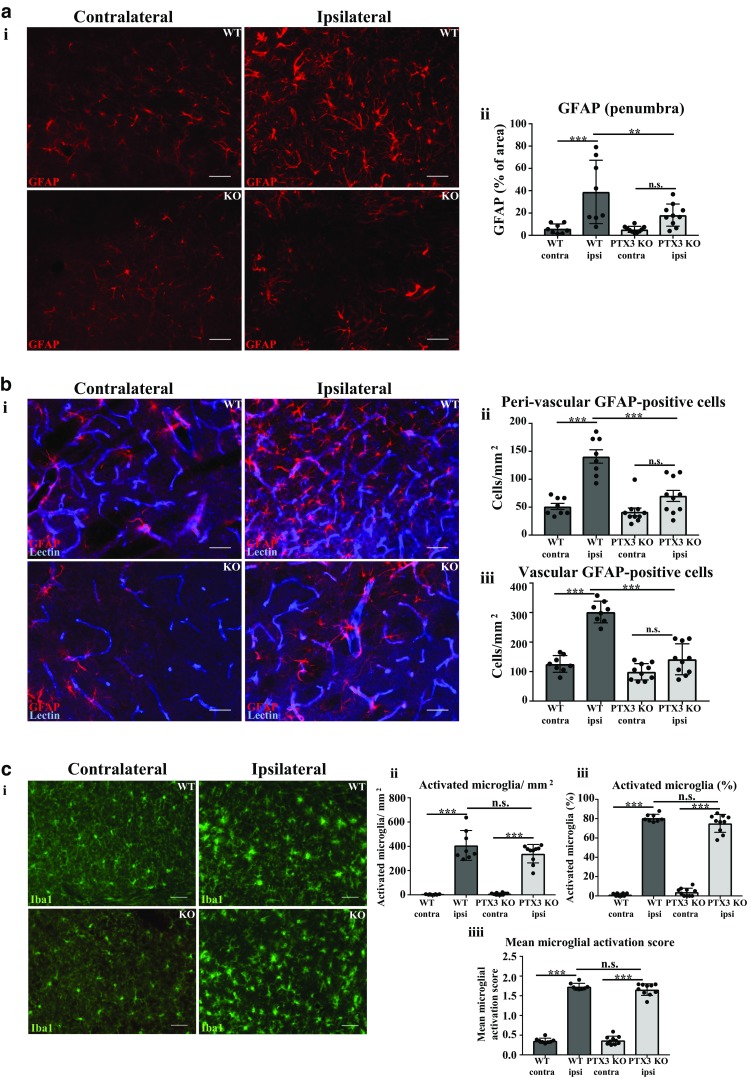
Restoration of cerebral blood flow (CBF) and upregulation of angiogenesis are crucial for brain repair and functional recovery after cerebral ischaemia. Pentraxin 3 (PTX3) is a key regulator of angiogenesis and is emerging as a promising target for cerebrovascular repair after stroke. Here, we investigated for the first time the role of PTX3 in long-term CBF, angiogenesis, and neuronal viability after ischaemic stroke induced by transient middle cerebral artery occlusion (MCAo). Lack of PTX3 had no effect on early brain damage, but significantly impaired restoration of CBF, 14 and 28 days after MCAo, compared to wild-type (WT) mice. Immunohistochemical analysis revealed that PTX3 KO mice have significantly greater neuronal loss, significantly decreased vessel diameter, vessel proliferation, vascular density, and reactive astrocytes and decreased expression of vascular endothelial growth factor receptor 2 (VEGR2), vascular extracellular matrix (ECM)-proteins (collagen IV, laminin), and integrin-β, in the ipsilateral (stroke) hemisphere compared to WT mice, 28 days after MCAo. Therefore, PTX3 promotes sustained long-term recovery of CBF, angiogenesis, and neuronal viability after cerebral ischaemia. Collectively, these findings demonstrate the potential and clinical relevance of PTX3 as a promising therapeutic target, providing sustained long-term post-stroke neurovascular repair and reducing the loss of neurons. KEY MESSAGES: Pentraxin 3 (PTX3) is a key regulator of angiogenesis and is emerging as a promising target for cerebrovascular repair after stroke. Restoration of cerebral blood flow (CBF) and angiogenesis are crucial for brain repair and functional recovery after cerebral ischaemia. PTX3 promotes sustained long-term recovery of CBF, angiogenesis, and neuronal viability after cerebral ischaemia.
恢复脑血流(CBF)和促进血管生成对于脑缺血后的脑修复和功能恢复至关重要。五聚素 3(PTX3)是血管生成的关键调节剂,并且作为中风后脑血管修复的有前途的靶点正在出现。在这里,我们首次研究了 PTX3 在短暂性大脑中动脉闭塞(MCAo)诱导的缺血性中风后长期 CBF、血管生成和神经元活力中的作用。与野生型(WT)小鼠相比,缺乏 PTX3 对早期脑损伤没有影响,但在 MCAo 后 14 天和 28 天,明显损害了 CBF 的恢复。免疫组织化学分析显示,与 WT 小鼠相比,PTX3 KO 小鼠在 MCAo 后 28 天,在同侧(中风)半球中神经元丢失明显更大,血管直径、血管增殖、血管密度和反应性星形胶质细胞明显减少,血管内皮生长因子受体 2(VEGR2)、血管细胞外基质(ECM)-蛋白(胶原 IV、层粘连蛋白)和整合素-β表达减少。因此,PTX3 可促进脑缺血后 CBF、血管生成和神经元活力的持续长期恢复。总的来说,这些发现表明 PTX3 作为一种有前途的治疗靶点具有潜力和临床相关性,为中风后提供了持续的长期神经血管修复,并减少了神经元的丢失。
五聚素 3(PTX3)是血管生成的关键调节剂,并且作为中风后脑血管修复的有前途的靶点正在出现。恢复脑血流(CBF)和血管生成对于脑缺血后的脑修复和功能恢复至关重要。PTX3 可促进脑缺血后 CBF、血管生成和神经元活力的持续长期恢复。