Department of Leukemia, The University of Texas MD Anderson Cancer Center, Houston, Texas.
Department of Symptom Research, The University of Texas MD Anderson Cancer Center, Houston, Texas.
Cancer Med. 2018 Nov;7(11):5457-5469. doi: 10.1002/cam4.1808. Epub 2018 Oct 14.
Treatment with tyrosine kinase inhibitors (TKIs) for patients with chronic myeloid leukemia (CML) is effective but needs to continue for several years, possibly indefinitely. Although generally safe, TKI may have hitherto poorly recognized effects in the quality of life (QoL) of such patients.
We prospectively measured the symptom burden of patients with chronic phase CML enrolled on frontline TKI trials with dasatinib, nilotinib, or ponatinib. A total of 219 patients were enrolled and filled out the MD Anderson Symptom Inventory (MDASI)-CML questionnaire before the start of therapy and during follow-up at defined time points of 3, 6, 9, 12, 18, and 24 months.
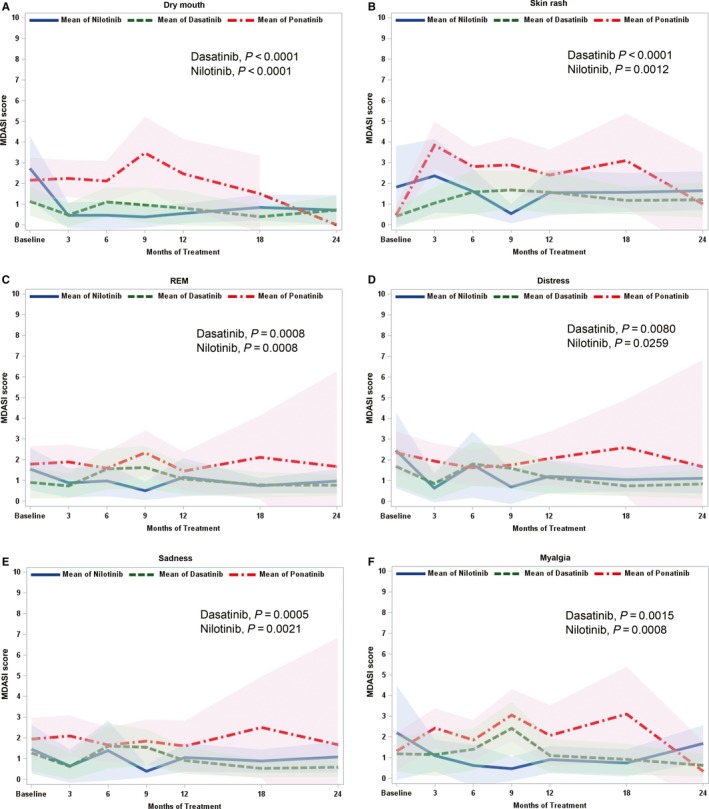
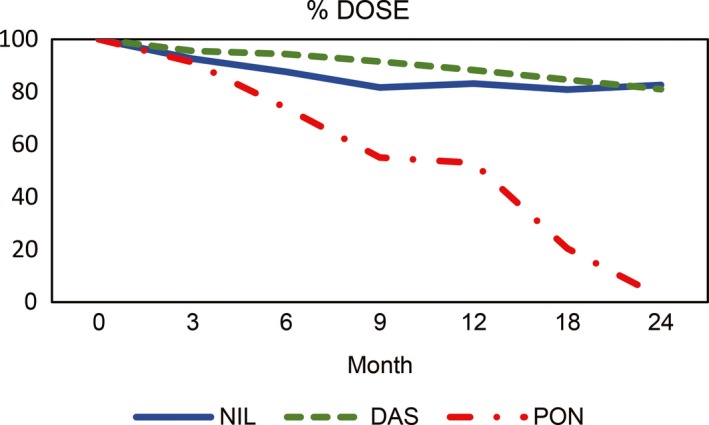
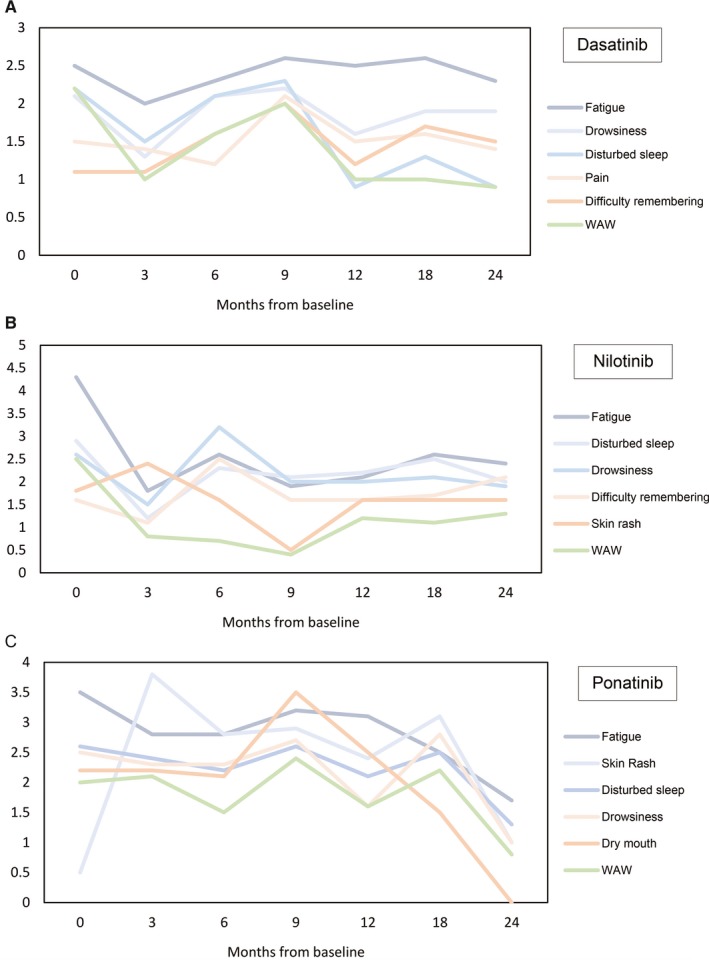
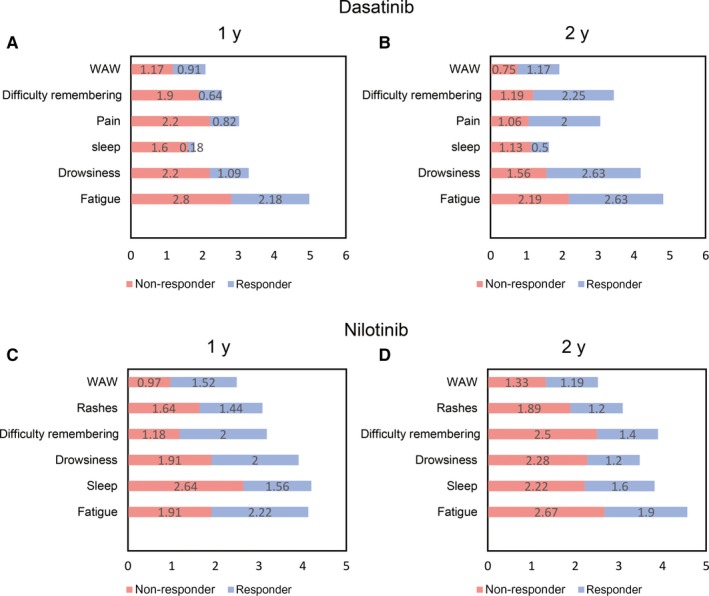
The median age was 50 years. Longitudinal analysis showed relatively stable symptom severity scores over time. Fatigue was the most common symptom in all three cohorts, both prior to the start of therapy and during therapy, including after achievement of deep molecular remission. Work was the most affected component of daily living. Overall patients tolerated therapy well with improvement of their symptoms from baseline, with few dose reductions related to toxicity or symptomatology. Although 31% of the patients who completed MDASI-CML achieved complete molecular remission by 24 months of treatment, nearly 90% experienced persistent mild symptoms.
Side effects related to TKIs may impact the quality of life in patients with CML-CP. Further studies should investigate factors (comorbidities, concomitant medications, dose and schedule, etc) associated with these symptoms and interventions that may improve the patients' QoL, including treatment discontinuation when safely feasible.
酪氨酸激酶抑制剂(TKI)治疗慢性髓性白血病(CML)患者的效果良好,但需要持续数年,甚至可能是无限期的。尽管 TKI 通常是安全的,但它可能对这些患者的生活质量(QoL)产生了以前尚未被充分认识的影响。
我们前瞻性地测量了接受达沙替尼、尼洛替尼或普纳替尼一线 TKI 治疗的慢性期 CML 患者的症状负担。共有 219 名患者入组,并在治疗开始前和治疗后 3、6、9、12、18 和 24 个月的规定时间点填写了 MD 安德森症状量表(MDASI)-CML 问卷。
中位年龄为 50 岁。纵向分析显示,症状严重程度评分随时间相对稳定。疲劳是所有三个队列中最常见的症状,无论是在治疗前还是治疗期间,包括在达到深度分子缓解后。工作是日常生活受影响最大的部分。总体而言,患者对治疗耐受良好,症状从基线改善,因毒性或症状学而减少剂量的情况很少。尽管 31%的完成 MDASI-CML 的患者在治疗 24 个月时达到了完全分子缓解,但近 90%的患者仍持续存在轻度症状。
TKI 相关的副作用可能会影响 CML-CP 患者的生活质量。进一步的研究应调查与这些症状相关的因素(合并症、伴随用药、剂量和方案等)以及可能改善患者 QoL 的干预措施,包括在安全可行的情况下停止治疗。