Ghosh Ayndrila, Das Sujoy, Sarkar Himadri S, Kundu Shampa, Sahoo Prithidipa
Department of Chemistry, Visva-Bharati University, Santiniketan 731235, W.B., India.
ACS Omega. 2018 Sep 30;3(9):11617-11623. doi: 10.1021/acsomega.8b01751. Epub 2018 Sep 21.
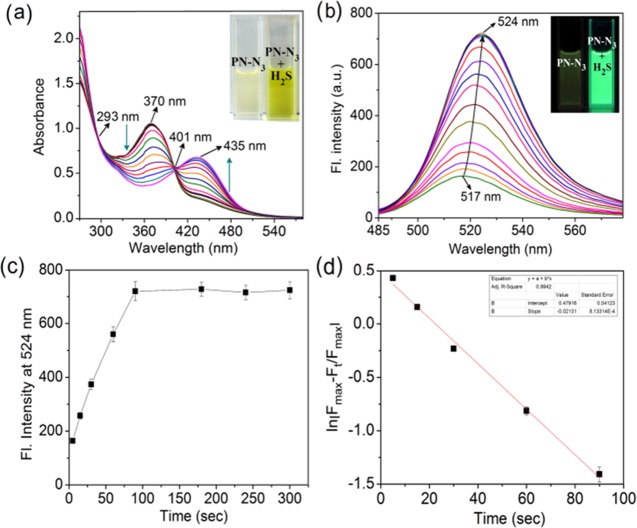
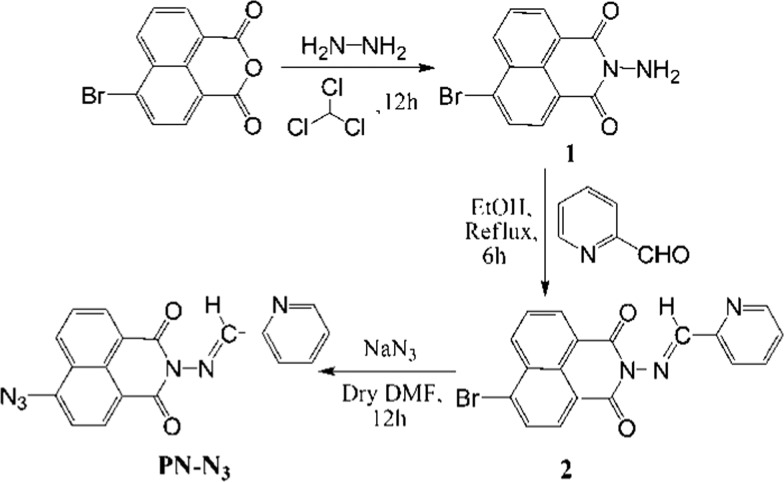
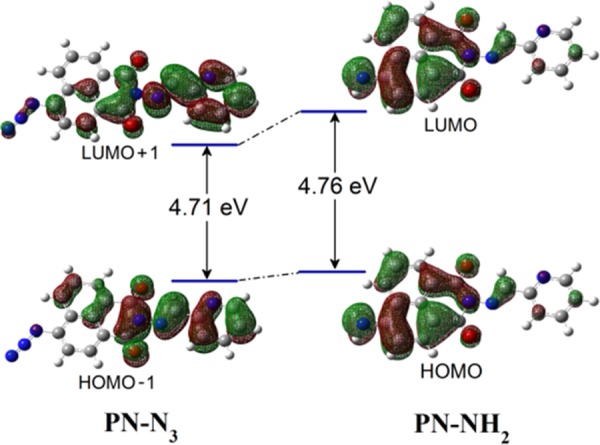
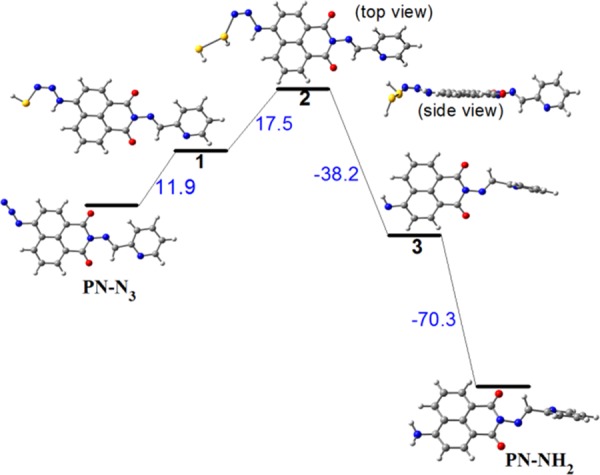
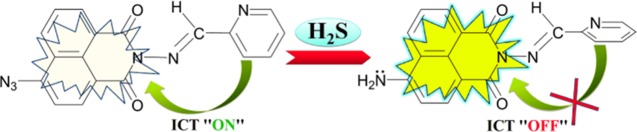
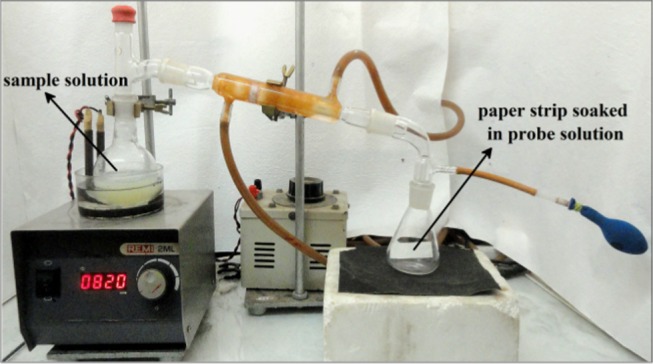
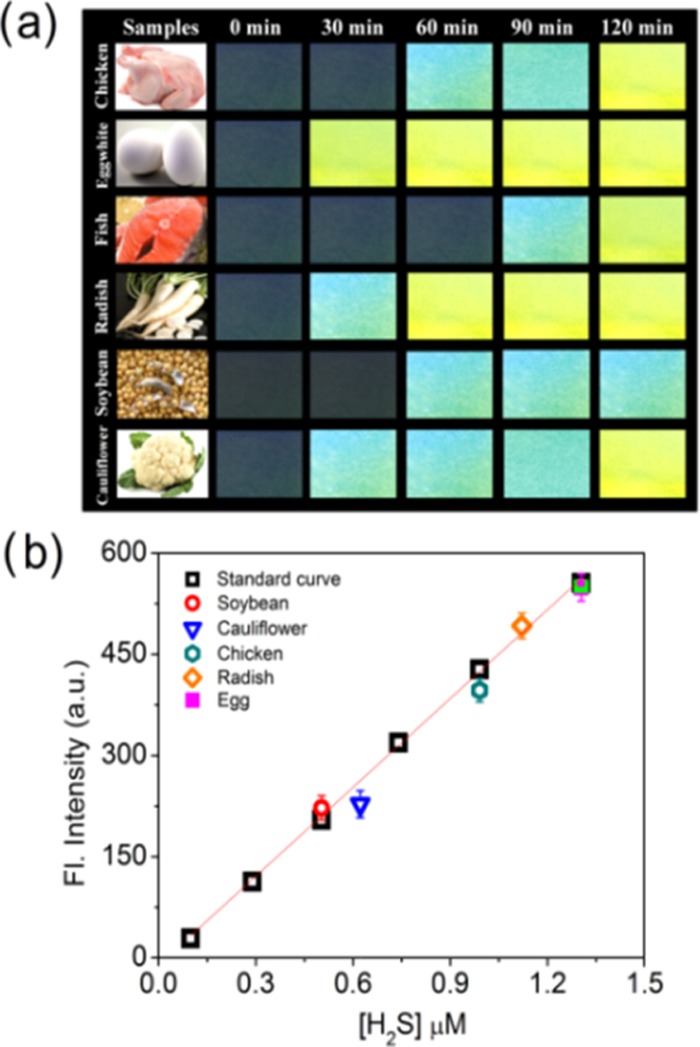
A unique method has been developed for comparative analysis of HS produced from food samples from our daily diet, both qualitatively and quantitatively. The selective detection of HS has been executed by introducing a simple chemodosimeter ( ) that gives response on the basis of intramolecular charge transfer. UV-vis, fluorimetric, and NMR titrations were performed to demonstrate the sensing mechanism and electronic environment of in the presence of HS. Density functional theory calculations were performed to validate the mechanism of azide ( ) reduction to amine ( ) by the strong reducing power of HS. The potentiality of this chemosensing method is that it could be treated as a simple, less-time-consuming, and cost-effective method for determining HS in biological samples in the nanomolar range.
已经开发出一种独特的方法,用于对我们日常饮食中食物样本产生的硫化氢进行定性和定量的比较分析。通过引入一种简单的化学计量器( )来实现对硫化氢的选择性检测,该化学计量器基于分子内电荷转移产生响应。进行了紫外可见光谱、荧光光谱和核磁共振滴定,以证明在硫化氢存在下 的传感机制和电子环境。进行了密度泛函理论计算,以验证硫化氢的强还原能力将叠氮化物( )还原为胺( )的机制。这种化学传感方法的潜力在于,它可被视为一种简单、耗时少且经济高效的方法,用于在纳摩尔范围内测定生物样品中的硫化氢。