Laboratory of Clinical and Experimental Endocrinology, Department of Chronic Diseases, Metabolism and Ageing, KU Leuven, Belgium.
Department of Clinical and Experimental Medicine, University of Pisa, Pisa, Italy.
Endocr Rev. 2019 Aug 1;40(4):1109-1151. doi: 10.1210/er.2018-00126.
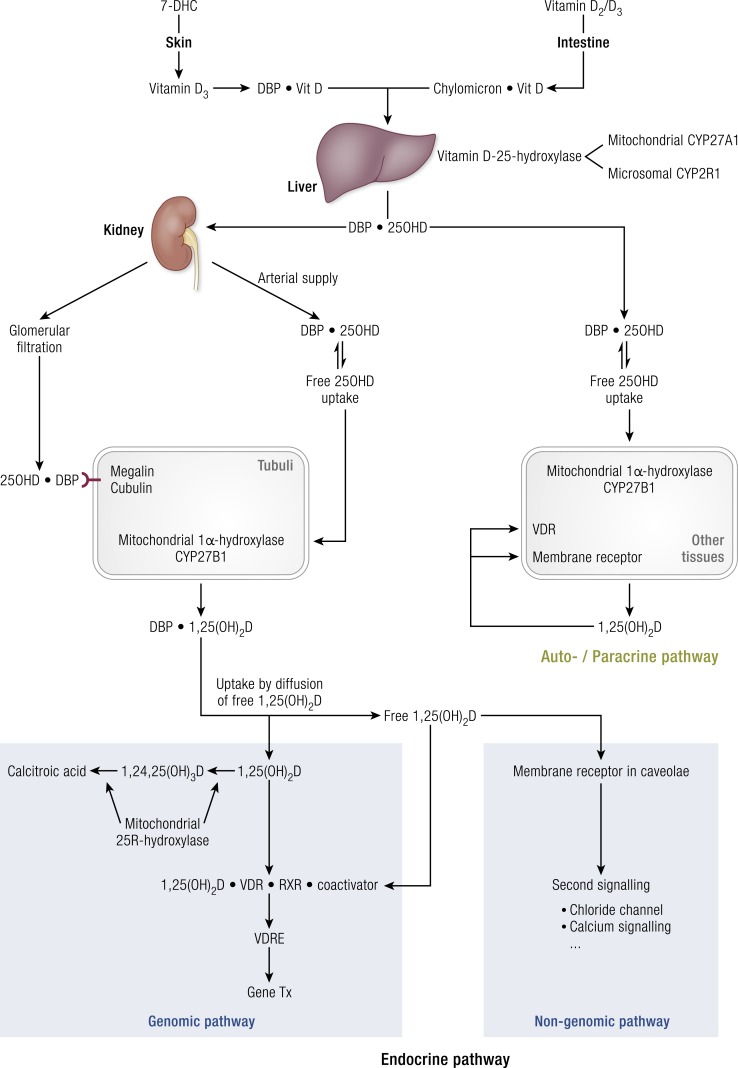
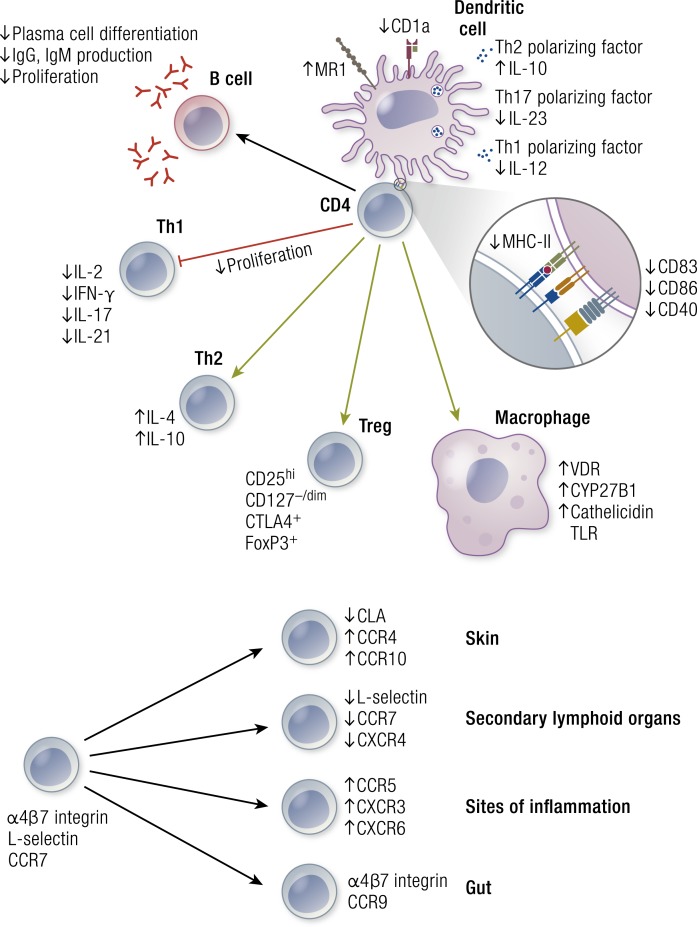
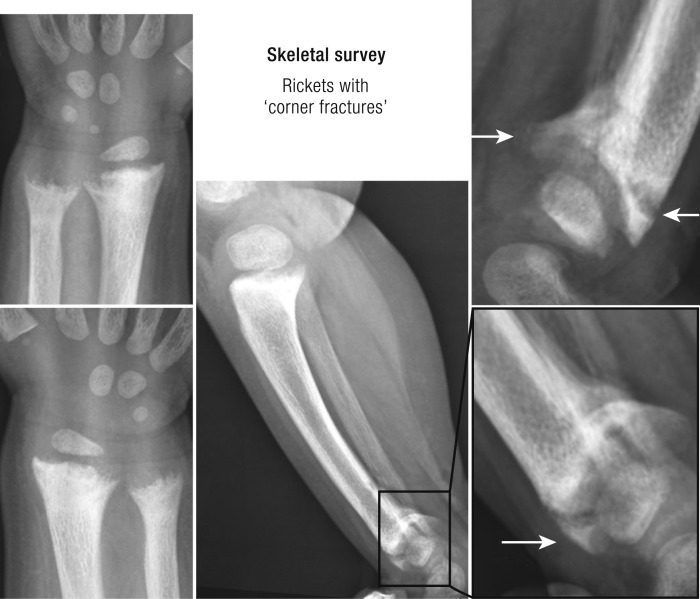
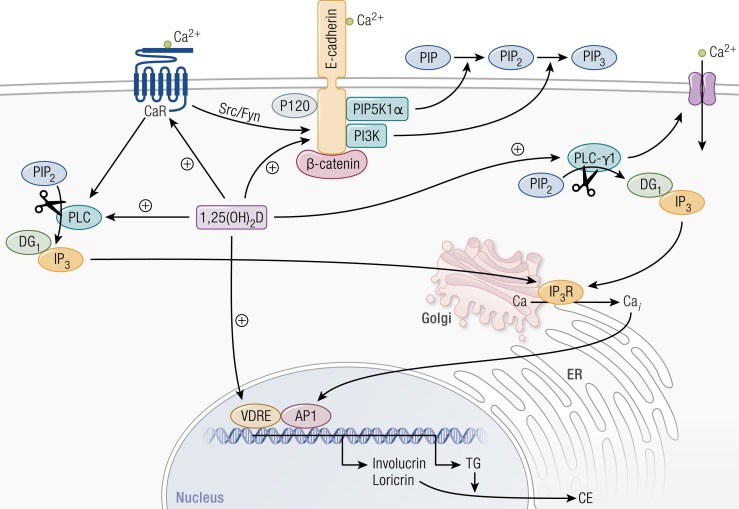
The etiology of endemic rickets was discovered a century ago. Vitamin D is the precursor of 25-hydroxyvitamin D and other metabolites, including 1,25(OH)2D, the ligand for the vitamin D receptor (VDR). The effects of the vitamin D endocrine system on bone and its growth plate are primarily indirect and mediated by its effect on intestinal calcium transport and serum calcium and phosphate homeostasis. Rickets and osteomalacia can be prevented by daily supplements of 400 IU of vitamin D. Vitamin D deficiency (serum 25-hydroxyvitamin D <50 nmol/L) accelerates bone turnover, bone loss, and osteoporotic fractures. These risks can be reduced by 800 IU of vitamin D together with an appropriate calcium intake, given to institutionalized or vitamin D-deficient elderly subjects. VDR and vitamin D metabolic enzymes are widely expressed. Numerous genetic, molecular, cellular, and animal studies strongly suggest that vitamin D signaling has many extraskeletal effects. These include regulation of cell proliferation, immune and muscle function, skin differentiation, and reproduction, as well as vascular and metabolic properties. From observational studies in human subjects, poor vitamin D status is associated with nearly all diseases predicted by these extraskeletal actions. Results of randomized controlled trials and Mendelian randomization studies are supportive of vitamin D supplementation in reducing the incidence of some diseases, but, globally, conclusions are mixed. These findings point to a need for continued ongoing and future basic and clinical studies to better define whether vitamin D status can be optimized to improve many aspects of human health. Vitamin D deficiency enhances the risk of osteoporotic fractures and is associated with many diseases. We review what is established and what is plausible regarding the health effects of vitamin D.
地方性佝偻病的病因一个世纪前就被发现了。维生素 D 是 25-羟维生素 D 和其他代谢物(包括 1,25(OH)2D,维生素 D 受体 (VDR) 的配体)的前体。维生素 D 内分泌系统对骨骼及其生长板的影响主要是间接的,通过其对肠道钙转运和血清钙磷平衡的影响来介导。每天补充 400IU 的维生素 D 可以预防佝偻病和骨软化症。维生素 D 缺乏(血清 25-羟维生素 D <50nmol/L)会加速骨转换、骨丢失和骨质疏松性骨折。这些风险可以通过 800IU 的维生素 D 和适当的钙摄入来降低,适用于机构化或维生素 D 缺乏的老年受试者。VDR 和维生素 D 代谢酶广泛表达。大量的遗传、分子、细胞和动物研究强烈表明,维生素 D 信号具有许多骨骼外效应。这些包括细胞增殖、免疫和肌肉功能、皮肤分化和生殖以及血管和代谢特性的调节。从人类受试者的观察性研究中可以看出,维生素 D 状态不佳与这些骨骼外作用所预测的几乎所有疾病都有关。随机对照试验和孟德尔随机化研究的结果支持补充维生素 D 可以降低某些疾病的发病率,但总体而言,结论不一。这些发现表明,需要继续进行持续的基础和临床研究,以更好地定义维生素 D 状态是否可以优化,从而改善人类健康的许多方面。维生素 D 缺乏会增加骨质疏松性骨折的风险,并与许多疾病有关。我们回顾了关于维生素 D 对健康影响的已确立和合理的观点。