• 文献检索
  • 文档翻译
  • 深度研究
  • 学术资讯
  • Suppr Zotero 插件Zotero 插件
  • 邀请有礼
  • 套餐&价格
  • 历史记录
应用&插件
Suppr Zotero 插件Zotero 插件浏览器插件Mac 客户端Windows 客户端微信小程序
定价
高级版会员购买积分包购买API积分包
服务
文献检索文档翻译深度研究API 文档MCP 服务
关于我们
关于 Suppr公司介绍联系我们用户协议隐私条款
关注我们

Suppr 超能文献

核心技术专利:CN118964589B侵权必究
粤ICP备2023148730 号-1Suppr @ 2026

文献检索

告别复杂PubMed语法,用中文像聊天一样搜索,搜遍4000万医学文献。AI智能推荐,让科研检索更轻松。

立即免费搜索

文件翻译

保留排版,准确专业,支持PDF/Word/PPT等文件格式,支持 12+语言互译。

免费翻译文档

深度研究

AI帮你快速写综述,25分钟生成高质量综述,智能提取关键信息,辅助科研写作。

立即免费体验

在一个对研究缺乏经验的卒中病房中,评估一种基于智能手表的干预措施,该措施可提供日常活动反馈:一项试点随机对照试验。

Evaluation of a smartwatch-based intervention providing feedback of daily activity within a research-naive stroke ward: a pilot randomised controlled trial.

作者信息

Lawrie Sophie, Dong Yun, Steins Dax, Xia Zhidao, Esser Patrick, Sun Shanbin, Li Fei, Amor James D, James Christopher, Izadi Hooshang, Cao Yi, Wade Derick, Mayo Nancy, Dawes Helen

机构信息

1Centre for Movement, Occupational and Rehabilitation Sciences (MOReS), Department of Sport, Health Sciences and Social Work, Oxford Brookes University, Headington Campus, Headington Road, Gipsy Lane, Oxford, OX3 0BP UK.

2Rehabilitation Centre, the Second Affiliated Hospital of Anhui University of Traditional Chinese Medicine, Hefei, Anhui Province China.

出版信息

Pilot Feasibility Stud. 2018 Oct 6;4:157. doi: 10.1186/s40814-018-0345-x. eCollection 2018.

DOI:10.1186/s40814-018-0345-x
PMID:30323946
原文链接:https://pmc.ncbi.nlm.nih.gov/articles/PMC6173888/
Abstract

BACKGROUND

The majority of stroke patients are inactive outside formal therapy sessions. Tailored activity feedback via a smartwatch has the potential to increase inpatient activity. The aim of the study was to identify the challenges and support needed by ward staff and researchers and to examine the feasibility of conducting a randomised controlled trial (RCT) using smartwatch activity monitors in research-naive rehabilitation wards. Objectives (Phase 1 and 2) were to report any challenges and support needed and determine the recruitment and retention rate, completion of outcome measures, smartwatch adherence rate, (Phase 2 only) readiness to randomise, adherence to protocol (intervention fidelity) and potential for effect.

METHODS

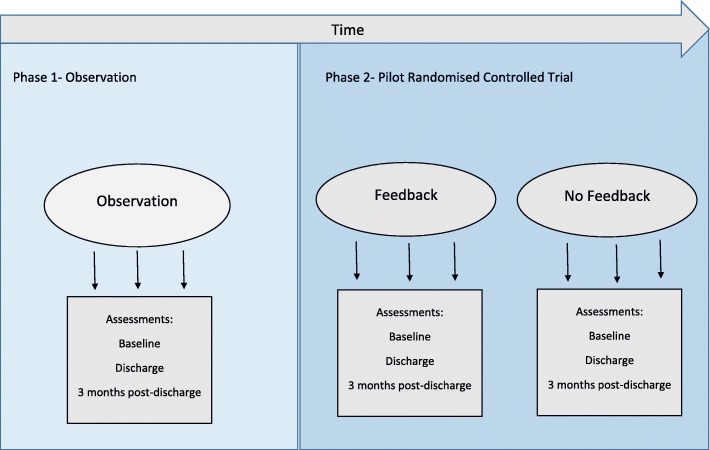
First admission, stroke patients (onset < 4 months) aged 40-75, able to walk 10 m prior to stroke and follow a two-stage command with sufficient cognition and vision (clinically judged) were recruited within the Second Affiliated Hospital of Anhui University of Traditional Chinese Medicine. Phase 1: a non-randomised observation phase (to allow practice of protocol)-patients received no activity feedback. Phase 2: a parallel single-blind pilot RCT. Patients were randomised into one of two groups: to receive daily activity feedback over a 9-h period or to receive no activity feedback. EQ-5D-5L, WHODAS and RMI were conducted at baseline, discharge and 3 months post-discharge. Descriptive statistics were performed on recruitment, retention, completion and activity counts as well as adherence to protocol.

RESULTS

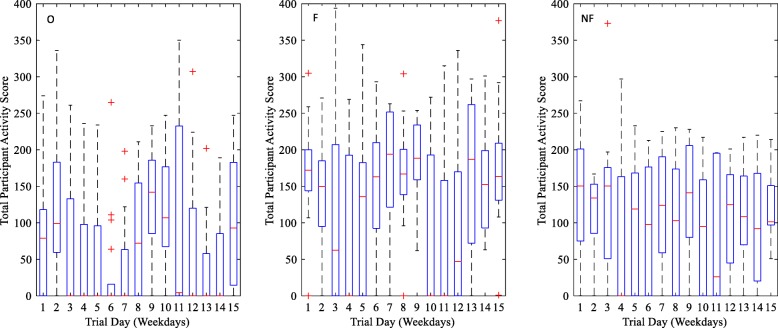
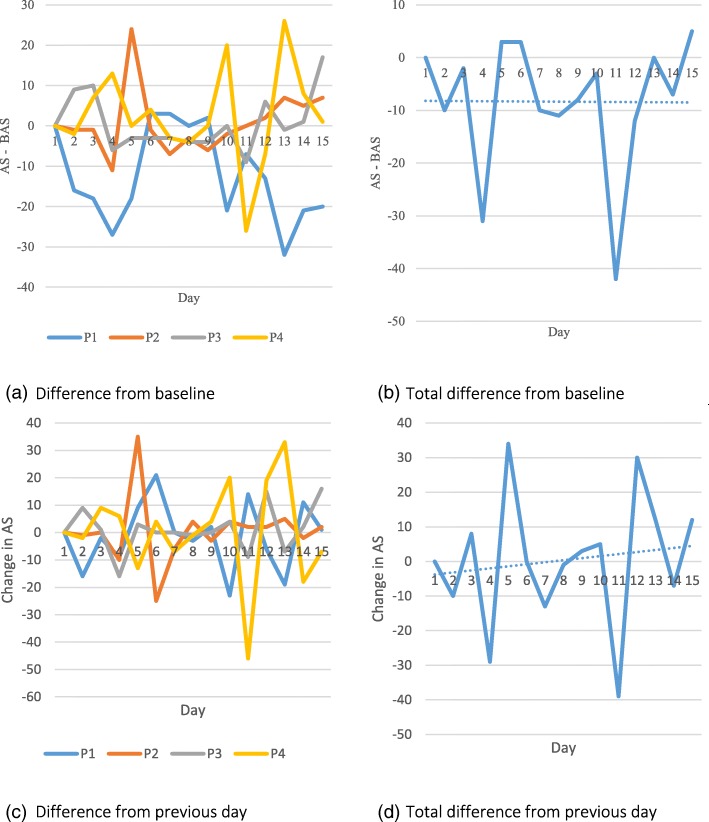
Out of 470 ward admissions, 11% were recruited across the two phases, over a 30-week period. Retention rate at 3 months post-discharge was 48%. Twenty-two percent of patients dropped out post-baseline assessment, 78% completed baseline and discharge admissions, from which 62% were assessed 3 months post-discharge. Smartwatch data were received from all patients. Patients were correctly randomised into each RCT group. RCT adherence rate to wearing the smartwatch was 80%. Baseline activity was exceeded for 65% of days in the feedback group compared to 55% of days in the no feedback group.

CONCLUSIONS

Delivery of a smartwatch RCT is feasible in a research-naive rehabilitation ward. However, frequent support and guidance of research-naive staff are required to ensure completeness of clinical assessment data and protocol adherence.

TRIALS REGISTRATION

ClinicalTrials.gov Identifier, NCT02587585-30th September 2015.

摘要

背景

大多数中风患者在正规治疗课程之外缺乏活动。通过智能手表提供量身定制的活动反馈有可能增加住院患者的活动量。本研究的目的是确定病房工作人员和研究人员所面临的挑战及所需支持,并检验在对研究缺乏经验的康复病房中使用智能手表活动监测器进行随机对照试验(RCT)的可行性。目标(第1阶段和第2阶段)是报告任何挑战及所需支持,并确定招募和保留率、结局指标的完成情况、智能手表的依从率,(仅第2阶段)随机分组的准备情况、对方案的依从性(干预保真度)和效果潜力。

方法

在安徽中医药大学第二附属医院招募首次入院、年龄在40 - 75岁、中风发作时间<4个月、中风前能够行走10米且具有足够认知和视力(临床判断)以遵循两阶段指令的中风患者。第1阶段:非随机观察阶段(以允许方案实践)——患者未接受活动反馈。第2阶段:平行单盲试点RCT。患者被随机分为两组之一:在9小时内接受每日活动反馈或不接受活动反馈。在基线、出院时和出院后3个月进行EQ - 5D - 5L、WHODAS和RMI评估。对招募、保留、完成情况和活动计数以及对方案的依从性进行描述性统计。

结果

在470例病房入院患者中,在30周内的两个阶段共招募了11%。出院后3个月的保留率为48%。22%的患者在基线评估后退出,78%的患者完成了基线和出院评估,其中62%的患者在出院后3个月接受了评估。所有患者均收到了智能手表数据。患者被正确随机分配到每个RCT组。RCT中智能手表佩戴的依从率为80%。反馈组65% 的天数超过了基线活动量,无反馈组为55%。

结论

在对研究缺乏经验的康复病房中进行智能手表RCT是可行的。然而,需要对缺乏研究经验的工作人员进行频繁的支持和指导,以确保临床评估数据的完整性和对方案的依从性。

试验注册

ClinicalTrials.gov标识符,NCT02587585 - 2015年9月30日。
https://cdn.ncbi.nlm.nih.gov/pmc/blobs/8e7b/6173888/96bc08fd1d94/40814_2018_345_Fig7_HTML.jpg
https://cdn.ncbi.nlm.nih.gov/pmc/blobs/8e7b/6173888/9d76b770158c/40814_2018_345_Fig1_HTML.jpg
https://cdn.ncbi.nlm.nih.gov/pmc/blobs/8e7b/6173888/f3589e7c75c2/40814_2018_345_Fig2_HTML.jpg
https://cdn.ncbi.nlm.nih.gov/pmc/blobs/8e7b/6173888/2e40109e6a2e/40814_2018_345_Fig3_HTML.jpg
https://cdn.ncbi.nlm.nih.gov/pmc/blobs/8e7b/6173888/52a06042bdb7/40814_2018_345_Fig4_HTML.jpg
https://cdn.ncbi.nlm.nih.gov/pmc/blobs/8e7b/6173888/da6b682ece78/40814_2018_345_Fig5_HTML.jpg
https://cdn.ncbi.nlm.nih.gov/pmc/blobs/8e7b/6173888/b3365541ce4a/40814_2018_345_Fig6_HTML.jpg
https://cdn.ncbi.nlm.nih.gov/pmc/blobs/8e7b/6173888/96bc08fd1d94/40814_2018_345_Fig7_HTML.jpg
https://cdn.ncbi.nlm.nih.gov/pmc/blobs/8e7b/6173888/9d76b770158c/40814_2018_345_Fig1_HTML.jpg
https://cdn.ncbi.nlm.nih.gov/pmc/blobs/8e7b/6173888/f3589e7c75c2/40814_2018_345_Fig2_HTML.jpg
https://cdn.ncbi.nlm.nih.gov/pmc/blobs/8e7b/6173888/2e40109e6a2e/40814_2018_345_Fig3_HTML.jpg
https://cdn.ncbi.nlm.nih.gov/pmc/blobs/8e7b/6173888/52a06042bdb7/40814_2018_345_Fig4_HTML.jpg
https://cdn.ncbi.nlm.nih.gov/pmc/blobs/8e7b/6173888/da6b682ece78/40814_2018_345_Fig5_HTML.jpg
https://cdn.ncbi.nlm.nih.gov/pmc/blobs/8e7b/6173888/b3365541ce4a/40814_2018_345_Fig6_HTML.jpg
https://cdn.ncbi.nlm.nih.gov/pmc/blobs/8e7b/6173888/96bc08fd1d94/40814_2018_345_Fig7_HTML.jpg

相似文献

1
Evaluation of a smartwatch-based intervention providing feedback of daily activity within a research-naive stroke ward: a pilot randomised controlled trial.在一个对研究缺乏经验的卒中病房中,评估一种基于智能手表的干预措施,该措施可提供日常活动反馈:一项试点随机对照试验。
Pilot Feasibility Stud. 2018 Oct 6;4:157. doi: 10.1186/s40814-018-0345-x. eCollection 2018.
2
Does feedback on daily activity level from a Smart watch during inpatient stroke rehabilitation increase physical activity levels? Study protocol for a randomized controlled trial.住院脑卒中康复期间智能手表提供的日常活动水平反馈是否会提高身体活动水平?一项随机对照试验的研究方案。
Trials. 2018 Mar 9;19(1):177. doi: 10.1186/s13063-018-2476-z.
3
Behavioural activation therapy for post-stroke depression: the BEADS feasibility RCT.行为激活疗法治疗脑卒中后抑郁:BEADS 可行性 RCT。
Health Technol Assess. 2019 Sep;23(47):1-176. doi: 10.3310/hta23470.
4
The feasibility of a randomised controlled trial of physiotherapy for adults with joint hypermobility syndrome.针对关节活动过度综合征成人患者进行物理治疗随机对照试验的可行性。
Health Technol Assess. 2016 Jun;20(47):1-264. doi: 10.3310/hta20470.
5
Community-based Rehabilitation Training after stroke: protocol of a pilot randomised controlled trial (ReTrain).中风后基于社区的康复训练:一项试点随机对照试验(ReTrain)方案
BMJ Open. 2016 Oct 3;6(10):e012375. doi: 10.1136/bmjopen-2016-012375.
6
7
8
An intervention to improve the quality of life in children of parents with serious mental illness: the Young SMILES feasibility RCT.改善严重精神疾病父母子女生活质量的干预措施:Young SMILES 可行性 RCT。
Health Technol Assess. 2020 Nov;24(59):1-136. doi: 10.3310/hta24590.
9
Singing for people with aphasia (SPA): results of a pilot feasibility randomised controlled trial of a group singing intervention investigating acceptability and feasibility.为失语症患者歌唱(SPA):一项关于团体歌唱干预的初步可行性随机对照试验结果,该试验调查了可接受性和可行性。
BMJ Open. 2021 Jan 13;11(1):e040544. doi: 10.1136/bmjopen-2020-040544.
10
Retrograde intramedullary nail fixation compared with fixed-angle plate fixation for fracture of the distal femur: the TrAFFix feasibility RCT.逆行髓内钉固定与角度固定钢板治疗股骨远端骨折的比较:TRAFFIX 可行性 RCT。
Health Technol Assess. 2019 Sep;23(51):1-132. doi: 10.3310/hta23510.

引用本文的文献

1
Application of Smart Watch-Based Functional Evaluation for Upper Extremity Impairment: A Preliminary Study on Older Emirati Stroke Population.基于智能手表的上肢功能评估在阿联酋老年卒中人群中的应用:一项初步研究
Sensors (Basel). 2025 Mar 3;25(5):1554. doi: 10.3390/s25051554.
2
Use of commercially available wearable devices for physical rehabilitation in healthcare: a systematic review.商业可用可穿戴设备在医疗保健中的物理康复应用:系统评价。
BMJ Open. 2024 Nov 7;14(11):e084086. doi: 10.1136/bmjopen-2024-084086.
3
Behavior Change Approaches in Digital Technology-Based Physical Rehabilitation Interventions Following Stroke: Scoping Review.

本文引用的文献

1
Does feedback on daily activity level from a Smart watch during inpatient stroke rehabilitation increase physical activity levels? Study protocol for a randomized controlled trial.住院脑卒中康复期间智能手表提供的日常活动水平反馈是否会提高身体活动水平?一项随机对照试验的研究方案。
Trials. 2018 Mar 9;19(1):177. doi: 10.1186/s13063-018-2476-z.
2
What interventions are used to improve exercise adherence in older people and what behavioural techniques are they based on? A systematic review.有哪些干预措施可用于提高老年人的锻炼依从性,以及它们基于哪些行为技术?系统评价。
BMJ Open. 2017 Dec 14;7(12):e019221. doi: 10.1136/bmjopen-2017-019221.
3
中风后基于数字技术的物理康复干预中的行为改变方法:范围综述
J Med Internet Res. 2024 Apr 24;26:e48725. doi: 10.2196/48725.
4
The effectiveness of physical activity interventions using activity trackers during or after inpatient care: a systematic review and meta-analysis of randomized controlled trials.使用活动追踪器进行的身体活动干预在住院期间或之后的有效性:一项随机对照试验的系统评价和荟萃分析。
Int J Behav Nutr Phys Act. 2022 May 23;19(1):59. doi: 10.1186/s12966-022-01261-9.
5
Sensorimotor vs. Motor Upper Limb Therapy for Patients With Motor and Somatosensory Deficits: A Randomized Controlled Trial in the Early Rehabilitation Phase After Stroke.感觉运动疗法与运动疗法对运动和躯体感觉功能障碍患者上肢的影响:一项脑卒中后早期康复阶段的随机对照试验
Front Neurol. 2020 Dec 4;11:597666. doi: 10.3389/fneur.2020.597666. eCollection 2020.
6
Validity of the Polar M430 Activity Monitor in Free-Living Conditions: Validation Study.极地M430活动监测仪在自由生活条件下的有效性:验证研究。
JMIR Form Res. 2019 Aug 16;3(3):e14438. doi: 10.2196/14438.
A Pilot Randomized Controlled Trial Evaluating Motivationally Matched Pedometer Feedback to Increase Physical Activity Behavior in Older Adults.
一项评估动机匹配计步器反馈以增加老年人身体活动行为的试点随机对照试验。
J Phys Act Health. 2011 Sep;8(s2):S267-S274. doi: 10.1123/jpah.8.s2.s267.
4
Promoting Activity in Geriatric Rehabilitation: A Randomized Controlled Trial of Accelerometry.促进老年康复活动:一项加速度计的随机对照试验
PLoS One. 2016 Aug 26;11(8):e0160906. doi: 10.1371/journal.pone.0160906. eCollection 2016.
5
Validating accelerometry as a measure of physical activity and energy expenditure in chronic stroke.验证加速度计作为慢性卒中患者身体活动和能量消耗测量方法的有效性。
Top Stroke Rehabil. 2017 Jan;24(1):18-23. doi: 10.1080/10749357.2016.1183866. Epub 2016 Jun 20.
6
An experimental test of control theory-based interventions for physical activity.基于控制理论的身体活动干预措施的实验测试。
Br J Health Psychol. 2016 Nov;21(4):812-826. doi: 10.1111/bjhp.12198.
7
Remote Physical Activity Monitoring in Neurological Disease: A Systematic Review.神经系统疾病中的远程身体活动监测:一项系统综述。
PLoS One. 2016 Apr 28;11(4):e0154335. doi: 10.1371/journal.pone.0154335. eCollection 2016.
8
Effect of wrist-worn activity monitor feedback on physical activity behavior: A randomized controlled trial in Finnish young men.腕戴式活动监测器反馈对身体活动行为的影响:芬兰年轻男性的一项随机对照试验。
Prev Med Rep. 2015 Jul 22;2:628-34. doi: 10.1016/j.pmedr.2015.07.005. eCollection 2015.
9
Characterization of wrist-wearable activity measurement using whole body calorimetry in semi-free living conditions.在半自由生活条件下使用全身量热法对腕部可穿戴活动测量进行表征。
Annu Int Conf IEEE Eng Med Biol Soc. 2015 Aug;2015:3735-8. doi: 10.1109/EMBC.2015.7319205.
10
Preliminary study on activity monitoring using an android smart-watch.使用安卓智能手表进行活动监测的初步研究。
Healthc Technol Lett. 2015 Feb 25;2(1):34-9. doi: 10.1049/htl.2014.0091. eCollection 2015 Feb.