• 文献检索
  • 文档翻译
  • 深度研究
  • 学术资讯
  • Suppr Zotero 插件Zotero 插件
  • 邀请有礼
  • 套餐&价格
  • 历史记录
应用&插件
Suppr Zotero 插件Zotero 插件浏览器插件Mac 客户端Windows 客户端微信小程序
定价
高级版会员购买积分包购买API积分包
服务
文献检索文档翻译深度研究API 文档MCP 服务
关于我们
关于 Suppr公司介绍联系我们用户协议隐私条款
关注我们

Suppr 超能文献

核心技术专利:CN118964589B侵权必究
粤ICP备2023148730 号-1Suppr @ 2026

文献检索

告别复杂PubMed语法,用中文像聊天一样搜索,搜遍4000万医学文献。AI智能推荐,让科研检索更轻松。

立即免费搜索

文件翻译

保留排版,准确专业,支持PDF/Word/PPT等文件格式,支持 12+语言互译。

免费翻译文档

深度研究

AI帮你快速写综述,25分钟生成高质量综述,智能提取关键信息,辅助科研写作。

立即免费体验

中风后基于数字技术的物理康复干预中的行为改变方法:范围综述

Behavior Change Approaches in Digital Technology-Based Physical Rehabilitation Interventions Following Stroke: Scoping Review.

作者信息

Gooch Helen J, Jarvis Kathryn A, Stockley Rachel C

机构信息

Stroke Research Team, School of Nursing and Midwifery, University of Central Lancashire, Preston, United Kingdom.

出版信息

J Med Internet Res. 2024 Apr 24;26:e48725. doi: 10.2196/48725.

DOI:10.2196/48725
PMID:38656777
原文链接:https://pmc.ncbi.nlm.nih.gov/articles/PMC11079774/
Abstract

BACKGROUND

Digital health technologies (DHTs) are increasingly used in physical stroke rehabilitation to support individuals in successfully engaging with the frequent, intensive, and lengthy activities required to optimize recovery. Despite this, little is known about behavior change within these interventions.

OBJECTIVE

This scoping review aimed to identify if and how behavior change approaches (ie, theories, models, frameworks, and techniques to influence behavior) are incorporated within physical stroke rehabilitation interventions that include a DHT.

METHODS

Databases (Embase, MEDLINE, PsycINFO, CINAHL, Cochrane Library, and AMED) were searched using keywords relating to behavior change, DHT, physical rehabilitation, and stroke. The results were independently screened by 2 reviewers. Sources were included if they reported a completed primary research study in which a behavior change approach could be identified within a physical stroke rehabilitation intervention that included a DHT. Data, including the study design, DHT used, and behavior change approaches, were charted. Specific behavior change techniques were coded to the behavior change technique taxonomy version 1 (BCTTv1).

RESULTS

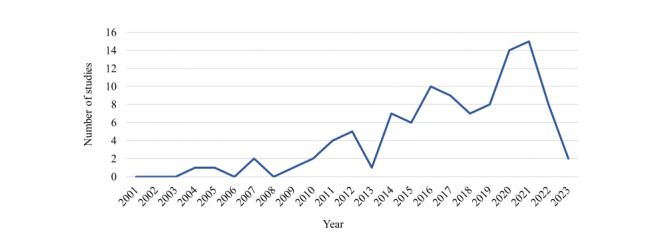
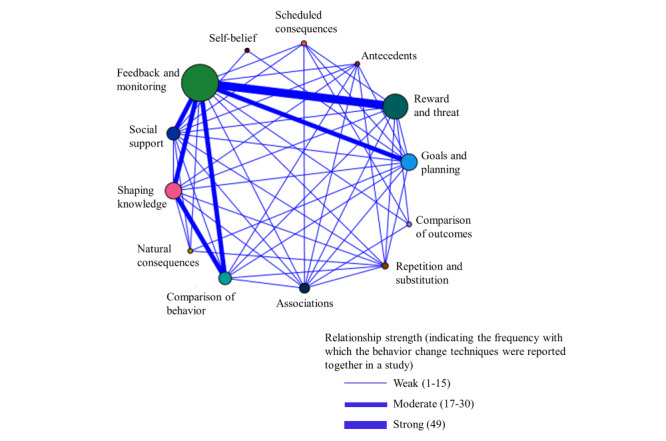
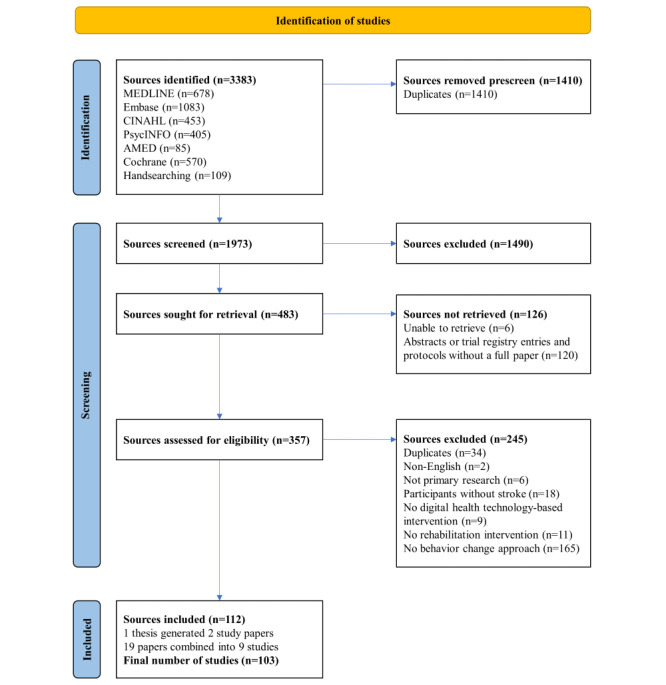
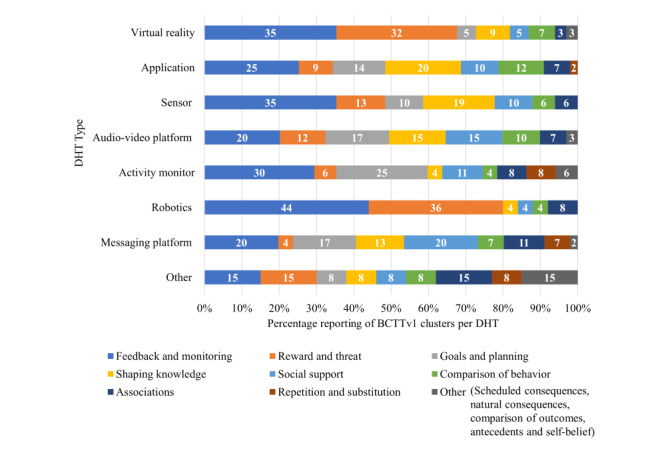
From a total of 1973 identified sources, 103 (5%) studies were included for data charting. The most common reason for exclusion at full-text screening was the absence of an explicit approach to behavior change (165/245, 67%). Almost half (45/103, 44%) of the included studies were described as pilot or feasibility studies. Virtual reality was the most frequently identified DHT type (58/103, 56%), and almost two-thirds (65/103, 63%) of studies focused on upper limb rehabilitation. Only a limited number of studies (18/103, 17%) included a theory, model, or framework for behavior change. The most frequently used BCTTv1 clusters were feedback and monitoring (88/103, 85%), reward and threat (56/103, 54%), goals and planning (33/103, 32%), and shaping knowledge (33/103, 32%). Relationships between feedback and monitoring and reward and threat were identified using a relationship map, with prominent use of both of these clusters in interventions that included virtual reality.

CONCLUSIONS

Despite an assumption that DHTs can promote engagement in rehabilitation, this scoping review demonstrates that very few studies of physical stroke rehabilitation that include a DHT overtly used any form of behavior change approach. From those studies that did consider behavior change, most did not report a robust underpinning theory. Future development and research need to explicitly articulate how including DHTs within an intervention may support the behavior change required for optimal engagement in physical rehabilitation following stroke, as well as establish their effectiveness. This understanding is likely to support the realization of the transformative potential of DHTs in stroke rehabilitation.
摘要

背景

数字健康技术(DHTs)越来越多地应用于中风后的物理康复中,以帮助患者成功参与那些为优化康复效果而开展的频繁、密集且耗时的活动。尽管如此,对于这些干预措施中的行为改变情况,我们知之甚少。

目的

本范围综述旨在确定行为改变方法(即影响行为的理论、模型、框架和技术)是否以及如何被纳入包含DHT的中风物理康复干预措施中。

方法

使用与行为改变、DHT、物理康复和中风相关的关键词搜索数据库(Embase、MEDLINE、PsycINFO、CINAHL、Cochrane图书馆和AMED)。结果由两名评审员独立筛选。如果文献报道了一项完整的初步研究,且在包含DHT的中风物理康复干预措施中能够识别出行为改变方法,则将其纳入。记录数据,包括研究设计、使用的DHT和行为改变方法。特定的行为改变技术被编码到行为改变技术分类法第1版(BCTTv1)中。

结果

在总共1973篇已识别的文献中,有103篇(5%)研究被纳入数据记录。全文筛选时最常见的排除原因是缺乏明确的行为改变方法(165/245,67%)。几乎一半(45/103,44%)的纳入研究被描述为试点或可行性研究。虚拟现实是最常被识别的DHT类型(58/103,56%),并且几乎三分之二(65/103,63%)的研究聚焦于上肢康复。只有少数研究(18/103,17%)纳入了行为改变的理论、模型或框架。最常使用的BCTTv1类别是反馈与监测(88/103,85%)、奖励与威胁(56/103,54%)、目标与计划(33/103,32%)以及塑造知识(33/103,32%)。通过关系图确定了反馈与监测以及奖励与威胁之间的关系,在包含虚拟现实的干预措施中,这两个类别都有显著应用。

结论

尽管人们认为DHTs可以促进康复参与,但本范围综述表明,在包含DHT的中风物理康复研究中,很少有研究公开使用任何形式的行为改变方法。在那些确实考虑行为改变的研究中,大多数没有报告坚实的基础理论。未来的发展和研究需要明确阐述在干预措施中纳入DHTs如何支持中风后物理康复中最佳参与所需的行为改变,并确定其有效性。这种理解可能有助于实现DHTs在中风康复中的变革潜力。

https://cdn.ncbi.nlm.nih.gov/pmc/blobs/7f0a/11079774/a48291e2df5a/jmir_v26i1e48725_fig4.jpg
https://cdn.ncbi.nlm.nih.gov/pmc/blobs/7f0a/11079774/00163b4dd4da/jmir_v26i1e48725_fig1.jpg
https://cdn.ncbi.nlm.nih.gov/pmc/blobs/7f0a/11079774/27382ff43ebd/jmir_v26i1e48725_fig2.jpg
https://cdn.ncbi.nlm.nih.gov/pmc/blobs/7f0a/11079774/85faf2be444e/jmir_v26i1e48725_fig3.jpg
https://cdn.ncbi.nlm.nih.gov/pmc/blobs/7f0a/11079774/a48291e2df5a/jmir_v26i1e48725_fig4.jpg
https://cdn.ncbi.nlm.nih.gov/pmc/blobs/7f0a/11079774/00163b4dd4da/jmir_v26i1e48725_fig1.jpg
https://cdn.ncbi.nlm.nih.gov/pmc/blobs/7f0a/11079774/27382ff43ebd/jmir_v26i1e48725_fig2.jpg
https://cdn.ncbi.nlm.nih.gov/pmc/blobs/7f0a/11079774/85faf2be444e/jmir_v26i1e48725_fig3.jpg
https://cdn.ncbi.nlm.nih.gov/pmc/blobs/7f0a/11079774/a48291e2df5a/jmir_v26i1e48725_fig4.jpg

相似文献

1
Behavior Change Approaches in Digital Technology-Based Physical Rehabilitation Interventions Following Stroke: Scoping Review.中风后基于数字技术的物理康复干预中的行为改变方法:范围综述
J Med Internet Res. 2024 Apr 24;26:e48725. doi: 10.2196/48725.
2
Sexual Harassment and Prevention Training性骚扰与预防培训
3
Interventions for promoting habitual exercise in people living with and beyond cancer.促进癌症患者及康复者进行习惯性锻炼的干预措施。
Cochrane Database Syst Rev. 2018 Sep 19;9(9):CD010192. doi: 10.1002/14651858.CD010192.pub3.
4
Virtual reality for stroke rehabilitation.用于中风康复的虚拟现实技术。
Cochrane Database Syst Rev. 2025 Jun 20;6:CD008349. doi: 10.1002/14651858.CD008349.pub5.
5
Computer and mobile technology interventions for self-management in chronic obstructive pulmonary disease.用于慢性阻塞性肺疾病自我管理的计算机和移动技术干预措施。
Cochrane Database Syst Rev. 2017 May 23;5(5):CD011425. doi: 10.1002/14651858.CD011425.pub2.
6
Eliciting adverse effects data from participants in clinical trials.从临床试验参与者中获取不良反应数据。
Cochrane Database Syst Rev. 2018 Jan 16;1(1):MR000039. doi: 10.1002/14651858.MR000039.pub2.
7
Interventions for improving adherence to amblyopia treatments in children.改善儿童弱视治疗依从性的干预措施。
Cochrane Database Syst Rev. 2025 Jul 2;7(7):CD015820. doi: 10.1002/14651858.CD015820.pub2.
8
Survivor, family and professional experiences of psychosocial interventions for sexual abuse and violence: a qualitative evidence synthesis.性虐待和暴力的心理社会干预的幸存者、家庭和专业人员的经验:定性证据综合。
Cochrane Database Syst Rev. 2022 Oct 4;10(10):CD013648. doi: 10.1002/14651858.CD013648.pub2.
9
Falls prevention interventions for community-dwelling older adults: systematic review and meta-analysis of benefits, harms, and patient values and preferences.社区居住的老年人跌倒预防干预措施:系统评价和荟萃分析的益处、危害以及患者的价值观和偏好。
Syst Rev. 2024 Nov 26;13(1):289. doi: 10.1186/s13643-024-02681-3.
10
Rehabilitation for ankle fractures in adults.成人踝关节骨折康复。
Cochrane Database Syst Rev. 2024 Sep 23;9(9):CD005595. doi: 10.1002/14651858.CD005595.pub4.

引用本文的文献

1
Understanding digital health technology implementation in rehabilitation: Development of the Rehabilitation Technologies Implementation model.了解数字健康技术在康复中的应用:康复技术实施模型的开发。
medRxiv. 2025 Jul 15:2025.07.11.25331266. doi: 10.1101/2025.07.11.25331266.
2
Digital health interventions for cancer-related cognitive impairment in breast cancer patients: A scoping review.乳腺癌患者癌症相关认知障碍的数字健康干预措施:一项范围综述
Digit Health. 2025 Jul 15;11:20552076251358297. doi: 10.1177/20552076251358297. eCollection 2025 Jan-Dec.
3
UI/UX design requirements for young stroke survivors: recommendations from the literature.

本文引用的文献

1
Telerehabilitation Initiated Early in Post-Stroke Recovery: A Feasibility Study.远程康复在卒中后康复早期的应用:一项可行性研究。
Neurorehabil Neural Repair. 2023 Feb-Mar;37(2-3):131-141. doi: 10.1177/15459683231159660. Epub 2023 Mar 6.
2
Usability of a wearable device for home-based upper limb telerehabilitation in persons with stroke: A mixed-methods study.用于中风患者家庭上肢远程康复的可穿戴设备的可用性:一项混合方法研究。
Digit Health. 2023 Feb 7;9:20552076231153737. doi: 10.1177/20552076231153737. eCollection 2023 Jan-Dec.
3
What is the feasibility and patient acceptability of a digital system for arm and hand rehabilitation after stroke? A mixed-methods, single-arm feasibility study of the 'OnTrack' intervention for hospital and home use.
年轻中风幸存者的用户界面/用户体验设计要求:文献综述建议
NPJ Digit Med. 2025 Jul 9;8(1):417. doi: 10.1038/s41746-025-01796-8.
4
Feasibility of Smartphone-Based Exercise Training Integrated with Functional Electrical Stimulation After Stroke (SETS): A Preliminary Study.基于智能手机的运动训练结合功能性电刺激在中风后的可行性研究(SETS):一项初步研究。
Sensors (Basel). 2025 Feb 19;25(4):1254. doi: 10.3390/s25041254.
脑卒中后手臂和手部康复的数字化系统的可行性和患者接受度如何?“OnTrack”干预措施在医院和家庭中使用的混合方法、单臂可行性研究。
BMJ Open. 2022 Sep 28;12(9):e062042. doi: 10.1136/bmjopen-2022-062042.
4
Virtual Reality-Based Rehabilitation as a Feasible and Engaging Tool for the Management of Chronic Poststroke Upper-Extremity Function Recovery: Randomized Controlled Trial.基于虚拟现实的康复作为一种可行且具吸引力的工具用于慢性中风后上肢功能恢复的管理:随机对照试验
JMIR Serious Games. 2022 Sep 27;10(3):e37506. doi: 10.2196/37506.
5
Rehabilitation of Upper Extremity by Telerehabilitation Combined With Exergames in Survivors of Chronic Stroke: Preliminary Findings From a Feasibility Clinical Trial.远程康复结合运动游戏对慢性卒中幸存者上肢的康复作用:一项可行性临床试验的初步结果
JMIR Rehabil Assist Technol. 2022 Jun 22;9(2):e33745. doi: 10.2196/33745.
6
Proposal of a Wearable Multimodal Sensing-Based Serious Games Approach for Hand Movement Training After Stroke.一种基于可穿戴多模态传感的严肃游戏方法用于中风后手运动训练的提议。
Front Physiol. 2022 Jun 3;13:811950. doi: 10.3389/fphys.2022.811950. eCollection 2022.
7
Sensorimotor Rhythm-Brain Computer Interface With Audio-Cue, Motor Observation and Multisensory Feedback for Upper-Limb Stroke Rehabilitation: A Controlled Study.用于上肢中风康复的带有音频提示、运动观察和多感官反馈的感觉运动节律-脑机接口:一项对照研究。
Front Neurosci. 2022 Mar 11;16:808830. doi: 10.3389/fnins.2022.808830. eCollection 2022.
8
Telehealth for rehabilitation and recovery after stroke: State of the evidence and future directions.远程康复治疗用于脑卒中后的康复和恢复:证据现状和未来方向。
Int J Stroke. 2022 Jun;17(5):487-493. doi: 10.1177/17474930211062480. Epub 2022 Jan 5.
9
Video game rehabilitation for outpatient stroke (VIGoROUS): A multi-site randomized controlled trial of in-home, self-managed, upper-extremity therapy.门诊卒中患者的电子游戏康复治疗(VIGoROUS):一项关于居家自我管理的上肢治疗的多中心随机对照试验
EClinicalMedicine. 2021 Dec 17;43:101239. doi: 10.1016/j.eclinm.2021.101239. eCollection 2022 Jan.
10
Reward During Arm Training Improves Impairment and Activity After Stroke: A Randomized Controlled Trial.手臂训练中的奖励可改善脑卒中后的功能障碍和活动能力:一项随机对照试验。
Neurorehabil Neural Repair. 2022 Feb;36(2):140-150. doi: 10.1177/15459683211062898. Epub 2021 Dec 22.