Physiotherapy Research Unit, Oxford University Hospitals NHS Foundation Trust, Oxford, UK.
Nuffield Department of Orthopaedics, Rheumatology and Musculoskeletal Sciences, University of Oxford, Oxford, UK.
BMJ Open. 2017 Dec 14;7(12):e019221. doi: 10.1136/bmjopen-2017-019221.
To conduct a systematic review of interventions used to improve exercise adherence in older people, to assess the effectiveness of these interventions and to evaluate the behavioural change techniques underpinning them using the Behaviour Change Technique Taxonomy (BCTT).
Systematic review.
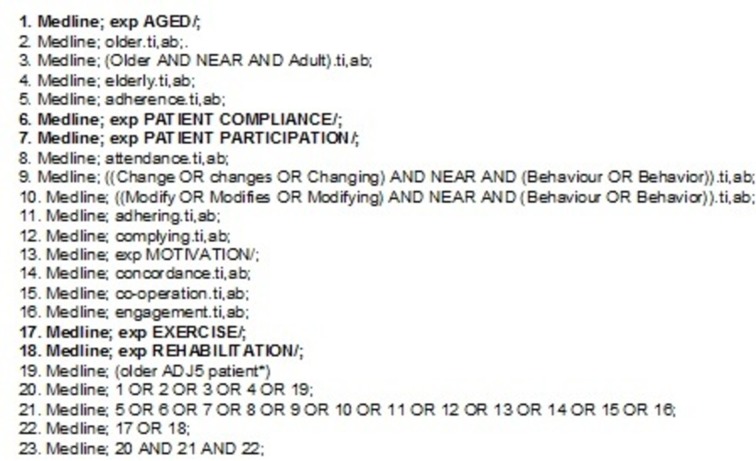
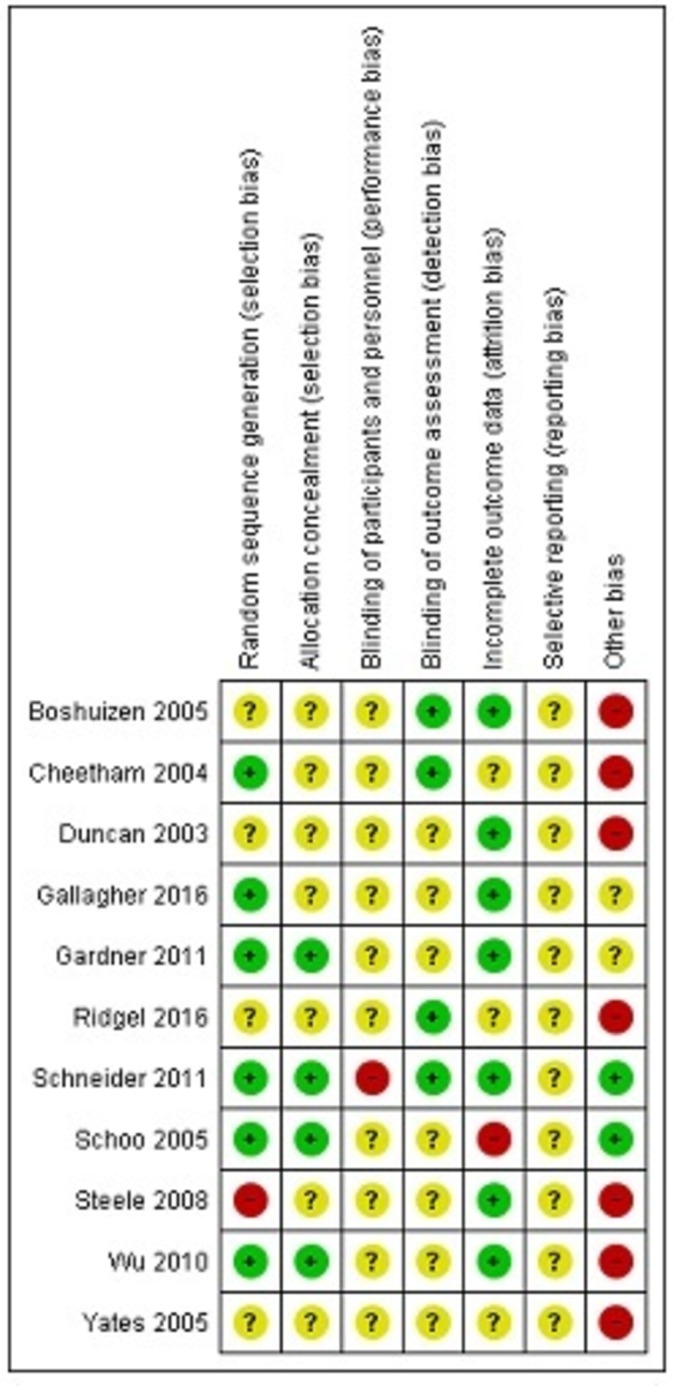
A search was conducted on AMED, BNI, CINAHL, EMBASE, MEDLINE and PsychINFO databases. Randomised controlled trials that used an intervention to aid exercise adherence and an exercise adherence outcome for older people were included. Data were extracted with the use of a preprepared standardised form. Risk of bias was assessed with the Cochrane Collaboration's tool for assessing risk of bias. Interventions were classified according to the BCTT.
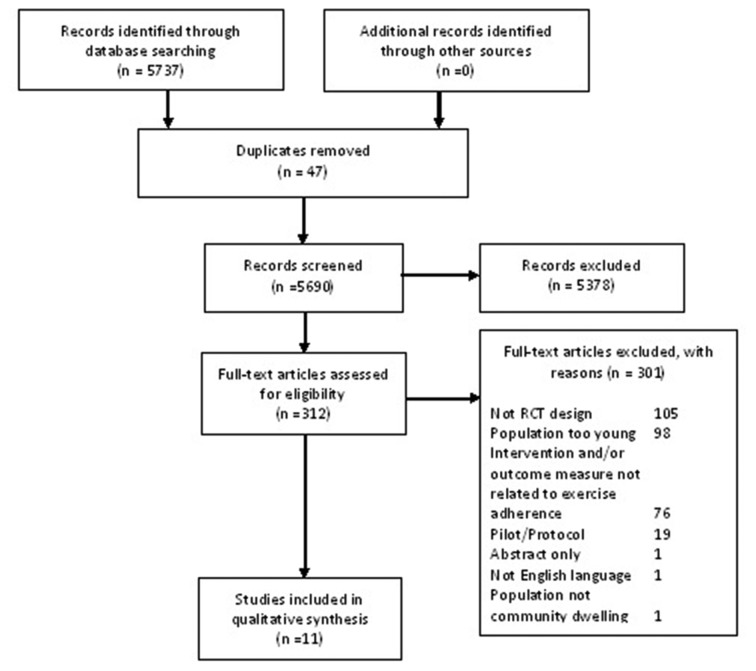
Eleven studies were included in the review. Risk of bias was moderate to high. Interventions were classified into the following categories: comparison of behaviour, feedback and monitoring, social support, natural consequences, identity and goals and planning. Four studies reported a positive adherence outcome following their intervention. Three of these interventions were categorised in the feedback and monitoring category. Four studies used behavioural approaches within their study. These were social learning theory, socioemotional selectivity theory, cognitive behavioural therapy and self-efficacy. Seven studies did not report a behavioural approach.
Interventions in the feedback and monitoring category showed positive outcomes, although there is insufficient evidence to recommend their use currently. There is need for better reporting, use and the development of theoretically derived interventions in the field of exercise adherence for older people. Robust measures of adherence, in order to adequately test these interventions would also be of use.
CRD42015020884.
系统评价用于提高老年人锻炼依从性的干预措施,评估这些干预措施的有效性,并使用行为改变技术分类(BCTT)评估其背后的行为改变技术。
系统评价。
在 AMED、BNI、CINAHL、EMBASE、MEDLINE 和 PsychINFO 数据库中进行了搜索。纳入了使用干预措施辅助老年人锻炼依从性和锻炼依从性结果的随机对照试验。使用预先准备的标准化表格提取数据。使用 Cochrane 协作风险偏倚评估工具评估风险偏倚。根据 BCTT 对干预措施进行分类。
共有 11 项研究纳入综述。偏倚风险为中度至高度。干预措施分为以下几类:行为比较、反馈和监测、社会支持、自然后果、身份和目标以及计划。四项研究报告干预后依从性结果为阳性。其中三项干预措施被归类为反馈和监测类别。四项研究在其研究中使用了行为方法。这些方法包括社会学习理论、社会情绪选择理论、认知行为疗法和自我效能。七项研究未报告行为方法。
反馈和监测类别中的干预措施显示出积极的结果,但目前尚无足够的证据推荐使用。在老年人锻炼依从性领域,需要更好地报告、使用和开发基于理论的干预措施。稳健的依从性测量方法也将有助于充分测试这些干预措施。
PROSPERO 注册号:CRD42015020884。