Translational Health Research Institute (THRI), School of Medicine, Western Sydney University, Locked Bag 1797, Penrith, NSW, 2571, Australia.
BMC Psychiatry. 2018 Oct 16;18(1):333. doi: 10.1186/s12888-018-1918-1.
Globally, depressive disorders are one of the most common forms of mental illness. Using data from the most recent Global Burden of Disease, Injury, and Risk Factor Study 2016 (GBD 2016), we aimed to describe the burden of disease attributable to depressive disorders in terms of prevalence and disability-adjusted life years (DALYs) in South Asia countries (namely India, Pakistan, Bangladesh, Nepal and Bhutan).
GBD 2016 used epidemiological data on depressive disorders (major depression and dysthymia) from South Asia and a Bayesian meta-regression tool (DisMod-MR 2.1) to model prevalence and DALYs of depressive disorders by age, sex, country and year. DALYs were calculated from the years lived with disability (YLDs), derived from the prevalence of depressive disorders and disability weights, obtained from a community and internet-based surveys. The analyses adjusted for comorbidity, data sources and multiple modelling, and estimates were presented with 95% uncertainty intervals (UI).
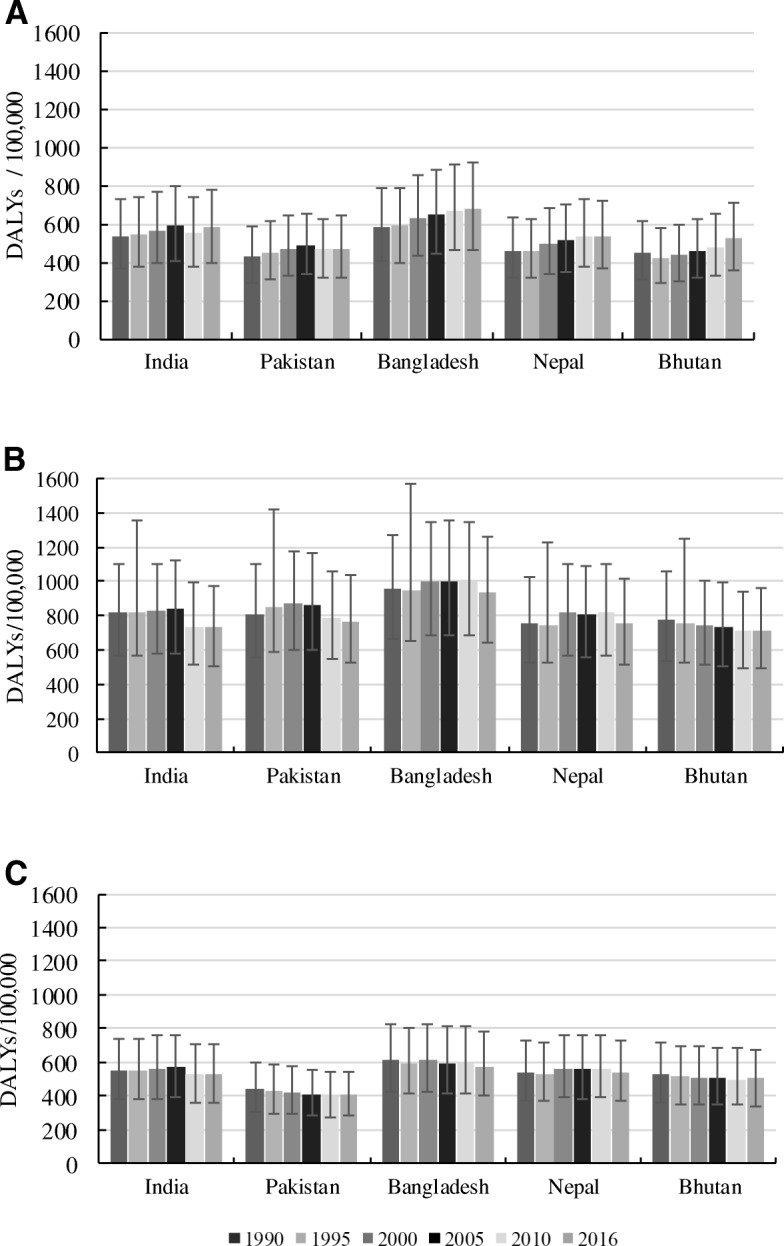
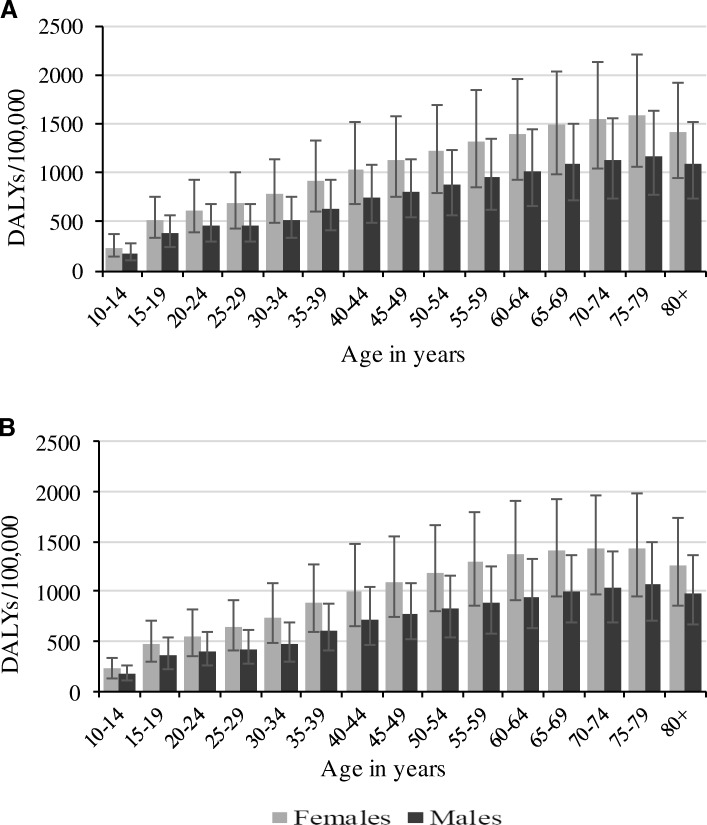
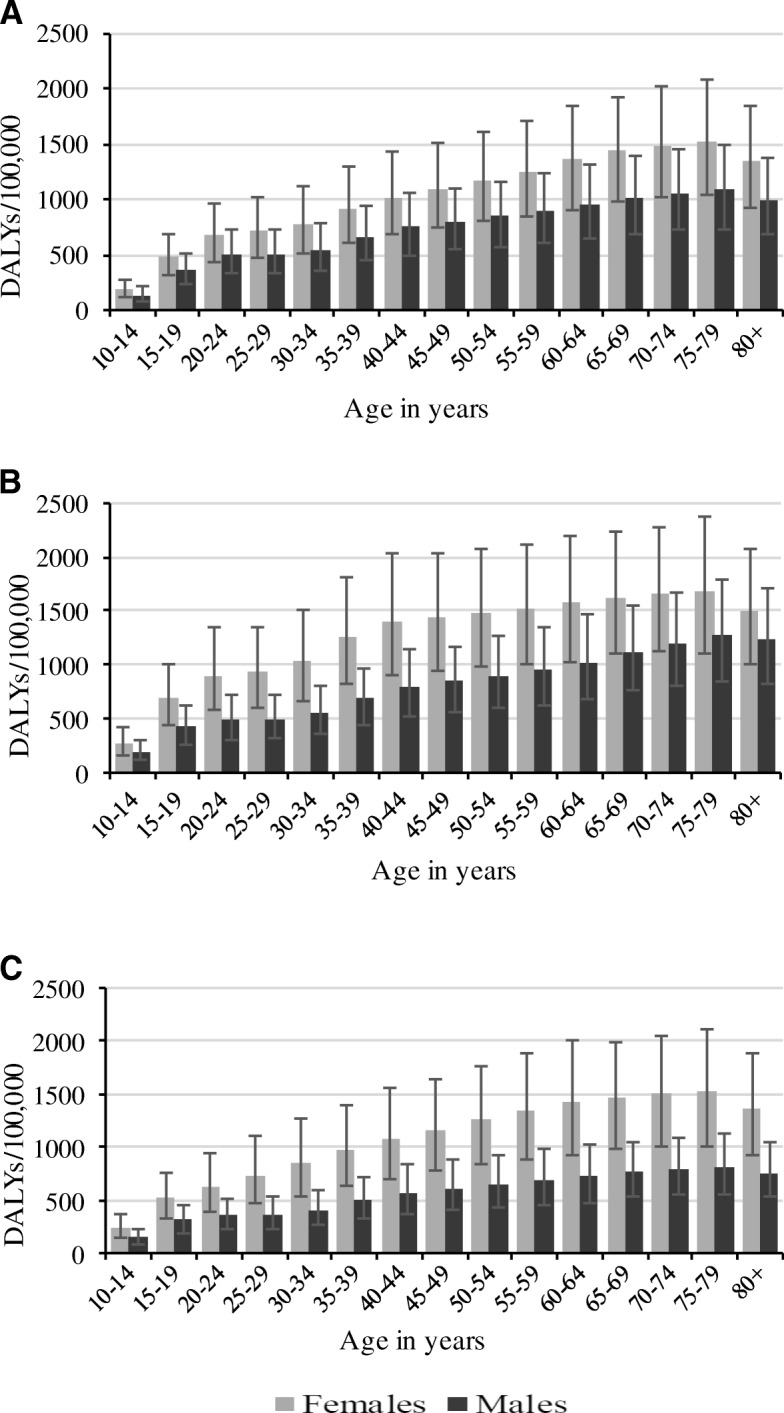
In 2016, the age-standardised prevalence of depressive disorders in South Asia was 3.9% (95% UI: 3.6-4.2%), 4.4% (95% UI: 4.4-4.8%) in Bangladesh, 3.9% (95% UI: 3.6-4.2%) in India, 3.0% (95% UI: 2.8-3.3%) in Pakistan, 4.0% (95% UI: 3.7-4.3%) in Nepal and 3.7% (95% UI: 3.4-4.1%) in Bhutan. In South Asia, depressive disorders accounted for 9.8 million DALYs (95% UI: 6.8-13.2 million) or 577.8 (95% UI: 399.9-778.9) per 100,000 population in 2016. Of these, major depressive disorders (MDD) accounted for 7.8 million DALYs (95% UI: 5.3-10.5 million). India generated the largest numbers of DALYs due to depressive disorders and MDD, followed by Bangladesh and Pakistan. DALYs due to depressive disorders were highest in females and older adults (75-79 years) across all countries.
Our findings show the substantial public health burden of depressive disorders in South Asian populations and healthcare systems. Given the scale of depressive disorders, improvement in overall population health is possible if South Asian countries prioritise the prevention and treatment of depressive disorders.
在全球范围内,抑郁障碍是最常见的精神疾病之一。本研究利用最新的 2016 年全球疾病、伤害和风险因素研究(GBD 2016)的数据,旨在描述南亚国家(印度、巴基斯坦、孟加拉国、尼泊尔和不丹)抑郁障碍的疾病负担,包括患病率和残疾调整生命年(DALYs)。
GBD 2016 利用了南亚地区抑郁障碍(重性抑郁障碍和恶劣心境)的流行病学数据,采用贝叶斯荟萃回归工具(DisMod-MR 2.1),按年龄、性别、国家和年份对抑郁障碍的患病率和 DALYs 进行建模。DALYs 是根据抑郁障碍的患病率和残疾权重(来源于社区和互联网调查)计算得出的,残疾权重反映了残疾年限。分析对共病、数据源和多重建模进行了调整,估计结果以 95%置信区间(UI)呈现。
2016 年,南亚地区年龄标准化的抑郁障碍患病率为 3.9%(95% UI:3.6-4.2%),孟加拉国为 4.4%(95% UI:4.4-4.8%),印度为 3.9%(95% UI:3.6-4.2%),巴基斯坦为 3.0%(95% UI:2.8-3.3%),尼泊尔为 4.0%(95% UI:3.7-4.3%),不丹为 3.7%(95% UI:3.4-4.1%)。在南亚地区,抑郁障碍导致 980 万 DALYs(95% UI:680 万-1320 万)或每 10 万人中有 577.8 个(95% UI:399.9-778.9)DALYs,2016 年。其中,重性抑郁障碍(MDD)导致 780 万 DALYs(95% UI:530 万-1050 万)。印度因抑郁障碍和 MDD 导致的 DALYs 数量最多,其次是孟加拉国和巴基斯坦。在所有国家中,女性和 75-79 岁年龄组的抑郁障碍 DALYs 最高。
本研究结果表明,抑郁障碍在南亚人群和医疗保健系统中造成了巨大的公共卫生负担。鉴于抑郁障碍的规模,如果南亚国家优先重视预防和治疗抑郁障碍,就有可能改善整体人口健康。