A.M. Butlerov' Chemistry Institute of Kazan Federal University, 18 Kremlevskaya Street, Kazan 420008, Russia.
Department of Nuclear Physics and Biophysics, Comenius University, Mlynska dolina F1, 842 48 Bratislava, Slovakia.
Sensors (Basel). 2018 Oct 16;18(10):3489. doi: 10.3390/s18103489.
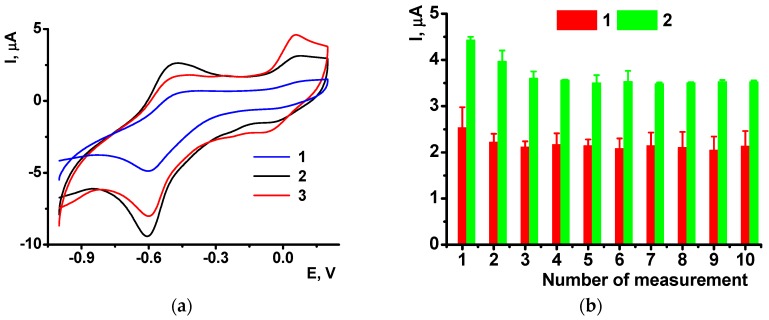
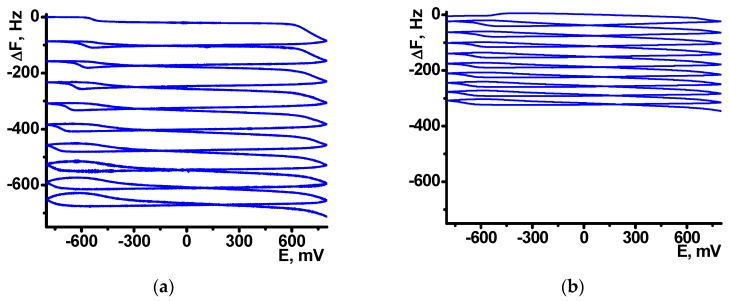
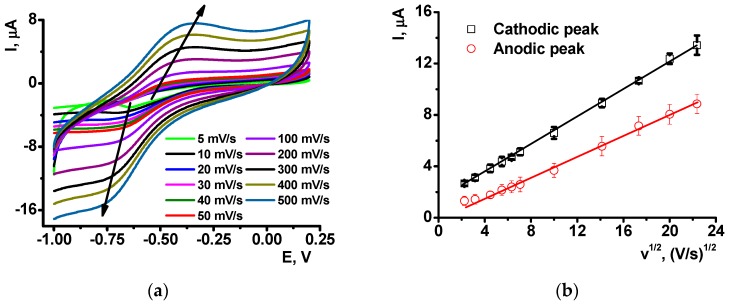
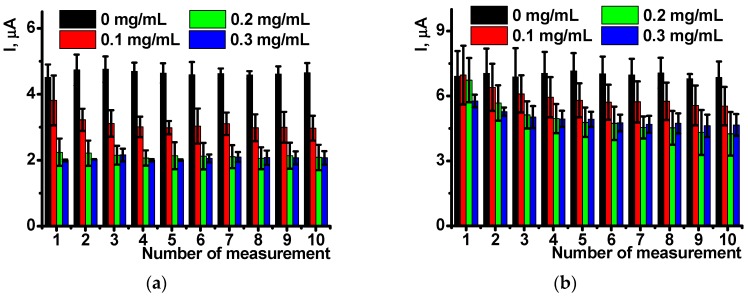
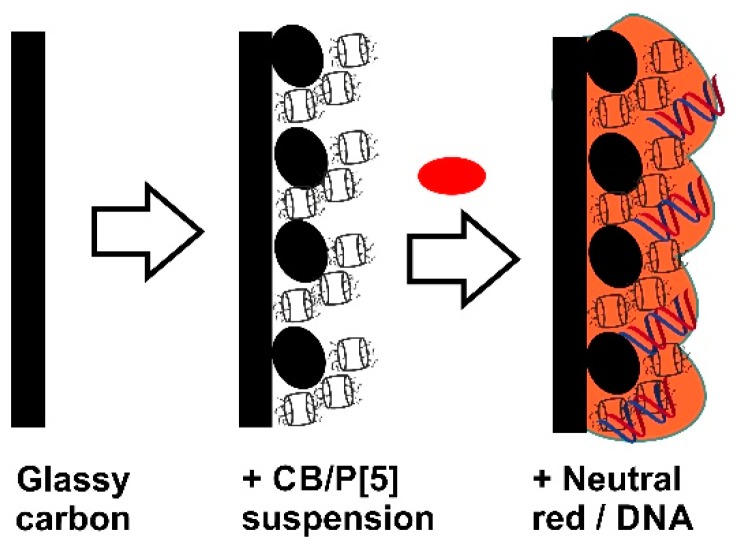
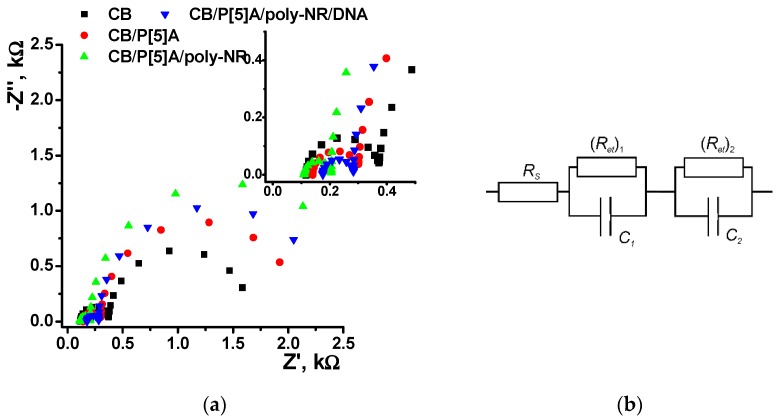
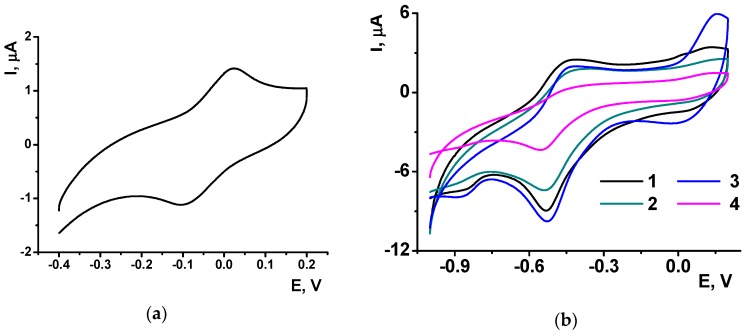
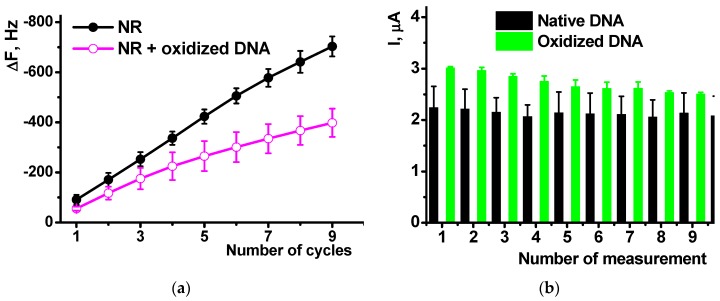
Voltammetric DNA sensor has been proposed on the platform of glassy carbon electrode covered with carbon black with adsorbed pillar[5]arene molecules. Electropolymerization of Neutral Red performed in the presence of native or oxidatively damaged DNA resulted in formation of hybrid material which activity depended on the DNA conditions. The assembling of the surface layer was confirmed by scanning electron microscopy and electrochemical impedance spectroscopy. The influence of DNA and pillar[5]arene on redox activity of polymeric dye was investigated and a significant increase of the peak currents was found for DNA damaged by reactive oxygen species generated by Cu/H₂O₂ mixture. Pillar[5]arene improves the electron exchange conditions and increases the response and its reproducibility. The applicability of the DNA sensor developed was shown on the example of ascorbic acid as antioxidant. It decreases the current in the concentration range from 1.0 μM to 1.0 mM. The possibility to detect antioxidant activity was qualitatively confirmed by testing tera infusion. The DNA sensor developed can find application in testing of carcinogenic species and searching for new antitumor drugs.
基于玻碳电极表面覆盖有吸附了[5]轮烷分子的炭黑,提出了一种测定 DNA 的伏安传感器。在存在天然或氧化损伤 DNA 的情况下,中性红的电聚合导致形成了依赖于 DNA 状态的杂交材料。表面层的组装通过扫描电子显微镜和电化学阻抗谱得到了证实。研究了 DNA 和[5]轮烷对聚合染料氧化还原活性的影响,发现由 Cu/H₂O₂ 混合物产生的活性氧物质损伤的 DNA 会显著增加峰电流。[5]轮烷改善了电子交换条件,提高了响应及其重现性。所开发的 DNA 传感器的适用性在抗坏血酸作为抗氧化剂的例子中得到了证明。它在 1.0 μM 至 1.0 mM 的浓度范围内降低了电流。通过测试茶提取物,定性地证实了检测抗氧化活性的可能性。所开发的 DNA 传感器可用于检测致癌物质和寻找新的抗肿瘤药物。