Grassland Agri-husbandry Research Center, Qingdao Agricultural University, Qingdao, 266109, China.
BMC Plant Biol. 2018 Oct 17;18(1):243. doi: 10.1186/s12870-018-1467-2.
WRKY transcription factors, so named because of the WRKYGQK heptapeptide at the N-terminal end, are widely distributed in plants and play an important role in physiological changes and response to biotic and abiotic stressors. Many previous studies have focused on the evolution of WRKY transcription factors in a given plant; however, little is known about WRKY evolution in legumes. The gene expression pattern of duplicated WRKY transcription factors remains unclear.
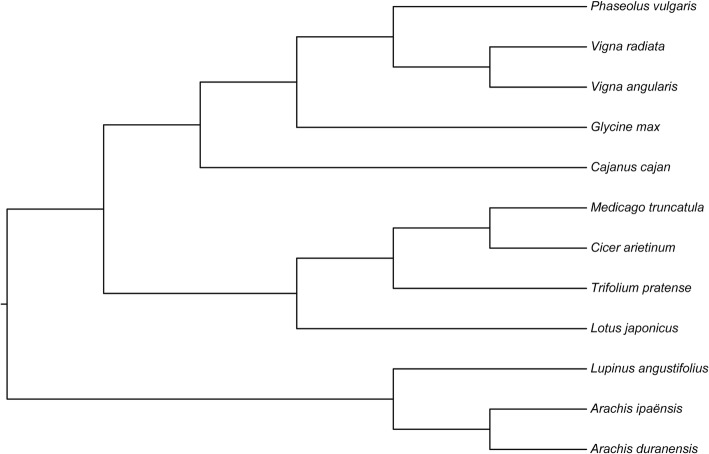
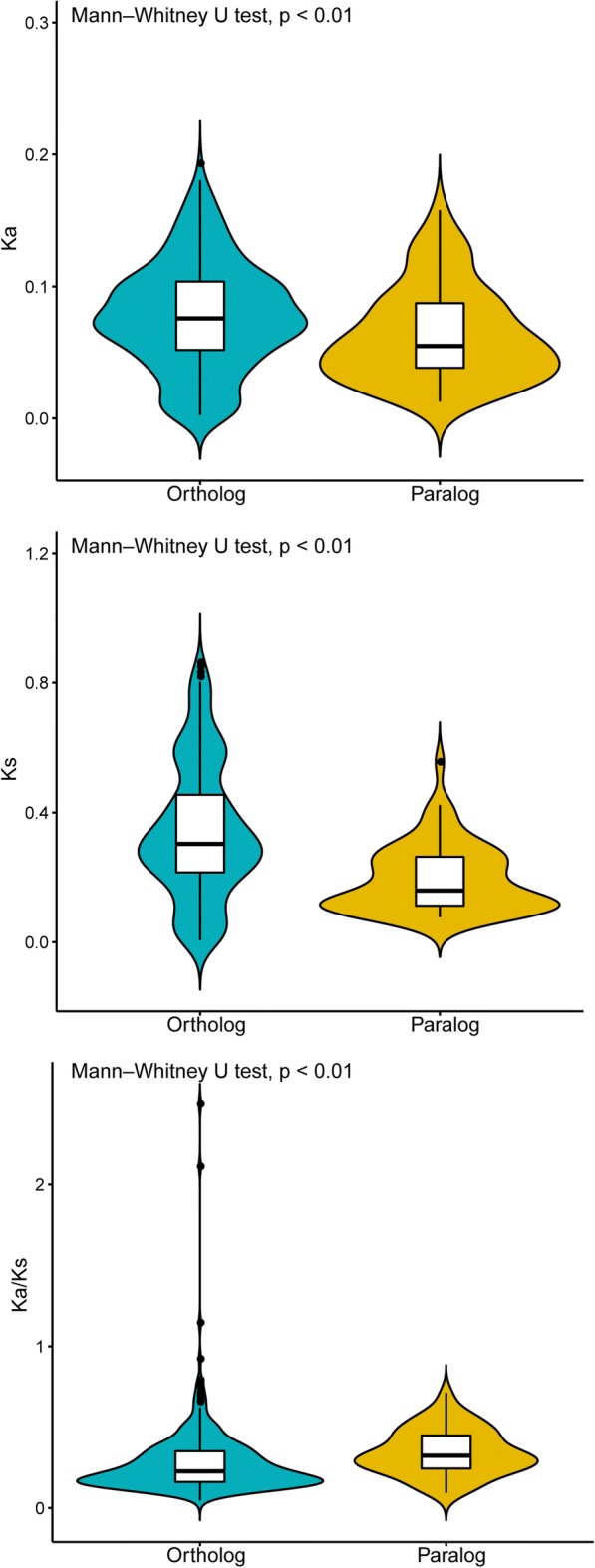
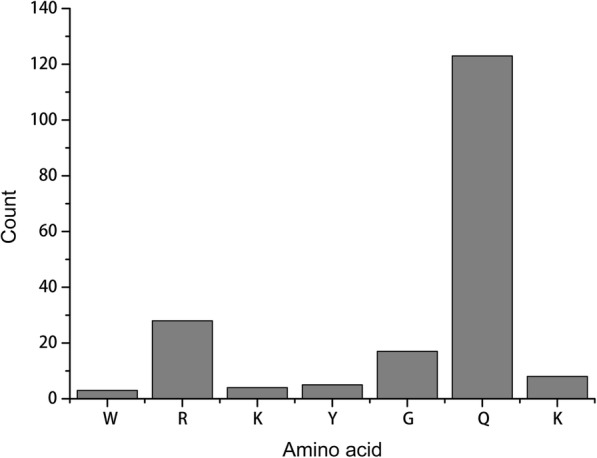
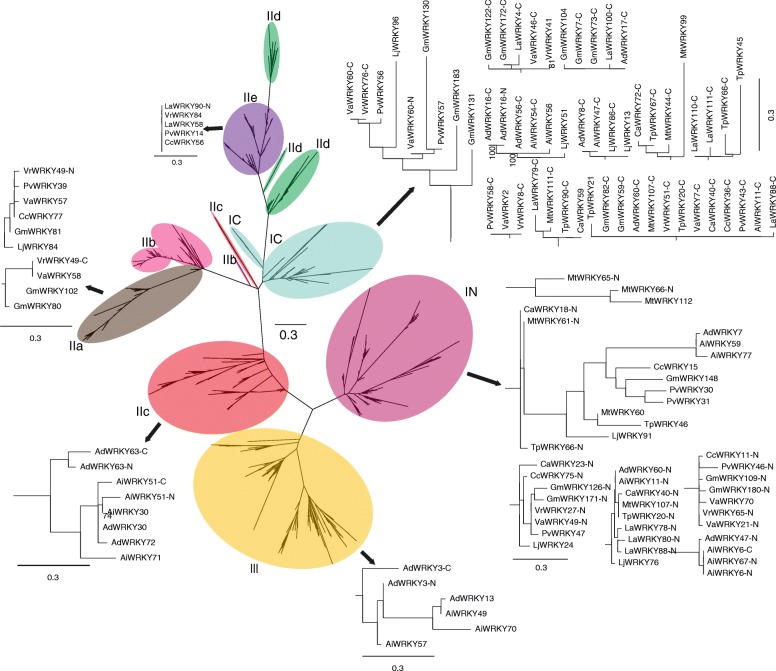
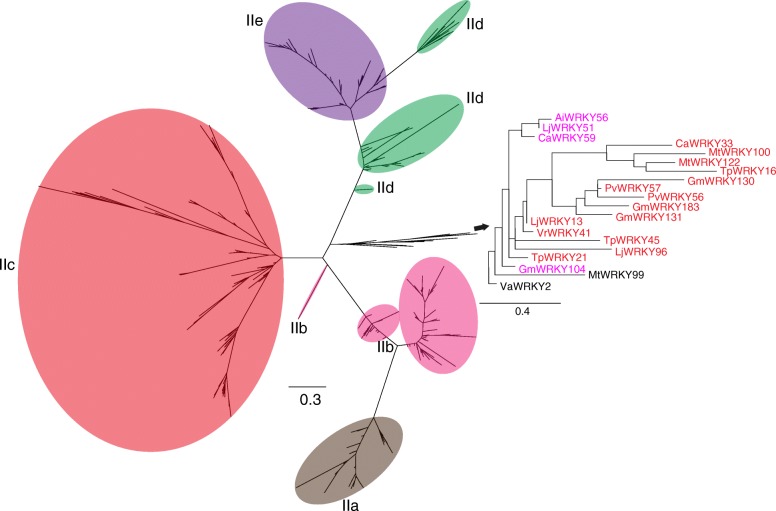
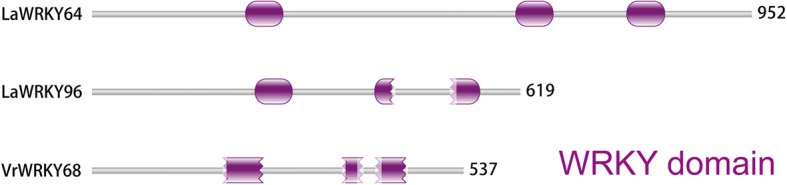
We first identified the WRKY proteins in 12 legumes. We found that the WRKYGQK heptapeptide tended to mutate into WRKYGKK. The Q site in WRKYGQK preferentially mutated, while W, K, and Y were conserved. The phylogenetic tree shows that the WRKY proteins in legumes have multiple origins, especially group IIc. For example, WRKY64 from Lupinus angustifolius (LaWRKY64) contains three WRKY domains, of which the first two clustered together in the N-terminal WRKY domain of the group I WRKY protein, and the third WRKY domain grouped in the C-terminal WRKY domain of the group I WRKY protein. Orthologous WRKY genes have a faster evolutionary rate and are subject to constrained selective pressure, unlike paralogous WRKY genes. Different gene features were observed between duplicated WRKY genes and singleton WRKY genes. Duplicated Glycine max WRKY genes with similar gene features have gene expression divergence.
We analyzed the WRKY number and type in 12 legumes, concluding that the WRKY proteins have multiple origins. A novel WRKY protein, LaWRKY64, was found in L. angustifolius. The first two WRKY domains of LaWRKY64 have the same origin. The orthologous and paralogous WRKY proteins have different evolutionary rates. Duplicated WRKY genes have gene expression divergence under normal growth conditions in G. max. These results provide insight into understanding WRKY evolution and expression.
WRKY 转录因子因 N 端的 WRKYGQK 七肽而得名,广泛分布于植物中,在生理变化和应对生物及非生物胁迫中发挥重要作用。许多先前的研究都集中在特定植物中 WRKY 转录因子的进化上;然而,对于豆科植物中的 WRKY 进化知之甚少。重复 WRKY 转录因子的基因表达模式尚不清楚。
我们首先在 12 种豆科植物中鉴定出 WRKY 蛋白。我们发现 WRKYGQK 七肽倾向于突变为 WRKYGKK。WRKYGQK 中的 Q 位优先突变,而 W、K 和 Y 则保守。系统发育树表明豆科植物的 WRKY 蛋白具有多种起源,尤其是 IIc 组。例如,来自窄叶羽扇豆(LaWRKY64)的 WRKY64 包含三个 WRKY 结构域,其中前两个在 I 组 WRKY 蛋白的 N 端 WRKY 结构域中聚集在一起,第三个 WRKY 结构域在 I 组 WRKY 蛋白的 C 端 WRKY 结构域中聚集。直系同源 WRKY 基因的进化速度较快,受到约束性选择压力的影响,而旁系同源 WRKY 基因则不然。重复 WRKY 基因和单拷贝 WRKY 基因之间存在不同的基因特征。具有相似基因特征的重复 Glycine max WRKY 基因存在基因表达分歧。
我们分析了 12 种豆科植物中的 WRKY 数量和类型,得出结论 WRKY 蛋白具有多种起源。在窄叶羽扇豆中发现了一种新型 WRKY 蛋白 LaWRKY64。LaWRKY64 的前两个 WRKY 结构域具有相同的起源。直系同源和旁系同源 WRKY 蛋白具有不同的进化速度。在 G. max 的正常生长条件下,重复 WRKY 基因存在基因表达分歧。这些结果为理解 WRKY 进化和表达提供了新的认识。